
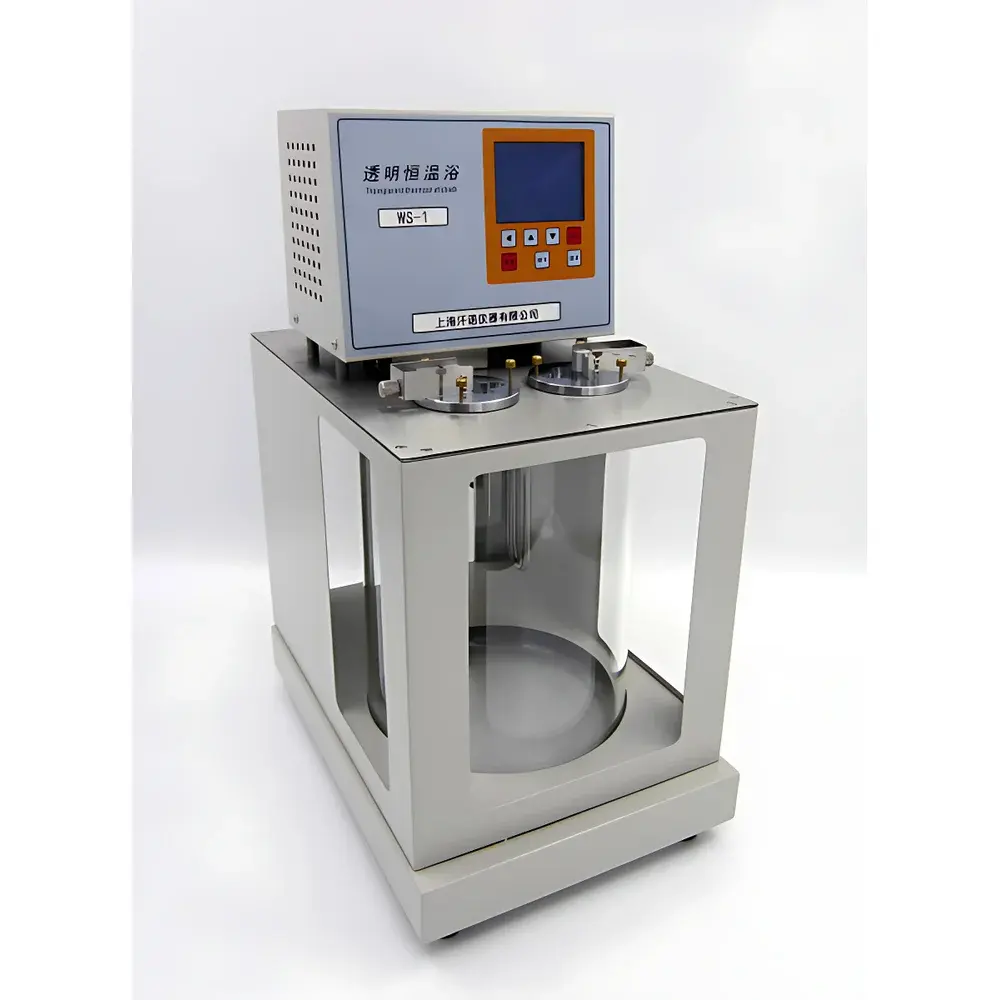
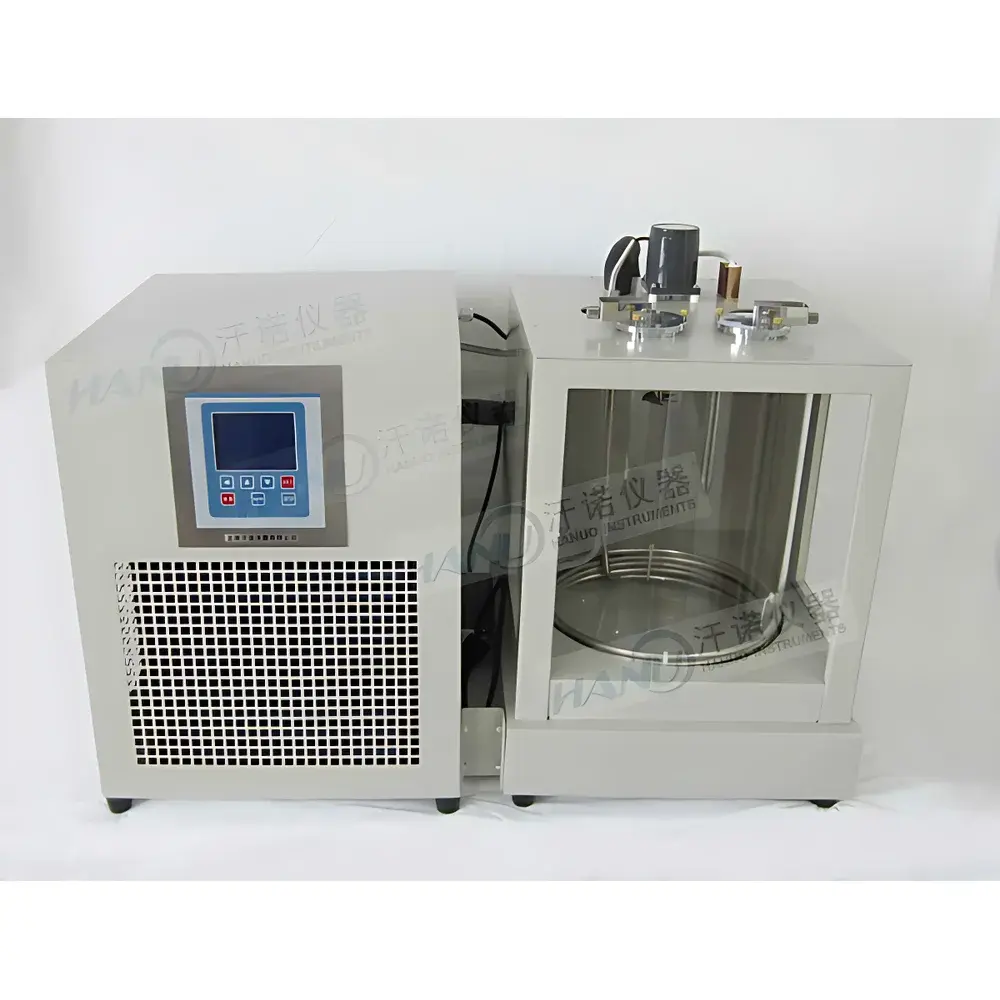
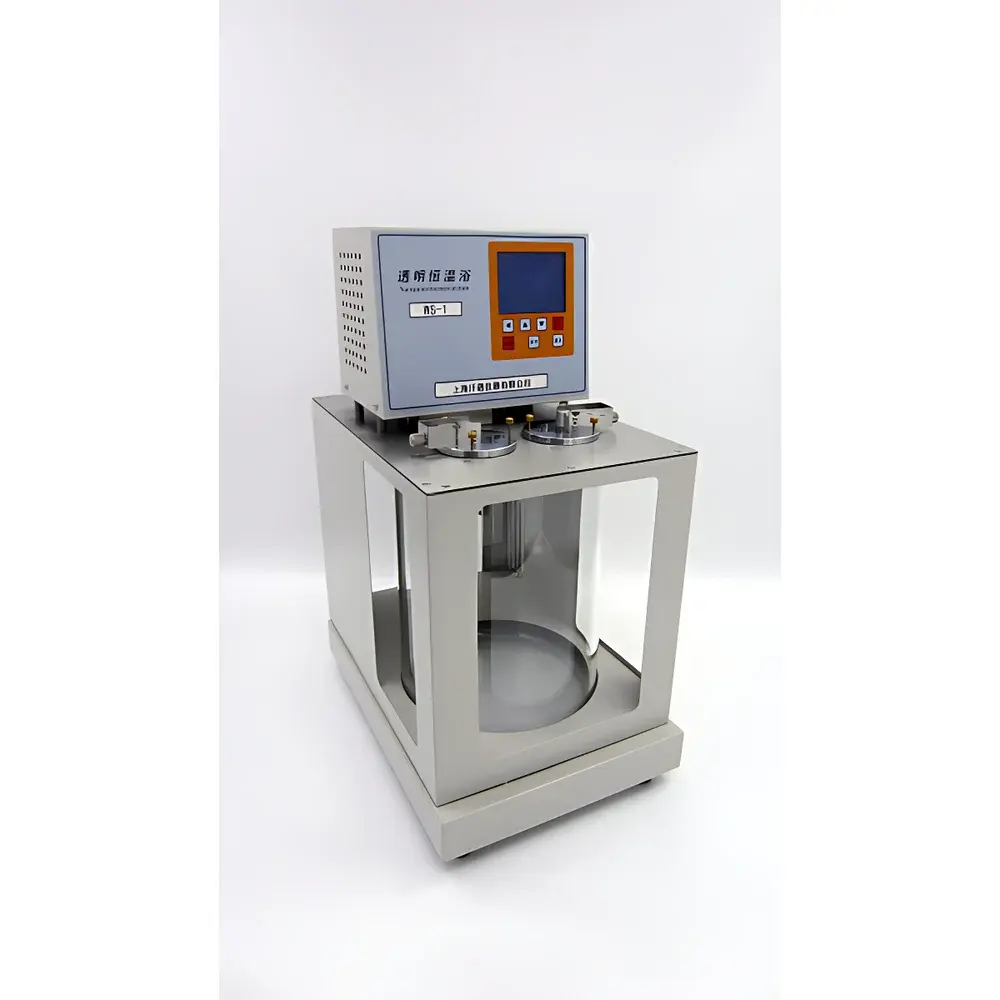
Hanuo WS-2 Ubbelohde Viscometer Analyzer
| Brand | Hanuo |
|---|---|
| Origin | Shanghai, China |
| Model | WS-2 |
| Temperature Range | RT+10–80 °C (standard), 50–210 °C (high-temp variants) |
| Display Resolution | 0.1 °C / 0.01 °C / 0.001 °C |
| Temperature Stability | ±0.1 °C / ±0.02 °C / ±0.002 °C |
| Bath Opening | Ø65 mm |
| Bath Depth | 300 mm / 350 mm / 400 mm |
| Transparent Viewing Window | 4-sided |
| Total Power | 1.0–1.9 kW |
| Communication Interface | RS-232 or RS-485 (optional) |
| Temperature Ramp Control | Optional programmable ramp |
| Sensor Protection | Dual-limit overtemperature cutoff, sensor fault detection |
| Calibration Correction | Adjustable offset for temperature sensor error compensation |
Overview
The Hanuo WS-2 Ubbelohde Viscometer Analyzer is a precision-controlled constant-temperature bath system engineered specifically for capillary viscometry in accordance with standardized methods including ASTM D445, ISO 3104, and GB/T 265. It provides thermally stable immersion conditions for Ubbelohde-type capillary viscometers used in the kinematic viscosity determination of transparent and opaque liquids—primarily petroleum products (e.g., lubricating oils, fuels, bitumen dilutions), synthetic polymers (e.g., PET, PA, PC melts), resins, pharmaceutical excipients, and fiber-forming solutions. Unlike generic heating baths, the WS-2 integrates PID-based adaptive thermal regulation, multi-layer safety interlocks, and high-fidelity temperature monitoring to ensure repeatability ≤±0.02 °C under steady-state operation—a prerequisite for GLP-compliant viscosity reporting in QC laboratories and R&D facilities.
Key Features
- High-resolution digital display (0.1 °C to 0.001 °C selectable resolution) with intuitive touch-key interface for rapid setpoint entry and real-time monitoring.
- Adaptive PID temperature controller with auto-tuning capability; manual parameter adjustment available for non-standard media (e.g., silicone oils, glycerol-water mixtures).
- Dual-redundant overtemperature protection: primary electronic cutoff at user-defined limit + secondary mechanical thermostat fail-safe, both triggering audible alarm and automatic heater deactivation.
- Four-sided borosilicate glass viewing window enables unobstructed observation of capillary flow, meniscus positioning, and bubble formation during timing—critical for USP and pharmacopeial compliance.
- Integrated internal circulation pump ensures uniform thermal distribution (ΔT ≤ ±0.01 °C across bath volume), minimizing stratification effects that compromise efflux time accuracy.
- Configurable temperature offset correction allows calibration traceability against NIST-traceable reference thermometers, supporting ISO/IEC 17025 audit requirements.
- Power-down mode retains bath temperature readout post-shutdown, enabling passive cooling/heating profiling without active control—useful for thermal history documentation.
- Optional RS-232/RS-485 serial interface supports integration into LIMS environments and automated data logging per FDA 21 CFR Part 11 requirements (when paired with compliant software).
Sample Compatibility & Compliance
The WS-2 accommodates standard Ubbelohde capillaries (e.g., Cannon-Fenske, Ostwald, and micro-Ubbelohde types) with outer diameters up to 18 mm. Its bath geometry—Ø65 mm opening and 300–400 mm depth—ensures full submersion of capillary bulbs and sufficient headspace for precise meniscus alignment. The unit complies with electrical safety standards IEC 61010-1 and electromagnetic compatibility directive 2014/30/EU. For regulated environments, optional firmware upgrades support audit trail generation, electronic signature capture, and user access level management—aligning with GMP Annex 11 and WHO TRS 992 validation expectations.
Software & Data Management
While the WS-2 operates as a standalone hardware platform, its optional serial interface enables bidirectional communication with third-party viscosity calculation software (e.g., RheoCompass™, ViscCalc Pro, or custom LabVIEW/VB.NET applications). Time-stamped temperature values and status flags (e.g., “Stabilized”, “Alarm Active”, “Ramp Complete”) are transmitted at user-defined intervals. When integrated into validated systems, raw temperature logs can be archived with SHA-256 hash integrity checks and linked to corresponding efflux times stored in secure SQL databases—fulfilling ALCOA+ data integrity principles (Attributable, Legible, Contemporaneous, Original, Accurate, Complete, Consistent, Enduring, Available).
Applications
- Kinematic viscosity testing of base oils and finished lubricants per ASTM D445 and IP 71.
- Melt viscosity assessment of thermoplastic polymers using calibrated capillary viscometers under controlled shear rate profiles.
- Quality control of epoxy resins, polyurethane prepolymers, and acrylic monomers prior to polymerization initiation.
- Viscosity grading of pharmaceutical syrups, suspensions, and ophthalmic solutions per USP and Ph. Eur. 2.2.34.
- Research-grade thermal ramp studies on temperature-dependent flow behavior of nanocomposite dispersions and biopolymer hydrogels.
FAQ
What capillary viscometer standards does the WS-2 support?
It is mechanically compatible with all Ubbelohde-style capillaries conforming to ASTM D445 Annex A1, including Cannon-Fenske Routine, Suspended-Level, and Dilution types. Calibration certificates must be maintained per ISO 17025.
Can the WS-2 be validated for 21 CFR Part 11 compliance?
Yes—when configured with optional audit-trail-enabled firmware and connected to validated data acquisition software, it meets electronic record and signature requirements for regulated pharmaceutical and biotech labs.
Is external refrigeration required for sub-ambient operation?
No. The standard WS-2 operates from ambient +10 °C upward. Sub-zero capability requires the optional WS-2-Cryo variant with integrated Peltier cooling module (not covered under this model designation).
How is temperature uniformity verified during IQ/OQ protocols?
Using a minimum of nine calibrated PT100 probes positioned at defined locations (top/mid/bottom × center/periphery), per ASTM E1137 and EU GMP Annex 15 guidelines.
Does the unit include factory calibration documentation?
Each shipment includes a traceable calibration report referencing NIST SRM 1750a (liquid-in-glass thermometer standard), with uncertainty budget stated at k=2.
Related Products



