
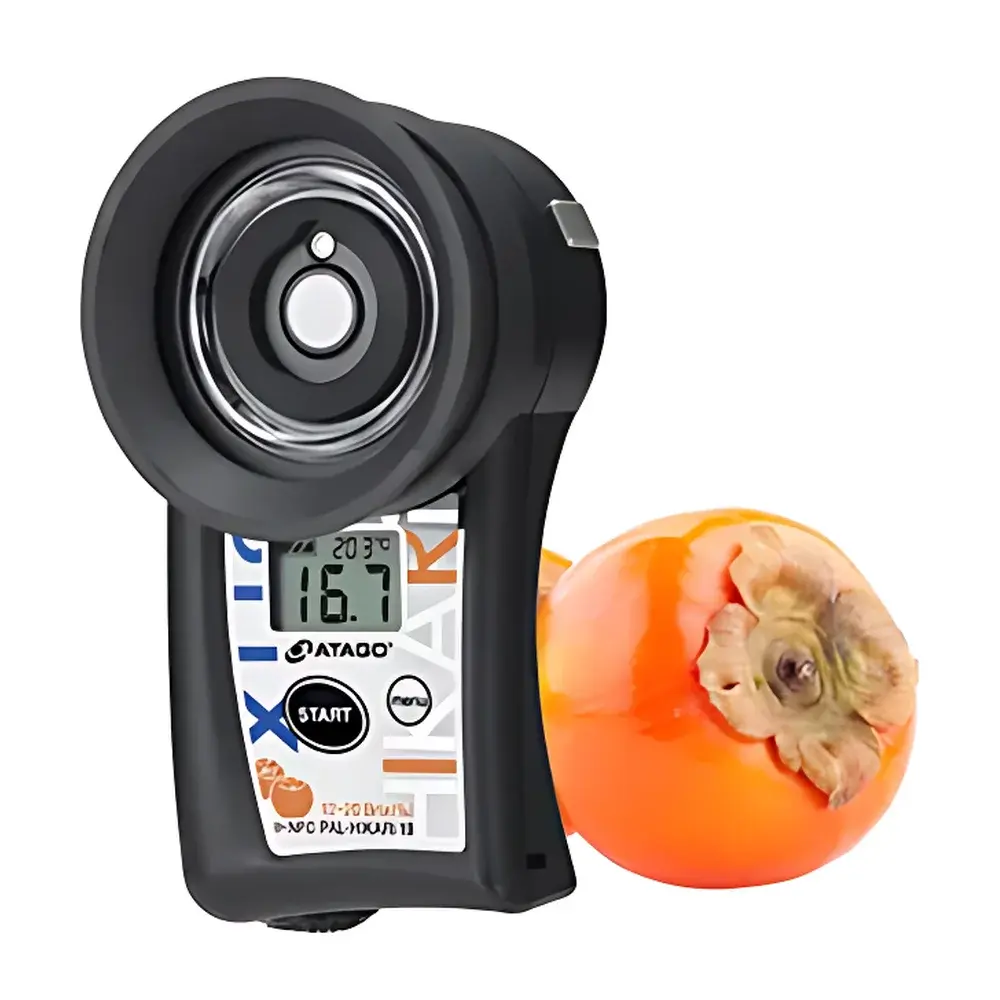
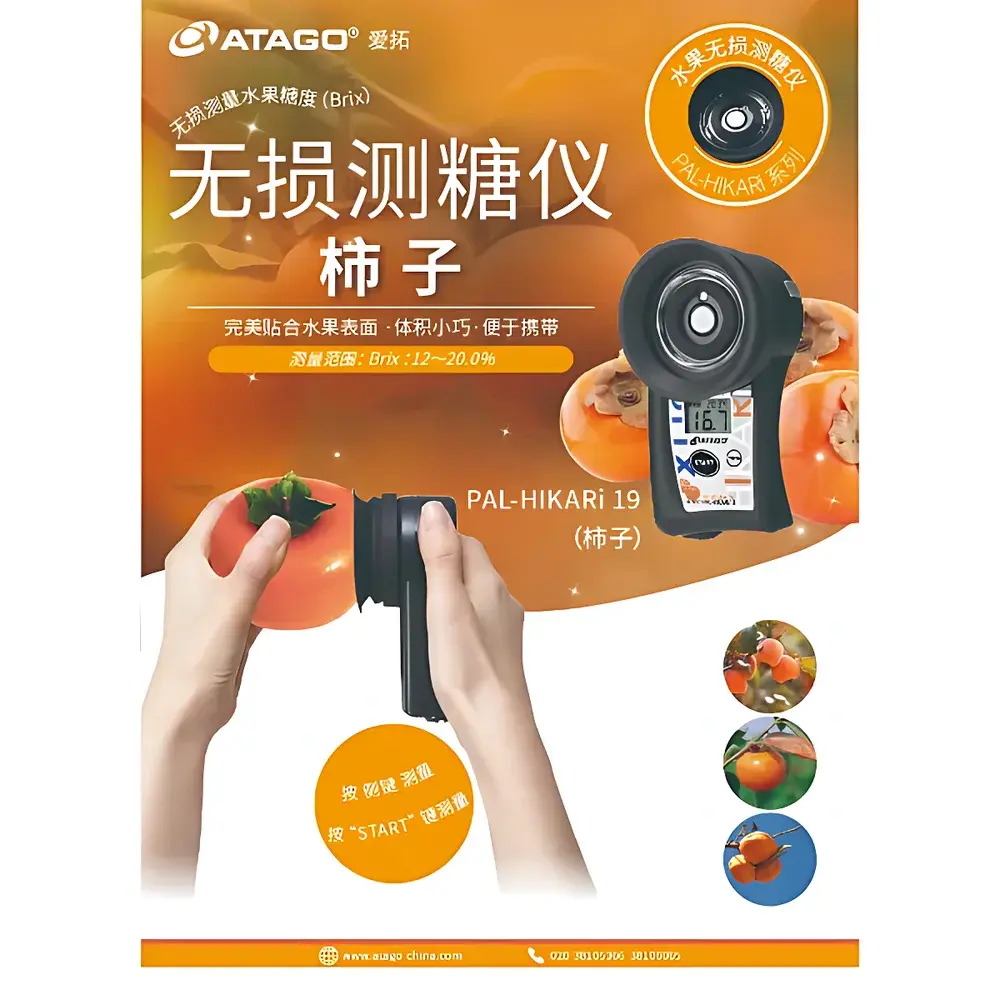
ATAGO PAL-HIKARi 19 Non-Destructive Persimmon Refractometer
| Brand | ATAGO |
|---|---|
| Origin | Japan |
| Model | PAL-HIKARi 19 (Persimmon-Specific) |
| Instrument Type | Non-Destructive Optical Refractometer |
| Measurement Principle | Near-Infrared (NIR) Reflectance Spectroscopy |
| Measuring Range | 12.0–20.0% Brix |
| Accuracy | ±1.5% Brix (varies with fruit variety and ambient conditions) |
| Resolution | 0.1% Brix |
| Automatic Temperature Compensation | 5.0–30.0°C |
| Ingress Protection Rating | IP64 |
| Power Supply | Two AAA alkaline batteries |
| Dimensions | 6.1 × 4.4 × 11.5 cm |
| Weight | 120 g (instrument only) |
Overview
The ATAGO PAL-HIKARi 19 is a handheld, non-destructive optical refractometer engineered specifically for in-situ Brix measurement in intact persimmons (Diospyros kaki). Unlike conventional benchtop or juice-based refractometers, the PAL-HIKARi 19 employs near-infrared (NIR) reflectance spectroscopy to estimate soluble solids content (SSC) without physical sampling. A calibrated NIR probe emits light at defined wavelengths into the fruit epidermis; the backscattered signal—modulated by internal sugar concentration, tissue density, and water distribution—is captured by an integrated photodetector array. Proprietary algorithms convert spectral response time and intensity profiles into a Brix value, referenced against ATAGO’s validated persimmon-specific calibration matrix. This principle enables field-deployable, real-time assessment of fruit maturity and quality while preserving structural integrity—a critical requirement for longitudinal monitoring in horticultural research, precision orchard management, and postharvest logistics.
Key Features
- Persimmon-optimized optical calibration: Factory-calibrated using >200 representative samples across multiple cultivars (e.g., Fuyu, Hachiya, Jiro), ensuring metrological relevance within the 12.0–20.0% Brix range typical of commercial persimmon harvest windows.
- True non-invasive operation: No skin puncture, no flesh excision, no juice extraction—measurement is performed via gentle probe-to-skin contact, eliminating contamination risk and enabling repeated measurements on the same fruit over time.
- On-device temperature compensation: Built-in thermistor dynamically adjusts readings across 5.0–30.0°C ambient and fruit surface temperatures, mitigating thermal drift common in field environments.
- Ruggedized portable architecture: IP64-rated enclosure resists dust ingress and splashing water; compact form factor (6.1 × 4.4 × 11.5 cm) and lightweight design (120 g) support extended use in orchards, packing houses, and cold-chain inspection points.
- Three-second measurement cycle: High-speed signal acquisition and embedded processing deliver numeric Brix output with 0.1% resolution on a backlit LCD display—no external software or PC required for basic operation.
- Statistical functionality: Internal memory supports up to 30 sequential readings per session; users may compute mean, min/max, and standard deviation directly on instrument to assess intra-fruit or inter-fruit variability.
Sample Compatibility & Compliance
The PAL-HIKARi 19 is validated exclusively for intact, unblemished persimmons exhibiting typical skin thickness (0.3–0.8 mm), firmness (≥5.5 N penetration force), and surface moisture levels consistent with post-harvest handling standards. It is not intended for use on bruised, overripe, or wax-coated specimens, nor for other fruit species—even those within the same Brix range—due to divergent optical scattering properties. While not certified to ISO/IEC 17025 or ASTM D7447 (standard test method for Brix determination in fruit juices), its performance aligns with Good Agricultural Practice (GAP) and Good Manufacturing Practice (GMP) guidelines for qualitative maturity screening. Data outputs comply with basic traceability requirements for internal quality records; however, for regulatory submission (e.g., FDA FSMA, EU Regulation 1308/2013), confirmatory juice-extraction refractometry remains mandatory.
Software & Data Management
The PAL-HIKARi 19 operates as a standalone instrument with no Bluetooth, USB, or cloud connectivity. All data remain stored locally in volatile memory until power-off. For integration into digital quality management systems, users may manually transcribe results into LIMS-compatible spreadsheets or third-party agricultural analytics platforms (e.g., FarmQA, Cropio). ATAGO provides optional CSV export templates and calibration verification protocols upon request—supporting audit readiness under GLP frameworks where instrument logbooks and periodic verification are mandated. Firmware updates are not field-upgradable; recalibration must be performed by authorized ATAGO service centers using NIST-traceable sucrose reference standards.
Applications
- Orchard maturity mapping: Correlate spatial Brix gradients across tree canopies to optimize selective harvesting schedules and reduce pre-sorting waste.
- Varietal breeding trials: Track SSC progression during fruit development without sacrificing experimental units—enabling longitudinal genotype × environment interaction analysis.
- Postharvest cold storage monitoring: Quantify sugar metabolism rates under controlled atmosphere conditions to refine shelf-life prediction models.
- Wholesale grading compliance: Support tiered pricing structures (e.g., Premium vs. Standard) based on objective, repeatable Brix thresholds rather than subjective visual assessment.
- Educational extension programs: Demonstrate non-destructive phenotyping principles to cooperative growers and agri-tech trainees without requiring laboratory infrastructure.
FAQ
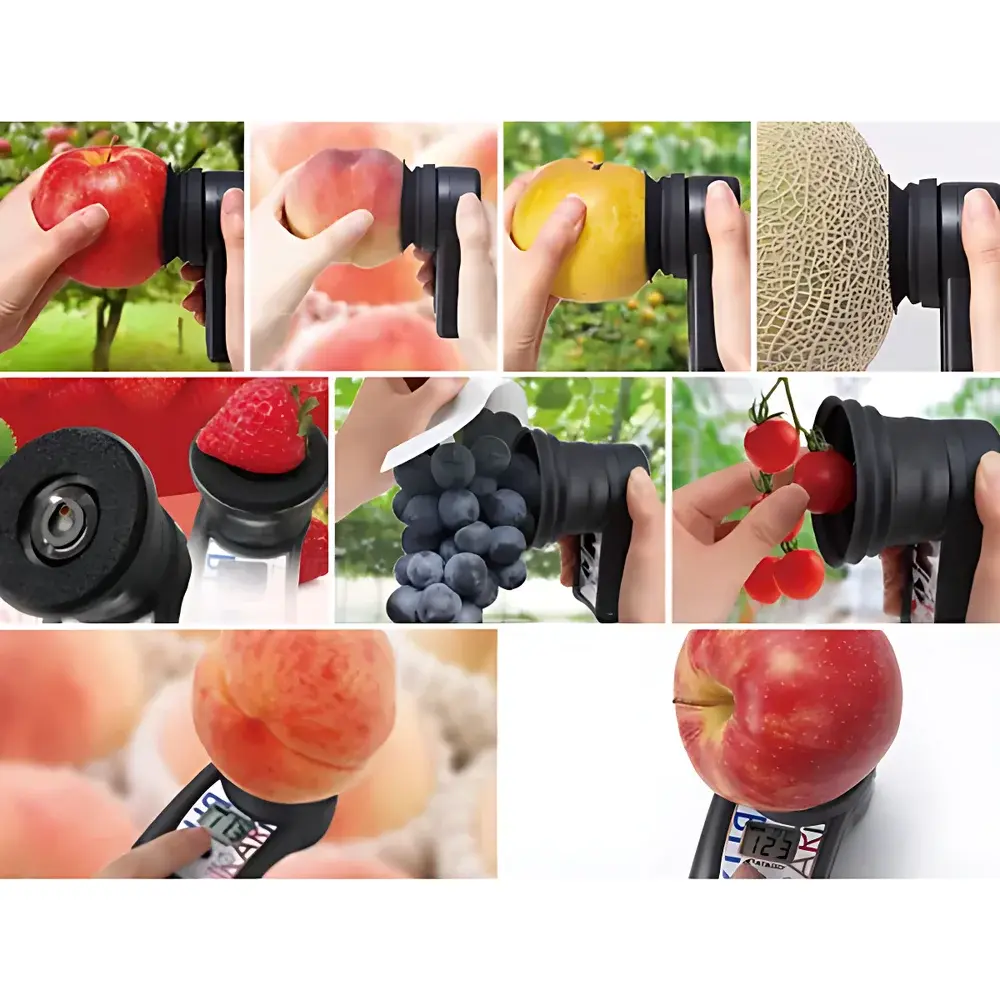
Can the PAL-HIKARi 19 measure other fruits such as apples or grapes?
No. Its optical model and calibration are strictly limited to persimmons. Using it on other species introduces unquantified bias due to differences in cuticle structure, cell wall composition, and NIR absorption spectra.
Does the device require annual recalibration?
Yes. ATAGO recommends recalibration every 12 months or after 5,000 measurements—whichever occurs first—to maintain traceability to factory reference standards.
Is the measurement affected by fruit surface moisture or dew?
Excess surface water alters NIR reflectance. Wipe the measurement site dry before contact; avoid use immediately after rain or irrigation.
How does automatic temperature compensation work?
An integrated thermistor measures both ambient air and probe-to-skin interface temperature in real time, applying empirically derived correction coefficients to the raw spectral signal prior to Brix conversion.
What is the minimum fruit size compatible with the PAL-HIKARi 19?
Fruit diameter must exceed 5.5 cm to ensure full probe contact area coverage and minimize edge-scattering artifacts. Smaller fruits yield unreliable readings.



