
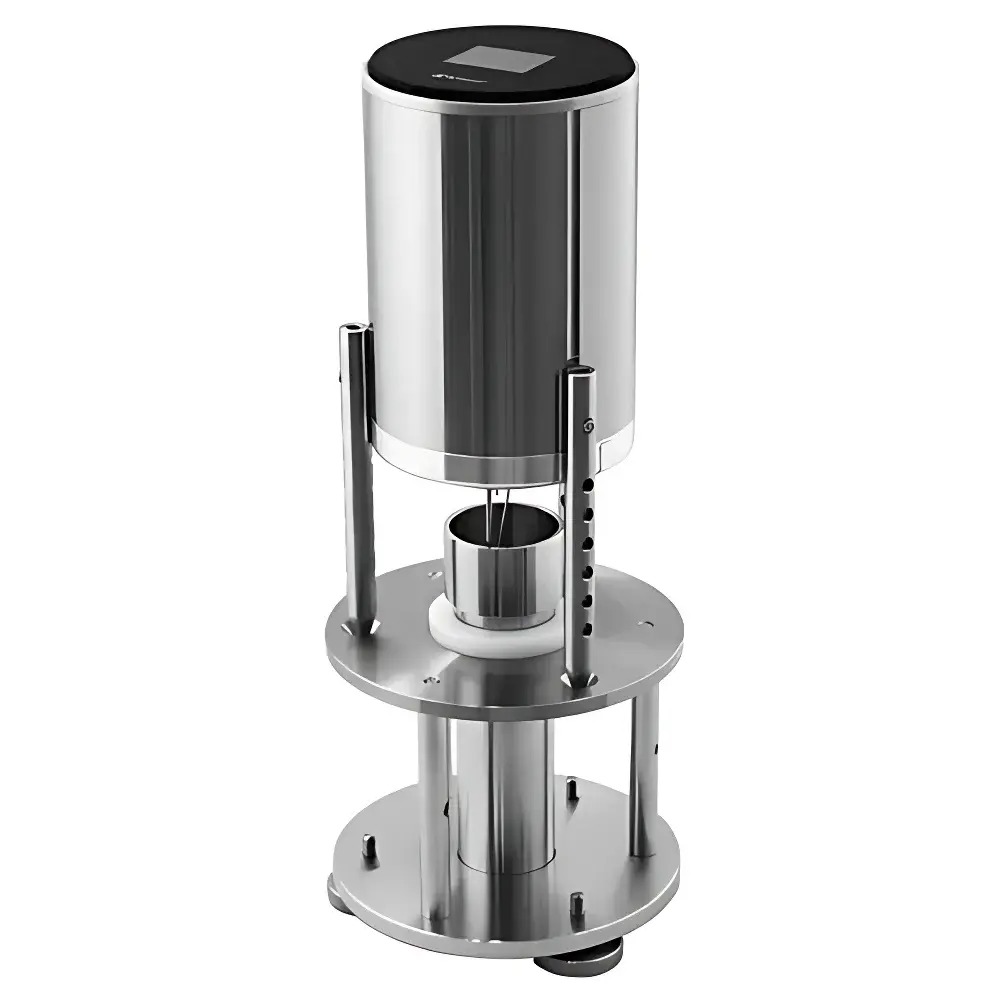
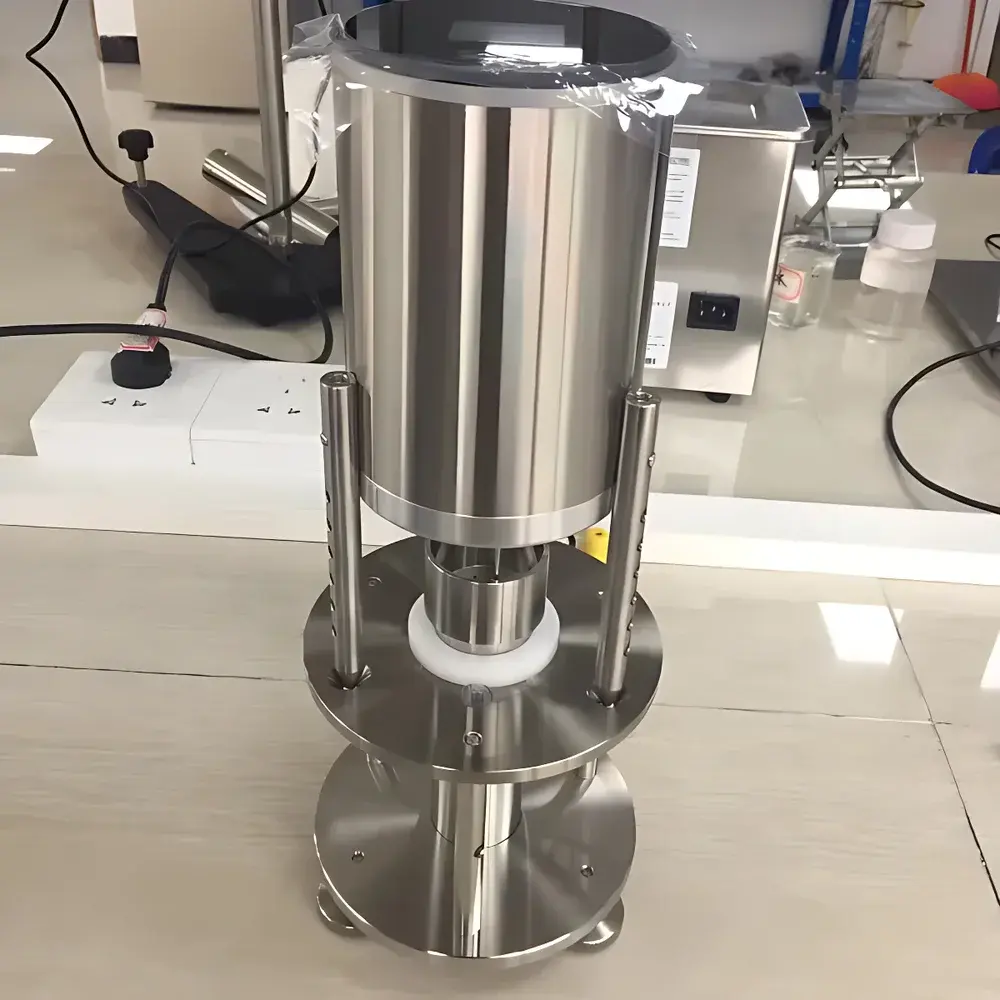
ATAGO VISCO Ultra-Low Viscosity Rotational Viscometer
| Brand | ATAGO |
|---|---|
| Origin | Japan |
| Instrument Type | Benchtop Rotational Viscometer |
| Viscosity Range | 1–2,000 mPa·s (cP) |
| Operating Temperature | 10.0–40.0 °C |
| Rotational Speed | 0.5–250 rpm (20 steps) |
| Torque Range | 0.0–100.0% (recommended: 10.0–100.0%) |
| Temperature Measurement Range | 0.0–100.0 °C / 32.0–212.0 °F |
| Resolution | Viscosity — 0.01 mPa·s (≤100), 0.1 mPa·s (100–10,000), 1 mPa·s (>10,000) |
| Accuracy | Viscosity ±1% FS |
| Power | 4×AA alkaline batteries (DC 6 V) or AC adapter (100–240 V AC) |
| Battery Life | ~7 h (60 rpm continuous) |
| Data Interface | USB to PC |
| Sample Volume | ≥15 mL |
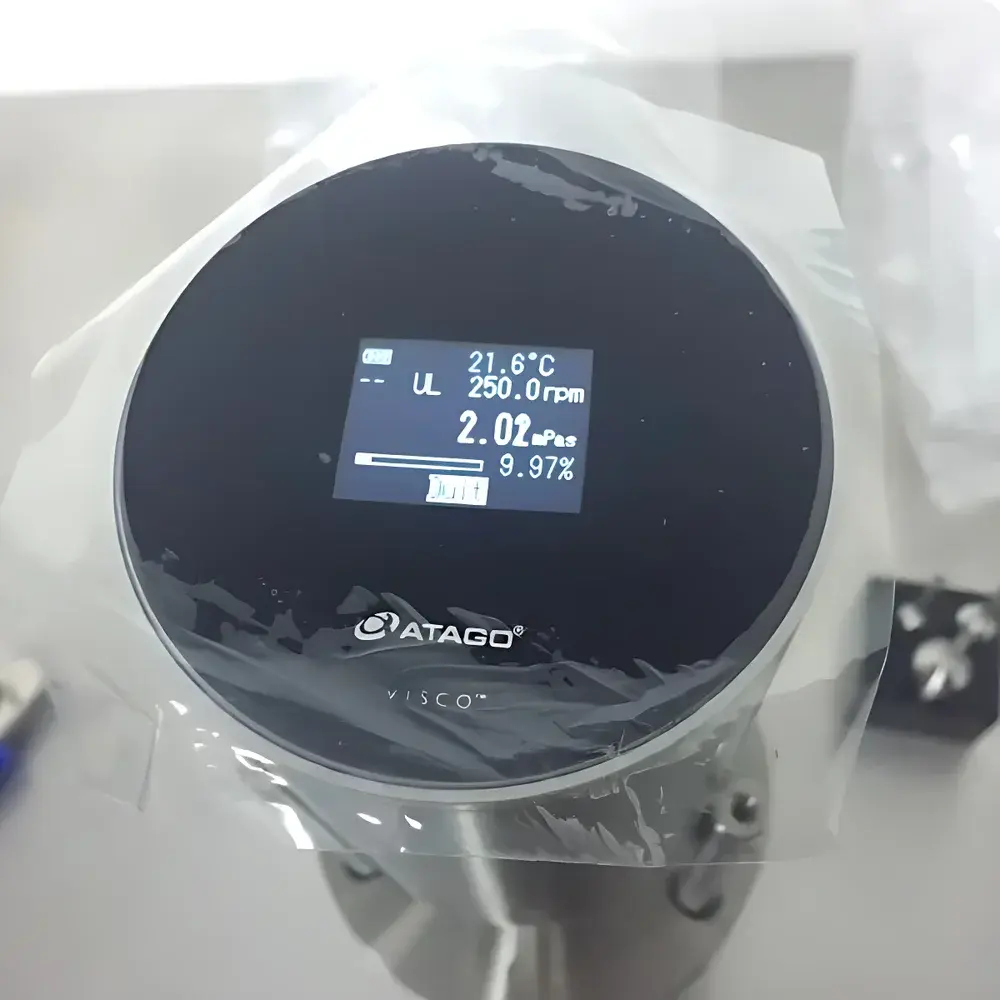
| Display | LCD with viscosity (mPa·s/cP), % torque, rotor ID, and temperature |
Overview
The ATAGO VISCO Ultra-Low Viscosity Rotational Viscometer is an engineered benchtop instrument designed for precise, repeatable measurement of low-viscosity Newtonian and near-Newtonian fluids in laboratory, quality control, and field environments. Based on the principle of rotational viscometry—specifically Couette flow between a rotating spindle and stationary sample cup—the VISCO leverages a dedicated Ultra-Low Viscosity Adapter (ULA, Cat. No. RE-77120) to extend reliable measurement down to 1 mPa·s. This configuration minimizes wall-slip and inertial effects common in low-viscosity regimes, ensuring high reproducibility across routine analyses. Unlike capillary or falling-ball methods, the VISCO delivers real-time torque-based viscosity calculation under controlled shear rates (0.5–250 rpm, 20 discrete steps), enabling direct correlation with process-relevant rheological behavior. Its compact footprint, dual power capability (AC or battery), and USB data export support GLP-compliant workflows without requiring dedicated infrastructure.
Key Features
- Ultra-low viscosity measurement range: 1–2,000 mPa·s using the ULA adapter (RE-77120), optimized for shear-thinning stability at low torque thresholds
- Benchtop design with integrated LCD display showing real-time viscosity (mPa·s or cP), % torque, rotor identification, and sample temperature (°C/°F)
- Minimal sample requirement: only 15 mL per test—compatible with disposable paper cups to eliminate cross-contamination and reduce cleaning cycles
- Dual power operation: four AA alkaline batteries (up to 7 hours at 60 rpm) or universal AC adapter (100–240 V), enabling deployment in production lines, warehouses, or remote sites
- USB interface for direct data transfer to Windows-based PCs; no proprietary software required—exports tab-delimited .csv files for integration with LIMS or statistical analysis platforms
- Calibration traceable to NIST-traceable reference oils; built-in self-diagnostic routines verify sensor linearity and thermal stability prior to measurement
Sample Compatibility & Compliance
The VISCO ULA system accommodates a broad spectrum of low-to-moderate viscosity liquids encountered across regulated and industrial sectors. Validated applications include aqueous food matrices (milk, fruit juices, syrups, soy sauce), pharmaceutical solutions (amino acid infusions, saline diluents, extraction solvents), cosmetic emulsions (shampoos, glycerin-based serums), petrochemical distillates (gasoline, diesel, light lubricants), and industrial process fluids (coolants, thin adhesives, surfactant solutions). The instrument meets mechanical and electrical safety requirements per IEC 61010-1:2010. While not intrinsically rated for hazardous locations, its non-sparking drive mechanism and low-energy operation align with general-purpose lab use under ISO/IEC 17025-accredited quality systems. Data logging via USB supports audit trails required for FDA 21 CFR Part 11 compliance when paired with validated third-party data management software.
Software & Data Management
The VISCO operates as a standalone measurement device with no embedded operating system or firmware-upgrade dependency. All data—including timestamped viscosity, torque, temperature, rotational speed, and rotor ID—is stored in volatile memory during operation and exported in plain-text CSV format upon USB connection. This architecture eliminates validation overhead associated with embedded software, facilitating straightforward IQ/OQ protocols. Exported files contain columns for Date, Time, Viscosity (mPa·s), Torque (%), Temp (°C), RPM, and Rotor Code—enabling seamless import into Excel, JMP, Minitab, or LIMS databases. For laboratories requiring electronic signature and change control, the instrument’s deterministic output allows full integration into validated document management systems without modifying native functionality.
Applications
- Food & Beverage QC: Monitoring consistency of dairy beverages, juice concentrates, vinegar, light salad dressings, and edible oils during blending and thermal processing
- Pharmaceutical Manufacturing: Verifying viscosity of parenteral diluents, ophthalmic solutions, and low-concentration polymer excipients per USP and guidelines
- Personal Care Formulation: Screening surfactant micelle formation, glycerin/water phase behavior, and preservative solubility in clear rinse-off products
- Chemical Process Control: Tracking polymerization onset in acrylic monomers, solvent recovery efficiency in distillation overheads, and additive dispersion homogeneity
- Academic Research: Teaching fundamental rheology concepts including Newtonian behavior, shear rate dependence, and temperature-viscosity relationships (Arrhenius modeling)
FAQ
What is the minimum sample volume required for accurate ULA measurements?
A minimum of 15 mL is required to fully immerse the ULA spindle and ensure laminar flow conditions within the defined gap geometry.
Can the VISCO be used with non-standard containers such as disposable cups?
Yes—its ULA adapter includes a universal cup holder compatible with standard 50–100 mL paper or plastic cups, eliminating the need for glassware cleaning between samples.
Is temperature control integrated into the instrument?
No—VISCO measures sample temperature via a built-in RTD probe but does not provide active heating or cooling; users must precondition samples to 10.0–40.0 °C prior to testing.
How is calibration verified in daily operation?
Users perform two-point verification using certified viscosity standards (e.g., 5 mPa·s and 500 mPa·s silicone oils) at fixed rpm; deviation beyond ±1% FS triggers recalibration per ATAGO Technical Bulletin TB-VISCO-03.
Does the USB interface support real-time data streaming?
No—data export occurs post-measurement as a static CSV file; continuous streaming requires external hardware interfacing via analog voltage output (available on optional analog module, not included in base ULA kit).



