
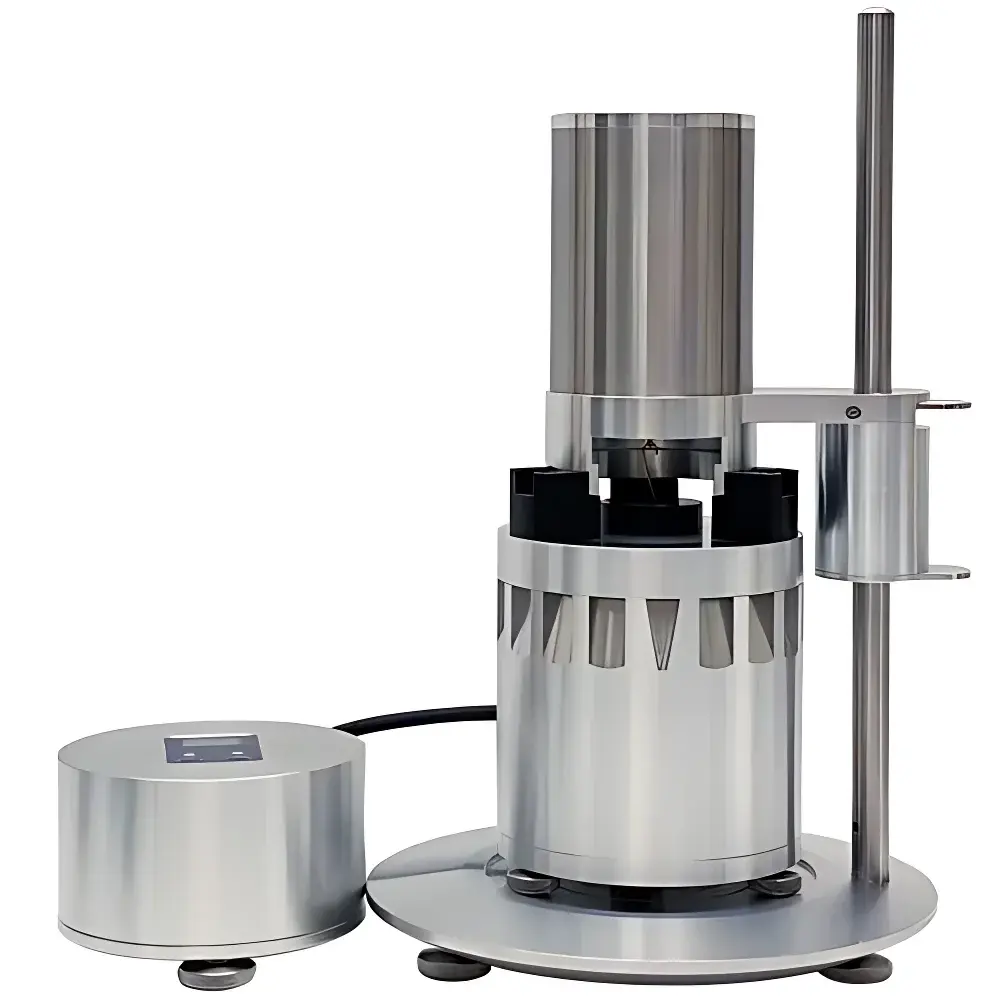
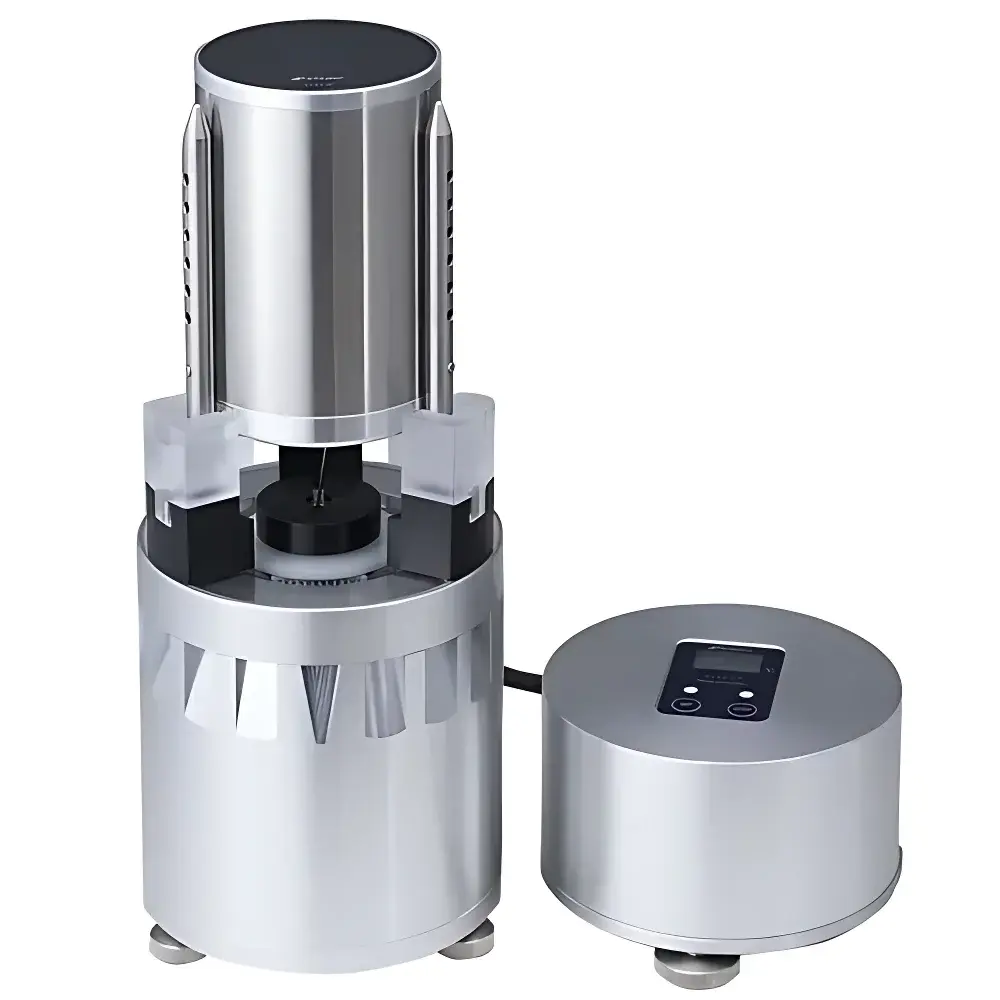
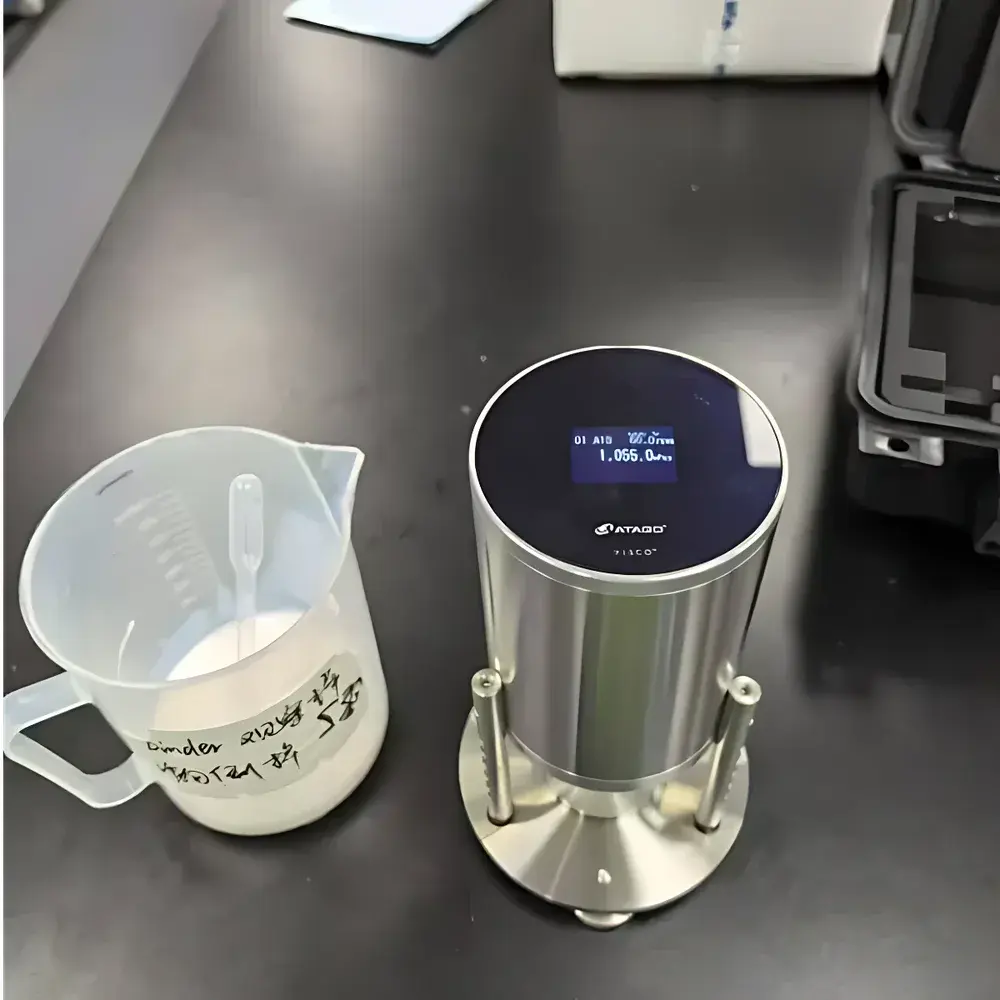
ATAGO VISCO Series Temperature-Controlled Rotational Viscometer
| Brand | ATAGO |
|---|---|
| Origin | Japan |
| Manufacturer Type | Authorized Distributor |
| Origin Category | Imported |
| Model | VISCO (Temperature-Controlled) |
| Instrument Type | Benchtop Rotational Viscometer |
| Installation Type | Fixed-Position |
| Operating Environment | Ambient Temperature |
| Viscosity Range | 12 – 60,000,000 mPa·s |
| Temperature Control Range | 5.0 – 90.0 °C |
| Temperature Resolution | 0.1 °C |
| Temperature Accuracy | ±0.2 °C |
Overview
The ATAGO VISCO Series Temperature-Controlled Rotational Viscometer is an engineered solution for precise, reproducible viscosity measurement across diverse liquid and semi-liquid samples. Based on the Couette principle of rotational rheometry, the instrument determines dynamic viscosity by quantifying the torque required to rotate a spindle (rotor) at a defined angular velocity within the sample. This shear-controlled method enables both absolute viscosity determination for Newtonian fluids and apparent viscosity characterization for non-Newtonian systems—including pseudoplastic, dilatant, and thixotropic materials—under controlled thermal conditions. Integrated Peltier-based temperature regulation ensures stable, programmable thermal environments from 5.0 °C to 90.0 °C, eliminating reliance on external water baths and supporting standardized test protocols requiring thermal consistency.
Key Features
- Integrated Peltier temperature control system with ±0.2 °C accuracy and 0.1 °C resolution, enabling ISO/ASTM-compliant thermal conditioning without auxiliary equipment
- Benchtop fixed-position architecture optimized for laboratory stability and long-term calibration integrity
- Wide dynamic viscosity range spanning six orders of magnitude (12–60,000,000 mPa·s), accommodating low-viscosity solvents and highly structured gels or polymer melts
- Minimal sample volume requirement of only 15 mL, compatible with disposable paper cups—reducing cross-contamination risk and eliminating cleaning downtime
- Dual power operation: AC adapter for continuous lab use and standard AA batteries for field deployment or mobile QC stations
- High-contrast LCD display showing real-time viscosity (mPa·s or cP), % torque, spindle identifier, and current temperature
- USB 2.0 interface compliant with USB CDC class standards for direct data streaming to Windows-based acquisition software with timestamped logging
Sample Compatibility & Compliance
The VISCO Series accommodates heterogeneous and temperature-sensitive matrices common in regulated industries. Its spindle geometry and low-shear design support accurate characterization of shear-thinning food emulsions (e.g., yogurt, mayonnaise), pharmaceutical suspensions (e.g., oral suspensions, ointment bases), and industrial polymer solutions (e.g., acrylic resins, cellulose derivatives). The instrument supports method validation under GLP and GMP frameworks; its temperature control module meets requirements for ASTM D2196 (viscosity of paints), ISO 2555 (resin solutions), and USP (rheological properties of semisolid dosage forms). Audit-trail-capable data export facilitates compliance with FDA 21 CFR Part 11 when paired with validated third-party software.
Software & Data Management
Data acquisition is performed via ATAGO’s proprietary PC application (Windows 10/11 compatible), which records viscosity, temperature, spindle ID, rotational speed (rpm), and torque percentage at user-defined intervals. Export formats include CSV and XLSX, preserving metadata for traceability. The software allows creation of multi-point temperature ramps (e.g., 25→40→25 °C) with automatic viscosity capture at each plateau—essential for assessing thermal hysteresis in thermoresponsive hydrogels or edible fats. All datasets are time-stamped and include instrument serial number and calibration certificate reference, satisfying documentation requirements for internal QA audits and regulatory submissions.
Applications
- Food & Beverage: Quality control of ketchup, honey, chocolate mass, dairy concentrates, and plant-based creams—monitoring structural breakdown during processing or shelf-life studies
- Pharmaceuticals: Viscosity profiling of topical gels, injectable suspensions, and mucosal delivery systems to ensure dose uniformity and syringeability
- Personal Care: Formulation development of shampoos, conditioners, and toothpastes where yield stress and flow onset impact consumer perception
- Chemicals & Polymers: Batch release testing of adhesives, latex dispersions, and thickener solutions under process-relevant temperatures
- Energy & Lubricants: Cold-flow behavior assessment of biofuels and hydraulic fluids per ASTM D7483
- Academic Research: Teaching rheological fundamentals in undergraduate physical chemistry labs and supporting graduate-level material science investigations
FAQ
What spindle geometries are supported by the VISCO Series?
Standard configurations include cylindrical spindles (LV, RV, HA types) and optional cone-plate adapters for high-shear applications. Spindle interchange is tool-free and mechanically indexed for repeatable immersion depth.
Is calibration traceable to national standards?
Yes—each unit ships with a NIST-traceable calibration certificate covering viscosity (using certified silicone oil standards) and temperature (via calibrated Pt100 sensor), valid for 12 months under normal operating conditions.
Can the instrument perform timed shear tests (e.g., thixotropy recovery)?
Yes—programmable shear history protocols allow sequential speed changes with dwell times, enabling structural recovery analysis using the built-in timer and data logging.
Does the system meet IP rating requirements for humid environments?
The enclosure conforms to IP20 (IEC 60529), suitable for indoor laboratory use; it is not rated for washdown or outdoor exposure.
How often is recalibration recommended?
Annual recalibration is advised; however, users performing critical GMP testing should follow internal SOPs aligned with ISO/IEC 17025 or ASTM E2911 guidelines.



