
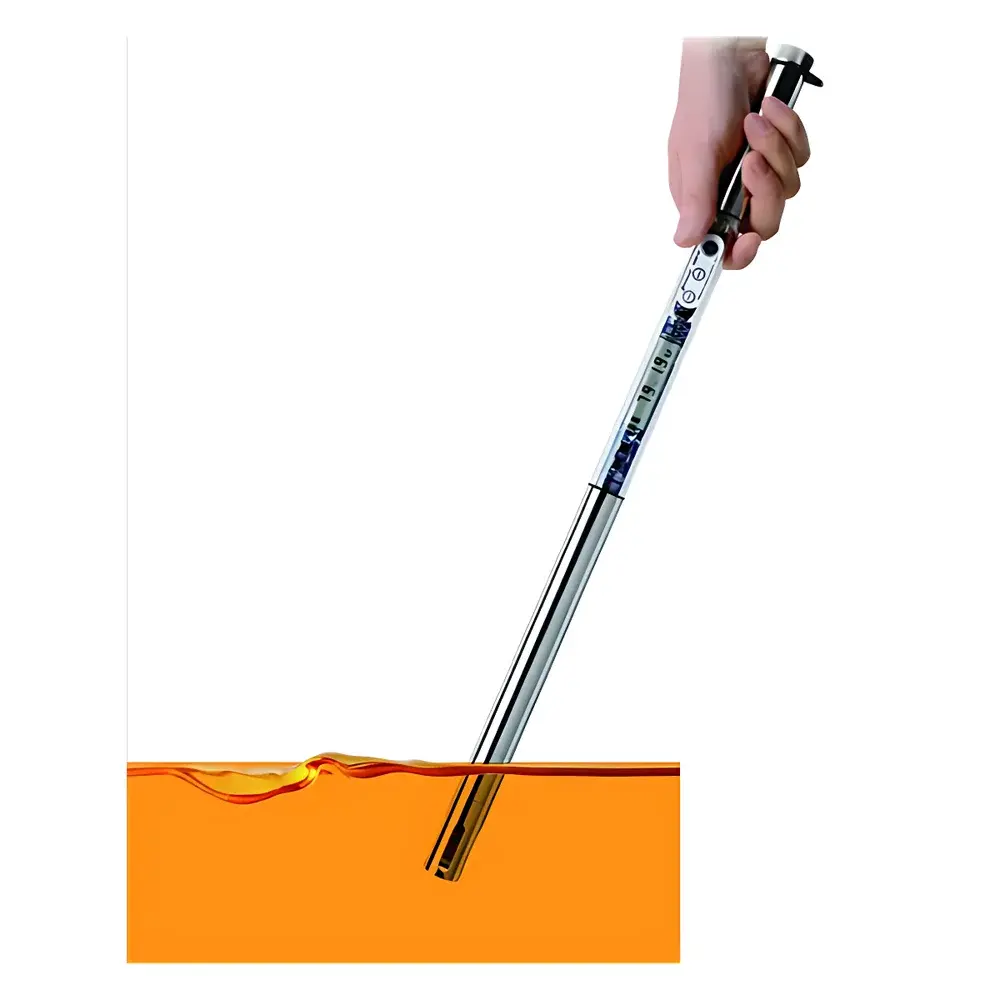
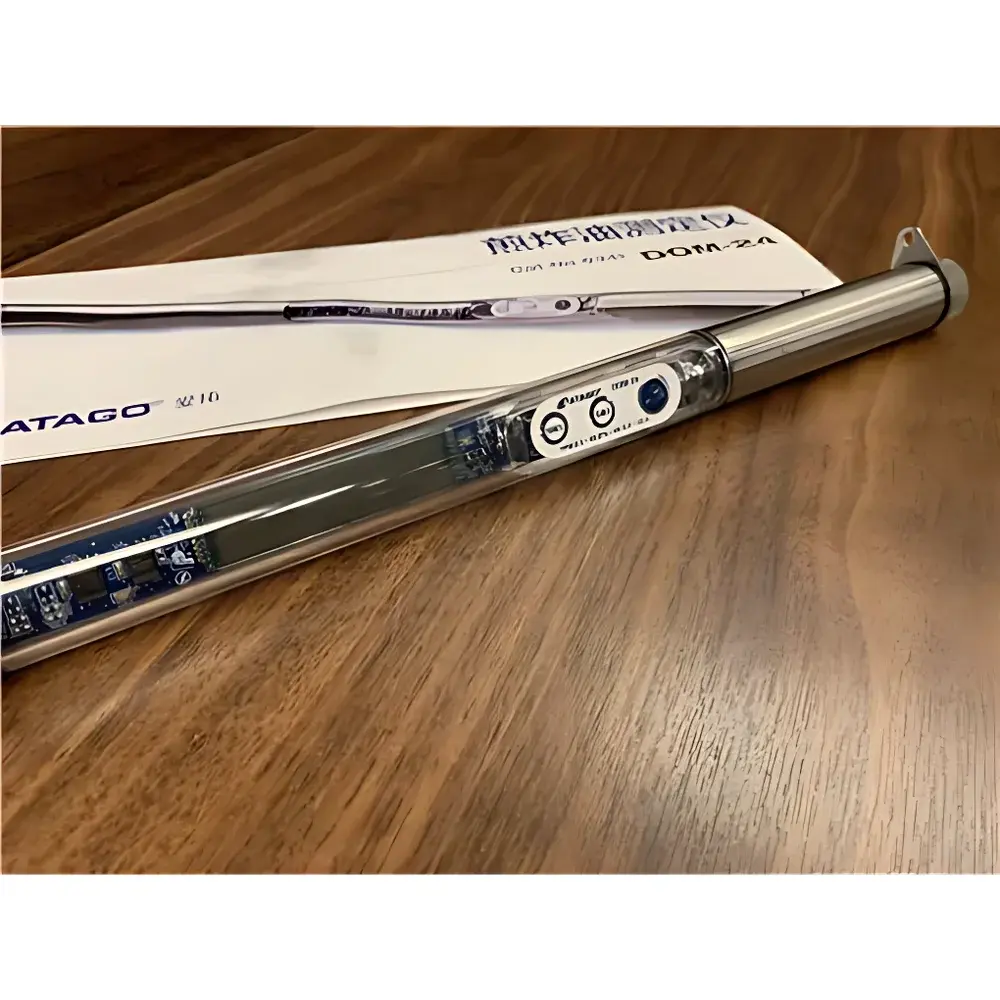
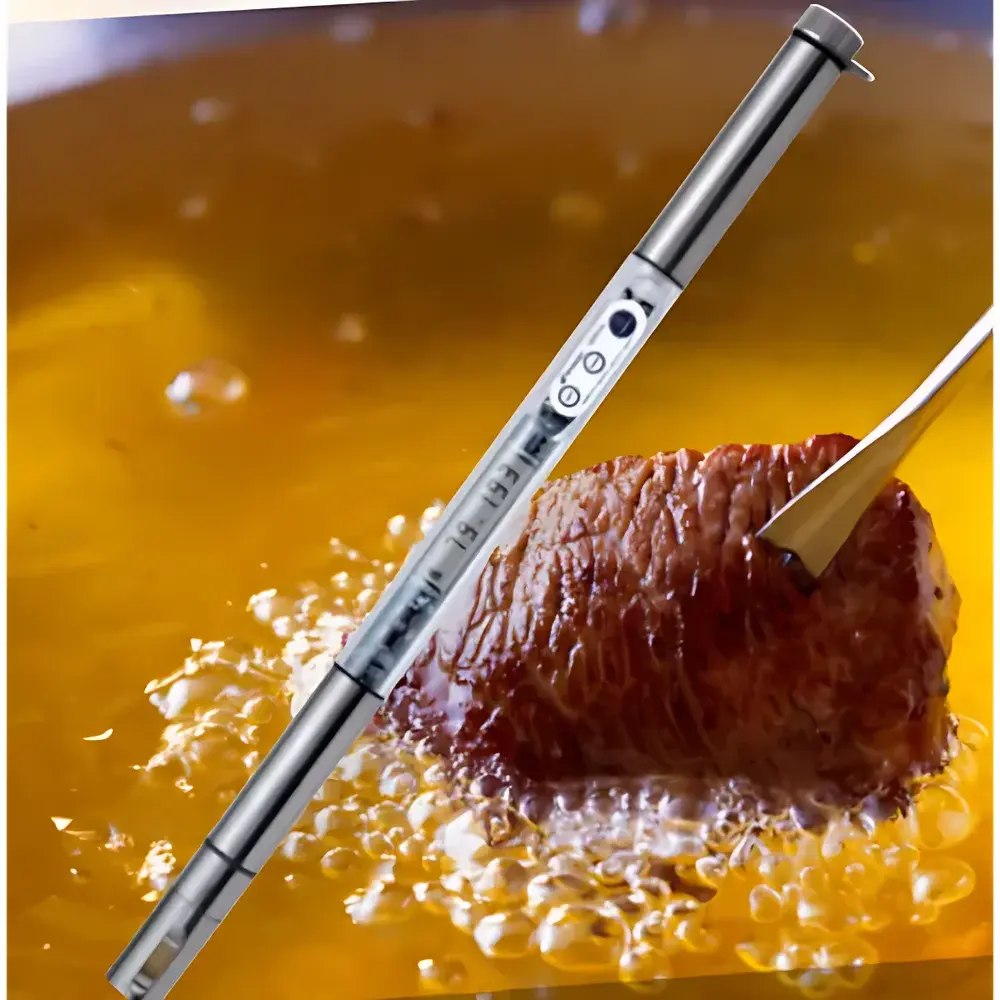
ATAGO DOM-24 Edible Oil Quality Analyzer for Total Polar Materials (TPM) and Acid Value (AV) Measurement
| Brand | ATAGO |
|---|---|
| Origin | Japan |
| Model | DOM-24 |
| TPM Range | 0.5–40.0% |
| AV Range | 0.00–9.99 |
| Temperature Range | 0–225°C |
| TPM Accuracy | ±2.0% (20–200°C) |
| AV Accuracy | ±0.2 |
| Temperature Accuracy | ±1°C |
| TPM Resolution | 0.5% |
| AV Resolution | 0.01 |
| Temp. Resolution | 1°C |
| IP Rating | IP67 |
| Power | 2×AAA alkaline batteries |
| Dimensions | Ø22×490 mm |
| Weight | 400 g (host only) |
Overview
The ATAGO DOM-24 Edible Oil Quality Analyzer is a handheld, field-deployable instrument engineered for rapid, on-site quantification of two critical degradation indicators in frying oils: Total Polar Materials (TPM%) and Acid Value (AV). Based on proprietary dielectric property measurement principles—calibrated against reference methods such as ISO 8534 (for TPM) and AOAC 940.28 (for AV)—the DOM-24 provides non-destructive, solvent-free analysis without sample preparation. It operates under the physical principle that oxidation and hydrolysis of triglycerides generate polar compounds (e.g., free fatty acids, mono/diglycerides, polymers), which significantly alter the oil’s dielectric constant and conductivity. These changes are measured via high-frequency impedance sensing across a calibrated electrode array, enabling real-time correlation to TPM% and AV. Designed specifically for compliance with food safety regulations—including China’s GB 7102-2003 (which mandates oil replacement at ≥27% TPM or ≥5 mg KOH/g AV), EU Regulation (EC) No 258/97, and FDA Food Code 2022—the DOM-24 supports objective, auditable decision-making during routine fryer monitoring.
Key Features
- Simultaneous dual-parameter measurement: TPM% and AV in a single 3-second test cycle
- Automatic Temperature Compensation (ATC) algorithm validated across 20–200°C, eliminating manual correction and ensuring metrological consistency regardless of frying vessel thermal state
- IP67-rated enclosure for resistance to oil splatter, steam, dust, and incidental submersion—suitable for kitchen, canteen, food truck, and inspection vehicle environments
- No consumables, reagents, or calibration fluids required; factory-calibrated traceable to NIST-traceable reference oils
- Integrated temperature sensor with ±1°C accuracy ensures concurrent thermal profiling alongside chemical assessment
- Ergonomic, pen-style form factor (Ø22 × 490 mm, 400 g) enables one-handed operation and extended field use
Sample Compatibility & Compliance
The DOM-24 is validated for use with all common edible frying media, including soybean, palm, sunflower, canola, peanut, and blended oils—regardless of initial iodine value or saturation profile. It does not require homogenization or cooling prior to measurement, accommodating viscous, hot (up to 225°C), or particulate-laden samples directly from fryers. Regulatory alignment includes full support for GB 7102-2003 (China), DIN 10351 (Germany), and Codex Alimentarius Stan 210-1999. Data outputs satisfy GLP/GMP documentation requirements when paired with ATAGO’s optional USB data logger (model DL-24), enabling time-stamped, operator-ID-tagged records compliant with FDA 21 CFR Part 11 audit trails.
Software & Data Management
While the DOM-24 operates as a standalone device with LCD readout, its digital interface supports optional connectivity via ATAGO’s DL-24 Data Logger (sold separately). This accessory captures TPM%, AV, temperature, timestamp, and user ID into CSV files for import into LIMS or Excel-based quality dashboards. Firmware updates are delivered via ATAGO’s official web portal (atago.com/support), ensuring ongoing alignment with evolving international standard revisions. All internal calibration coefficients are stored in tamper-evident memory, and device-level calibration verification is performed using certified reference standards (ATAGO CRM-TPM-01 and CRM-AV-02), documented per ISO/IEC 17025 clause 6.6.
Applications
- Routine in-line monitoring of commercial deep-fryers in restaurants, fast-food chains, and institutional kitchens
- Regulatory inspections by municipal food safety authorities, health supervision institutes, and market regulation bureaus
- Preventive maintenance scheduling for industrial food processing lines using continuous frying systems
- Research and development of antioxidant-stabilized frying oils and alternative lipid formulations
- Training and certification programs for food safety officers and HACCP coordinators
- Third-party laboratory verification of vendor-supplied frying oil shelf-life claims
FAQ
How does the DOM-24 differentiate between TPM and AV mathematically?
It applies multivariate regression models trained on >12,000 reference measurements across 17 oil types and degradation stages, isolating frequency-dependent dielectric responses specific to polar compound classes versus proton-donating species.
Is cleaning required between measurements?
Yes—a lint-free cloth dampened with isopropyl alcohol is recommended after each test to prevent cross-contamination and electrode fouling; no disassembly is needed.
Can the DOM-24 be used for cold-pressed or unheated oils?
No—it is optimized for thermally stressed oils; baseline readings below 100°C lack sufficient signal-to-noise ratio for reliable AV quantification per AOAC guidelines.
Does battery life affect measurement stability?
No—low-battery detection triggers before voltage drops below operational threshold; measurements remain within ±0.1% TPM accuracy until shutdown.
Is third-party validation data available?
Yes—ATAGO publishes interlaboratory study reports (ILS) conducted per ISO 5725-2, demonstrating repeatability (RSD ≤1.8%) and reproducibility (RSD ≤3.2%) across 14 independent testing sites.





