
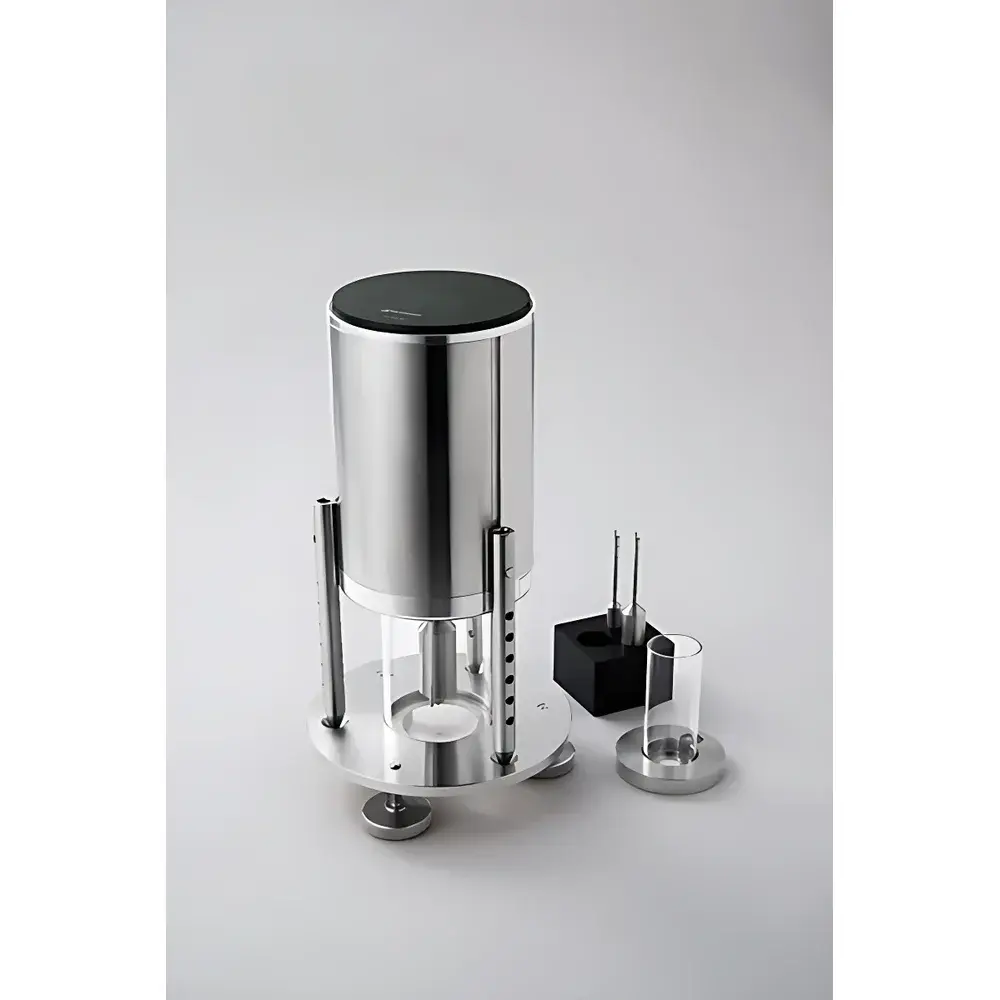
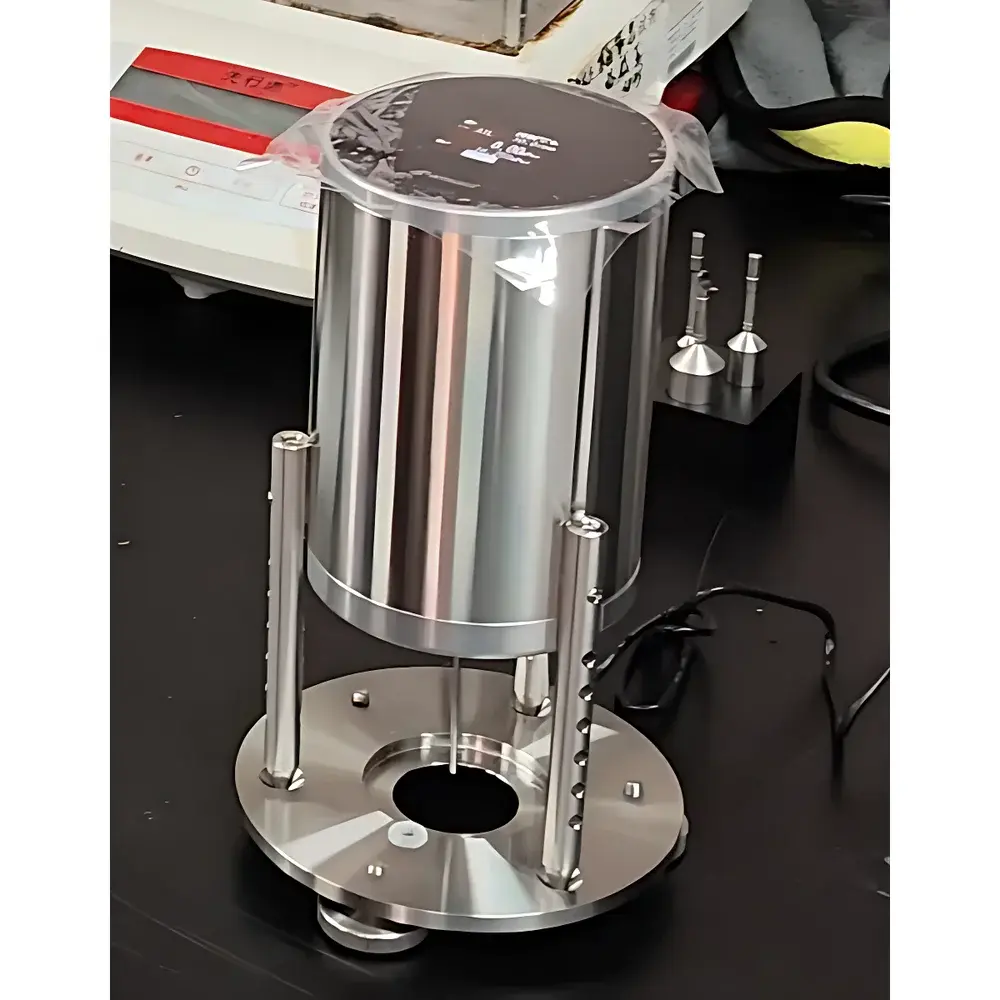
ATAGO VISCO Portable Rotational Viscometer for Fruit Puree
| Brand | ATAGO |
|---|---|
| Origin | Japan |
| Instrument Type | Portable Rotational Viscometer |
| Viscosity Range | 50–99,999,999 mPa·s (model-dependent) |
| Temperature Range | 0.0–100.0 °C |
| Temperature Resolution | 0.1 °C |
| Temperature Accuracy | ±0.2 °C |
| Speed Range | 0.01–250 rpm (28 speed steps) |
| Torque Measurement | 0.0–100.0% (recommended 10.0–100.0%) |
| Power Supply | 4×AA alkaline batteries (DC 6 V) or AC adapter (100–240 V, 50/60 Hz) |
| Dimensions & Weight | 12×12×20 cm, 1.2 kg (main unit) |
| stand + mounting hardware | 0.5 kg |
| Compliance | Designed for GLP-compliant routine QC in food processing environments |
Overview
The ATAGO VISCO is a handheld rotational viscometer engineered specifically for rapid, on-site viscosity assessment of high-solids fruit purees—including aronia, sea buckthorn (Hippophae rhamnoides), blackcurrant, and other pulpy, non-Newtonian fruit matrices. It operates on the principle of Couette flow: a precisely calibrated spindle rotates at a user-defined shear rate within the sample, and the resulting viscous drag torque is measured via a high-resolution torsion sensor. The instrument calculates dynamic viscosity (mPa·s) in real time, compensating for temperature variations using an integrated Pt100-class thermal probe. Unlike capillary or falling-ball viscometers, the VISCO delivers reproducible readings across wide shear-rate ranges—critical for characterizing shear-thinning behavior typical of pectin-rich, particulate-laden fruit purees. Its design prioritizes operational robustness in ambient production environments (10–40 °C operating range), with no requirement for thermostatic baths or external rheology software during routine use.
Key Features
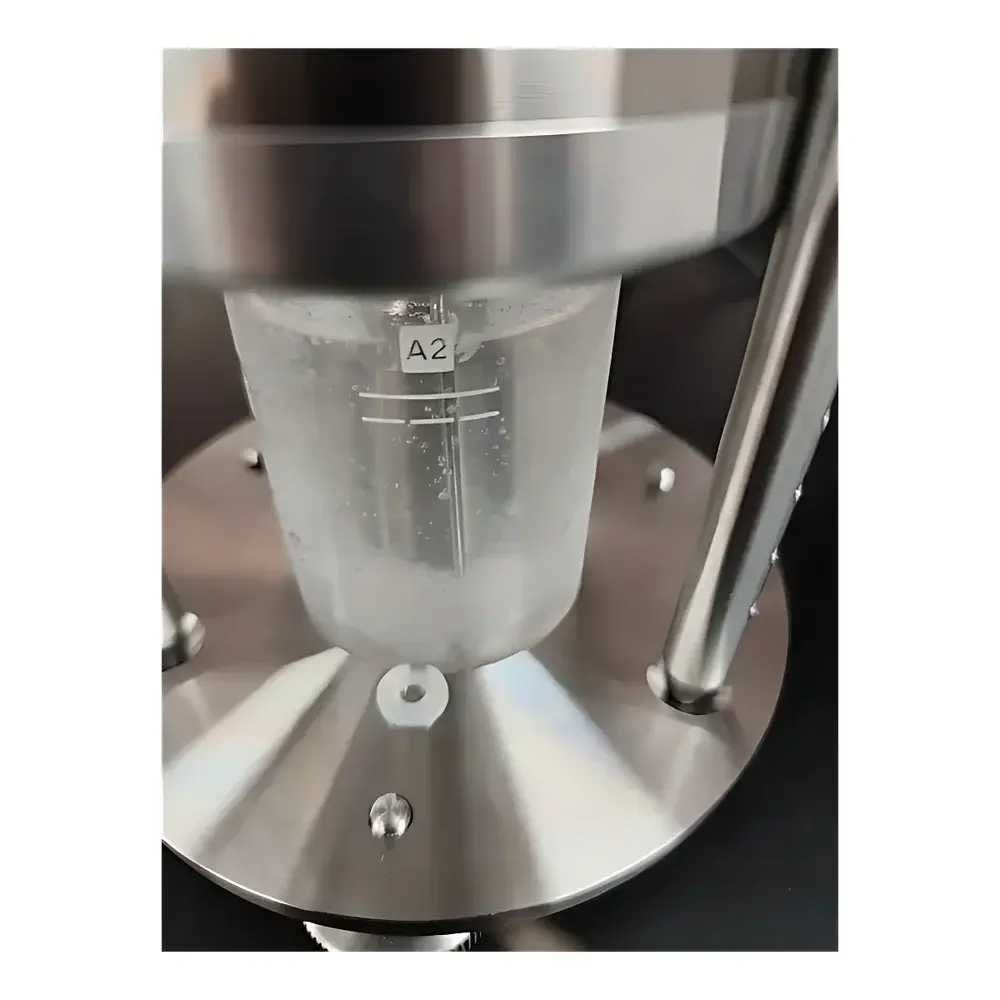
- Three interchangeable spindles (A1, A2, A3) enabling measurement across an extended dynamic range—from low-viscosity clarified juices (50 mPa·s) to ultra-high-viscosity pastes and gels (up to 99,999,999 mPa·s)
- Quick-lock spindle coupling mechanism reduces setup time and eliminates alignment errors during field deployment
- Integrated digital level indicator ensures consistent instrument orientation—essential for minimizing gravitational bias in torque measurement
- High-resolution temperature monitoring (0.1 °C resolution, ±0.2 °C accuracy) with automatic viscosity-temperature compensation per ASTM D2196 and ISO 2555
- 28 discrete rotational speeds (0.01–250 rpm) allow controlled shear-rate profiling for preliminary flow curve estimation
- Battery-powered portability (1.2 kg main unit) supports measurements directly at receiving docks, homogenization lines, or cold storage zones without AC infrastructure
- USB interface enables raw data export (torque %, viscosity, temperature, timestamp) to CSV-compatible spreadsheets for traceable QC documentation
Sample Compatibility & Compliance
The VISCO is validated for direct immersion into undiluted, unfiltered fruit purees containing suspended pulp particles ≤500 µm in diameter. Its spindle geometry minimizes particle trapping while maintaining laminar flow conditions under typical operating shear rates (1–100 s⁻¹). The instrument meets mechanical and electrical safety requirements per IEC 61010-1 for laboratory and light industrial use. While not certified for GMP-regulated final release testing, its ±1% full-scale viscosity accuracy and audit-ready USB data logging support GLP-aligned process monitoring per FDA 21 CFR Part 11 when paired with controlled electronic records management. It complies with ISO 17025 clause 6.4.10 for equipment suitability verification in accredited food testing laboratories performing in-process checks.
Software & Data Management
No proprietary software installation is required. All measurement data—including viscosity (mPa·s), torque (%), sample temperature (°C), rotational speed (rpm), and timestamp—are streamed in real time via USB to standard spreadsheet applications. Each record includes instrument serial number and spindle ID, enabling full traceability. Users may configure automated pass/fail thresholds (e.g., “12,500 ± 800 mPa·s at 25 °C”) for immediate visual feedback during line checks. Exported logs are compatible with LIMS integration and satisfy internal QA requirements for batch record linkage. Firmware updates are delivered via ATAGO’s secure customer portal; version history and calibration certificates are stored locally on-device memory.
Applications
- Real-time consistency control of sea buckthorn puree during cold-pressing and enzymatic maceration
- Verification of homogenization endpoint in mixed-berry formulations prior to aseptic filling
- Monitoring viscosity drift during vacuum concentration to prevent over-processing and Maillard degradation
- Batch-to-batch comparison of pectin content via viscosity response to controlled Ca²⁺ addition
- Validation of pumpability specifications for transport pipelines carrying high-Brix fruit suspensions
- Correlation studies between viscosity, Brix, and titratable acidity in R&D formulation optimization
- Supporting shelf-life studies by tracking structural breakdown (viscosity decay) under accelerated storage conditions
FAQ
Is the VISCO suitable for measuring highly aerated or foaming purees?
No. Air entrapment introduces significant measurement artifacts. Samples must be degassed or allowed to settle for ≥30 seconds prior to immersion.
Can I use the same spindle for both apple puree and sea buckthorn paste?
Yes—but spindle selection must match expected viscosity: A1 for ≤16,000 mPa·s (e.g., strained apple), A3 for ≥500 mPa·s (e.g., whole-fruit sea buckthorn). Always verify torque reading falls between 10–100% for valid results.
Does the instrument require annual recalibration?
ATAGO recommends annual verification against NIST-traceable silicone oil standards (e.g., Cannon N47, N100) per ISO 17025 Section 6.5. Internal zero-point and span checks can be performed daily using the included calibration check fluid.
How does temperature control affect measurement validity?
Viscosity of fruit purees exhibits strong thermal dependence (~2–3% per °C near 20 °C). The built-in Pt100 sensor corrects readings in real time; however, sample equilibration to target temperature (±0.5 °C) prior to measurement remains essential for inter-laboratory reproducibility.
Is the device compliant with food-contact material regulations?
All wetted parts (spindle shaft, guard leg, temperature probe sheath) are constructed from 316 stainless steel and PTFE—materials compliant with FDA 21 CFR §177.1550 and EU Regulation (EC) No. 1935/2004 for repeated-use food contact surfaces.



