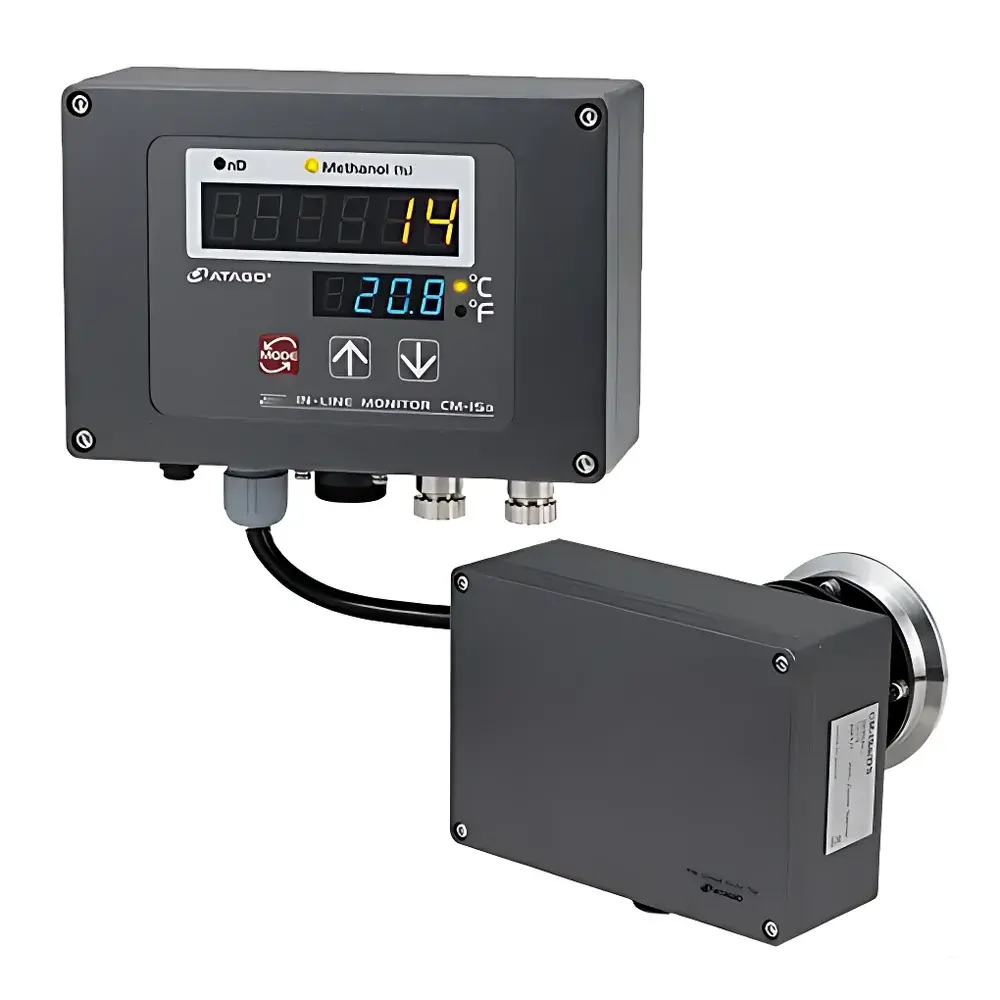
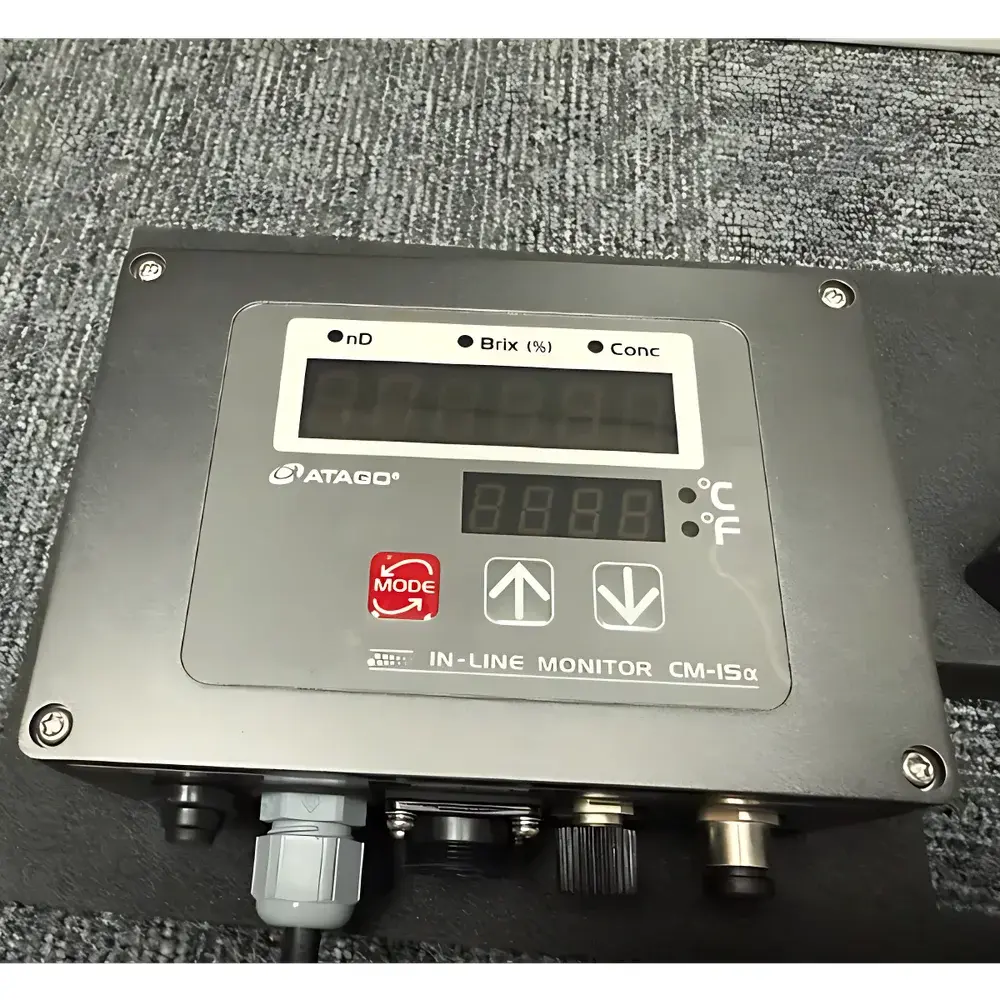
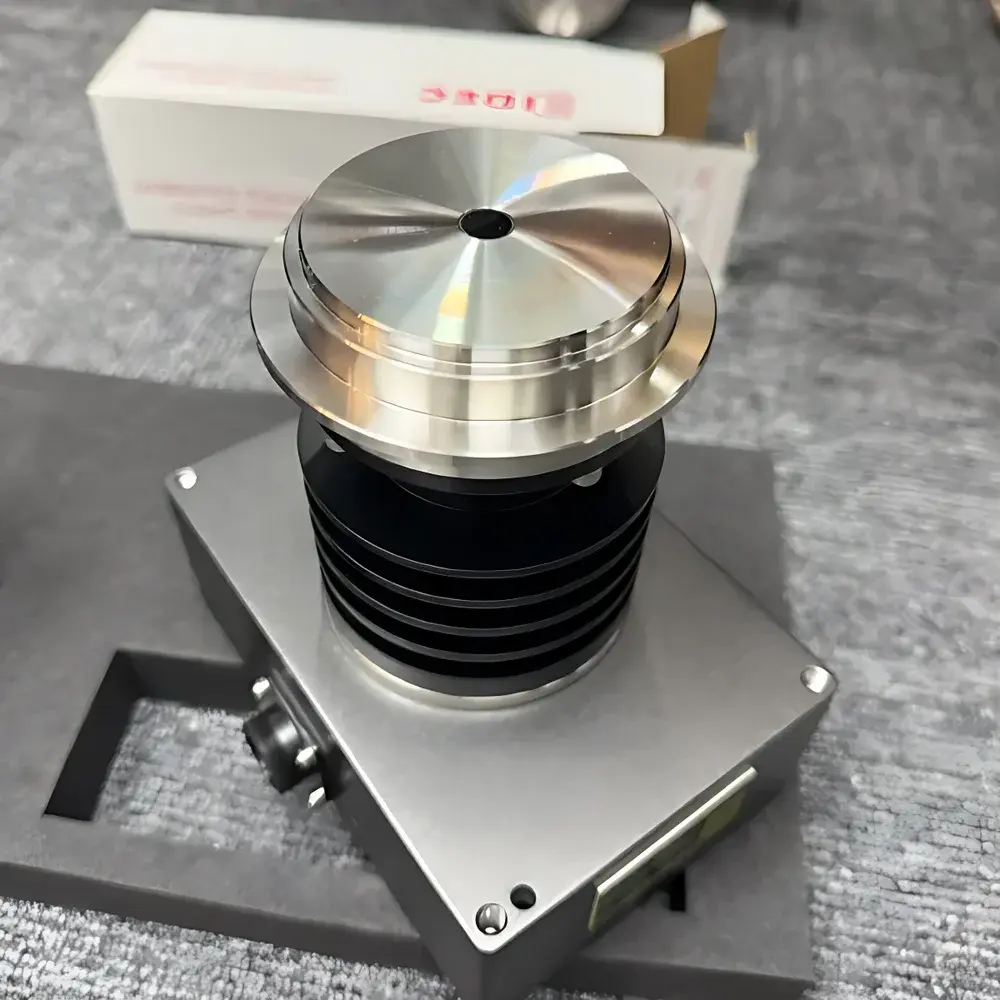
ATAGO CM-ISα-Methanol Intrinsically Safe Online Refractometer
| Brand | ATAGO |
|---|---|
| Origin | Japan |
| Model | CM-ISα-Methanol |
| Explosion Protection Rating | Ex ia IIB T3 Ga TA |
| Measurement Principle | Critical Angle Refractometry |
| Temperature Compensation | Automatic (PT1000 sensor integrated) |
| Output Signals | 4–20 mA (HART optional), RS-232C |
| Process Connection | DN25/DN40 flange or tri-clamp (SUS316L wetted parts) |
| Operating Temperature | –10 to +60 °C (process fluid) |
| IP Rating | IP67 (sensor head), IP65 (transmitter) |
| Compliance | ATEX Directive 2014/34/EU, IEC 60079-0, IEC 60079-11, ISO 21873-1 (for hazardous area instrumentation) |
Overview
The ATAGO CM-ISα-Methanol is an intrinsically safe online refractometer engineered for continuous, real-time concentration monitoring of methanol aqueous solutions in industrial process streams. It operates on the principle of critical-angle refractometry: a collimated LED light beam passes through the process fluid at the prism–liquid interface; the resulting refraction angle is precisely measured by a high-resolution linear CCD array. This optical measurement is directly correlated to the solution’s refractive index (nD), which—under controlled temperature conditions—exhibits a monotonic, repeatable relationship with methanol mass fraction (wt%). The instrument integrates a PT1000 platinum resistance thermometer directly adjacent to the sensing prism, enabling dynamic temperature compensation per ISO 21873-1 Annex B and ASTM D1218 guidelines. Designed for permanent installation in pressurized piping systems, it delivers stable, drift-free measurements without sampling, dilution, or reagent consumption—making it suitable for unattended operation over extended maintenance intervals.
Key Features
- Intrinsically safe design certified to Ex ia IIB T3 Ga TA per IEC 60079-11, permitting direct installation in Zone 0/1 hazardous areas handling methanol vapor-air mixtures
- SUS316L wetted materials compliant with NACE MR0175/ISO 15156 for corrosion resistance in aggressive chemical environments
- Real-time output via isolated 4–20 mA analog signal (HART 7 protocol optional) and bidirectional RS-232C serial interface for integration with DCS, PLC, or SCADA systems
- Factory-calibrated for methanol–water binary systems across 0–100 wt% range; calibration traceable to NIST-traceable reference standards
- Self-diagnostic firmware with continuous health monitoring of optical path integrity, temperature sensor stability, and signal-to-noise ratio
- Zero-drift optical architecture with thermally stabilized prism housing and anti-fouling surface treatment for long-term measurement consistency
Sample Compatibility & Compliance
The CM-ISα-Methanol is validated for homogeneous, non-particulate methanol–water solutions under laminar or turbulent flow conditions (Re > 2,300). It is not intended for slurries, emulsions, or highly viscous (> 500 mPa·s) or optically opaque media. Compliance includes full adherence to ATEX 2014/34/EU essential health and safety requirements, IECEx certification documentation, and conformity with ISO 21873-1 for optical process analyzers in explosive atmospheres. For regulated industries, the device supports audit-ready data logging (with optional SD card module) and meets foundational requirements for FDA 21 CFR Part 11 compliance when deployed with validated software platforms that enforce electronic signature, audit trail, and role-based access control.
Software & Data Management
The embedded firmware enables local configuration via IR remote or RS-232C terminal. Optional PC-based ATAGO Process Manager software provides graphical trend visualization, alarm threshold setup (high/low deviation, rate-of-change), batch export of time-stamped concentration and temperature logs (CSV format), and calibration history tracking. All measurement records include embedded metadata: timestamp (RTC-synced), sensor ID, firmware version, and ambient/process temperature. When integrated into GMP-compliant facilities, the system can be configured to generate electronic signatures and immutable audit trails meeting ALCOA+ principles (Attributable, Legible, Contemporaneous, Original, Accurate, Complete, Consistent, Enduring, Available).
Applications
- Chemical manufacturing: Real-time monitoring of methanol concentration in synthesis reactors (e.g., low-pressure methanol synthesis loops), distillation overheads, and absorption towers—enabling feed-forward control of catalyst hydration and product purity
- Pharmaceutical production: In-line verification of methanol content during active pharmaceutical ingredient (API) crystallization, solvent exchange, and extractive purification steps—supporting ICH Q5, Q7, and USP analytical instrument qualification protocols
- Food & beverage processing: Residual solvent monitoring in natural flavor extraction and food additive synthesis, ensuring compliance with EU Regulation (EC) No 1333/2008 and FDA 21 CFR §173.1
- Wastewater treatment: Continuous tracking of methanol concentration in denitrification basins and bioreactor influents, facilitating adaptive carbon dosing per EPA Method 415.3
- Research & development: Kinetic profiling of methanol-involved transesterification, esterification, or hydrogenation reactions in pilot-scale continuous flow reactors
FAQ
What is the maximum allowable process pressure for the CM-ISα-Methanol sensor head?
The standard flanged sensor head is rated for continuous operation up to 1.6 MPa (232 psi) at 20 °C, with derating per ASME B16.5 pressure–temperature ratings.
Can the instrument measure methanol concentration in mixed-solvent systems (e.g., methanol–ethanol–water)?
No. The factory calibration is strictly validated for binary methanol–water solutions. Multi-component systems require application-specific recalibration and are outside the scope of standard certification.
Is third-party validation support available for GMP or GLP audits?
Yes. ATAGO provides IQ/OQ documentation templates, calibration certificates traceable to JCSS (Japan), and technical support for protocol development aligned with ASTM E2500 and Annex 15 of the EU GMP Guide.
How often does the optical prism require cleaning or maintenance?
Under typical clean-process conditions, no routine cleaning is required. Fouling detection is enabled via optical signal attenuation diagnostics; cleaning frequency depends on particulate load and should be determined empirically during commissioning.
Does the transmitter support Modbus RTU or Profibus DP communication?
Not natively. Only 4–20 mA (HART 7) and RS-232C are built-in. Protocol conversion requires external gateways compliant with IEC 61784-1 CP 3/1 (Modbus) or CP 3/2 (Profibus).