
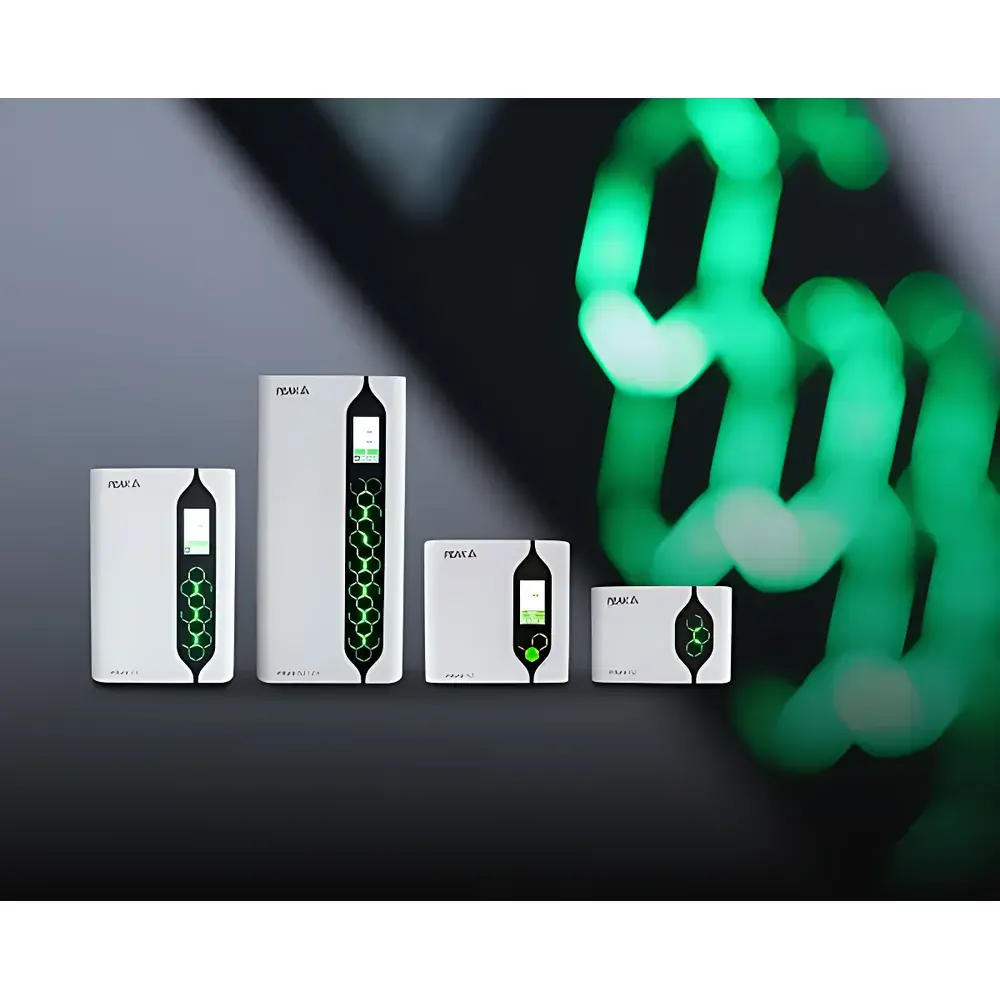
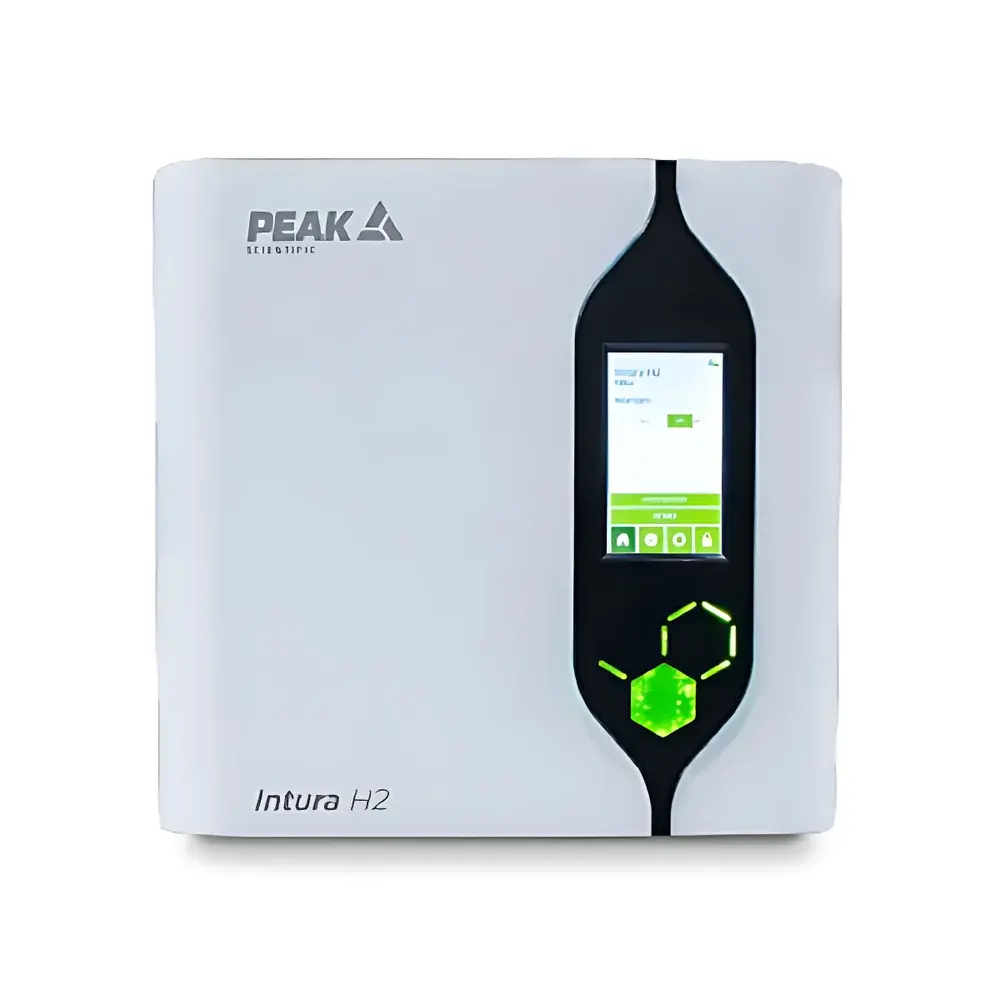
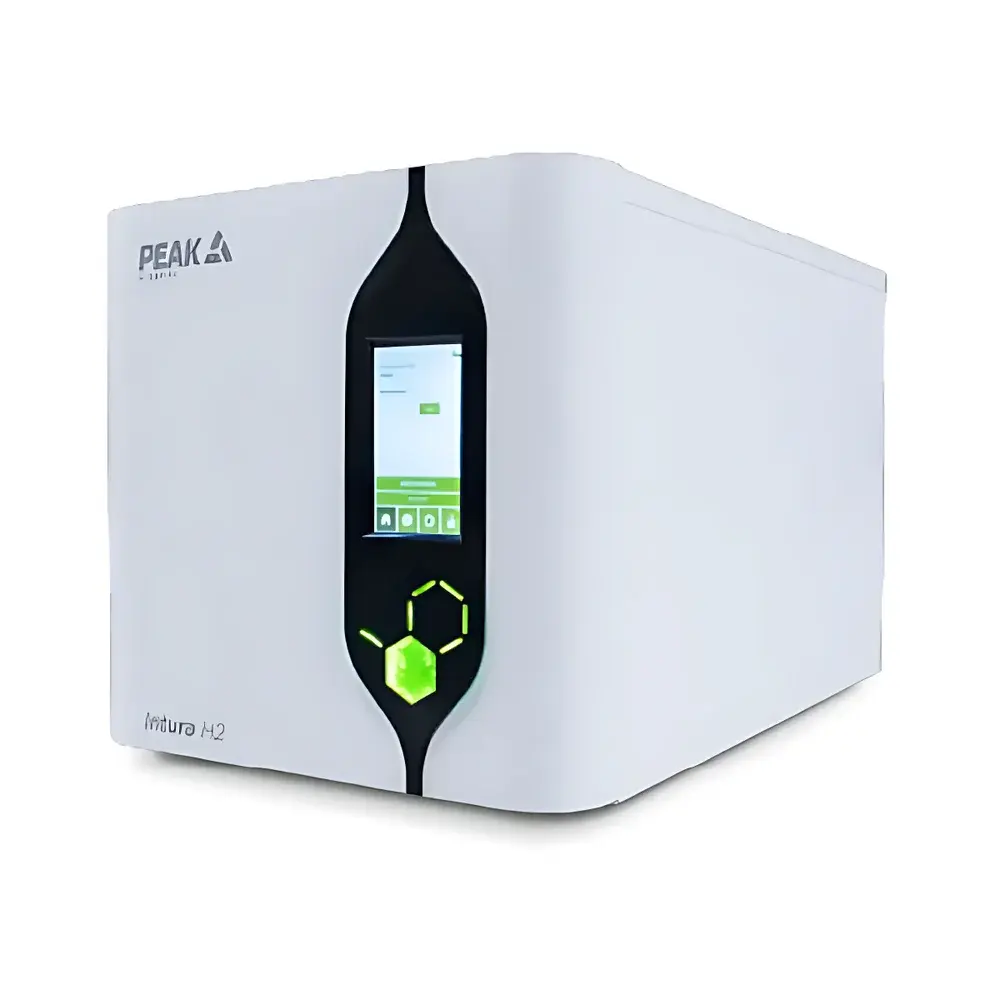
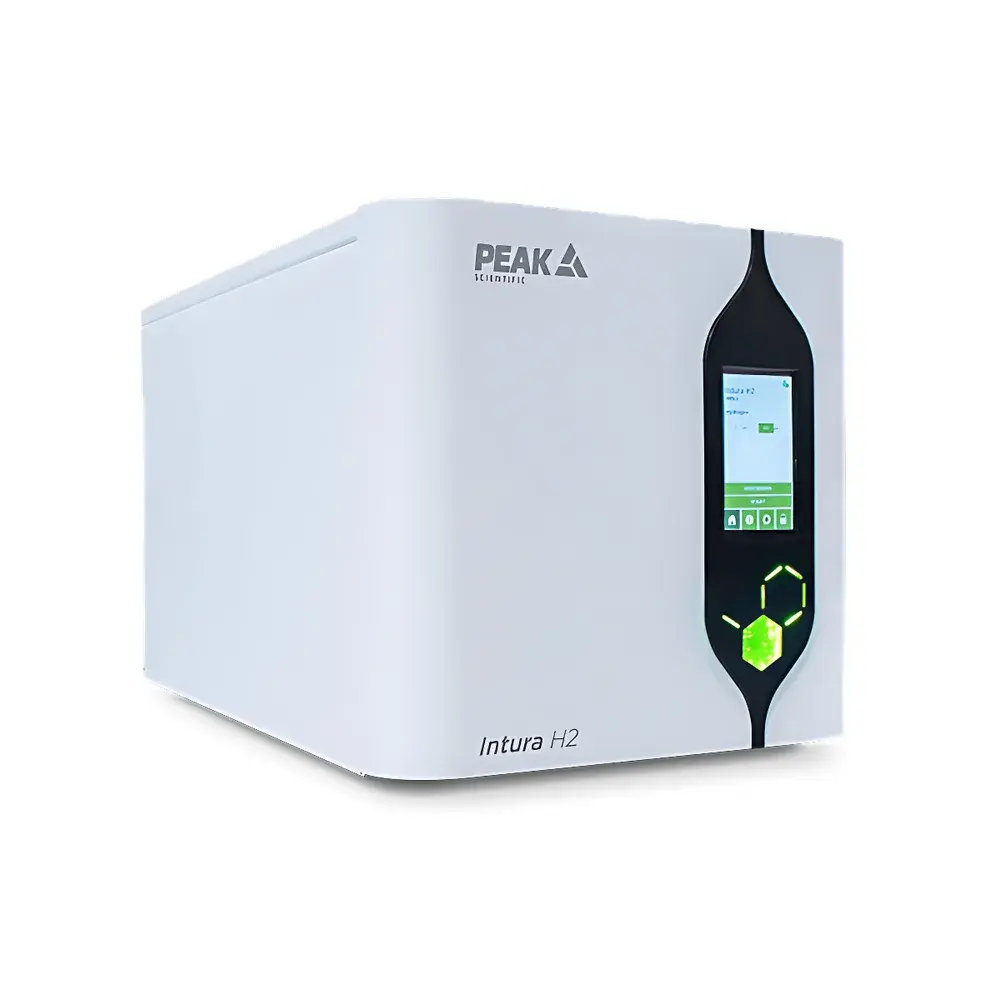
PEAK Intura Hydrogen Gas Generator
| Brand | PEAK |
|---|---|
| Origin | United Kingdom |
| Manufacturer Type | Original Equipment Manufacturer (OEM) |
| Import Status | Imported |
| Model | Intura Hydrogen |
| Hydrogen Generation Principle | Deionized Water Electrolysis via Proton Exchange Membrane (PEM) |
| Output Flow Rate | 100 / 250 / 500 / 1000 / 1500 cc/min |
| Output Pressure | 175 psi (12.1 bar) |
| Hydrogen Purity | 99.99999% (v/v, O₂-equivalent basis, certified by NPL) |
| Power Consumption | 296–674 W |
Overview
The PEAK Intura Hydrogen Gas Generator is an engineered solution for laboratories requiring continuous, on-demand, high-purity hydrogen gas—specifically designed to replace traditional high-pressure hydrogen cylinders in analytical and synthetic applications. Built upon proton exchange membrane (PEM) electrolysis technology, the system splits deionized water (≥1 MΩ·cm resistivity) into high-purity H₂ and O₂ gases with exceptional efficiency and minimal maintenance overhead. Unlike alkaline electrolyzers, PEM-based generation enables rapid start-up, precise flow/pressure regulation, and zero risk of caustic electrolyte contamination. The Intura Hydrogen delivers up to 1500 cc/min at a regulated pressure of 12.1 bar (175 psi), meeting the dynamic gas demand profiles of modern gas chromatography (GC), GC–mass spectrometry (GC–MS), inductively coupled plasma mass spectrometry (ICP–MS), and catalytic hydrogenation reactors. Its compact footprint, integrated water quality monitoring, and fail-safe architecture align with ISO/IEC 17025-compliant laboratory infrastructure requirements.
Key Features
- Proton exchange membrane (PEM) electrolyzer core ensuring stable, low-particulate hydrogen output without liquid electrolyte carryover
- Real-time deionized water quality monitoring with automatic alerting and shutdown if conductivity exceeds 1.0 µS/cm
- Adjustable flow (100–1500 cc/min) and pressure (0–12.1 bar) via intuitive front-panel interface or digital control protocol
- Internal hydrogen storage volume limited to <100 mL—complying with IEC 61000-6-4 and local lab safety codes for Class 3 hazardous gas equipment
- Dual-stage filtration: particulate pre-filter + palladium-diffusion purifier delivering ≤0.1 ppb O₂ and ≤0.5 ppb H₂O residual impurities
- Leak detection system with electrochemical H₂ sensors (0–1000 ppm range) and automatic isolation valve actuation within 1.2 seconds
- Remote operation support via RS-232, Ethernet (Modbus TCP), or optional dry-contact I/O for integration into building management systems (BMS)
- Energy-optimized standby mode reducing power draw to <15 W during idle periods; full restart achieved in <90 seconds
Sample Compatibility & Compliance
The Intura Hydrogen is compatible with all major GC and GC–MS platforms—including Agilent, Thermo Fisher Scientific, Shimadzu, and PerkinElmer—via standard 1/8″ stainless-steel tubing and Swagelok fittings. It meets essential regulatory and operational standards: EN 61000-6-2 (immunity), EN 61000-6-4 (emissions), CE marking per Machinery Directive 2006/42/EC, and conforms to ASTM D7217–22 for hydrogen purity verification in analytical carrier gas applications. The 99.99999% purity specification (O₂-equivalent, verified per NPL traceable methodology) satisfies USP , EP 2.5.27, and ISO 8573-1:2010 Class 1 compressed gas quality requirements for instrumental analysis. Optional 21 CFR Part 11-compliant software audit trail module available for GxP environments.
Software & Data Management
The generator supports native communication protocols for seamless integration into laboratory information management systems (LIMS) and electronic lab notebooks (ELN). Firmware v3.2+ includes configurable event logging (flow deviation >±2%, pressure loss >0.3 bar/min, water conductivity drift >0.05 µS/cm/hour), with timestamped records exportable as CSV or XML. Remote diagnostics enable predictive maintenance alerts—for example, electrolyzer stack voltage drift beyond ±5% of baseline triggers service recommendation. All firmware updates are digitally signed and validated prior to installation, supporting GLP/GMP-aligned change control documentation.
Applications
- Carrier and fuel gas for capillary GC and GC–MS systems requiring ultra-high purity and stable flow dynamics
- Plasma gas and reaction gas in ICP–MS instrumentation where oxygen contamination compromises polyatomic interference correction
- On-demand hydrogen supply for benchtop hydrogenation reactors, eliminating cylinder handling, storage permits, and associated safety audits
- Calibration gas generation for hydrogen sensor validation in environmental monitoring and semiconductor cleanroom applications
- Backup or primary source in multi-instrument labs using parallel or cascaded configurations (up to four units synchronized via master–slave CAN bus)
FAQ
What is the expected lifetime of the PEM electrolyzer stack under normal operating conditions?
The stack is rated for ≥20,000 hours of operation (≈2.3 years continuous use) with annual performance verification recommended; PEAK provides a 36-month limited warranty covering stack replacement due to material or workmanship defects.
Can the Intura Hydrogen be used with tap water or must it be connected to a dedicated DI water system?
It requires feed water with resistivity ≥1 MΩ·cm (≤1 µS/cm conductivity); connection to a certified Type I or II laboratory water purification system is mandatory—integrated pretreatment does not compensate for inadequate inlet water quality.
Is external ventilation required for safe operation in a standard fume hood?
No forced ventilation is needed—the unit emits no ozone or NOₓ, and its internal H₂ inventory remains below 100 mL, satisfying NFPA 55 and local fire code exemptions for “low-hazard” gas generation equipment.
How does the system ensure compliance with FDA 21 CFR Part 11 for electronic records?
When configured with the optional Audit Trail Module, it enforces user authentication, electronic signatures, immutable event logs, and secure data export—fully aligned with Part 11 Subpart B requirements for closed systems.
What maintenance intervals are recommended for routine operation?
Filter cartridges require replacement every 6 months or after 3000 hours of runtime; water quality sensor calibration is advised annually; no routine electrolyte replenishment or membrane cleaning is necessary due to solid-state PEM design.



