
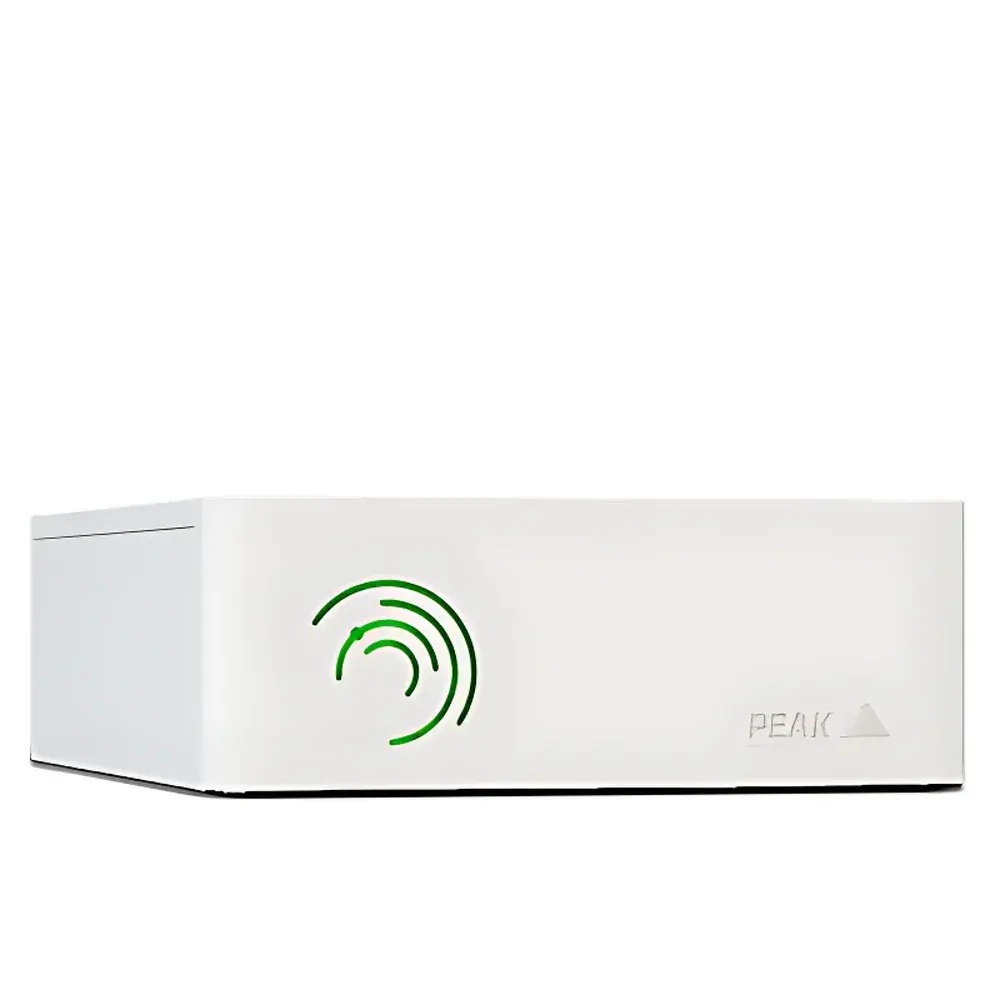
Peak Solaris 10 Nitrogen Generator for ELSD
| Brand | PEAK |
|---|---|
| Origin | United Kingdom |
| Manufacturer Type | Direct Manufacturer |
| Origin Category | Imported |
| Model | Solaris Nitrogen Generator |
| Nitrogen Generation Principle | Membrane Separation |
| Output Flow Rate | 10 L/min |
| Output Pressure | 100 psi / 690 kPa |
| Nitrogen Purity | 99.5% |
| Dew Point | −50 °C |
| Dimensions (D×W×H) | 416 mm × 540 mm × 156 mm |
| Weight | 12 kg |
| Power Supply | 100–230 VAC, 50/60 Hz, 0.03 A |
| Power Consumption | 6.9 W |
| Operating Temperature | 5–35 °C |
| Inlet Air Requirement | 30 L/min minimum, 80–130 psi (5.5–8.9 bar), ISO 8573-1:2010 Class 1.4.1 |
| Certifications | CE, FCC |
Overview
The Peak Solaris 10 Nitrogen Generator is an engineered solution designed specifically to support evaporative light scattering detection (ELSD) systems and compact mass spectrometers in analytical laboratories. It employs hollow-fiber membrane separation technology to extract high-purity nitrogen from compressed air—eliminating reliance on high-pressure cylinders, liquid nitrogen dewars, or centralized nitrogen infrastructure. Unlike cryogenic or pressure-swing adsorption (PSA) systems, the membrane-based architecture delivers consistent, oil-free, and particle-free nitrogen without moving parts, regeneration cycles, or consumable molecular sieves. The generator operates continuously at up to 10 L/min flow rate with user-adjustable output pressure (up to 100 psi / 690 kPa) and maintains a stable purity of ≥99.5% N₂ under defined inlet air conditions. Its low thermal load (25 BTU/hr) and minimal power draw (6.9 W) reflect a design optimized for integration into sensitive analytical environments where electrical noise, heat dissipation, and footprint are critical constraints.
Key Features
- Compact, benchtop-ready form factor (416 × 540 × 156 mm) engineered for space-constrained labs—no floor-standing installation required
- Integrated pressure regulation with real-time, manual adjustment of outlet pressure across the full 0–100 psi range
- Color-coded LED status indicators for immediate visual verification of operational state (e.g., standby, generating, fault)
- Modular compatibility with Peak’s certified Solaris series air compressors—enabling fully self-contained, cylinder-free operation without external compressed air infrastructure
- ISO 8573-1:2010 Class 1.4.1 inlet air compliance ensures removal of oil aerosols, water vapor, and particulates prior to membrane separation—critical for protecting downstream detectors and ion sources
- Factory-tested and CE/FCC-certified; designed and manufactured in the UK under ISO 9001-aligned quality controls
- No phthalates, BHT, or silicone-based lubricants used in internal wetted components—ensuring compatibility with trace-level analytical workflows
Sample Compatibility & Compliance
The Solaris 10 is validated for continuous supply to two parallel ELSD detectors or one low-flow electrospray ionization (ESI) or atmospheric pressure chemical ionization (APCI) source in compact LC-MS platforms. Its −50 °C pressure dew point guarantees condensation-free delivery under typical laboratory ambient conditions (5–35 °C), preventing moisture-induced baseline drift or detector fouling. All wetted materials comply with USP Class VI biocompatibility standards, and the absence of volatile organic residues supports GLP- and GMP-regulated environments. While not intrinsically compliant with FDA 21 CFR Part 11, the device supports audit-ready operation when integrated with validated laboratory information management systems (LIMS) that enforce electronic record integrity, user access control, and change tracking for instrument parameters.
Software & Data Management
The Solaris 10 operates as a standalone, firmware-controlled unit with no embedded software interface or network connectivity. All operational parameters—including flow, pressure, and purity—are mechanically and pneumatically regulated; no digital calibration or firmware updates are required during routine use. This architecture minimizes cybersecurity exposure and eliminates validation overhead associated with computerized systems. For laboratories implementing 21 CFR Part 11-compliant workflows, the generator may be documented within instrument qualification protocols (IQ/OQ/PQ) as a “non-configurable ancillary device,” with performance verified via periodic purity testing (e.g., GC-TCD or electrochemical sensor verification) and pressure/flow calibration using NIST-traceable meters.
Applications
- HPLC-ELSD analysis of non-chromophoric compounds including carbohydrates, lipids, surfactants, and polymers
- Mobile-phase nebulization and drying gas for benchtop LC-MS systems with flow rates ≤200 µL/min
- Carrier gas for thermal desorption units and purge-and-trap concentrators
- Blanketing and inerting in sample preparation stations handling oxygen-sensitive analytes
- Replacement for high-pressure nitrogen cylinders in regulated QC labs seeking reduced safety audits and logistics overhead
FAQ
Can the Solaris 10 supply nitrogen to multiple ELSD units simultaneously?
Yes—it is rated for continuous delivery to two ELSD detectors operating at combined flow rates up to 10 L/min.
Is external compressed air required if I do not purchase the optional Solaris air compressor module?
No—the unit can accept either the integrated Solaris air compressor or a third-party compressed air source meeting ISO 8573-1:2010 Class 1.4.1 specifications.
What maintenance is required over its service life?
Annual inspection of inlet filters and verification of membrane integrity via dew point and purity checks; no scheduled replacement parts are specified under normal operating conditions.
Does the generator include data logging or remote monitoring capability?
No—operation is analog and self-regulating; no digital outputs, USB ports, or Ethernet interfaces are provided.
How does the −50 °C dew point impact long-term detector reliability?
It prevents condensation in capillary lines and nebulizer chambers, reducing the risk of clogging, signal instability, and corrosion in ESI sources and ELSD optical cells.



