
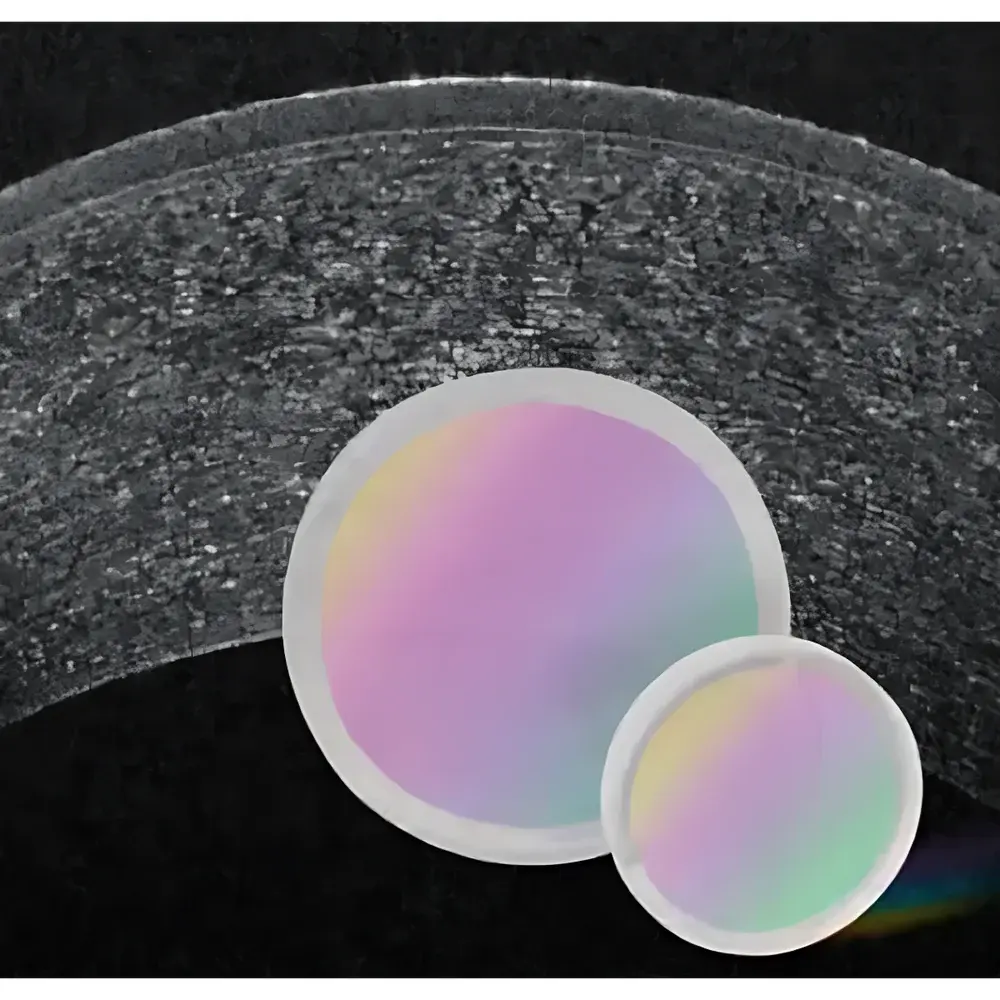
Wasatch Photonics VPH Transmission Gratings (WP-800/1030-xx, WP-1250/1030-xx, WP-1800/1030-xx Series)
| Brand | Wasatch Photonics |
|---|---|
| Origin | USA |
| Product Type | Volume Phase Holographic (VPH) Transmission Grating |
| Wavelength Range | 300–2500 nm |
| Bandwidth | 5–800 nm |
| Groove Density | 150–5000 lines/mm |
| Efficiency | Up to 98% (1st order) |
| Substrate | Fused silica or BK7 |
| Surface Quality | 60–40 scratch-dig |
| Wavefront Distortion | < λ/5 rms @ 633 nm (25 mm clear aperture) |
| AR Coating | Optimized for specified wavelength range and angle of incidence |
| Max Pulse Energy Handling | ≤300 GW/cm² (100–200 fs), ≤kW/cm² (CW) |
| Customization Available | Yes |
Overview
Wasatch Photonics VPH Transmission Gratings are precision-engineered volume phase holographic optical components fabricated using proprietary photopolymer recording techniques in homogeneous, low-absorption substrates such as fused silica or BK7. Unlike surface-relief gratings, VPH gratings operate on Bragg diffraction principles—where incident light couples into a periodic refractive index modulation embedded volumetrically within the substrate—enabling exceptionally high first-order diffraction efficiency, minimal polarization dependence, near-zero stray light, and negligible ghost orders. These characteristics arise from the absence of physical topography, resulting in inherently low wavefront distortion (< λ/5 rms over 25 mm apertures) and robust mechanical stability. Designed for demanding applications including ultrafast laser pulse compression, spectral-domain optical coherence tomography (SD-OCT), Raman spectroscopy, hyperspectral imaging, astronomical spectrography, and grism-based dispersion compensation, these transmission gratings support broadband operation across UV-VIS-NIR (300–2500 nm) with customizable groove densities (150–5000 lines/mm), angular acceptance, and spectral bandwidths.
Key Features
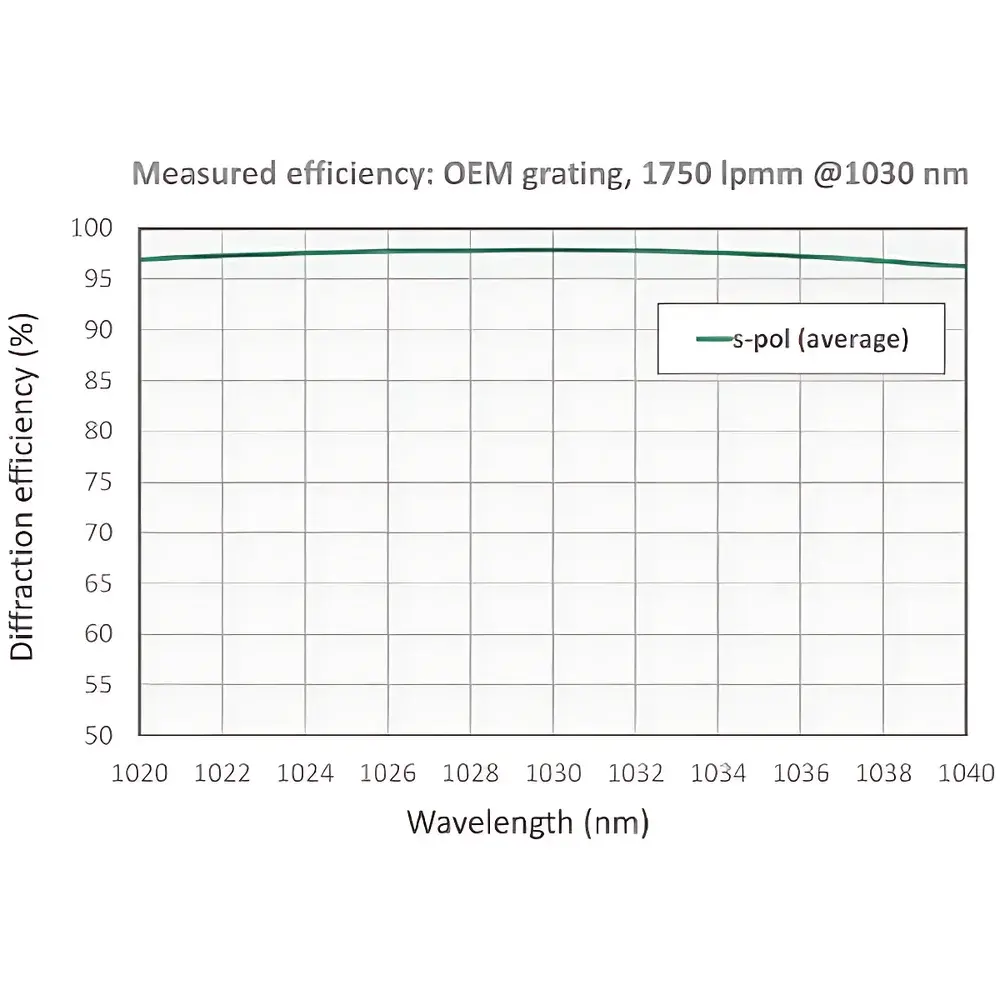
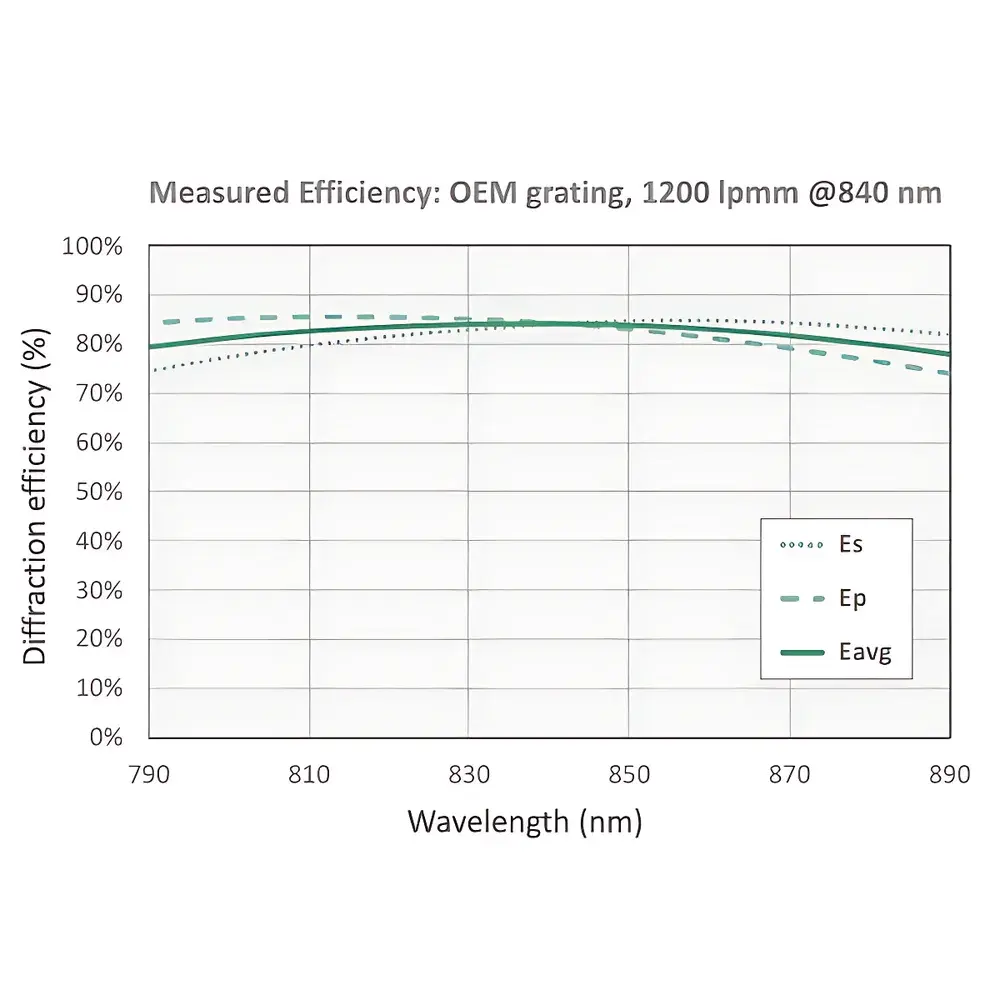
- First-order diffraction efficiency up to 98% at design wavelength, with average polarization performance ≥82–96% depending on configuration
- Ultra-low polarization sensitivity (< ±0.5% efficiency variation between s- and p-polarizations)
- Wavefront error < λ/5 rms @ 633 nm across standard clear apertures (e.g., 25 × 25 mm, Ø25.4 mm, or Ø50.8 mm)
- Optimized anti-reflection coatings achieving R < 1.0% (standard) or R < 0.5% (enhanced) across operational bandwidths
- High laser damage threshold: compatible with peak intensities up to 300 GW/cm² (100–200 fs pulses) and continuous-wave power densities up to several kW/cm²
- Robust monolithic construction—no metallic layers or delicate etched structures—enabling safe cleaning with standard optical solvents and lint-free wipes
- Customizable parameters including central wavelength (CWL), groove density (±0.5 lines/mm tolerance), angle of incidence (AOI), aperture size (up to Ø300 mm), and substrate material
Sample Compatibility & Compliance
These VPH transmission gratings are fully compatible with standard optomechanical mounting systems (e.g., kinematic mounts, lens tubes, and spectrograph entrance slits) and integrate seamlessly into OEM instrumentation platforms requiring high-fidelity spectral dispersion. All gratings are manufactured under controlled cleanroom conditions per ISO 10110-7 surface quality standards (60–40 scratch-dig). While not medical devices or regulated instrumentation per se, their performance metrics align with requirements for GLP-compliant spectroscopic analysis, FDA 21 CFR Part 11–ready data acquisition systems (when integrated with compliant software), and ISO/IEC 17025-accredited calibration workflows. For astronomical applications, gratings meet ESO and NASA heritage specifications for throughput stability, thermal cycling resilience (−40°C to +85°C), and vacuum compatibility.
Software & Data Management
Wasatch Photonics provides comprehensive optical design support—including Zemax OpticStudio and CODE V prescription files—for each custom grating configuration. Grating performance data (efficiency vs. wavelength/polarization, angular dispersion, Littrow condition maps) is delivered in machine-readable formats (CSV, HDF5) suitable for integration into automated test benches, LabVIEW-based control systems, or Python-driven spectral reconstruction pipelines. No proprietary firmware or closed drivers are required; all gratings function as passive optical elements. For traceable metrology, NIST-traceable calibration reports (including spectrophotometric efficiency measurements at multiple AOIs and polarizations) are available upon request and comply with ISO/IEC 17025 documentation practices.
Applications
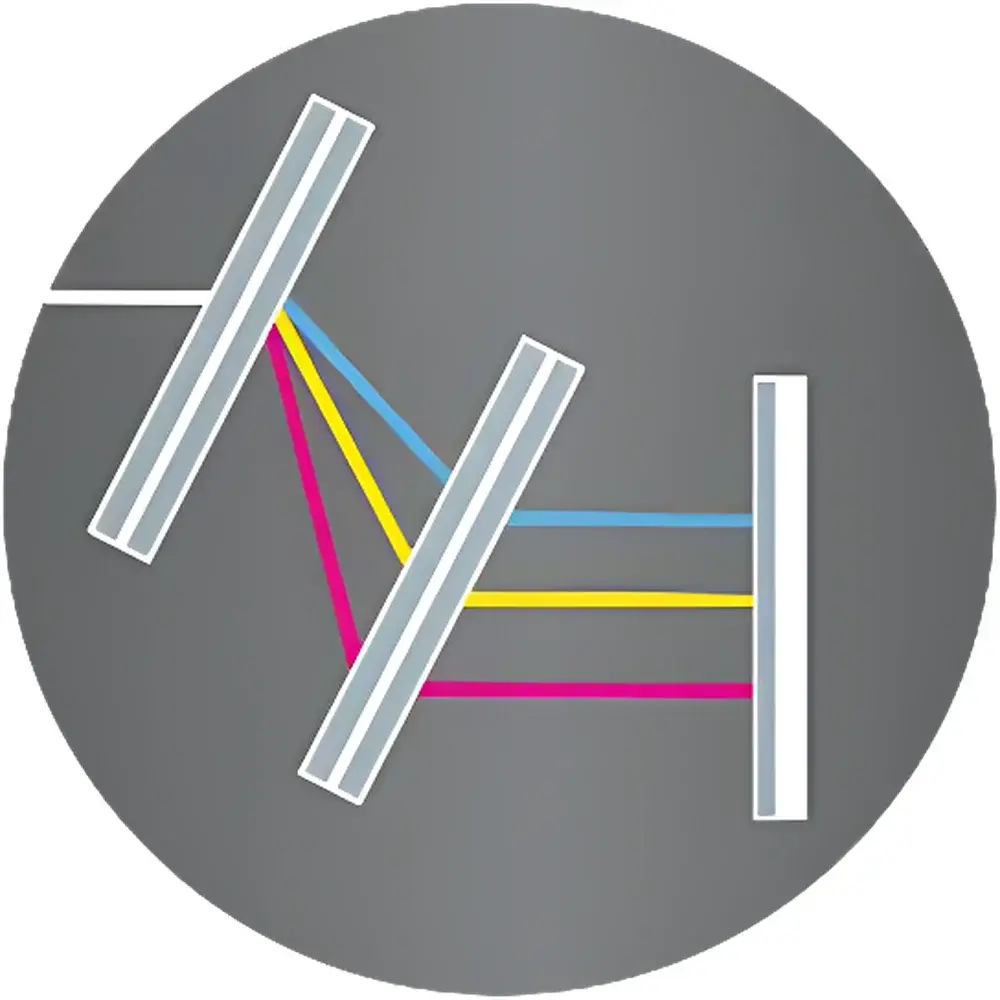
- Laser Pulse Compression: Used in CPA (chirped pulse amplification) systems for high-efficiency stretching and recompression of ultrashort pulses (e.g., Ti:sapphire, Yb:fiber lasers at 1030 nm); enables compact, alignment-insensitive stretcher-compressor architectures with minimal B-integral accumulation.
- SD-OCT Imaging: Enables high-speed, high-SNR spectral-domain OCT systems in ophthalmology and dermatology; HD-series gratings (e.g., WP-HD1800/840-xx) deliver uniform >85% efficiency across 100 nm bandwidths with sub-0.1 nm spectral sampling resolution.
- Raman Spectroscopy: Integrated into back-illuminated CCD- and sCMOS-based spectrometers for low-light detection; superior throughput and reduced stray light improve signal-to-noise ratio by >3× compared to ruled or holographic surface-relief gratings.
- Hyperspectral Imaging: Supports push-broom and snapshot architectures in VNIR/SWIR (400–2500 nm); low wavefront distortion preserves spatial fidelity while high dispersion enables <5 nm spectral resolution at f/2.0 input optics.
- Astronomical Spectroscopy: Deployed in multi-object and integral-field spectrographs (e.g., DESI, GMT, ELT instruments); scalable to Ø300 mm apertures with tunable dispersion and broad-bandpass operation across atmospheric windows (320–2500 nm).
- Grism Design: Combined with prisms to form grisms—enabling zero-deviation dispersion for slitless spectroscopy in space telescopes and adaptive optics systems without compromising pupil geometry or field flatness.
FAQ
What distinguishes VPH transmission gratings from surface-relief gratings?
VPH gratings rely on volumetric refractive index modulation rather than physical grooves, yielding higher efficiency, lower polarization dependence, negligible scatter/ghosting, and superior environmental stability—especially under high-power or vacuum conditions.
Can these gratings be used in vacuum or cryogenic environments?
Yes. Fused silica substrates exhibit negligible outgassing and thermal contraction mismatch; validated performance down to 77 K and in UHV (<10⁻⁹ Torr) has been demonstrated in astronomical instrument deployments.
Do you provide Zemax or Synopsys-compatible grating models?
Yes. Each grating shipment includes a complete physical optics model (POP) file and scalar diffraction efficiency lookup tables compatible with Zemax OpticStudio, CODE V, and FRED.
How is efficiency measured and guaranteed?
Efficiency is measured using calibrated double-monochromator setups traceable to NIST SRM standards; guaranteed minimum values are contractually defined per configuration and include full polarization averaging.
What is the lead time for custom designs?
Standard configurations ship in 4–6 weeks; complex customizations (e.g., large apertures, multi-wavelength designs, or enhanced AR coatings) require 8–12 weeks from final design approval.





