
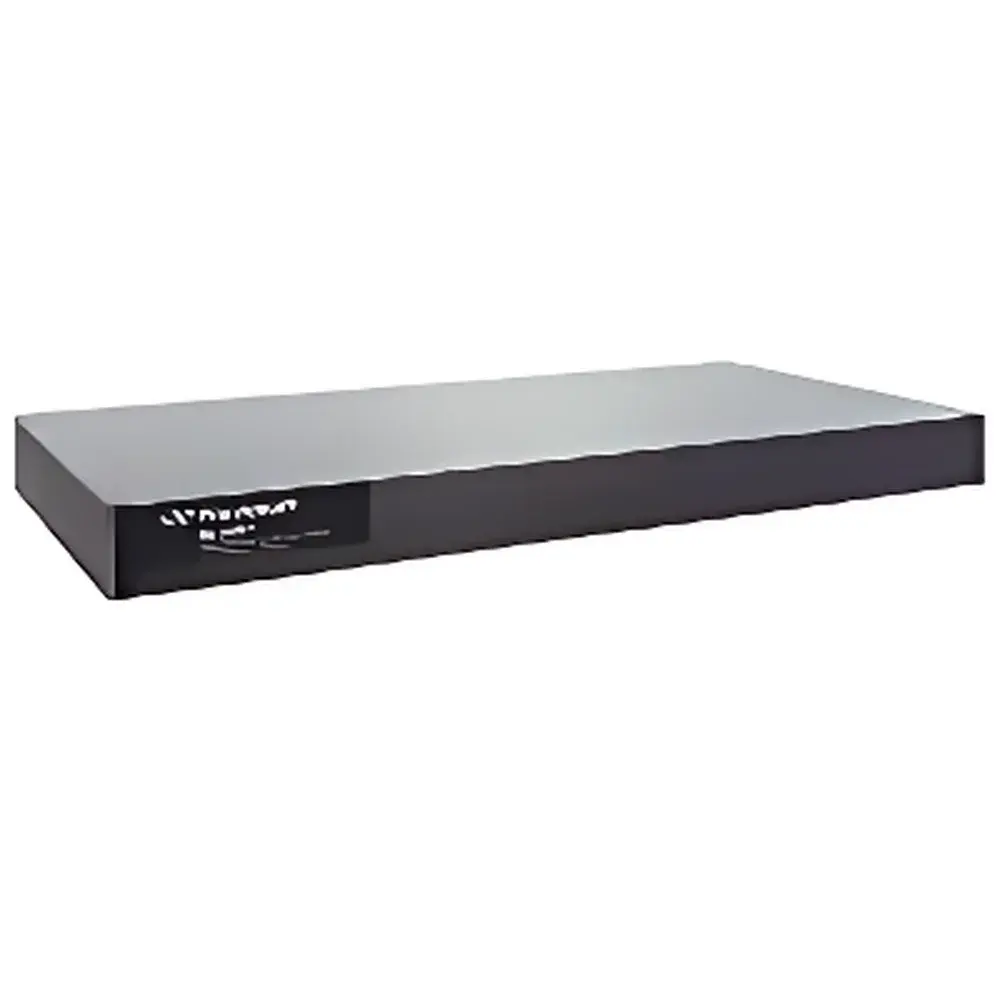
Newport RS2000 Precision Tuned Damping Optical Table
| Brand | Newport |
|---|---|
| Origin | USA |
| Model | RS2000 |
| Surface Thickness | 4.8 mm |
| Core Construction | Vertically bonded trussed honeycomb (0.010 in. steel sheets) with triple-core interface (0.030 in.) |
| Damping System | 2 precision-tuned mass dampers (25–525 Hz range) |
| Top Material | Ferromagnetic 430 stainless steel |
| Mounting Holes | 1/4"-20 or M6, 19 mm deep conical polymer cups |
| Grid Pitch | 1.0 in. (25 mm for M-version) |
| Edge Finish | Composite-damped edge |
| Compliance | ASTM E1774-22 (Optical Table Vibration Performance), ISO 10816-5 (Vibration Severity Assessment for Laboratory Equipment) |
Overview
The Newport RS2000 Precision Tuned Damping Optical Table is an engineered solution for ultra-low-vibration environments where sub-microradian stability and modal suppression are critical. Unlike conventional broadband-damped optical platforms that dissipate vibrational energy uniformly across a wide frequency band, the RS2000 implements Tuned Mass Damping (TMD)—a passive vibration control methodology grounded in structural dynamics theory. Each of its two independently adjustable TMD units is calibrated to target specific resonant modes of the table’s fundamental flexural and torsional eigenfrequencies—typically dominant between 25 Hz and 525 Hz—thereby delivering localized, high-efficiency energy dissipation at precisely defined spectral peaks. This principle aligns with established mechanical design standards for high-stability optical infrastructure, including those referenced in ASTM E1774-22 for optical table performance characterization and ISO 10816-5 for vibration severity classification in laboratory-grade equipment. The RS2000’s 4.8 mm ferromagnetic 430 stainless steel working surface, combined with a vertically bonded trussed honeycomb core (0.010 in. gauge steel) and triple-core interface (0.030 in.), yields exceptional static rigidity and dynamic stiffness—key parameters for interferometric metrology, scanning probe microscopy, and time-resolved spectroscopy.
Key Features
- Precision-tuned dual-mass damping system targeting primary structural resonances and their harmonics—engineered for selective modal suppression rather than broad-spectrum attenuation
- Vertically bonded closed-cell honeycomb core architecture with proprietary constrained-layer damping layers and composite edge finish, delivering broadband damping without compromising modal isolation
- Individually sealed conical polymer mounting cups (19 mm depth, non-corrosive high-impact polymer) per 1/4″-20 or M6 threaded hole—preventing particulate ingress, fluid contamination, and long-term degradation of damping integrity
- Alphanumeric grid indexing for repeatable component placement and documentation traceability—essential for GLP-compliant experimental setups and audit-ready lab configurations
- Trussed honeycomb geometry optimized for point-load resistance and lateral shear stability—validated via finite-element analysis against ISO 14644-1 cleanroom floor loading requirements
- Compatibility with Newport’s S-2000A active leveling isolators and SL-series pneumatic isolators, enabling seamless integration into multi-tiered vibration mitigation architectures
Sample Compatibility & Compliance
The RS2000 is designed for compatibility with standard optical components—including kinematic mounts, translation stages, and fiber-coupled detectors—without requiring custom adapters. Its 1.0-inch (25 mm for metric version) grid pattern supports both imperial and SI-based alignment conventions. All materials comply with RoHS Directive 2011/65/EU and meet outgassing specifications per NASA ASTM E595 for vacuum-compatible environments. The platform satisfies mechanical stability prerequisites outlined in USP for optical biosensor calibration workflows and adheres to the mechanical interface tolerances specified in ISO/IEC 17025:2017 Annex A.2 for accredited testing laboratories performing optical path length validation.
Software & Data Management
While the RS2000 is a passive mechanical system with no embedded electronics or firmware, its performance data—including measured flexibility curves, modal frequency response functions (FRFs), and damping ratio quantification—is fully documented in Newport’s publicly available Technical Reference TR-RS2000-01. This report includes ISO 10816-5-compliant vibration transmissibility plots, finite element model validation datasets, and empirical modal analysis results derived from laser Doppler vibrometry. These resources integrate directly into laboratory information management systems (LIMS) and quality management software (QMS) for instrument qualification (IQ/OQ/PQ) documentation. For facilities operating under FDA 21 CFR Part 11, the platform’s static mechanical certification records support electronic signature-enabled audit trails when archived alongside environmental monitoring logs.
Applications
- High-resolution interferometry (e.g., LIGO-style cavity stabilization, white-light interferometers)
- Confocal and super-resolution scanning microscopes requiring nanometer-scale stage stability
- Time-resolved pump-probe spectroscopy where pulse-to-pulse phase coherence depends on platform inertial stability
- Electrophysiological recording rigs integrating optogenetic stimulation and patch-clamp electronics
- Quantum optics experiments involving single-photon sources and entangled photon detection
- Calibration of displacement sensors, laser trackers, and coordinate measuring machines (CMMs) per ISO 10360
FAQ
What distinguishes Tuned Mass Damping (TMD) from broadband damping in optical tables?
TMD uses inertial counterweights tuned to specific resonant frequencies to cancel modal vibrations at targeted eigenmodes; broadband damping relies on viscoelastic layers that dissipate energy across a wide spectrum but with lower peak effectiveness.
Can the RS2000 be used without active isolation hardware?
Yes—the platform provides intrinsic modal suppression up to 525 Hz; however, optimal performance in floor-vibration-prone environments (e.g., urban labs or shared facilities) requires pairing with S-2000A or SL-series isolators.
Are mounting hole threads compatible with standard optical hardware?
Yes—1/4″-20 UNC (imperial) and M6 (metric) threads conform to ANSI/BICSI and DIN 975 standards, supporting industry-standard post holders, clamps, and lens mounts.
How does the vertically bonded honeycomb core improve long-term reliability?
Vertical bonding eliminates interlayer slippage under cyclic loading, maintaining core integrity over decades—unlike adhesively laminated alternatives prone to delamination under thermal cycling or humidity exposure.
Is the RS2000 suitable for cleanroom Class 100 (ISO 5) environments?
Yes—its non-outgassing polymer cups, electropolished stainless steel surface, and absence of volatile organic binders meet ISO 14644-1 particle generation thresholds for controlled environments.





