Lumi-Universe Qingluan High-Harmonic Generation (HHG) Vacuum Ultraviolet (VUV) Light Source

| Brand | Lumi-Universe |
|---|---|
| Model | Qingluan |
| Wavelength Range | 100–200 nm |
| Output Power | 1 mW – 1 W |
| Pulse Duration | < 100 fs |
| Repetition Rate | 1–10 MHz |
| Beam Size (Output Aperture) | Ø3–5 mm (collimated, TEM₀₀-like) |
| Spatial Coherence | High (λ/10 wavefront error typical) |
| Tunability | Monochromatized & continuously tunable across range |
| Cooling | Active air/water hybrid |
| Vacuum Interface | CF-63 or DN40 ISO-KF flange |
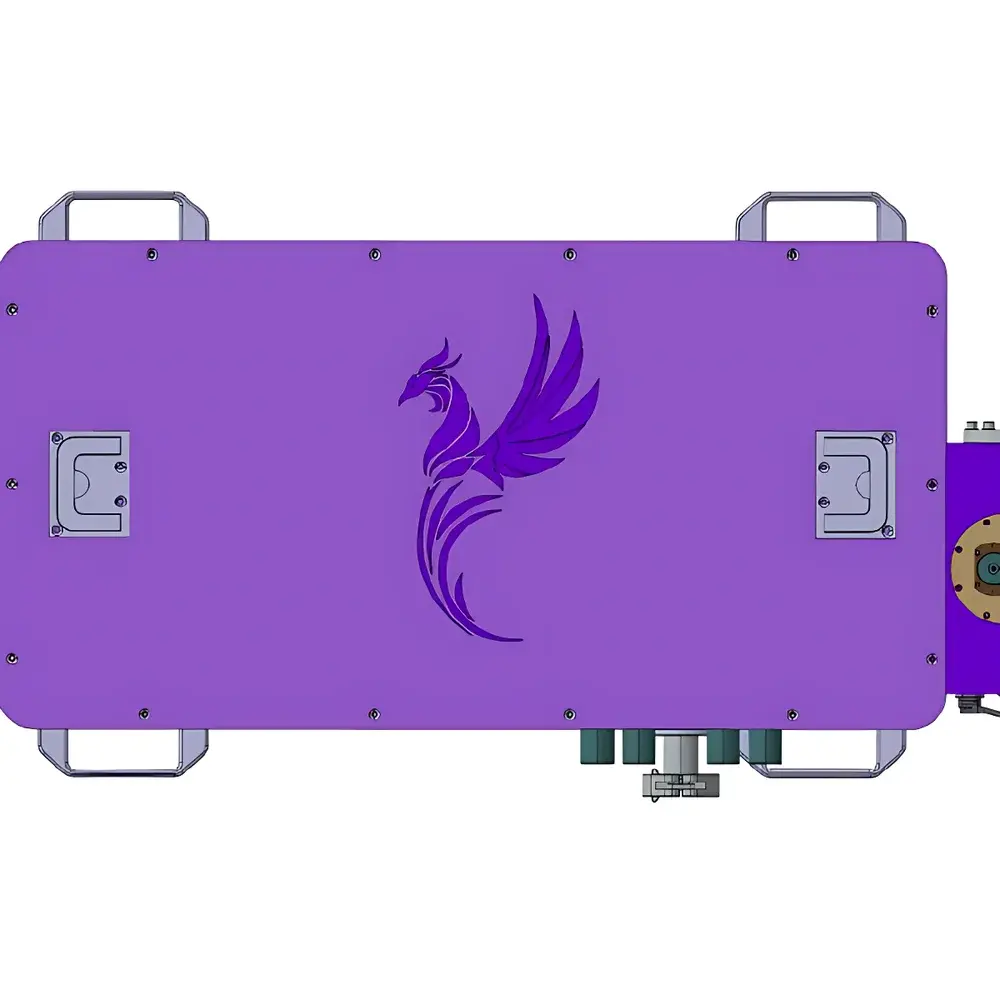
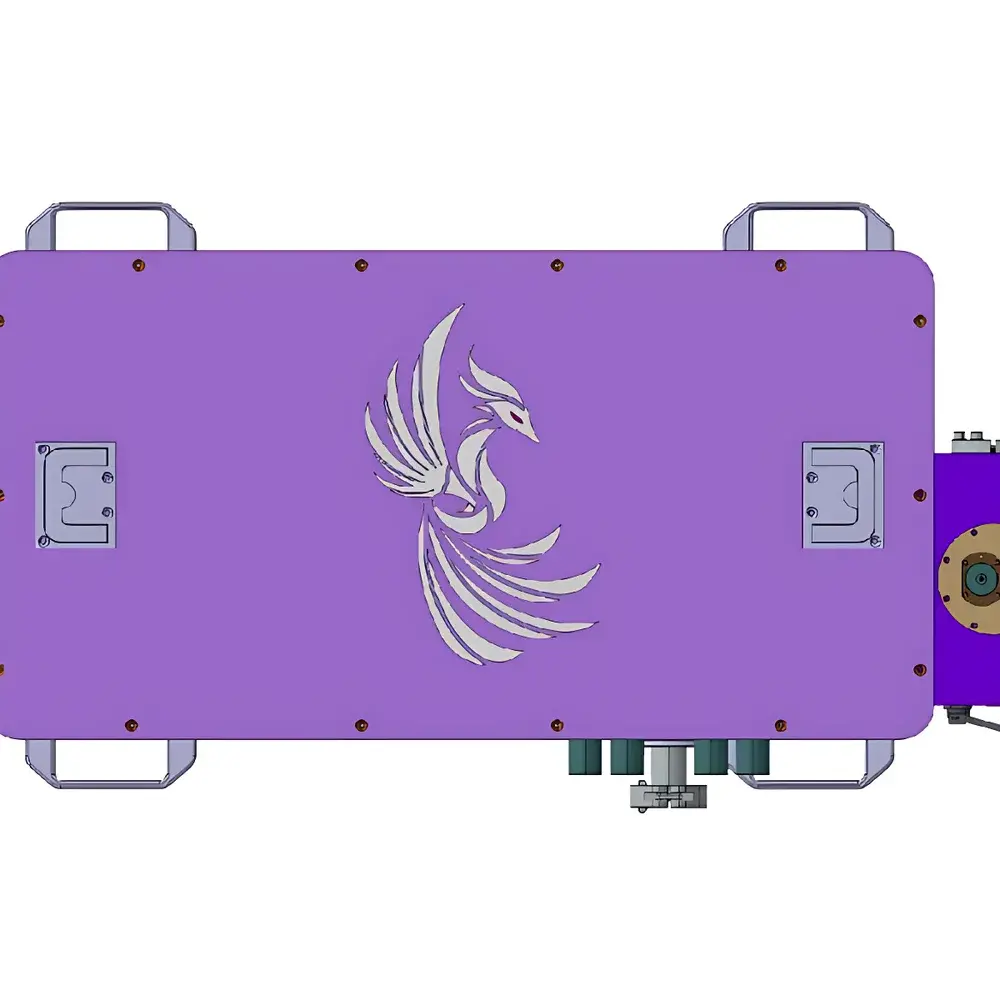
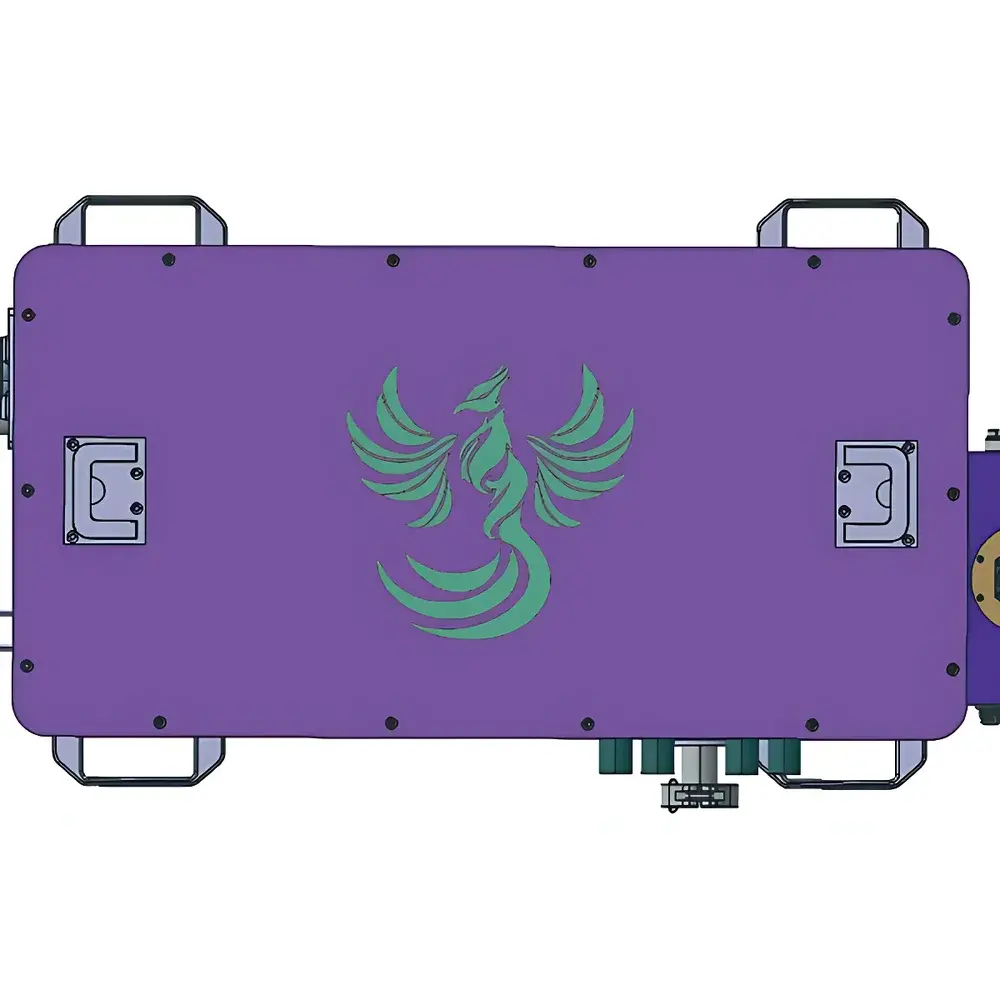
| Dimensions | 885 × 420 × 233 mm |
| Weight | 55 kg |
| Compliance | CE, RoHS, EN 61000-6-3/-4 |
Ask about pricing, availability and specifications.
Overview
The Lumi-Universe Qingluan High-Harmonic Generation (HHG) Vacuum Ultraviolet (VUV) Light Source is an engineered laboratory-scale HHG system optimized for stable, high-brightness, narrow-bandwidth VUV radiation in the 100–200 nm spectral window (photon energies: 6.2–12.4 eV). Based on the three-step model of strong-field ionization, electron acceleration, and recollision-driven recombination, the Qingluan source generates coherent VUV photons through non-linear frequency upconversion of near-infrared (NIR) femtosecond driving lasers—typically Ti:sapphire or Yb-based amplifiers—focused into a gas target (e.g., Ar, Ne, or He) under ultra-high vacuum (UHV) conditions (≤1×10⁻⁷ mbar). Unlike synchrotron or free-electron laser facilities, the Qingluan delivers tabletop, laser-synchronized VUV pulses with intrinsic attosecond timing jitter (<100 as), enabling pump-probe experiments requiring precise temporal overlap between VUV probe and optical/IR pump pulses. Its compact footprint and integrated vacuum architecture eliminate the need for external beamlines during initial commissioning, while maintaining compatibility with standard UHV-compatible end-stations.
Key Features
- Stable, tunable VUV output from 100 to 200 nm with <0.1 nm resolution (using grating monochromator with motorized drive and calibrated photodiode feedback)
- High average power density: up to 1 W at 150 nm (dependent on driver laser parameters and gas medium)
- Femtosecond pulse duration (<100 fs FWHM), fully synchronized to the fundamental laser oscillator
- Repetition rate flexibility: supports 1–10 MHz operation via cavity-dumped or amplifier-seeded configurations
- Integrated UHV chamber (base pressure ≤5×10⁻⁸ mbar) with bake-out capability and real-time pressure monitoring
- Optomechanically rigid platform with kinematic mounts for harmonic generation gas cell, focusing optics, and beam extraction port
- Modular design enables direct integration with Tr-ARPES spectrometers, time-of-flight mass spectrometers (TOF-MS), or VUV ellipsometers
Sample Compatibility & Compliance
The Qingluan VUV source is designed for use in ultra-high-vacuum environments compatible with surface science, photoelectron spectroscopy, and molecular dynamics studies. It meets ISO 14644-1 Class 5 cleanroom requirements for internal optical path integrity and complies with electromagnetic compatibility standards EN 61000-6-3 (emission) and EN 61000-6-4 (immunity). All electrical interfaces conform to IEC 61000-4-5 surge immunity and IEC 61000-4-6 conducted RF immunity specifications. The system supports GLP/GMP-aligned operation when paired with audit-trail-capable control software (see Software section). No radioactive components; all optical materials are certified for VUV transmission (MgF₂, CaF₂, and Al-coated mirrors with LiF overcoat where applicable). Safety interlocks comply with IEC 60825-1:2014 (Class 4 laser product classification per embedded NIR driver).
Software & Data Management
The Qingluan is operated via LumiControl™ v3.2—a Qt-based GUI running on Linux (Ubuntu 22.04 LTS) with deterministic real-time kernel patches. The software provides full parametric control of monochromator angle, gas flow rate (mass flow controller), vacuum stage pressure, and laser synchronization delay (±5 ps resolution). All operational parameters—including photon flux (measured via calibrated Si photodiode + VUV filter stack), pulse energy history, and vacuum logs—are timestamped and exported in HDF5 format compliant with NeXus conventions. Audit trails meet FDA 21 CFR Part 11 requirements for electronic records and signatures, including user authentication, session logging, and immutable parameter change history. Remote access is supported via TLS-encrypted SSH tunneling; no cloud dependency or telemetry collection.
Applications
- Time-resolved angle-resolved photoemission spectroscopy (Tr-ARPES) for mapping band structure dynamics in quantum materials
- VUV-pump/VIS-probe transient absorption for tracking excited-state relaxation in photocatalysts and 2D semiconductors
- Photoionization mass spectrometry (PIMS) of reactive intermediates in combustion and atmospheric chemistry
- Nanoscale interference lithography for sub-50 nm feature patterning using 157 nm (F₂ laser line) or tunable HHG exposure
- In-situ VUV reflectometry and ellipsometry for thin-film thickness and optical constant monitoring during ALD/CVD processes
- Calibration of space-based VUV detectors (e.g., for solar physics missions such as ESA’s Solar Orbiter/EUI instrument)
FAQ
What vacuum level is required for optimal HHG efficiency?
Optimal harmonic yield requires a base pressure ≤1×10⁻⁷ mbar in the interaction region, achievable with standard turbomolecular pumping and optional NEG pump integration.
Can the Qingluan be coupled to an existing Ti:sapphire amplifier?
Yes—the system accepts 800 nm ±20 nm, 35–50 fs pulses at 1–5 mJ/pulse (1 kHz–10 kHz); custom coupling optics and dispersion compensation modules are available upon request.
Is the output beam polarization maintained?
The VUV output retains linear polarization of the driving laser (extinction ratio >100:1) unless modified by downstream reflective optics; optional quarter-wave plates enable circular polarization.
Does the system include beam diagnostics?
Standard configuration includes a VUV-calibrated photodiode, beam profiler (with MgF₂ window), and optional XUV spectrometer (20–200 nm, 0.05 nm resolution).
What maintenance intervals are recommended?
Gas nozzle inspection every 500 hours; mirror cleaning every 2000 hours; vacuum pump oil replacement every 6 months (if oil-sealed roughing pump used).