
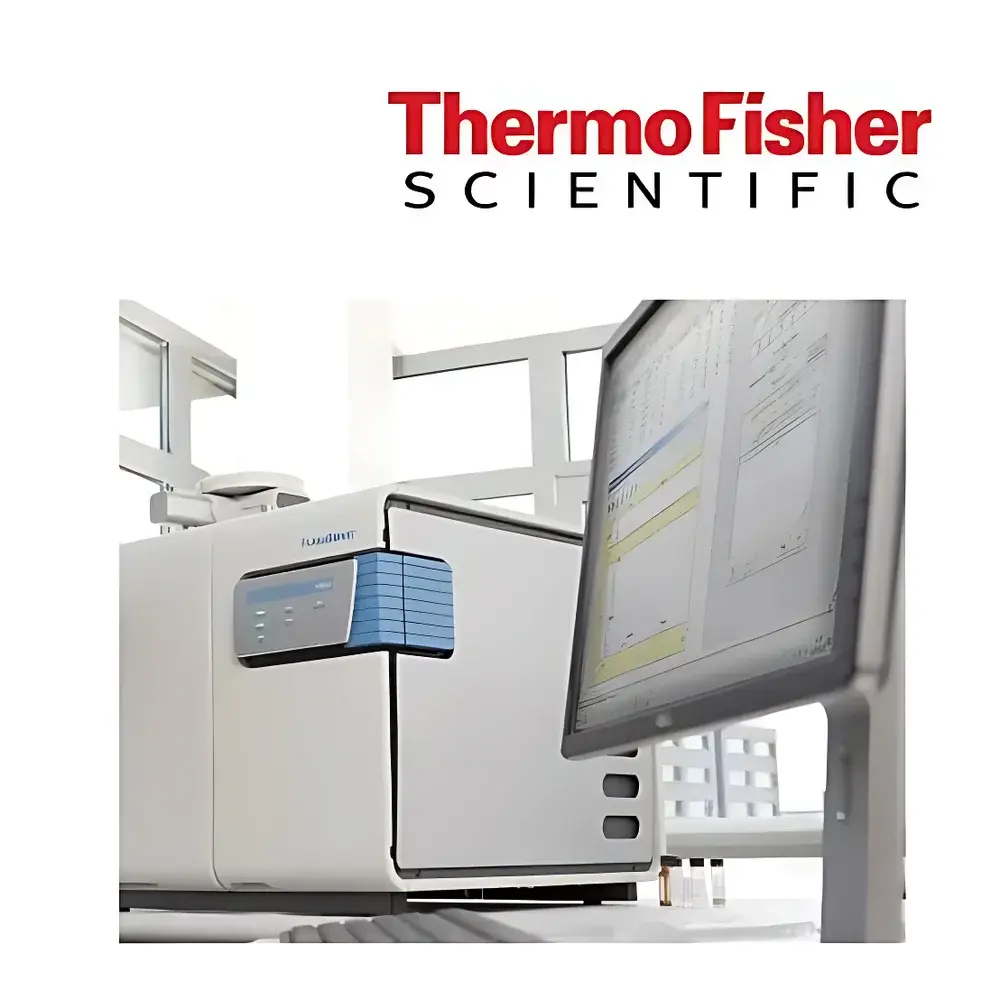
Thermo Fisher FlashSmart Dumas Protein Nitrogen Determinator
| Brand | Thermo Fisher |
|---|---|
| Origin | Italy |
| Instrument Type | Dumas Combustion Method |
| Automation Level | Fully Automated Elemental Analyzer |
| Nitrogen Measurement Range | 0.001–500 mg N |
| Reproducibility | <0.3% RSD |
| Sample Mass Requirement | ≥1 g |
| Recovery Rate | 99.5–100% |
| Digestion/Combustion Time | 3–4 min per sample |
| Linear Range | 0.001–500 mg N |
| Power Consumption | 1400 W |
| Dimensions (L×W×H) | 620 × 580 × 500 mm |
| Sample Capacity | Up to 125 positions (with optional 4-position carousel) |
| Compliance | ASTM D5142, AOAC 992.15, ISO 14891, EN ISO 16634-1/-2, USP <28>, FDA 21 CFR Part 11 ready (via EagerSmart software audit trail) |
Overview
The Thermo Fisher FlashSmart Dumas Protein Nitrogen Determinator is a high-throughput, fully automated elemental analyzer engineered for precise and robust quantification of total nitrogen—and by extension, protein content—in solid and liquid samples using the Dumas combustion method. Unlike Kjeldahl-based systems, FlashSmart employs high-temperature catalytic oxidation (up to 1150 °C) in a controlled oxygen-rich environment, converting all organic and inorganic nitrogen compounds into molecular nitrogen (N₂). The resulting N₂ gas is separated via chromatographic separation and quantified using a high-stability thermal conductivity detector (TCD), ensuring trace-level sensitivity and stoichiometric accuracy. Designed for routine QC/QA laboratories in food, feed, agricultural, pharmaceutical, and environmental sectors, FlashSmart delivers certified-compliant results without manual intervention—reducing analyst exposure to hazardous reagents and eliminating digestion-related variability.
Key Features
- Fully automated operation with integrated 32-position standard autosampler; expandable to four independent carousels (125 total positions) for unattended 24/7 analysis.
- Real-time Electronic Flow Control (EFC) system regulating O₂, He, and CO₂ carrier gases with ±0.5% flow stability—critical for reproducible combustion efficiency and quantitative N₂ recovery.
- Intelligent method selection via EagerSmart software: automatically selects optimal temperature ramp profiles, oxygen pulse duration, and catalyst conditioning cycles based on sample mass and matrix class (e.g., cereal, dairy, meat, fertilizer).
- Modular configuration support for multi-element analysis: field-upgradable to CHNS, NCS, NC, S, and oxygen modes via hardware add-ons and software licensing.
- Comprehensive safety architecture including real-time leak detection, overtemperature cutoff, pressure monitoring, and automatic shutdown upon abnormal gas consumption or cooling failure.
- Pre-loaded OEACookBook database containing >1,200 validated methods aligned with AOAC, ISO, and EN standards—enabling immediate compliance without method development overhead.
Sample Compatibility & Compliance
FlashSmart accommodates heterogeneous sample forms—including powders, granules, pastes, slurries, and clear liquids—without derivatization or pre-treatment. Sample mass range (≥1 g) ensures representative subsampling for heterogeneous matrices while maintaining sub-milligram nitrogen detection limits (0.001 mg N). All reported data meet regulatory requirements for nutritional labeling (e.g., EU Regulation No. 1169/2011), feed certification (EC No. 767/2009), and pharmacopeial testing (USP , EP 2.5.20). The instrument’s firmware and EagerSmart software support full 21 CFR Part 11 compliance, including electronic signatures, role-based access control, and immutable audit trails for GLP/GMP environments.
Software & Data Management
EagerSmart is a dedicated, Windows-based analytical platform featuring intuitive workflow navigation, dynamic calibration management, and embedded uncertainty calculation per ISO/IEC 17025 guidelines. It supports batch processing, customizable report templates (PDF/CSV/XLSX), LIMS integration via ASTM E1384-compliant drivers, and remote diagnostics. All method parameters—including combustion temperature, oxygen injection volume, catalyst regeneration frequency, and protein conversion factor (e.g., 6.25 for general food, 5.70 for wheat, 6.38 for dairy)—are user-editable and version-controlled. Audit logs record every parameter change, run initiation, calibration event, and result export with timestamp, operator ID, and IP address.
Applications
- Food & Beverage: Crude protein determination in cereals, legumes, dairy products, meat analogs, and infant formula per AOAC 992.15 and ISO 16634-1.
- Animal Feed: Total nitrogen and digestible protein assessment in compound feeds, premixes, and silage per EN ISO 16634-2.
- Agriculture: Soil and fertilizer nitrogen content verification under ISO 13878 and EPA Method 365.2.
- Pharmaceuticals: Nitrogen content verification in excipients, APIs, and biopolymer formulations per USP .
- Environmental Research: Organic nitrogen profiling in sludge, compost, and biochar matrices.
FAQ
What is the minimum detectable nitrogen mass, and how is it verified?
The lower limit of quantification is 0.001 mg N, validated per ICH Q2(R2) using certified reference materials (e.g., NIST SRM 84j, 184b) and signal-to-noise ratio ≥10:1 across ten replicate injections.
Can FlashSmart analyze volatile or thermally labile samples?
Yes—sample encapsulation in tin or aluminum boats prevents volatilization loss; optional low-temperature combustion protocols (800–950 °C) are available for heat-sensitive matrices such as certain vitamins or amino acid derivatives.
Is method transfer from Kjeldahl possible?
Direct correlation is established via paired-sample validation per ISO 5725-2; typical bias remains within ±0.2% protein for most food matrices when using matrix-specific conversion factors.
How does the system ensure long-term catalyst performance?
FlashSmart implements adaptive catalyst regeneration: real-time CO₂ and NOₓ signal monitoring triggers automated air-purge cycles at defined intervals, extending catalyst lifetime beyond 10,000 analyses with documented activity retention ≥98%.
What maintenance is required for daily operation?
Daily tasks include ash removal from the combustion tube and desiccant replacement in the moisture trap; quarterly maintenance involves TCD sensor cleaning and EFC valve calibration—both guided by onboard diagnostic prompts and service history tracking in EagerSmart.





