
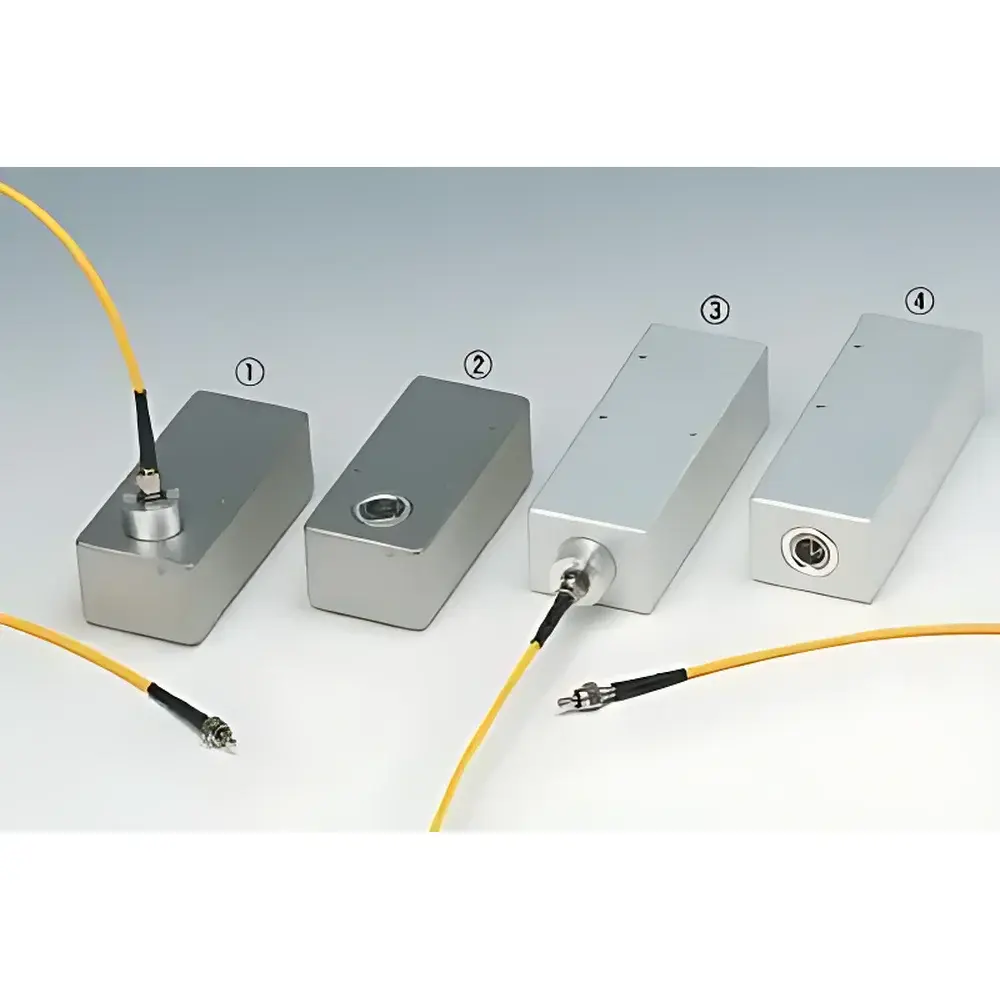
Compact 5W Xenon Lamp Module (SPL L94/L11 Series)
| Brand | SPL |
|---|---|
| Origin | Japan |
| Light Source Type | Xenon Lamp |
| Maximum Optical Output Power | 5 W |
| Illumination Mode | External Illumination |
| Housing | Metal Enclosure |
| Spectral Range | UV to NIR (≈200–1100 nm) |
| Stability | ≤2.0% CV (Coefficient of Variation) |
| Lifetime | ≥1.0×10⁹ flashes |
| Interface Options | SMA-905 or Collimated Output |
| Mounting Form Factor | Compact Modular Design |
| Compliance | CE-marked for laboratory instrumentation use |
| Regulatory Context | Designed for integration into analyzers requiring IEC 61000-6-3 EMC-compliant light sources |
Overview
The SPL L94/L11 Series Compact 5W Xenon Lamp Module is an engineered solid-state-integrated pulsed light source designed for high-reliability optical detection systems in analytical instrumentation. Based on a sealed, metal-housed short-arc xenon lamp, it operates via high-voltage triggering to generate intense, broadband radiation spanning the deep ultraviolet (UV) through visible and into the near-infrared (NIR) spectrum—approximately 200 nm to 1100 nm. Unlike continuous-wave (CW) lamps, this module delivers precisely timed, microsecond-duration pulses with exceptional temporal reproducibility, making it especially suitable for time-resolved fluorescence, absorbance kinetics, and synchronous detection architectures. Its 5 W peak optical output power represents the highest achievable radiometric intensity within its physical footprint (≤Φ25 mm × 35 mm), enabling high signal-to-noise ratio (SNR) measurements without thermal load compromises typical of larger arc lamps. The module’s internal driver integrates ignition circuitry, current regulation, and thermal monitoring—ensuring stable pulse energy delivery over extended operational cycles.
Key Features
- Ultra-compact form factor (≤Φ25 mm × 35 mm) optimized for OEM integration into space-constrained analyzers such as portable water quality meters and atmospheric gas sensors.
- Metal enclosure design minimizes electromagnetic interference (EMI) and suppresses stray thermal radiation—critical for low-noise photodetector coupling in UV-VIS spectrophotometers.
- Optical stability ≤2.0% CV under constant pulse repetition frequency (PRF), validated per ISO 9001-controlled burn-in and aging protocols.
- Rated lifetime ≥1.0×10⁹ flashes at nominal operating conditions (200 V trigger, 100 Hz PRF, 10 µs pulse width), supporting multi-year deployment in unattended environmental monitoring stations.
- Two standardized optical interfaces: SMA-905 fiber-coupled port for flexible light delivery or factory-aligned collimated free-space output (1.5 mrad divergence, Ø3 mm beam).
- Compliant with IEC 61000-6-3 (emission) and IEC 61000-6-2 (immunity) standards for industrial environments; CE-marked for laboratory equipment applications.
Sample Compatibility & Compliance
This xenon module is compatible with standard quartz cuvettes (1 cm path length), flow cells (e.g., 500 µL microfluidic channels), and reflective sample holders used in benchtop and field-deployable analyzers. Its broad spectral output supports absorption measurements across multiple analyte bands—including nitrate (220 nm), dissolved organic carbon (DOC) via UV254, ozone (254 nm), and NO₂ (400–450 nm). For regulated applications, the module’s consistent pulse energy profile enables traceable calibration against NIST-traceable photodiode standards. It meets key requirements for instruments intended for EPA Method 300.0 (anions), ASTM D5540 (water turbidity), and ISO 7027 (turbidity measurement), particularly when integrated into GLP/GMP-compliant analyzer platforms where audit trails and calibration history are maintained per FDA 21 CFR Part 11 guidelines.
Software & Data Management
While the L94/L11 module itself is hardware-only (no embedded firmware), its TTL-compatible trigger input (3.3/5 V logic) enables seamless synchronization with host instrument controllers running LabVIEW, Python (PyVISA), or C++-based acquisition software. Pulse timing jitter is <50 ns RMS, supporting lock-in amplification and phase-sensitive detection workflows. When deployed in analyzers with onboard data logging, the module’s operational status (flash count, overtemperature events, ignition failure logs) can be relayed via optional digital status lines—facilitating predictive maintenance and automated recalibration scheduling in ISO/IEC 17025-accredited laboratories.
Applications
- Water quality analyzers: Real-time detection of nitrate, nitrite, phosphate, and organic pollutants via UV-VIS absorption spectroscopy.
- Atmospheric monitoring systems: Quantitative analysis of tropospheric NO₂, SO₂, and formaldehyde using differential optical absorption spectroscopy (DOAS).
- Fluorescence-based clinical analyzers: Excitation source for hemoglobin derivatives, bilirubin, and porphyrins in blood serum assays.
- Portable fluorometers and microplate readers: High-intensity excitation for low-concentration biomarker detection in environmental and life science screening.
- Calibration reference units: Stable broadband source for wavelength and photometric verification of spectroradiometers and hyperspectral imagers.
FAQ
What is the maximum recommended pulse repetition frequency (PRF) for continuous operation?
The module is rated for sustained operation up to 200 Hz at full 5 W output; derating to 100 Hz is recommended for >10,000-hour service life in uncooled enclosures.
Can this module be used with liquid light guides or UV-grade fused silica fibers?
Yes—SMA-905 interface supports standard 400 µm core UV-VIS-NIR fibers; transmission efficiency exceeds 85% from 250–800 nm when using solarization-resistant fibers.
Is there a built-in temperature sensor or thermal shutdown circuit?
Yes—integrated thermistor feedback regulates drive current and initiates safe shutdown if housing temperature exceeds 70 °C.
Does SPL provide calibration certificates traceable to NIST?
Upon request, SPL issues factory calibration reports (per ISO/IEC 17025 accredited partner labs) including spectral irradiance (W·sr⁻¹·m⁻²·nm⁻¹) and pulse energy (µJ/pulse) at defined wavelengths.
How does the metal housing affect EMI compatibility in sensitive detector circuits?
The hermetically sealed aluminum housing provides >60 dB shielding attenuation above 30 MHz, reducing conducted and radiated noise that could otherwise couple into photomultiplier tube (PMT) or avalanche photodiode (APD) front-end electronics.



