
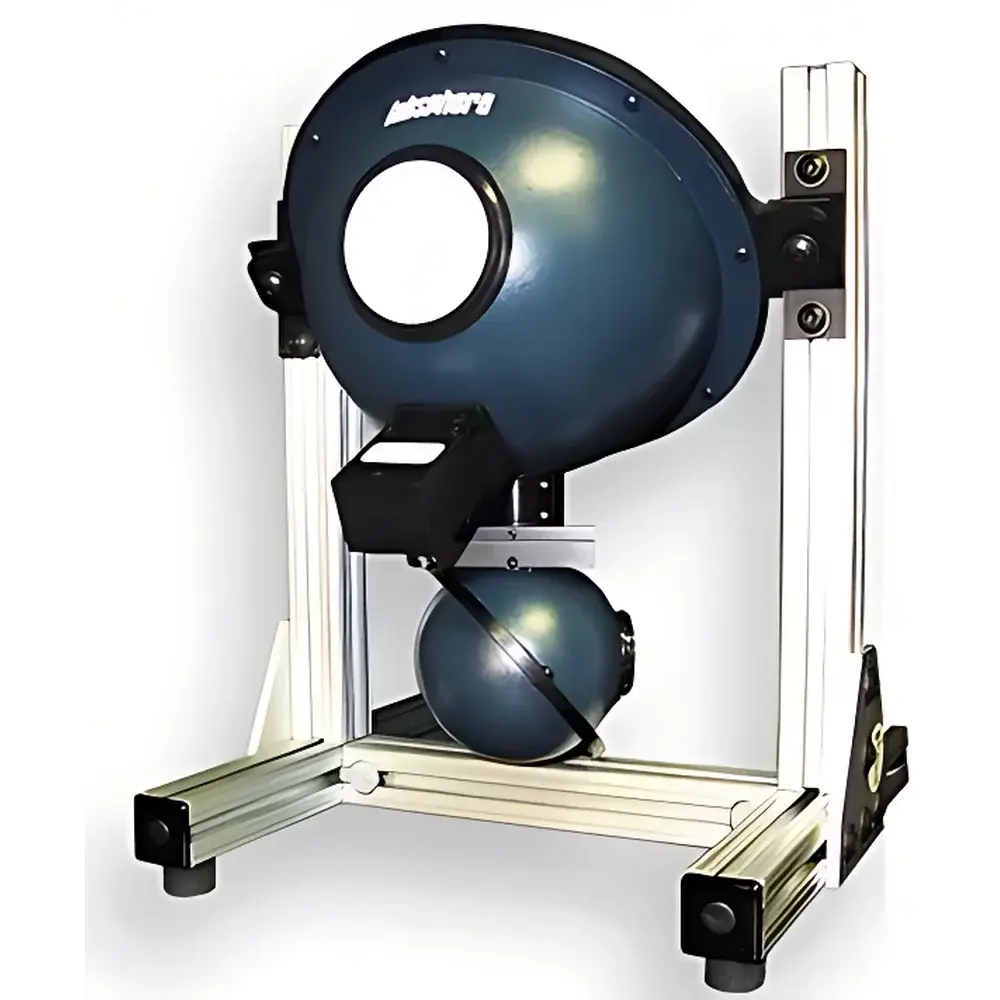
SPL Custom Large-Area Uniform Light Source System
| Brand | SPL |
|---|---|
| Origin | USA |
| Manufacturer Type | Authorized Distributor |
| Product Origin | Imported |
| Model | SPL Custom Large-Area Uniform Light Source System |
| Pricing | Upon Request |
Overview
The SPL Custom Large-Area Uniform Light Source System is an engineered optical calibration platform designed for high-fidelity radiometric and photometric characterization of large-aperture imaging and non-imaging optical systems. Based on collimated or integrating-sphere-based illumination architecture—configurable per application—the system delivers spatially uniform, spectrally stable, and temporally reproducible irradiance or radiance across apertures up to 1.5 meters in diameter. It operates on the principle of spatial homogenization via multi-reflection integration (for sphere-based variants) or precision collimation with diffuser-engineered beam shaping (for collimated variants), enabling traceable, NIST-traceable calibration of detectors, focal plane arrays, radiometers, photometers, and remote sensing instruments. The system is purpose-built for laboratories requiring compliance with ISO/IEC 17025, ASTM E308, CIE S 023, and USP photometric validation protocols.
Key Features
- Configurable spectral output spanning 250 nm to 2500 nm, achieved through synchronized operation of pulsed xenon arc lamps (UV–visible) and tungsten-halogen sources (visible–NIR), enabling continuous correlated color temperature (CCT) tuning from 2800 K to 6500 K.
- Uniformity better than ±1.5% over >90% of the defined output aperture—verified per ISO 13665 and CIE Publication 127—achievable via motorized diffuser positioning, adjustable lamp-to-integrator distance, and real-time feedback-controlled intensity stabilization.
- Dual-mode intensity control: programmable stepwise adjustment (0.1% increments) and analog continuous dimming (0–10 V or 4–20 mA interface), supporting both manual calibration routines and automated test sequences.
- Integrated thermal management system with forced-air cooling and temperature-stabilized lamp housings ensures drift < ±0.2% over 4-hour operational cycles, critical for long-duration radiometric validation.
- Factory-provided NIST-traceable calibration certificate includes spectral irradiance (W·m⁻²·nm⁻¹), spatial uniformity maps, temporal stability data, and uncertainty budgets compliant with GUM (JCGM 100:2008).
Sample Compatibility & Compliance
The system accommodates optical devices with entrance apertures ranging from 50 mm to 1500 mm, including satellite-borne push-broom sensors, airborne hyperspectral imagers, automotive ADAS camera modules, and large-format scientific CCD/CMOS focal planes. All configurations adhere to IEC 61000-4-3 (radiated immunity) and meet Class 1 laser safety requirements per IEC 60825-1 when operated within specified exposure limits. Calibration documentation satisfies FDA 21 CFR Part 11 audit trail requirements for electronic records and signatures, and supports GLP/GMP-compliant validation workflows—including IQ/OQ/PQ documentation packages upon request.
Software & Data Management
Control is executed via SPL LightCal™ v4.2—a Windows-based application supporting LabVIEW, Python (PyVISA), and MATLAB instrument drivers. The software provides real-time monitoring of lamp voltage/current, integrated detector readings, uniformity correction coefficients, and historical calibration logs. All measurement sessions are timestamped, user-authenticated, and exportable in CSV, HDF5, or XML formats compatible with LIMS integration. Audit trails record parameter changes, calibration events, and operator actions—fully compliant with ISO/IEC 17025 clause 7.7 and Annex A2 requirements for data integrity.
Applications
- Radiometric calibration of Earth observation sensors (e.g., VIIRS, OLI, MSI) prior to launch and during ground verification.
- Photometric validation of automotive camera systems under standardized D65, A, and TL84 illuminants per ISO 16505 and SAE J2824.
- Non-uniformity correction (NUC) and gain mapping of infrared FPAs using programmable spectral ramps.
- Testing of optical attenuation filters, neutral density standards, and stray light suppression performance in telescope baffles.
- Validation of spectral radiance transfer standards used in national metrology institutes (NMIs) and accredited calibration labs.
FAQ
Is the system supplied with a full NIST-traceable calibration certificate?
Yes—each unit ships with a comprehensive certificate covering spectral irradiance, spatial uniformity, temporal stability, and associated expanded uncertainties (k = 2), directly traceable to NIST SRMs 1930, 2025, and 2030.
Can the system be configured for vacuum or cleanroom environments?
Yes—custom enclosures with CF flanges, bake-out compatibility (up to 80 °C), and ISO Class 5 particulate filtration are available as optional hardware packages.
What level of after-sales technical support does SPL provide?
SPL offers remote diagnostics, firmware updates, annual performance verification services, and on-site re-calibration by NIST-accredited engineers—with SLA options for 4-hour response time on critical issues.
Are OEM integration interfaces available for embedding into automated test equipment (ATE)?
Yes—RS-232, Ethernet (TCP/IP), USB-TMC, and GPIB interfaces are standard; SCPI command sets and API documentation are provided for seamless ATE integration.



