
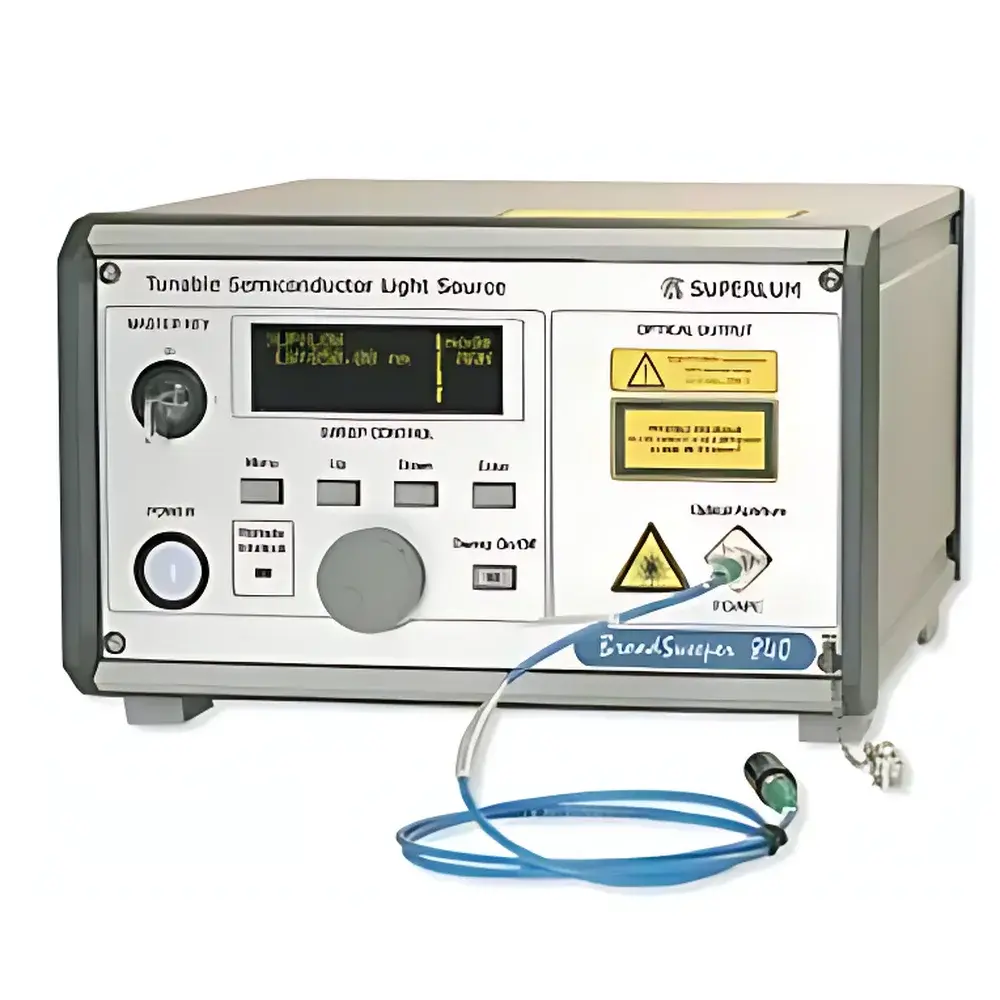
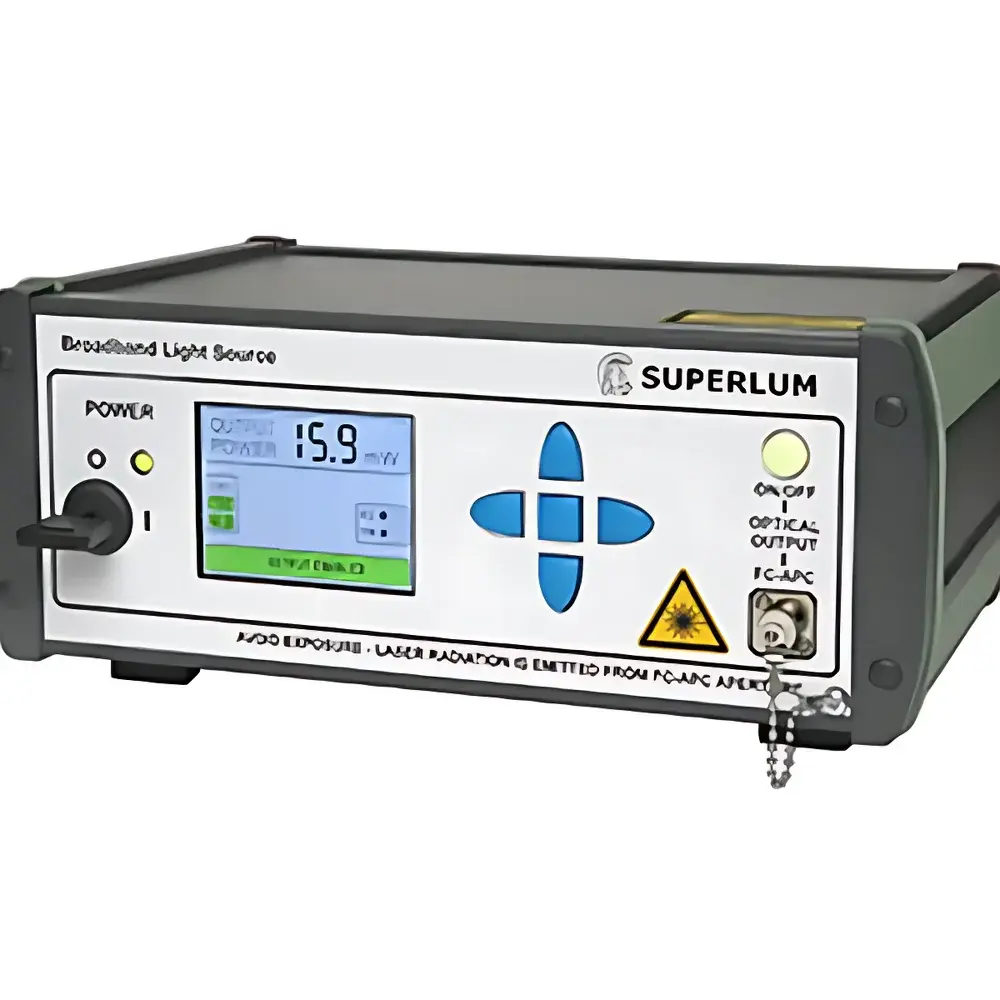
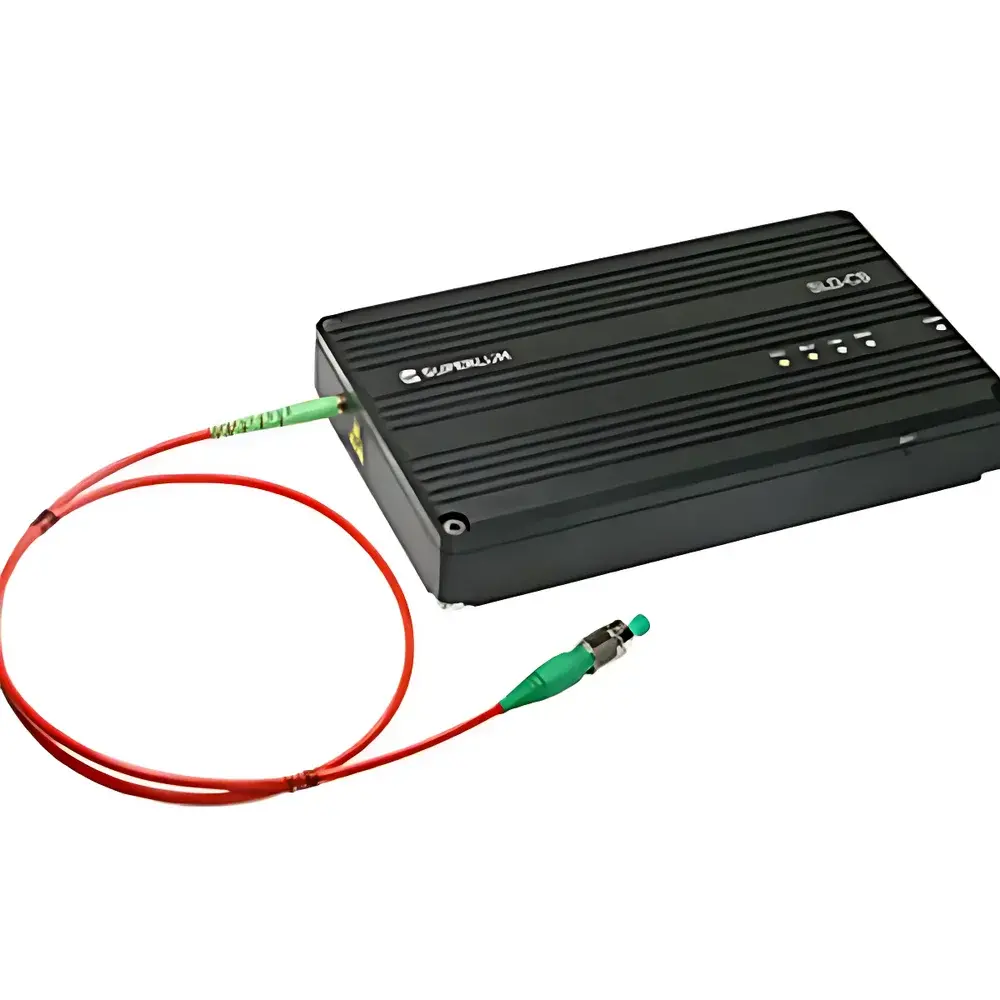
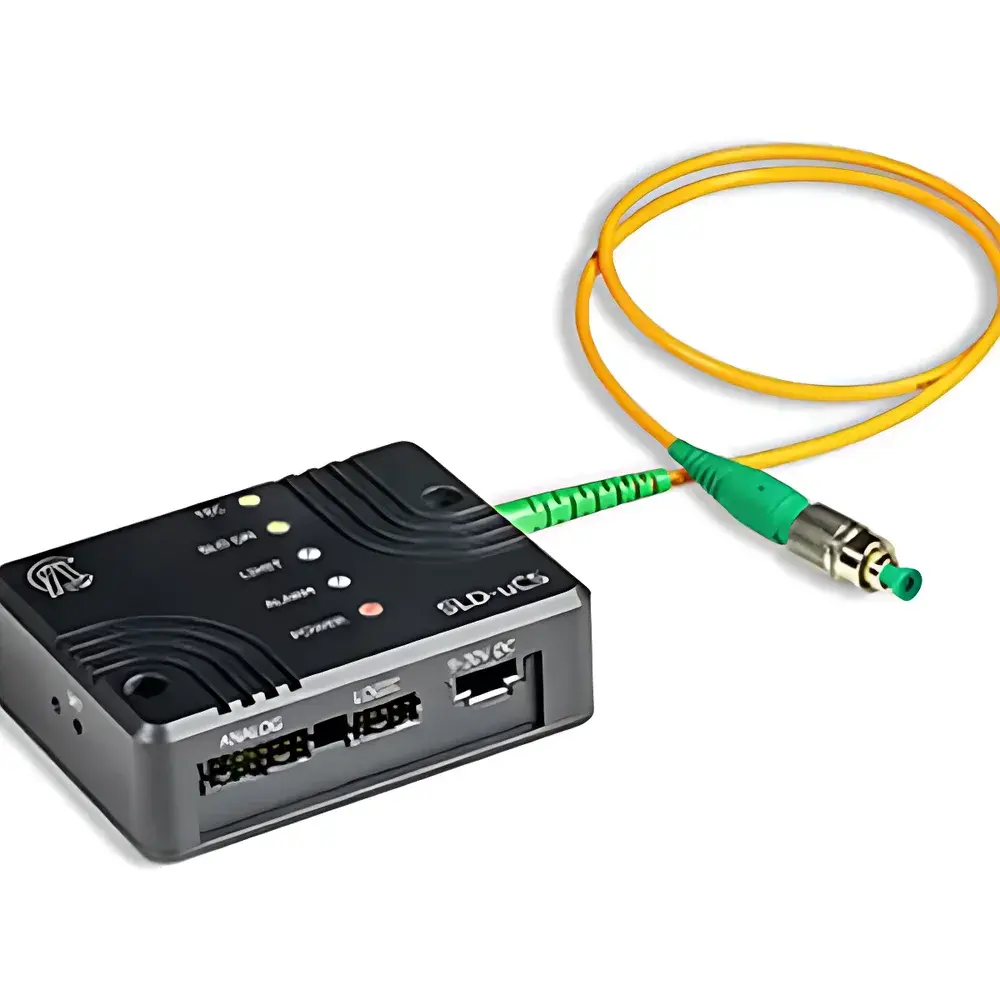
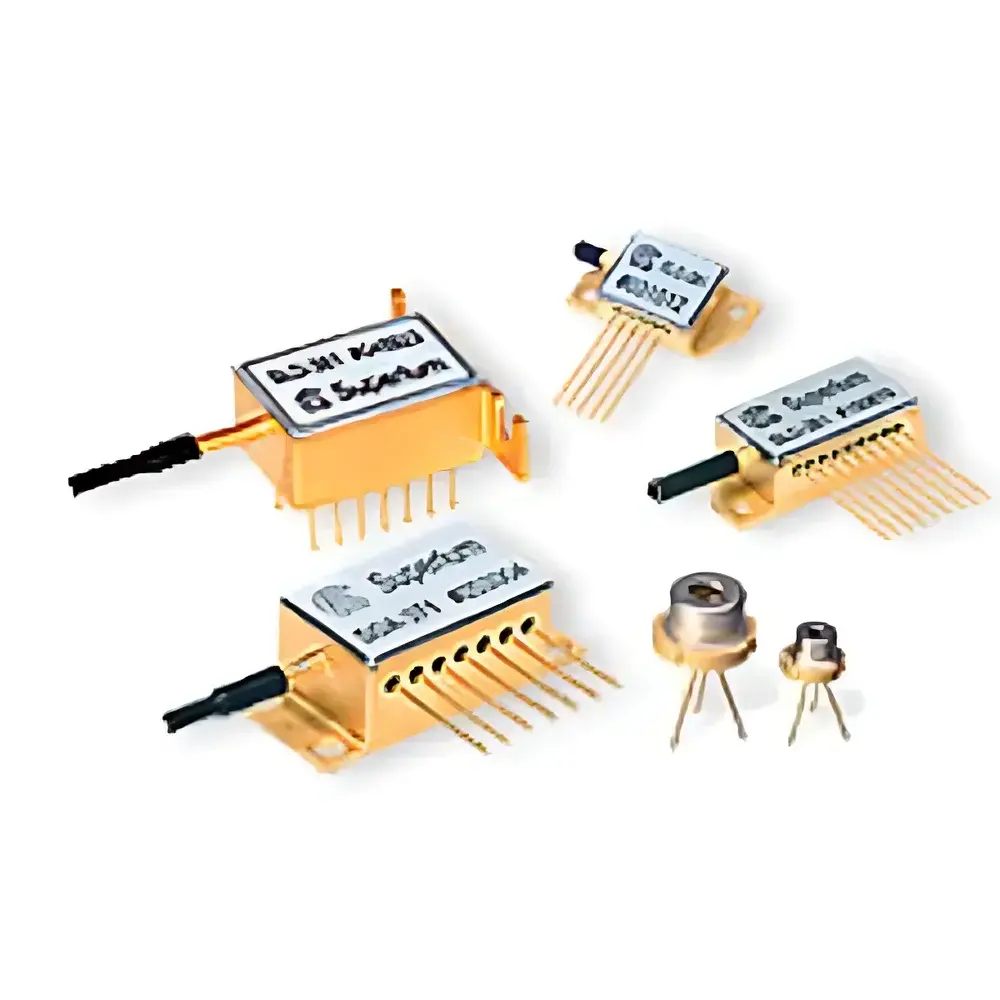
Superlum SLD-261-MP / SLD-M381 / SLD-mCS / BS-785-1-HP* Broadband Light Sources for Spectral-Domain Optical Coherence Tomography (SD-OCT)
| Brand | Superlum |
|---|---|
| Origin | Ireland |
| Product Types | Superlumination Diode (SLD) Modules, Swept-Source Lasers (BS Series), Fiber-Coupled Semiconductor Optical Amplifiers (SOAs) |
| Wavelength Range | 650–1620 nm |
| Spectral Bandwidth (FWHM) | Up to 100 nm (SLDs), up to 200 nm (multi-SLD sources) |
| Output Power | Up to 100 mW (multimode fiber-coupled), up to 30 mW (single-mode), up to 20 mW (broadband multi-SLD benchtop units) |
| Tuning Speed | Up to 100,000 nm/s (BS series) |
| Linewidth | 0.06–0.15 nm (BS series) |
| Compliance | RoHS-certified, CE-marked, designed for GLP-compliant OCT system integration |
Overview
Superlum’s broadband light sources are engineered for high-stability, low-coherence illumination in spectral-domain optical coherence tomography (SD-OCT) and other interferometric metrology applications. These sources leverage superluminescent diode (SLD) technology—operating on amplified spontaneous emission (ASE) in semiconductor gain media—to deliver spatially coherent, temporally incoherent output with Gaussian-like spectral profiles and high spectral density. Unlike lasers, SLDs exhibit negligible coherence length (<20 µm typical), enabling axial resolution down to ~5–15 µm in SD-OCT systems depending on central wavelength and FWHM bandwidth. The BS-series swept-source lasers employ an all-fiber external cavity architecture incorporating a broadband semiconductor optical amplifier (SOA) and an acousto-optic tunable filter (AOTF) with active thermal stabilization—ensuring sub-50 pm wavelength selection accuracy, 10⁶ scan cycles. All modules integrate precision current and thermoelectric temperature control, low-noise drive electronics, and optional integrated optical isolators to suppress back-reflection-induced instabilities—critical for long-term OCT system reliability under clinical or industrial QA/QC conditions.
Key Features
- Multiple platform options: compact OEM modules (SLD-mCS, SLD-sCS), benchtop broadband sources (M-D, M-T, cBLMD), and swept-source lasers (BS-785, BS-840, BS-1060 series)
- Wavelength coverage from 650 nm to 1620 nm across 11 discrete bands, supporting visible, NIR, and SWIR OCT implementations
- SLD spectral bandwidths up to 100 nm (FWHM); multi-SLD sources achieve >200 nm aggregate bandwidth via spectral stitching
- Output power options: up to 100 mW into multimode fiber (e.g., SLD-M381 @ 840 nm), up to 30 mW into single-mode fiber (e.g., SLD-340-UHP), and up to 20 mW for stabilized multi-band benchtop units
- BS-series swept sources offer linear, repeatable scanning at speeds up to 100,000 nm/s with <0.01% nonlinearity (k-space corrected), compatible with high-speed line-scan CCDs and CMOS detectors
- All units feature RS-232/TTL digital interface, analog modulation input (up to 50 kHz), ACC/APC mode switching, and built-in monitoring photodiodes
- RoHS-compliant construction; CE-marked; designed to meet electromagnetic compatibility (EMC) requirements per EN 61326-1 for laboratory instrumentation
Sample Compatibility & Compliance
Superlum broadband sources are optimized for integration into SD-OCT systems requiring high spectral radiance, low temporal coherence, and long-term intensity stability. They are routinely deployed in ophthalmic imaging (retinal layer segmentation), dermatology (epidermal thickness mapping), cardiology (intravascular plaque characterization), and industrial non-destructive testing (NDT) of polymer composites and coated substrates. The SLD-261-MP (660–680 nm), SLD-340-UHP (830–850 nm), and SLD-530-UHP (1030–1050 nm) models are widely adopted in FDA-cleared and CE-marked OCT platforms. All devices comply with IEC 61000-4 electromagnetic immunity standards and operate within ambient temperature ranges of +15 °C to +30 °C—meeting typical Class II laboratory environmental specifications. For regulated environments, firmware supports audit-trail-capable logging of operating parameters (current, TEC setpoint, photodiode feedback) compatible with 21 CFR Part 11–aligned data management systems when interfaced via serial protocol.
Software & Data Management
Superlum provides the Superlum Control Software Suite (v4.2+), a Windows-based application supporting real-time parameter configuration, waveform generation for swept-source triggering, and automated calibration routines for spectral flatness correction. The software implements SCPI-compatible command syntax over USB virtual COM port or RS-232, enabling seamless integration with LabVIEW, MATLAB, Python (PySerial), and C# applications. Firmware includes non-volatile memory for user-defined presets, factory calibration coefficients, and error-log history (last 1000 events). For GxP environments, optional firmware upgrade enables timestamped parameter logging with digital signature verification—supporting ALCOA+ data integrity principles in GLP/GMP workflows. No proprietary drivers required; native HID-class USB enumeration ensures plug-and-play compatibility.
Applications
- Spectral-domain OCT (SD-OCT) systems for biomedical imaging and material characterization
- Fiber optic gyroscopes (FOGs) requiring broadband ASE sources with polarization-maintaining (PM) output options
- Low-coherence interferometry (LCI) for surface profilometry and thin-film thickness measurement
- Optical component testing: insertion loss, polarization-dependent loss (PDL), and group delay dispersion (GDD) characterization
- Development of swept-source OCT (SS-OCT) engines with customizable scan protocols and k-clock synchronization
- Research-grade optical coherence elastography (OCE) and angiography (OCTA) platforms demanding high signal-to-noise ratio (SNR) and phase stability
FAQ
What is the difference between SLD-based broadband sources and swept-source lasers?
SLD sources emit broadband ASE simultaneously across their full spectrum—ideal for SD-OCT where a spectrometer resolves interference fringes. Swept-source lasers (e.g., BS-785-1-HP*) rapidly tune a narrow-linewidth laser across a defined band—used in SS-OCT where time-encoded wavelength sweeps replace spectral detection.
Can these sources be integrated into custom OCT systems with third-party spectrometers or line-scan cameras?
Yes. All modules provide standardized FC/PC or FC/APC single-mode fiber outputs (SMF-28 or PM980), TTL sync outputs for camera triggering, and analog modulation inputs for intensity control—fully compatible with commercial OCT detection electronics.
Do Superlum SLDs require external optical isolation?
SLD-sCS and cBLMD series include integrated isolators (≥30 dB). For SLD-M381 or bare SLDs, external isolation is recommended if system back-reflection exceeds −30 dB to prevent power instability and spectral ripple.
Are calibration certificates traceable to NIST or other national standards available?
Yes. Factory spectral power calibration (±3% uncertainty) is provided with each unit; optional NIST-traceable spectral irradiance calibration (via accredited lab) is available upon request.
What is the expected lifetime under continuous operation?
Rated MTBF ≥ 25,000 hours at nominal drive current and case temperature ≤ 35 °C—validated per Telcordia GR-468-CORE reliability testing for optoelectronic components.




