
Fermionics FD-Series High-Speed InGaAs Photodiodes
| Brand | Fermionics |
|---|---|
| Origin | USA |
| Model | FD50–FD300 (High-Speed) / FD500–FD5000W (Large-Area) |
| Spectral Range | 800–1700 nm |
| Active Area Diameter | 50–5000 µm |
| Capacitance | Low (typ. <0.15 pF for FD50) |
| Dark Current | Low (typ. <0.5 nA at –5 V for FD50) |
| Operating Temperature | –40 to +85 °C |
| Storage Temperature | –40 to +100 °C |
| Passivation | Planar passivated |
| AR Coating | Broadband anti-reflection (800–1700 nm) |
| Compliance | RoHS-compliant, ISO 9001-manufactured wafers |
Overview
The Fermionics FD-Series InGaAs photodiodes are precision semiconductor photodetectors engineered for high-fidelity optical-to-electrical conversion in demanding time-resolved and low-noise applications. Based on lattice-matched In0.53Ga0.47As epitaxial layers grown on InP substrates, these devices operate across the near-infrared (NIR) spectrum from 800 nm to 1700 nm — a critical range encompassing O-, E-, S-, C-, L-, and U-band telecommunications wavelengths, as well as key molecular absorption features used in spectroscopic sensing and medical diagnostics. The FD50–FD300 series emphasizes speed and linearity: optimized junction design yields ultra-low junction capacitance (down to ~0.08 pF for FD50 at –5 V bias) and sub-nanoampere dark current, enabling bandwidths exceeding 1 GHz (depending on load and bias conditions). The FD500–FD5000W variants prioritize quantum efficiency and signal-to-noise ratio for moderate-speed applications requiring large-area collection, such as integrating sphere-based radiometry or free-space IR detection.
Key Features
- Monolithic InGaAs/InP heterostructure with planar passivation for long-term stability and low surface recombination velocity
- Broadband anti-reflection coating (800–1700 nm) achieving >95% average responsivity across the full spectral band
- Low-capacitance, low-dark-current architecture — validated under reverse bias up to –10 V for optimal linearity and dynamic range
- Multiple active area options: 50 µm, 80 µm, 100 µm, 150 µm, 300 µm (FD-series); 500 µm, 1 mm, 1.5 mm, 2 mm, 3 mm, and 5 mm (FDW-series)
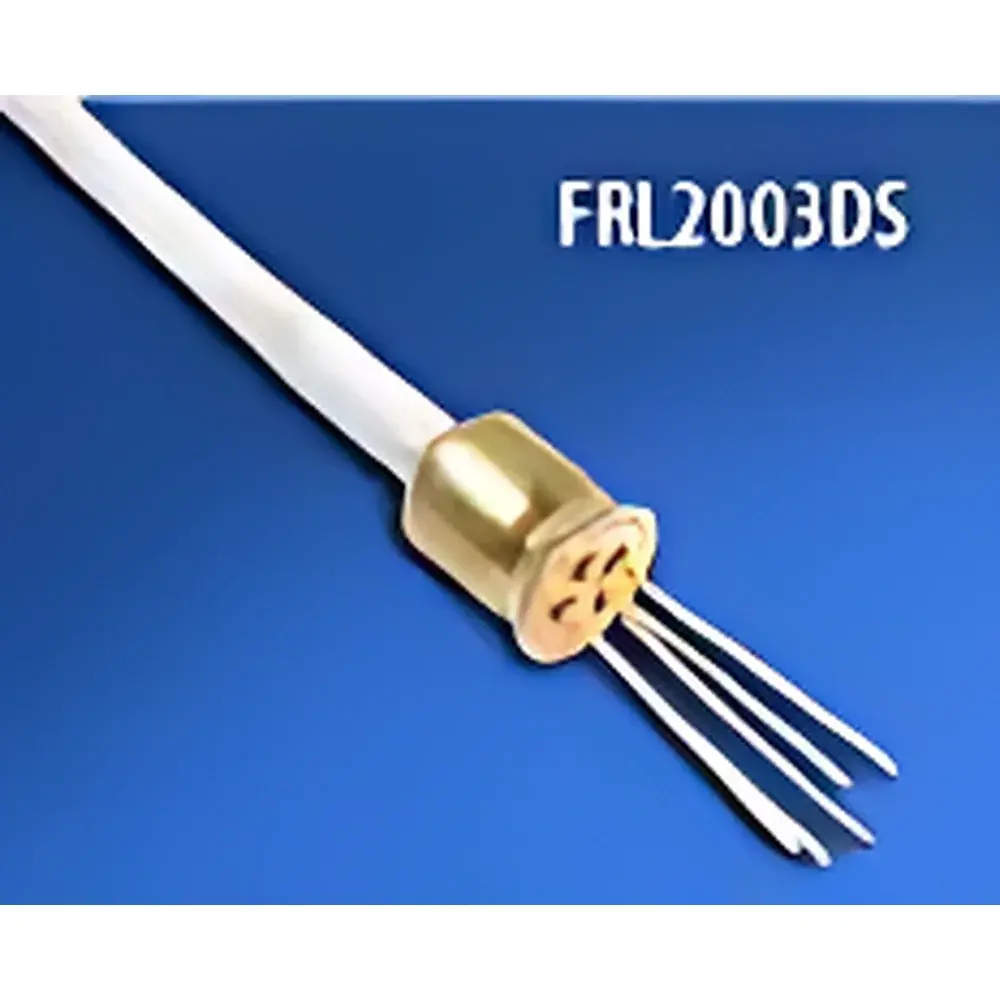
- Hermetically sealed TO-46, TO-52, or custom ceramic packages with fiber-pigtailed or free-space input configurations
- Compliant with Telcordia GR-468-CORE reliability standards for telecom-grade deployment
Sample Compatibility & Compliance
These photodiodes interface directly with standard single-mode (SMF-28) and multimode fibers via integrated collimators or discrete coupling optics. They are compatible with industry-standard transimpedance amplifier (TIA) modules, oscilloscopes with 50 Ω inputs, and lock-in amplifiers operating in voltage or current mode. All wafers are processed in an ISO 9001-certified cleanroom environment. Device-level qualification includes thermal cycling (–40 °C ↔ +85 °C, 100 cycles), humidity exposure (85% RH, 168 h), and mechanical shock testing (1500 g, 0.5 ms). The devices meet RoHS Directive 2011/65/EU and are suitable for integration into systems requiring IEC 61000-4 electromagnetic compatibility compliance.
Software & Data Management
While the FD-Series are analog front-end components (not standalone instruments), they are routinely integrated into calibrated measurement platforms compliant with NIST-traceable calibration hierarchies. When paired with Fermionics-recommended TIAs and digitizers, system-level data acquisition supports IEEE 1588 Precision Time Protocol synchronization for multi-channel timing alignment. Raw photocurrent outputs are compatible with LabVIEW™, Python (via PyVISA or DAQmx drivers), and MATLAB® environments. For GxP-regulated environments (e.g., pharmaceutical NIR process analytical technology), full audit trails, electronic signatures, and 21 CFR Part 11–compliant software wrappers can be implemented at the system level using validated third-party DAQ frameworks.
Applications
- High-bit-rate optical receivers (≥10 Gbps) in DWDM and coherent communication test beds
- Analog optical links for RF-over-fiber distribution and antenna remoting
- Pulsed laser characterization (pulse width, jitter, extinction ratio) in femtosecond-to-nanosecond regimes
- FTIR spectrometer detector arrays (when tiled or used in scanning configurations)
- Non-contact temperature monitoring in industrial furnaces (1000–2000 K blackbody radiation)
- Time-of-flight (ToF) LiDAR receivers for autonomous vehicle and atmospheric sensing platforms
- Quantum optics experiments requiring low-jitter, high-efficiency NIR photon counting (in conjunction with cryogenic amplification)
FAQ
What is the typical responsivity at 1550 nm?
Typical responsivity is 0.95–1.10 A/W at –5 V bias, depending on active area size and AR coating batch.
Can these diodes be operated in photovoltaic mode?
Yes; zero-bias operation is supported but results in reduced bandwidth and higher rise time due to increased junction capacitance.
Is thermoelectric cooling required for low-dark-current performance?
Not required for most lab or telecom applications; dark current remains below 2 nA at +25 °C and –5 V bias. For sub-picoampere dark current requirements (e.g., ultra-low-light spectroscopy), TE cooling to –20 °C is recommended.
Do you provide calibrated spectral response data?
Yes — NIST-traceable spectral responsivity curves (±2% uncertainty) are supplied with each wafer lot upon request.
Are custom packaging or fiber pigtail options available?
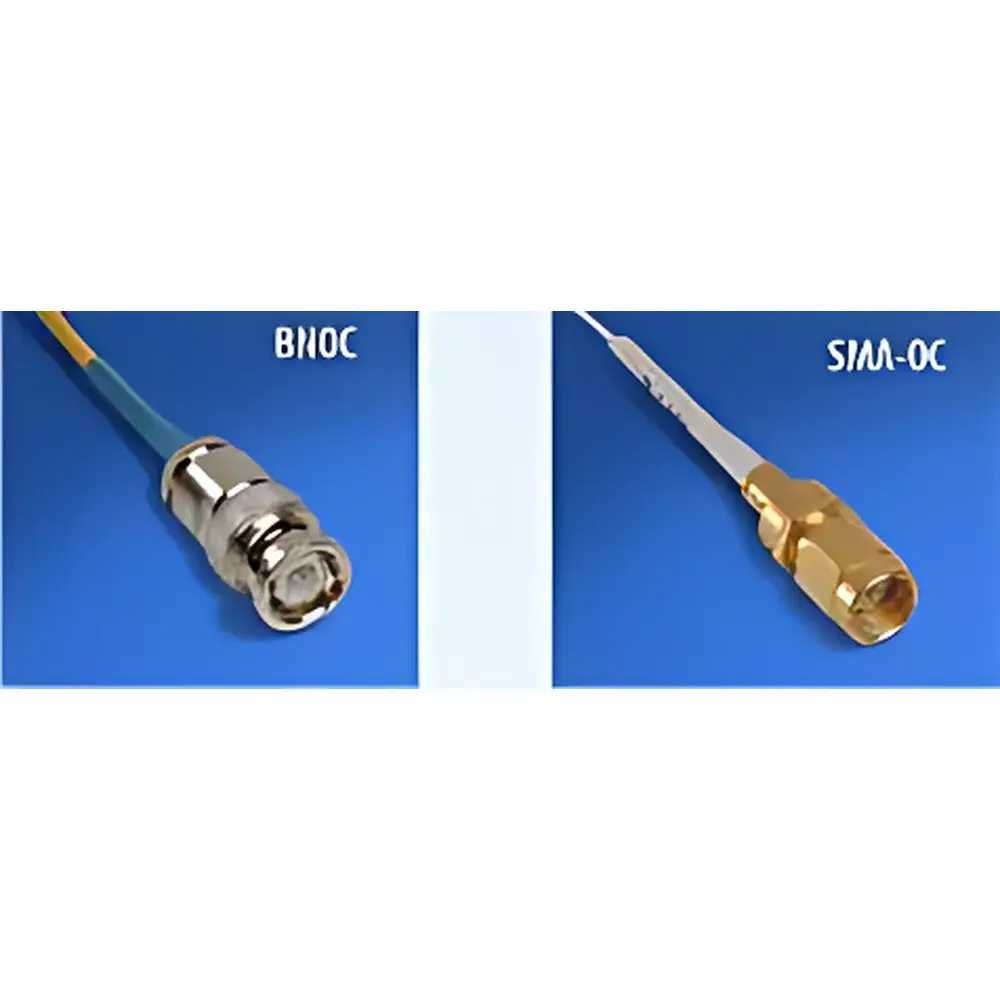
Yes — custom TO-can configurations, butterfly housings, and SMF-28 or PM fiber pigtails with FC/APC or FC/PC connectors are offered under OEM agreements.





