
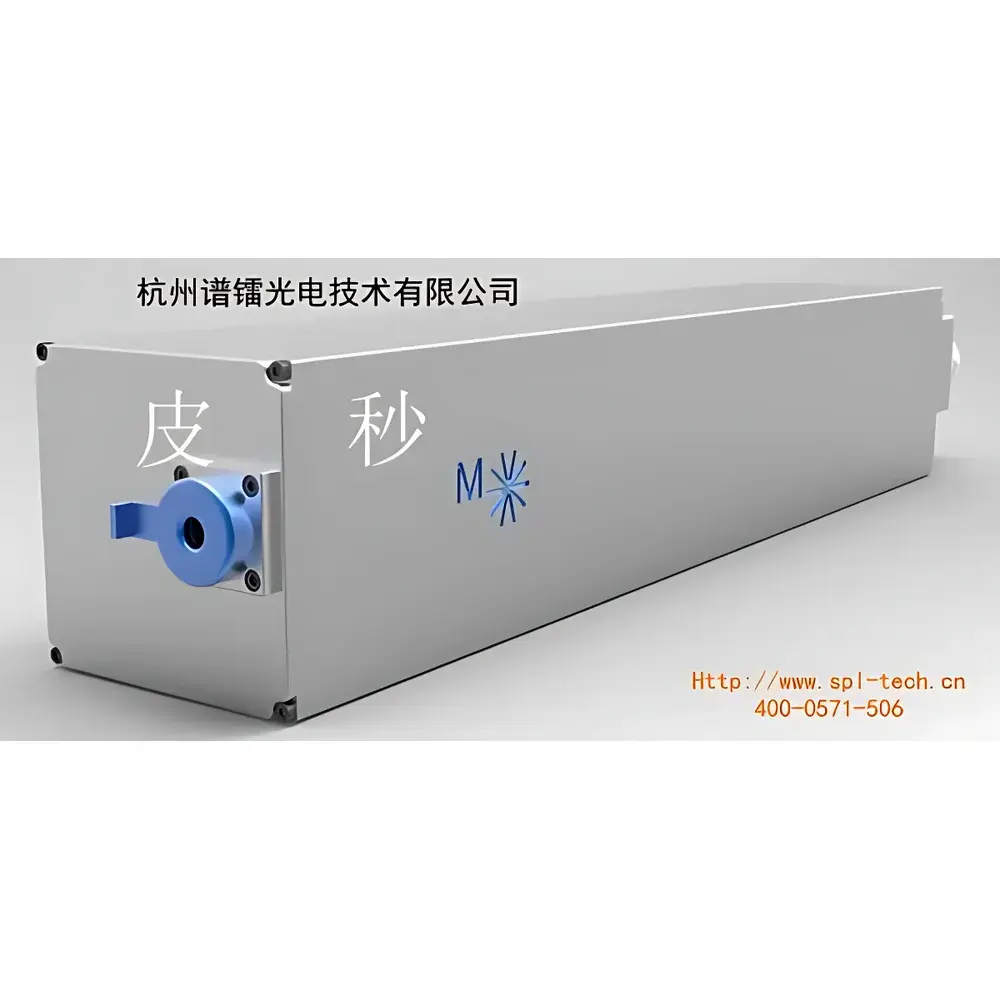
Montfort MP-PS Series High-Power Picosecond Laser System (OPO Pump Source)
| Brand | Montfort |
|---|---|
| Origin | Austria |
| Model | MP-PS-4W / MP-PS-6W / MP-PS-10W |
| Average Output Power | 4 W / 6 W / 10 W (selectable) |
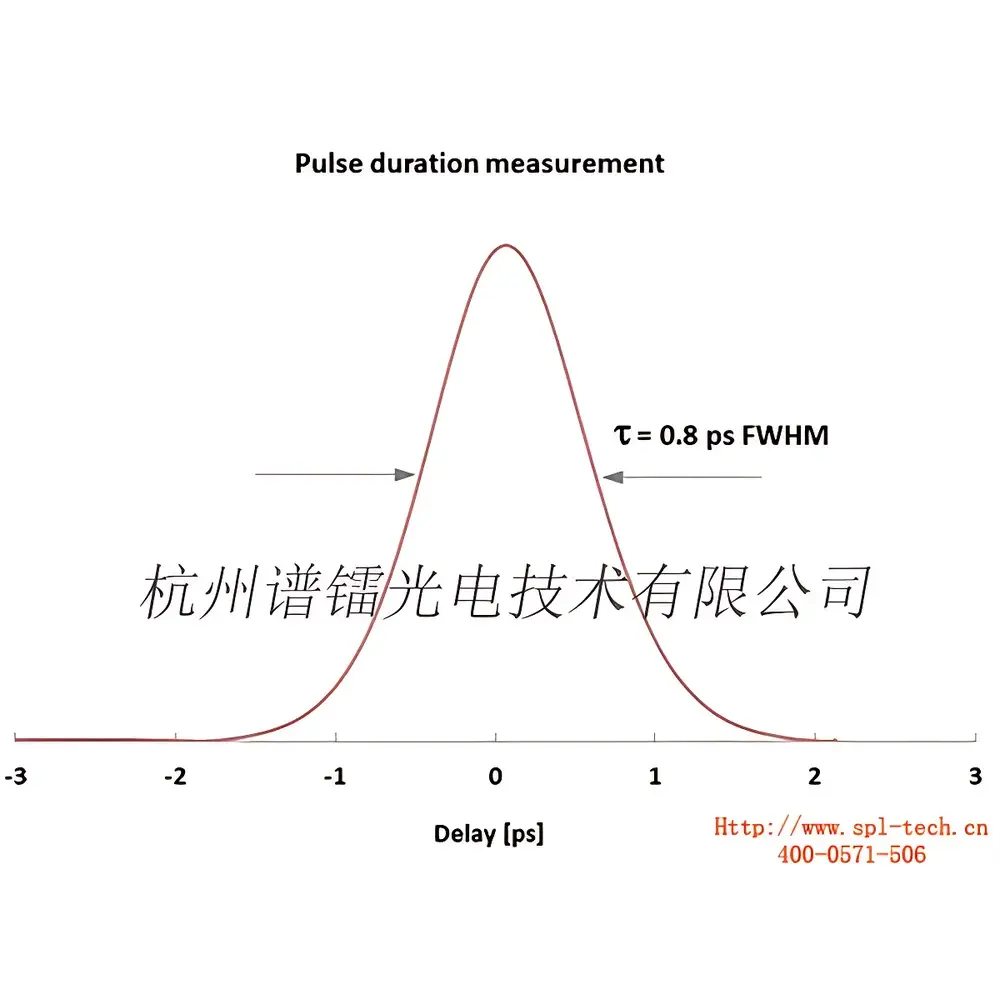
| Pulse Duration (FWHM, sech²) | 0.7–2 ps (factory-set per order) |
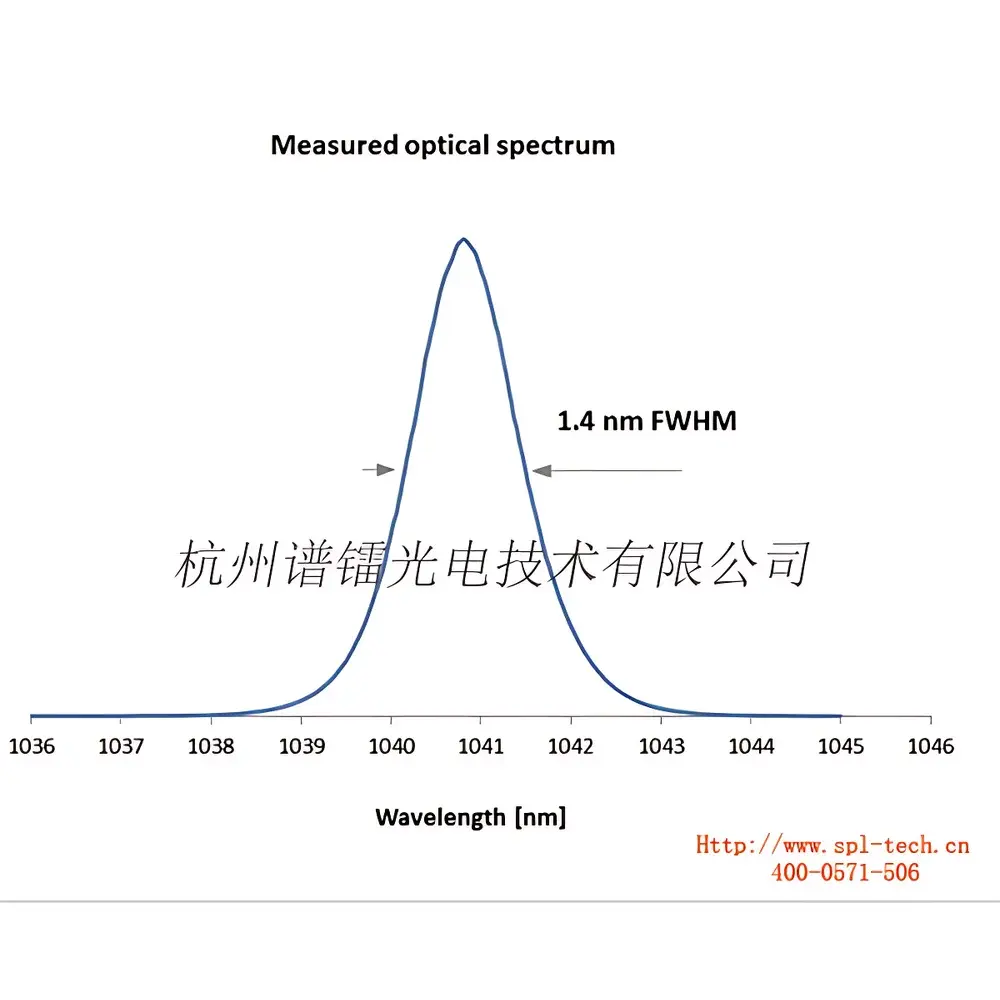
| Central Wavelength | 1030 ±5 nm |
| Repetition Rate | 85 ±5 MHz |
| Beam Quality (M²) | <1.2 |
| Laser Head Dimensions | 520 × 100 × 100 mm³ |
| Controller | 19″ rack-mount, 3 HU (sold separately) |
| Laser Type | SESAM-mode-locked Yb-doped solid-state oscillator |
| Pump Source | Fiber-coupled semiconductor diode |
| Compliance | CE, RoHS, IEC 60825-1:2014 Class 4 Laser Product |
Overview
The Montfort MP-PS Series is a high-repetition-rate, diode-pumped, SESAM-mode-locked ytterbium-doped solid-state picosecond laser system engineered for demanding ultrafast applications requiring exceptional temporal stability, beam fidelity, and long-term reliability. Operating at a center wavelength of 1030 nm with pulse durations tunable between 0.7 ps and 2 ps (FWHM, sech² profile), the MP-PS serves as a robust primary oscillator or seed source for optical parametric oscillators (OPOs), chirped-pulse amplification (CPA) systems, and nonlinear frequency conversion setups. Its all-solid-state architecture—free of liquid dyes or fragile fiber amplifiers—ensures mechanical rigidity, thermal stability, and immunity to environmental perturbations commonly encountered in field-deployable or industrial integration scenarios. Designed and manufactured in Austria by Montfort Laser GmbH—a spin-off of High Q Lasers with over two decades of semiconductor-pumped solid-state (DPSS) laser expertise—the MP-PS series reflects deep-rooted engineering discipline in compact ultrafast photonics.
Key Features
- Three power variants (4 W, 6 W, 10 W average output) optimized for scalability across OPO pumping thresholds and amplifier seeding requirements
- Factory-configurable pulse duration within 0.7–2 ps range, enabling precise matching to group-velocity dispersion compensation needs in downstream amplifiers
- Diffraction-limited beam quality (M² < 1.2) ensuring high spatial coupling efficiency into nonlinear crystals, waveguides, and single-mode fibers
- Integrated fiber-coupled diode pump architecture eliminating free-space alignment sensitivity and enhancing operational longevity
- Compact, air-cooled laser head (520 × 100 × 100 mm³) compatible with OEM integration, mobile laboratories, and space-constrained optical tables
- 24 V DC operation capability—enabling deployment in battery-powered or vehicle-mounted configurations for field-based LIBS, LIDAR, or PIV systems
- Compliance with IEC 60825-1:2014 Class 4 safety standards, including interlock-ready control interface and integrated beam shutter functionality
Sample Compatibility & Compliance
The MP-PS laser is routinely employed in environments governed by ISO/IEC 17025-accredited calibration labs and GLP-compliant analytical facilities. Its stable CW-seeded mode-locking mechanism delivers pulse-to-pulse energy stability better than ±1.5% RMS over 8 hours—critical for quantitative LIBS analysis and time-resolved spectroscopy. The 1030 nm fundamental output is directly compatible with commercially available BBO, KTP, and PPLN crystals for efficient OPO tuning across UV–mid-IR spectral regions (e.g., 210–4000 nm). As a Class 4 laser product, it conforms to EU Machinery Directive 2006/42/EC, CE marking requirements, and RoHS 2011/65/EU restrictions on hazardous substances. Full traceable documentation—including factory test reports, alignment certificates, and laser safety classification files—is supplied with each unit to support FDA 21 CFR Part 11–aligned audit trails in regulated pharmaceutical or materials R&D settings.
Software & Data Management
The MP-PS operates via a dedicated 19″ rack-mount controller (3 HU, not included) featuring Ethernet (TCP/IP) and USB 2.0 interfaces for remote monitoring and parameter adjustment. Firmware supports real-time readout of output power, repetition rate deviation, internal cavity temperature, and diode current—loggable via ASCII-formatted CSV export for integration into LabVIEW, Python-based acquisition suites, or enterprise LIMS platforms. Optional TTL-compatible sync outputs (5 V, 50 Ω) provide deterministic trigger signals for gated detectors, streak cameras, or delay generators used in pump-probe experiments. All firmware updates are delivered through signed binary packages verified against Montfort’s public key infrastructure, satisfying integrity and authenticity requirements under GxP-aligned software validation protocols.
Applications
- Primary pump source for synchronously pumped OPOs generating tunable picosecond pulses across UV, visible, and IR bands
- Seed oscillator for multi-stage Yb-based CPA systems targeting >100 mJ pulse energy at kHz repetition rates
- Time-resolved fluorescence upconversion and transient absorption spectroscopy in photochemistry and photobiology
- Terahertz generation via optical rectification in ZnTe or DAST crystals
- Nonlinear microscopy techniques including multiphoton excitation and coherent anti-Stokes Raman scattering (CARS)
- Optical damage threshold testing of coatings, thin films, and optical components per ISO 21254 standards
- Ultrafast ablation and precision micromachining of transparent dielectrics, polymers, and thin metal films
- Particle image velocimetry (PIV) and laser-induced breakdown spectroscopy (LIBS) in harsh or mobile environments
FAQ
Is the pulse duration user-adjustable in the field?
No. Pulse duration is fixed at time of manufacture based on customer specification (0.7 ps, 1.0 ps, 1.5 ps, or 2.0 ps). Fine-tuning requires reconfiguration of the SESAM reflectivity and cavity dispersion compensation, which must be performed at Montfort’s facility.
Can the MP-PS be synchronized to an external clock signal?
Yes. The system accepts an external 85 MHz reference clock (TTL or sine wave, ±500 ppm tolerance) via SMA input, enabling phase-locked operation with RF-driven modulators or other ultrafast sources.
What cooling method does the laser employ?
Air cooling only—no water chiller or thermoelectric cooler required. Ambient operating temperature range: 15–30 °C, non-condensing environment.
Is the 1030 nm output suitable for direct frequency doubling?
Yes. With appropriate type-I BBO or LBO crystals and tight focusing, second-harmonic generation (SHG) to ~515 nm is routinely achieved with >45% conversion efficiency under optimal phase-matching conditions.
Does Montfort provide OEM integration support?
Yes. Mechanical drawings, electrical interface schematics, API documentation, and custom mounting brackets are available under NDA for turnkey system integration projects.




