
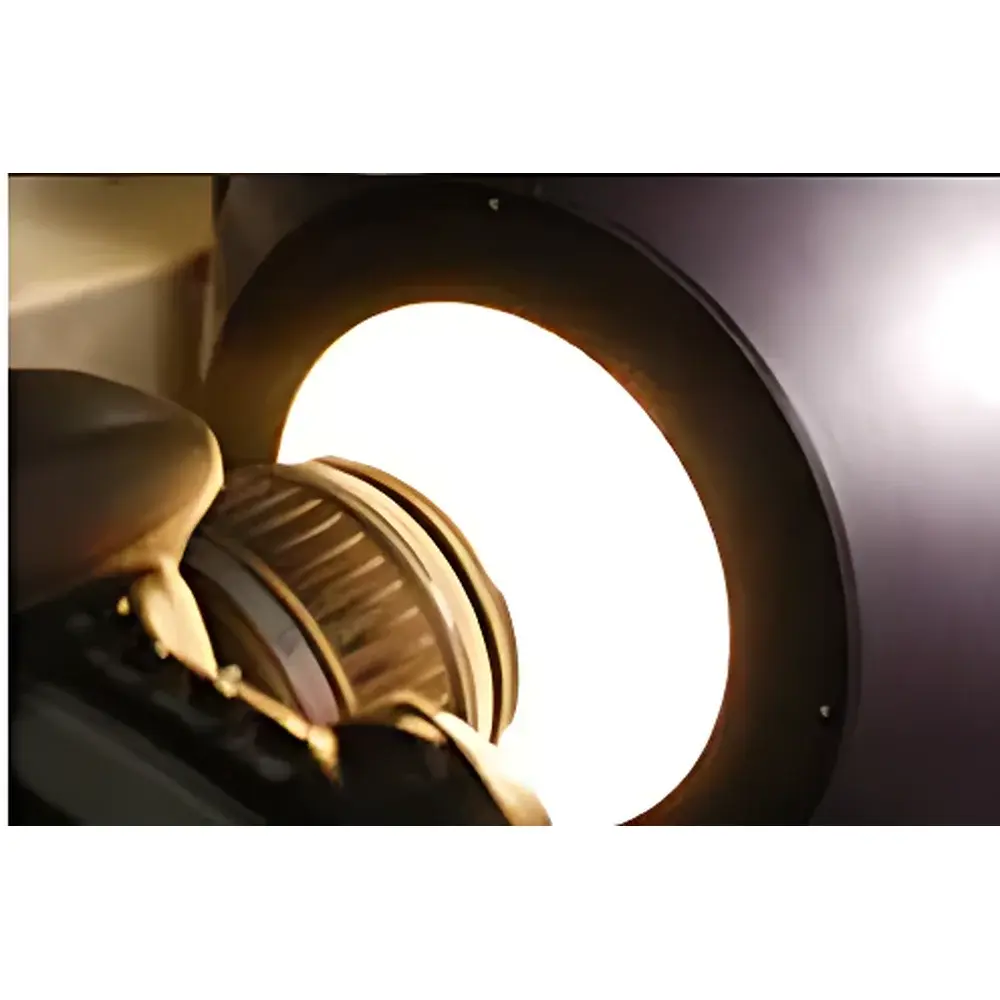
SPL Solar Spectrum Simulator System
| Brand | SPL |
|---|---|
| Origin | USA |
| Manufacturer Type | Authorized Distributor |
| Product Origin | Imported |
| Model | SPL Solar Spectrum Simulator System |
| Pricing | Available Upon Request |
| Spectral Range | UV to NIR (200–1100 nm) |
| Color Temperature Tunability | 3000 K – 6000 K |
| Calibration | NIST-traceable certificate provided |
| Output Monitoring | Integrated spectrometer and calibrated photodetector |
| Aperture Options | Multiple standard diameters (e.g., Ø25 mm, Ø50 mm, Ø100 mm) |
| Output Stability | <±0.5% over 1 hour (typical, under controlled ambient conditions) |
| Uniformity | >95% across central 80% of beam area (at specified working distance) |
Overview
The SPL Solar Spectrum Simulator System is a precision-engineered optical calibration source designed to replicate the spectral irradiance distribution of natural sunlight under controlled laboratory conditions. Based on broadband xenon-arc lamp technology coupled with advanced optical filtering and beam homogenization optics, the system delivers a continuous, spectrally stable output spanning 200 nm to 1100 nm—covering the full ultraviolet (UV), visible (VIS), and near-infrared (NIR) regions relevant to Earth observation sensors, solar cell characterization, and atmospheric remote sensing instrumentation. Unlike monochromatic or LED-based sources, this simulator employs a physically realistic continuum emission profile, enabling high-fidelity radiometric and spectral validation of hyperspectral imagers, multispectral radiometers, and satellite-borne Earth observation payloads. Its design adheres to fundamental principles outlined in ASTM E927-22 (Standard Specification for Solar Simulation for Photovoltaic Testing) and ISO 9022-12 (Optics and photonics — Environmental test methods — Solar simulation), ensuring compatibility with international calibration workflows.
Key Features
- Full-spectrum coverage from 200 nm to 1100 nm, supporting UV-enhanced silicon detectors, InGaAs NIR sensors, and hybrid focal plane arrays.
- Adjustable correlated color temperature (CCT) between 3000 K and 6000 K via motorized filter wheel and intensity-balanced lamp power control—enabling simulation of dawn/dusk, midday, and overcast solar conditions.
- Real-time spectral monitoring using an integrated, NIST-calibrated CCD-based spectrometer (resolution ≤1.5 nm FWHM) and a traceable thermopile detector for absolute irradiance feedback.
- Beam uniformity >95% over the central 80% of output aperture—verified per ISO 13695 and validated at standard working distances (e.g., 300 mm).
- Modular mechanical interface with standardized flange options (CF-35, SM1, or custom kinematic mounts) for seamless integration into vacuum chambers, goniometric stages, or optical benches.
- Comprehensive NIST-traceable calibration report included with each system, covering spectral irradiance (W·m⁻²·nm⁻¹), spatial uniformity, temporal stability, and angular divergence.
Sample Compatibility & Compliance
The SPL Solar Spectrum Simulator is compatible with reflective, transmissive, and emissive optical components up to Ø100 mm diameter. It supports both collimated and focused beam configurations and is routinely deployed in Class 1000 cleanroom environments for sensor qualification. The system meets essential requirements for radiometric traceability under ISO/IEC 17025:2017-accredited calibration laboratories. Its spectral output conforms to the AM1.5G reference spectrum (IEC 60904-3) within ±5% RMS deviation across 350–1050 nm when configured at 5772 K. All delivered calibration data are compliant with FDA 21 CFR Part 11 electronic record integrity standards, including audit trails, user authentication, and secure data export (CSV, HDF5, and SI-compatible XML formats).
Software & Data Management
The system is operated via SPL’s proprietary SpectrumControl Suite—a Windows-based application supporting automated wavelength scanning, CCT ramping, irradiance stabilization loops, and real-time spectral overlay against reference spectra (e.g., ASTM G173, MODTRAN outputs). Raw spectrometer data are timestamped and annotated with environmental metadata (ambient temperature, humidity, lamp operating hours). Software-generated reports include uncertainty budgets per GUM (JCGM 100:2008) and support GLP/GMP-compliant documentation workflows. Remote operation via TCP/IP and SCPI command set enables integration into automated test sequences governed by LabVIEW, Python (PyVISA), or MATLAB environments.
Applications
- Radiometric calibration of airborne and spaceborne multispectral/hyperspectral imaging systems (e.g., AVIRIS-NG, PRISMA, EnMAP).
- Pre-launch validation of Earth observation instrument response functions (RRFs) under simulated solar illumination conditions.
- Performance testing of solar reflectance standards, integrating spheres, and diffuse reflectance targets (e.g., Spectralon®, PTFE tiles).
- Quantitative evaluation of optical coatings, bandpass filters, and dichroic mirrors across broad spectral bands.
- Development and verification of atmospheric correction algorithms requiring ground-truth spectral irradiance inputs.
FAQ
Is the spectral output certified to AM1.5G?
Yes—when configured at 5772 K with optional AM1.5G filter set, the system achieves spectral match Class AAA per IEC 60904-9:2020 (spectral mismatch <±12.5%, spatial non-uniformity <±2%, temporal instability <±0.5%).
Can the system be used inside a vacuum chamber?
Yes—vacuum-compatible versions (up to 10⁻⁵ mbar) are available with CF-35 feedthroughs and conduction-cooled lamp housings.
What maintenance is required for long-term spectral stability?
Lamp replacement every 1,000–1,500 hours (xenon arc); annual recalibration recommended; spectrometer dark-current drift compensation performed automatically during startup.
Does the system support automated irradiance mapping?
Yes—integrated motorized XY stage option enables programmable raster scans with sub-millimeter positioning resolution and synchronized spectral acquisition.
Are custom spectral profiles supported?
Yes—user-defined spectra can be loaded as CSV target files; closed-loop feedback adjusts filter combination and lamp current to minimize RMS deviation over defined wavelength ranges.





