
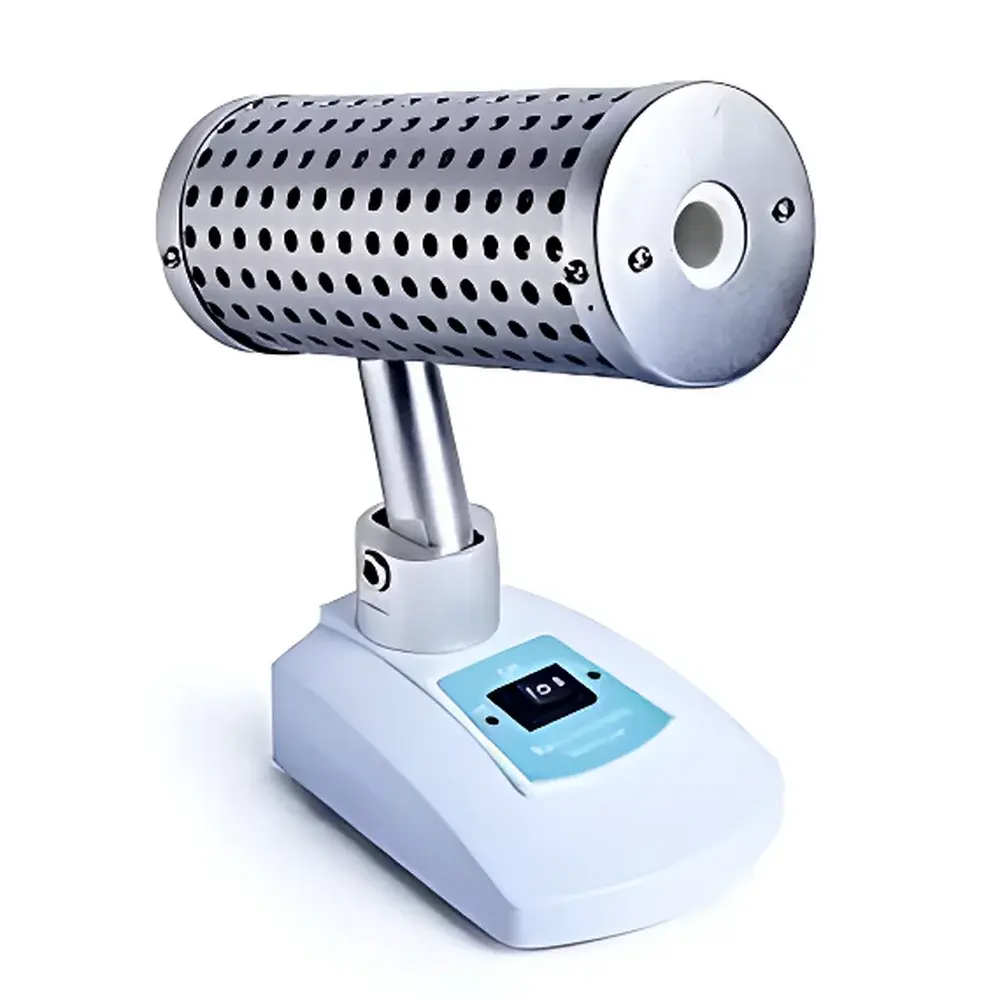
MENTS LC-800 Infrared Inoculation Loop Sterilizer
| Brand | MENTS |
|---|---|
| Origin | Beijing, China |
| Manufacturer Type | Direct Manufacturer |
| Product Category | Domestic |
| Model | LC-800 |
| Quotation | USD 350 (FOB) |
| Operating Temperature Range | Up to 825 °C |
| Temperature Setting Options | 480 °C / 825 °C |
| Temperature Uniformity at 825 °C | ±50 °C |
| Heating Power | 150 W |
| Internal Bore Diameter | φ14 mm |
| Heating Zone Length | 140 mm |
| Input Voltage | AC 220 V ±10%, 50 Hz ±1 Hz |
| Net Weight | 1.3 kg |
| Ambient Operating Temperature | 10–50 °C |
| Relative Humidity | ≤90% RH |
| Maximum Operating Altitude | Unrestricted |
Overview
The MENTS LC-800 Infrared Inoculation Loop Sterilizer is a compact, benchtop dry-heat sterilization device engineered for rapid, flame-free decontamination of microbiological inoculation loops, needles, and small metal instruments. Unlike traditional open-flame methods or convection-based dry heat ovens, the LC-800 employs high-intensity infrared radiation emitted from a ceramic heating element housed within a precisely engineered borosilicate glass or alumina-lined bore. This radiant heating mechanism delivers instantaneous thermal energy directly to the metal surface—achieving sterilization temperatures exceeding 800 °C in under 5 seconds. The unit operates on the principle of thermal inactivation via protein denaturation and nucleic acid degradation, validated for microbial kill of vegetative bacteria, yeasts, molds, and spores (including *Bacillus stearothermophilus* spores under defined exposure durations). Designed for integration into biosafety cabinets (Class II A2/B2), laminar flow hoods, anaerobic chambers, and mobile laboratory setups, it eliminates ignition hazards, airflow interference, and ethanol dependency—making it compliant with ISO 15189 and CLSI M29-A3 guidelines for aseptic technique in clinical and research microbiology.
Key Features
- Radiant infrared heating system with dual preset temperature modes (480 °C for routine disinfection; 825 °C ±50 °C for full sterilization), enabling precise thermal protocol selection based on application risk level.
- φ14 mm internal bore diameter accommodates standard stainless-steel loops (up to 3.5 mm wire diameter) and straight/angled inoculation needles without contact with chamber walls—ensuring uniform heat transfer and minimizing thermal shadowing.
- Adjustable tilt-angle mounting base (±30°) facilitates ergonomic insertion and removal of instruments while maintaining alignment with laminar airflow paths in containment workspaces.
- Ceramic-lined heating channel promotes complete carbonization of organic residues within the bore depth, preventing aerosolized particulate carryover and reducing cross-contamination risk between samples.
- Thermal protection circuitry prevents sustained overtemperature operation; integrated thermal cutoff safeguards against component degradation and extends heater lifespan beyond 10,000 cycles.
- Compact footprint (120 × 100 × 260 mm) and low power draw (150 W) support continuous use in energy-constrained environments including field-deployable labs and ISO Class 5 cleanrooms.
Sample Compatibility & Compliance
The LC-800 is validated for sterilizing metallic inoculation tools only—including platinum/iridium loops, nickel-chromium needles, and stainless-steel spreaders—with maximum outer diameter ≤14 mm. It is not intended for plastic, coated, or temperature-sensitive components. The device conforms to IEC 61010-1:2010 for electrical safety in laboratory equipment and meets electromagnetic compatibility requirements per EN 61326-1:2013. Its flameless operation satisfies NFPA 45 and ANSI Z9.5 ventilation safety standards when used inside fume hoods or biosafety cabinets. For GLP/GMP-regulated laboratories, the unit supports documented thermal validation through external thermocouple mapping (e.g., ASTM E2873-22) and is compatible with audit-ready logbooks for sterilization event tracking.
Software & Data Management
The LC-800 operates as a standalone analog-controlled instrument with no embedded firmware or digital interface. Temperature selection is executed via a mechanical toggle switch; status indication is provided by an LED power indicator. While it does not feature data logging or USB connectivity, its operational simplicity ensures compliance with FDA 21 CFR Part 11 Annex 11 principles for “low-risk” auxiliary devices—requiring only manual entry of sterilization cycle parameters (time, temperature mode, operator ID) into lab notebooks or LIMS-compatible electronic records. Optional external dataloggers (e.g., Testo 176 T4) may be deployed for periodic thermal verification per ISO/IEC 17025 accreditation requirements.
Applications
- Routine sterilization of inoculation loops and needles in clinical microbiology labs performing culture-based diagnostics (e.g., urine, wound, sputum analysis).
- Aseptic transfers in anaerobic workstations where open flames are prohibited due to hydrogen or CO₂ atmosphere.
- Point-of-use decontamination in BSL-2 containment suites during serial dilution or colony isolation workflows.
- Field microbiology operations aboard mobile health units or disaster-response laboratories requiring rapid, non-volatile sterilization.
- Teaching laboratories emphasizing safe, repeatable aseptic technique training without flammable solvent handling.
FAQ
What microorganisms are effectively inactivated at 825 °C for 5 seconds?
Thermal exposure at ≥800 °C for ≥5 seconds achieves ≥6-log reduction of vegetative bacteria (*E. coli*, *S. aureus*), yeasts (*C. albicans*), and bacterial endospores (*B. atrophaeus*, *G. stearothermophilus*) per ISO 14644-1 Annex B and USP sterility assurance principles.
Can the LC-800 be used inside a CO₂ incubator?
No—it must be operated outside the incubator in ambient air. The unit requires natural convective cooling and is not rated for humidified or pressurized enclosures.
Is calibration required before first use?
Factory calibration is performed prior to shipment. Users should verify bore temperature annually using a NIST-traceable miniature thermocouple (Type K, 0.5 mm diameter) inserted to 100 mm depth per ASTM E74-22.
Does the device meet UL or CE certification requirements?
The LC-800 carries CE marking per Directive 2014/30/EU (EMC) and 2014/35/EU (LVD); UL listing is available upon request for North American distribution channels.
How often should the ceramic heating bore be cleaned?
Visual inspection is recommended after every 50 cycles; light ash residue may be removed using a stainless-steel brush or compressed air—no solvents or abrasive agents permitted.



