Wiley KnowItAll UV-Vis Spectral Database
| Brand | Wiley |
|---|---|
| Origin | USA |
| Manufacturer Type | Authorized Distributor |
| Product Category | Imported |
| Model | KnowItAll UV-Vis Databases |
| Price Range | USD 2,500 – 6,200 (estimated FOB) |
Overview
The Wiley KnowItAll UV-Vis Spectral Database is a rigorously curated, reference-grade collection of experimentally acquired ultraviolet-visible absorption spectra, engineered for analytical validation, spectral correlation, and compound characterization in regulated and research laboratory environments. Built upon the legacy Sadtler Spectral Libraries—acquired by Wiley in 2013—the database delivers traceable, protocol-driven spectral data generated under standardized instrument conditions (e.g., 1 cm pathlength quartz cuvettes, controlled temperature, calibrated spectrophotometers per ASTM E275 and ISO 6425). Unlike predictive or computational spectral libraries, this collection contains only empirically measured spectra of chemically authenticated, high-purity organic compounds. Its primary analytical utility lies not in de novo identification of unknowns—due to the inherent broadness and solvent-dependent shifts of UV-Vis bands—but in confirmatory matching, structural inference support, and method development for quantitative absorbance-based assays (e.g., concentration determination via Beer–Lambert law validation).
Key Features
- Comprehensive spectral archive containing >30,000 experimentally verified UV-Vis spectra, representing the largest commercially available collection derived from the historic Sadtler UV-Vis library.
- Rich metadata per spectrum: wavelength range (typically 190–800 nm), peak positions (nm), molar absorptivity (ε, L·mol⁻¹·cm⁻¹), peak intensities (absorbance units), solvent identity, concentration (mol/L or g/L), pathlength (cm), temperature (°C), and instrument configuration notes.
- Chemical structure integration: Each entry includes 2D molecular diagrams, IUPAC names, CAS Registry Numbers, and calculated physicochemical descriptors (e.g., polar surface area, log P, hydrogen bond donors/acceptors).
- Functional group–organized browsing: Hierarchical taxonomy enables rapid navigation by chromophore class (e.g., α,β-unsaturated carbonyls, aromatic amines, azo dyes), enabling targeted spectral comparison during method troubleshooting.
- Built-in spectral preprocessing tools within KnowItAll ID Expert: baseline correction, smoothing, normalization, and derivative transformation to enhance match confidence in low-S/N measurements.
Sample Compatibility & Compliance
The database exclusively comprises spectra of pure, well-characterized organic compounds—including pharmaceutical intermediates, natural products, dyes, and polymer additives—subjected to stringent purity verification (≥98% by HPLC/GC prior to measurement). All spectral acquisitions adhere to documented SOPs aligned with GLP principles and referenced in FDA guidance documents for analytical method validation (ICH Q2(R2)). While the database itself is not a regulated system, its use supports compliance in regulated workflows when integrated into validated software environments (e.g., KnowItAll Analytical Edition configured under 21 CFR Part 11 controls with audit trail, electronic signatures, and user access management). Data provenance is fully traceable to original Sadtler lab notebooks and instrument logs archived at Wiley’s spectral curation center in Philadelphia, PA.
Software & Data Management
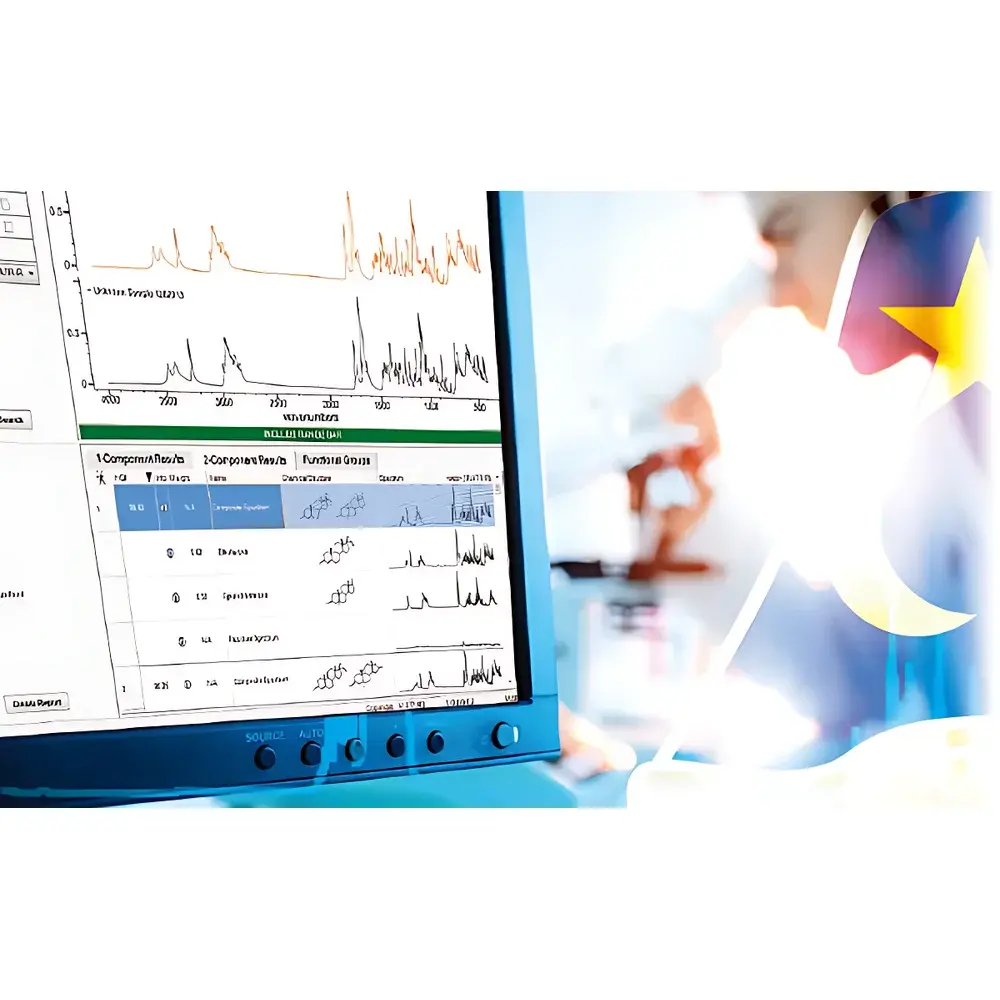
Licensing includes perpetual access to KnowItAll ID Expert, a desktop application providing fast, fingerprint-style spectral search using correlation algorithms (e.g., Pearson coefficient, Euclidean distance) against the UV-Vis subset. Search results include similarity scores, ranked matches, and side-by-side spectral overlays with difference plots. For advanced workflows, the optional KnowItAll Analytical Edition extends functionality with batch processing, custom spectral library creation, multivariate analysis (PCA, PLS), and direct import from major spectrophotometer vendors (Agilent, Shimadzu, PerkinElmer, Thermo Fisher). All spectral files are stored in open, vendor-neutral formats (JCAMP-DX v5.01 compliant), ensuring long-term readability and interoperability with LIMS and ELN platforms. Database updates are delivered annually via secure download; version history and change logs are provided for audit readiness.
Applications
- Confirmatory identity testing of raw materials and intermediates in pharmaceutical QC laboratories (aligned with USP <857> and Ph. Eur. 2.2.25).
- Supporting development and validation of UV-Vis quantitation methods for active pharmaceutical ingredients (APIs) and impurities.
- Teaching spectral interpretation in undergraduate and graduate chemistry curricula, leveraging real-world benchmark data.
- Troubleshooting spectral anomalies—e.g., unexpected bathochromic shifts or hypochromicity—by comparing solvent- or pH-dependent reference spectra.
- Building in-house spectral libraries for proprietary compounds, using KnowItAll’s template-based annotation and QA/QC validation tools.
FAQ
Is this database suitable for identifying unknown compounds solely from UV-Vis data?
No. UV-Vis spectra lack sufficient specificity for unambiguous identification of unknowns due to broad, overlapping absorption bands. It is intended for confirmatory matching against known references.
Can spectra be exported for use in third-party software like MATLAB or Python?
Yes. JCAMP-DX files can be imported into scientific computing environments using standard parsers (e.g., jcampdx in Python, jcampread in MATLAB).
Does the license include technical support and database updates?
Annual maintenance includes priority email support, documentation updates, and one major database revision per year. Extended support contracts are available.
How is data quality assured across the collection?
Every spectrum undergoes multi-stage review: instrument calibration verification, spectral noise threshold checks, chemical authenticity confirmation, and cross-laboratory reproducibility assessment where possible.
Is cloud-based access available?
No. The database is deployed locally for security, performance, and regulatory control; network licensing options are supported for enterprise installations.
Related Products