
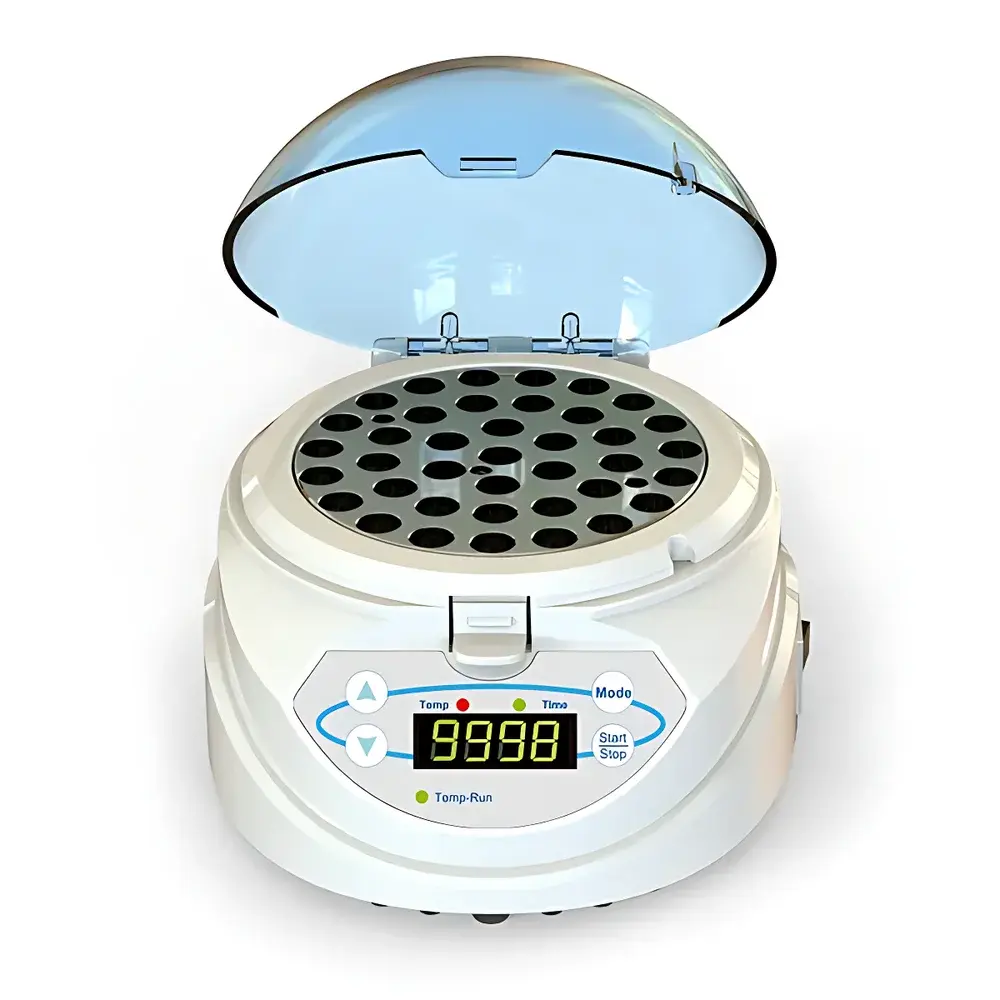
Jiayuan K30 Economical Dry Block Heater
| Brand | Jiayuan |
|---|---|
| Origin | Beijing, China |
| Model | K30 |
| Temperature Range | Ambient +5°C to 100°C |
| Temperature Accuracy | ≤ ±0.5°C |
| Heating Time | ≤15 min (20°C to 100°C) |
| Display Resolution | 0.1°C |
| Block Uniformity | ≤ ±0.5°C |
| Max Power | 150 W |
| Max Set Time | 9999 min |
| Dimensions (W×D×H) | 176 × 156 × 121 mm |
| Net Weight | 1.5 kg |
Overview
The Jiayuan K30 Economical Dry Block Heater is a precision-engineered thermal platform designed for consistent, contact-based sample heating in routine laboratory workflows. Unlike water baths, this dry block system utilizes solid aluminum heating blocks with precisely machined wells to transfer thermal energy directly to tubes and vials via conduction—eliminating evaporation, contamination risk, and maintenance overhead associated with liquid media. Its operating range spans from ambient +5°C to 100°C, making it suitable for applications such as enzyme inactivation, serum coagulation, DNA denaturation, reagent pre-warming, and sample equilibration prior to analysis. The unit employs PID-controlled solid-state heating elements coupled with high-stability NTC temperature sensors, ensuring rapid thermal response and minimal overshoot. With a typical heating time of ≤15 minutes from 20°C to 100°C and thermal uniformity of ≤±0.5°C across the block surface, the K30 delivers reproducible conditions critical for assay consistency and inter-laboratory comparability.
Key Features
- Rapid, energy-efficient heating: 150 W power rating enables fast ramp-up without excessive energy draw or audible operational noise.
- High-precision temperature control: PID algorithm with real-time feedback ensures stability within ≤±0.5°C and display resolution of 0.1°C.
- Integrated safety architecture: Dual-stage overtemperature protection (hardware cutoff + software limit), automatic fault detection, and audible alarm notification prevent thermal runaway and safeguard samples and equipment.
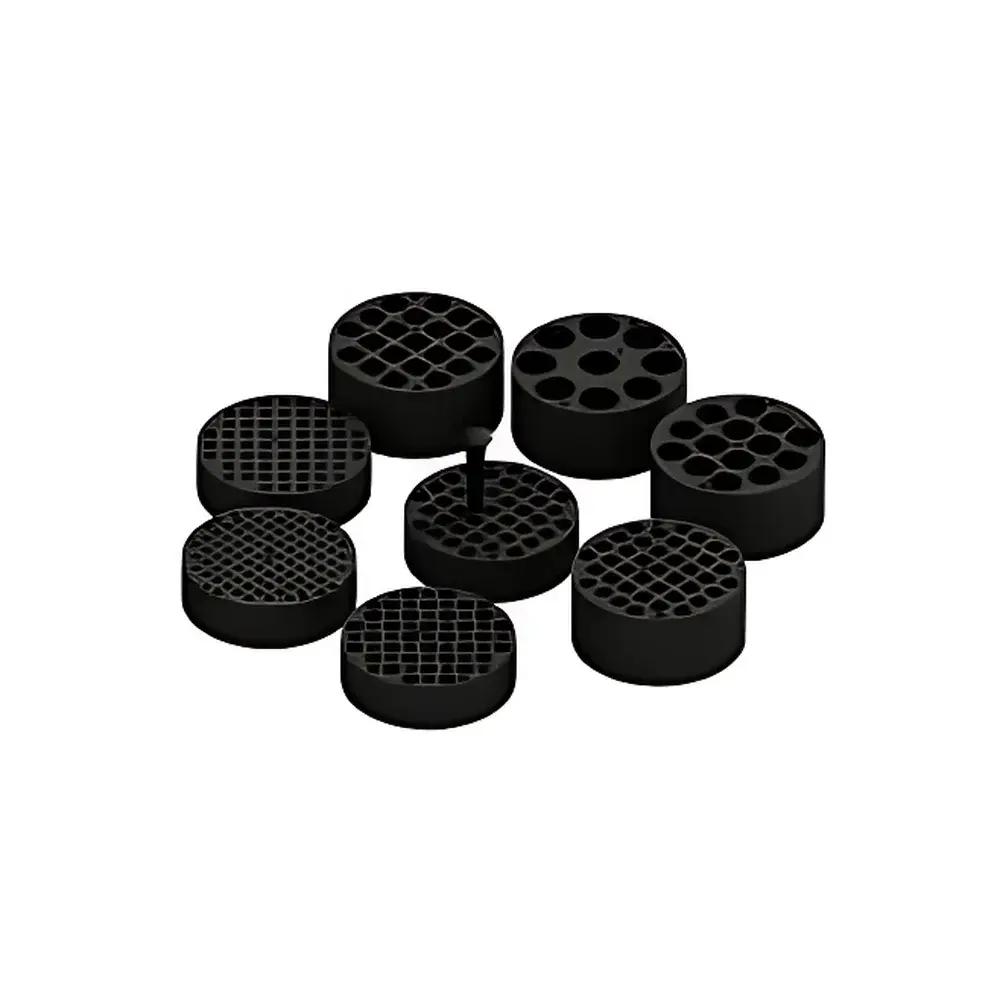
- Modular, cleanable design: Interchangeable aluminum blocks with standardized well geometries (e.g., 0.2 mL, 0.5 mL, 1.5 mL, 2.0 mL, 15 mL, 50 mL) support multi-format compatibility; smooth anodized surfaces resist corrosion and facilitate autoclaving or chemical disinfection.
- Compact footprint and ergonomic usability: Dimensions of 176 × 156 × 121 mm minimize benchtop occupancy; transparent polycarbonate lid allows visual monitoring while minimizing heat loss and preventing accidental contamination or tube displacement.
Sample Compatibility & Compliance
The K30 accommodates standard microcentrifuge tubes, PCR strips, glass vials, and small-volume reaction vessels across common diameters (0.2–50 mL). Its block geometry supports ISO/IEC 17025-aligned calibration practices, and temperature performance meets typical requirements for CLIA-waived and GLP-compliant sample preparation steps. While not certified to IEC 61010-1 or UL 61010B as a standalone medical device, its electrical and thermal safety features align with general laboratory equipment expectations under ANSI Z218.1 and EN 61010-1 guidelines. For regulated environments (e.g., pharmaceutical QC labs), users may perform in-house verification using traceable NIST-calibrated thermometers per SOPs referencing ASTM E2251 (Standard Specification for Liquid-in-Glass Thermometers) or ISO/IEC 17025 Clause 6.4.3 (Equipment Verification).
Software & Data Management
The K30 operates via an embedded microcontroller interface with push-button navigation and dual-line LED display—no external software or driver installation required. All settings (target temperature, hold time up to 9999 minutes, and auto-start delay) are retained in non-volatile memory after power cycling. While the unit does not feature USB/RS-232 connectivity or data logging capabilities, its analog control loop and mechanical timer design ensure long-term reliability and immunity to firmware corruption—a key advantage in high-throughput core facilities where uptime and deterministic behavior outweigh advanced connectivity needs. For laboratories requiring electronic records, integration with external temperature dataloggers (e.g., Omega OM-DAQPRO-5300 series) is feasible via external probe placement in designated reference wells.
Applications
- Clinical diagnostics: Serum clotting at 37°C, plasma thawing, antigen-antibody incubation.
- Molecular biology: Restriction enzyme digestion, ligase reactions, plasmid miniprep elution, RT-PCR master mix equilibration.
- Quality control: Standard solution warming prior to HPLC injection, viscosity reference sample conditioning, microbial culture medium activation.
- Environmental testing: Extraction solvent preheating for EPA Method 3510C, soil extract stabilization before metal analysis.
- Food safety: Pathogen enrichment broth pre-incubation, allergen extraction optimization, dairy enzyme activity assays.
FAQ
What is the maximum recommended operating temperature for continuous use?
The K30 is rated for sustained operation up to 100°C; the 105°C upper limit is a safety cutoff threshold—not a duty-cycle temperature.
Can the K30 be used with non-standard tube formats, such as glass capillaries or custom microfluidic cartridges?
Yes—provided compatible aluminum blocks with matching well diameters and depths are installed; block customization is available upon request through authorized distributors.
Does the unit comply with FDA 21 CFR Part 11 for electronic records?
No—the K30 lacks audit trail, user authentication, or electronic signature functionality; it is intended for non-GxP preparatory steps unless validated in situ per internal quality procedures.
How often should temperature accuracy be verified?
We recommend quarterly verification using a calibrated reference thermometer placed in the center well and two peripheral wells, per ISO/IEC 17025 Section 6.4.3 and internal lab SOPs.
Is the transparent lid resistant to common laboratory solvents?
The polycarbonate lid exhibits resistance to aqueous solutions, 70% ethanol, and mild detergents but is not compatible with acetone, chloroform, or concentrated acids/bases.



