
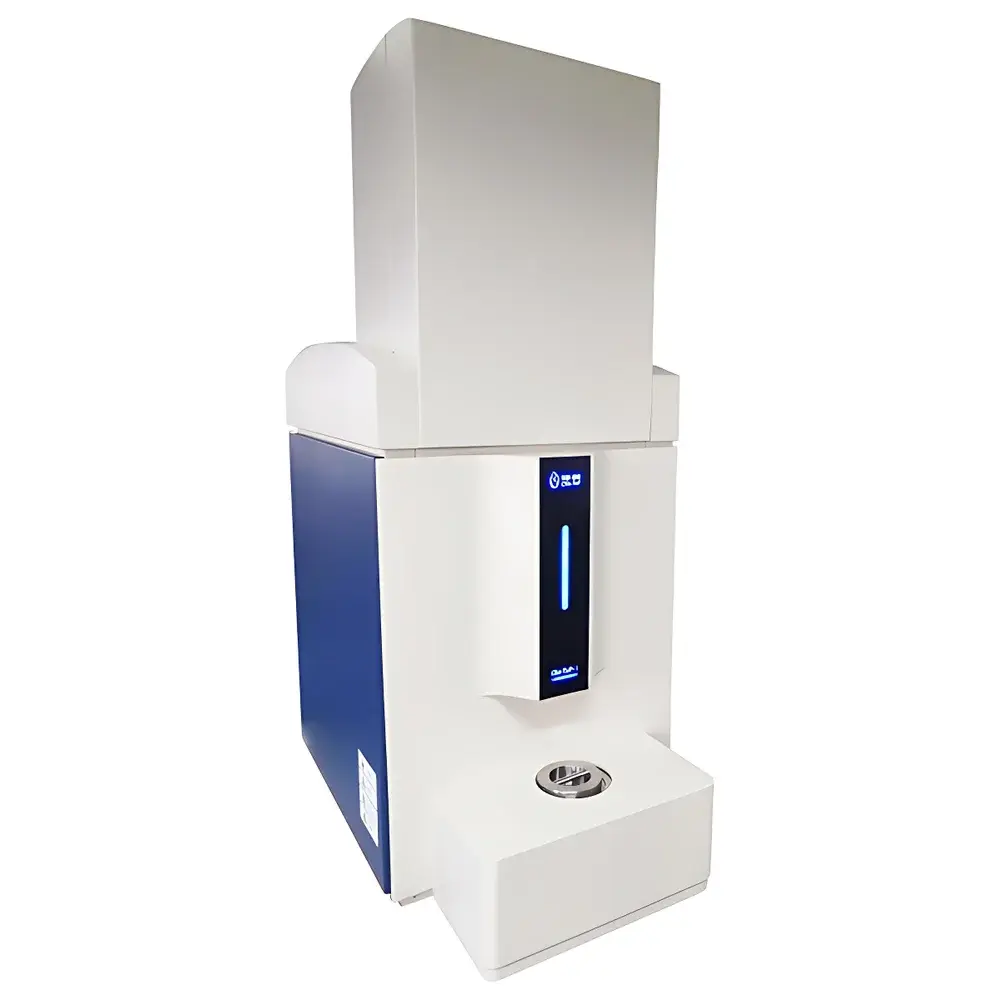
Clin-TOF-I Clinical Time-of-Flight Mass Spectrometer
| Brand | Bioyong |
|---|---|
| Origin | Beijing, China |
| Manufacturer Type | Original Equipment Manufacturer (OEM) |
| Country of Origin | China |
| Model | Clin-TOF-I |
| Price Range | USD 140,000 – 280,000 |
Overview
The Clin-TOF-I Clinical Time-of-Flight Mass Spectrometer is a CE-IVD marked and NMPA-approved matrix-assisted laser desorption/ionization time-of-flight (MALDI-TOF) mass spectrometer engineered for routine clinical microbiology laboratories. Developed by Bioyong Technologies Co., Ltd.—China’s first domestic enterprise to achieve full in-house R&D, manufacturing, and regulatory clearance for clinical MALDI-TOF systems—the Clin-TOF-I delivers rapid, label-free identification of microorganisms directly from isolated colonies. Its core principle relies on precise measurement of the time-of-flight of intact microbial protein ions (primarily ribosomal proteins in the 2–20 kDa range) generated via UV laser desorption and ionization. This enables unambiguous species-level identification based on highly conserved biomarker mass spectral fingerprints, independent of antibody or nucleic acid probe availability.
Key Features
- Regulatory-compliant platform: Cleared by China NMPA for in vitro diagnostic use (Registration No.: Jing Shiyaojian Xie (Zhun) Zi 2014 Di 2400606 Hao); CE-IVD certified per Regulation (EU) 2017/746.
- High-throughput operation: Average analysis time ≤10 seconds per sample; daily capacity exceeds 1,500 specimens under standard workflow conditions.
- Robust sample tolerance: Minimal requirements for DNA quality or quantity—identification performed directly from sub-cultured colonies without nucleic acid extraction or amplification.
- Differential resolution capability: Capable of resolving molecular species differing by as little as 1 Da, enabling discrimination between closely related strains (e.g., Escherichia coli vs. Shigella spp.) and post-translational variants.
- Low operational cost per test: Eliminates consumables associated with sequencing, hybridization, or immunoassays; primary consumables limited to MALDI target plates and matrix solution.
- Integrated hardware architecture: Solid-state UV laser (337 nm), orthogonal TOF analyzer with reflectron, high-vacuum ion optics, and sealed detector assembly optimized for long-term stability in clinical environments.
Sample Compatibility & Compliance
The Clin-TOF-I accepts standard microbiological isolates cultured on common media (e.g., blood agar, chocolate agar, MacConkey agar) following ≥18–24 h incubation. Compatible specimen types include Gram-positive and Gram-negative bacteria, yeasts (e.g., Candida, Malassezia), molds (with standardized extraction protocols), and mycobacteria (using dedicated lysis reagents). All identification workflows comply with ISO 15189:2022 requirements for medical laboratories, support GLP/GMP-aligned audit trails, and are validated per CLSI MM19-A guidelines for MALDI-TOF MS-based microbial identification. The system supports 21 CFR Part 11-compliant user access control, electronic signatures, and immutable data archiving when deployed with Bioyong’s optional LIMS integration module.
Software & Data Management
The instrument operates with Bioyong’s proprietary Clin-ID™ software suite, featuring a curated, clinically validated spectral database containing >3,200 strain entries across >580 species. Database updates are delivered quarterly via secure HTTPS channel and undergo internal version-controlled validation prior to deployment. Software functions include automated peak detection, spectral normalization, hierarchical clustering, and confidence-scored matching (score thresholds aligned with CLSI-recommended interpretive criteria). Raw spectra (.raw) and processed results (.csv, .pdf) are exportable in vendor-neutral formats. Audit logs record all user actions—including spectrum acquisition, database queries, result approvals, and parameter modifications—with timestamps and operator IDs traceable for regulatory review.
Applications
- Routine identification of aerobic/anaerobic bacteria and fungi from positive blood cultures and solid media isolates.
- Support for antimicrobial stewardship programs through rapid pathogen reporting (<30 min TAT from colony pick to report).
- Outbreak investigation: Strain typing via spectral pattern comparison (non-phylogenetic fingerprinting) for epidemiological linkage assessment.
- Reference laboratory verification of ambiguous biochemical or molecular results.
- Quality assurance testing of culture media performance using standardized challenge organisms.
- Research applications including microbial proteome profiling, antibiotic resistance marker screening (e.g., carbapenemase expression), and host-pathogen interaction studies.
FAQ
Is the Clin-TOF-I approved for use in the United States or European Union?
Yes—CE-IVD certification permits commercialization across EEA member states; FDA 510(k) clearance is under active submission with anticipated completion in Q4 2025.
Can the system identify organisms directly from positive blood culture bottles?
Yes, when used with Bioyong’s Clin-Blood™ sample preparation kit (CE-IVD marked), enabling direct-from-bottle identification with ≤30 min hands-on time.
Does the database include anaerobes and fastidious organisms?
Yes—the Clin-ID™ database includes validated entries for Prevotella, Fusobacterium, Treponema pallidum (heat-inactivated reference strains), and Helicobacter pylori.
How frequently is the spectral library updated?
Quarterly updates are released; each update undergoes analytical verification per ISO 17025:2017 Annex A.2 and includes versioned release notes.
What level of technical training is required for operators?
Minimal—trained microbiologists require ≤2 days of on-site instruction covering calibration, QC, troubleshooting, and interpretation of confidence scores per CLSI MM19-A Appendix B.
Related Products





