
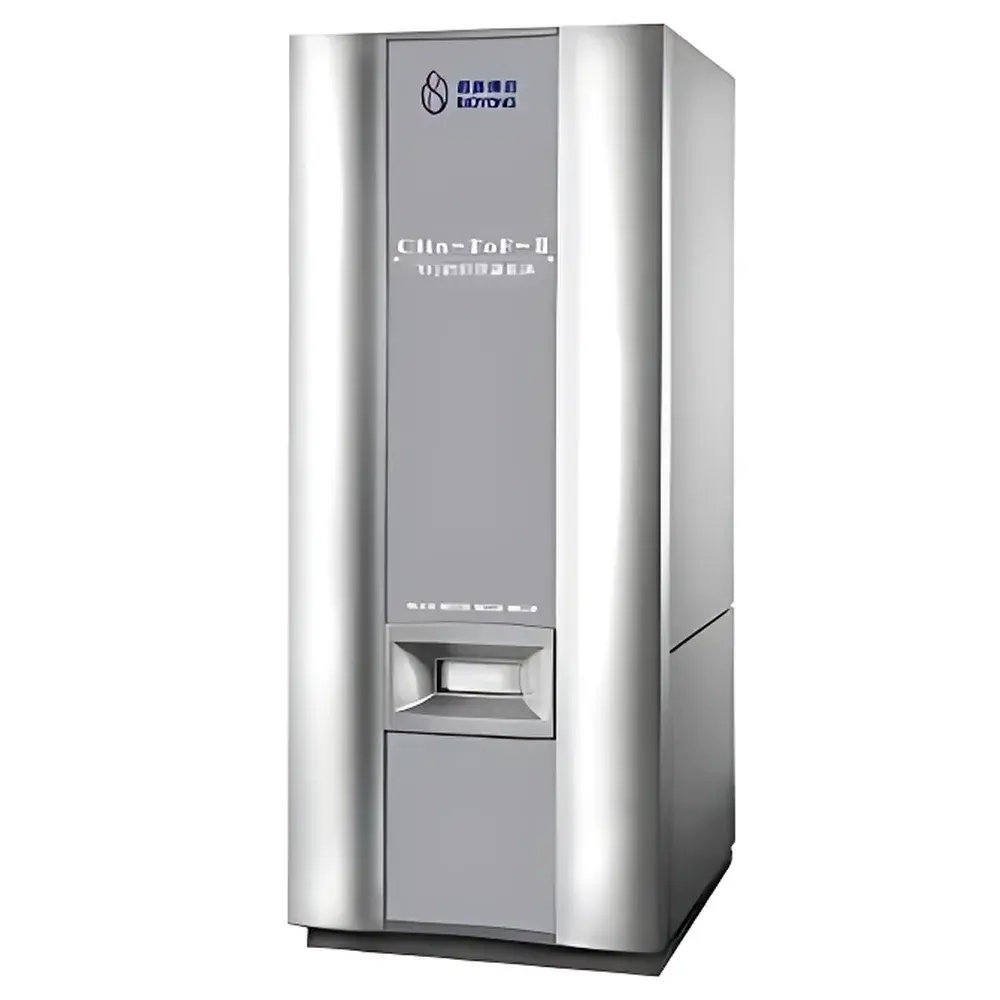
Bioyong Clin-TOF II Matrix-Assisted Laser Desorption/Ionization Time-of-Flight Mass Spectrometer
| Brand | Bioyong |
|---|---|
| Origin | Beijing, China |
| Manufacturer Type | Original Equipment Manufacturer (OEM) |
| Product Origin | Domestic (China) |
| Model | Clin-TOF II |
| Target Price Range | USD 280,000 – 700,000 |
| Sample Throughput | Up to 384 samples per run |
| Detection Mode | Positive and Negative Ion Modes |
| Laser Repetition Rate | 60 Hz |
| Acquisition Time | ≤20 seconds per spot |
| Mass Resolution | High-resolution TOF analyzer with delayed extraction |
| Calibration | On-board auto-calibration using internal standards |
| Target Plate | Hydrophobically treated 384-well stainless steel MALDI target |
Overview
The Bioyong Clin-TOF II is a clinical-grade, benchtop matrix-assisted laser desorption/ionization time-of-flight mass spectrometer (MALDI-TOF MS) engineered for high-precision, high-throughput molecular profiling in regulated laboratory environments. Designed around a robust orthogonal acceleration TOF architecture with delayed extraction and ion deflection optics, the system delivers reproducible mass accuracy (10,000 FWHM at m/z 1,000), and sub-femtomole sensitivity across nucleic acid, peptide, and intact protein analytes. Unlike conventional sequencing or immunoassay platforms, the Clin-TOF II directly measures the mass-to-charge (m/z) ratio of intact biomolecules without fluorescent labeling or enzymatic amplification—enabling label-free, multiplexed detection of single-nucleotide polymorphisms (SNPs), methylation variants, post-translational modifications, and microbial ribosomal protein fingerprints. Its dual-polarity capability (positive and negative ion modes) extends analytical flexibility to acidic metabolites, phosphopeptides, and oligonucleotides. As the first domestically developed MALDI-TOF platform cleared by China’s NMPA (formerly CFDA) for IVD use in 2014 (Clin-TOF I) and 2016 (Clin-TOF II), it complies with ISO 13485:2016 quality management requirements and supports GLP/GMP-aligned workflows in clinical microbiology, pharmacogenomics, and translational oncology laboratories.
Key Features
- Dual-polarity ion source enabling comprehensive coverage of nucleic acids, peptides, lipids, and small molecules
- Delayed extraction technology enhancing mass resolution and peak shape fidelity
- Ion deflection optics reducing detector saturation from low-mass matrix adducts and extending detector service life
- On-board auto-calibration using proprietary internal standard cocktails for traceable mass accuracy
- Hydrophobically modified 384-well stainless steel target plate ensuring uniform crystallization, high signal-to-noise ratio, and minimal carryover
- 60 Hz nitrogen laser enabling rapid acquisition (≤20 s per spot) and >300 samples/hour throughput
- Integrated vacuum system with turbomolecular pumping achieving stable base pressure <1×10⁻⁷ mbar
Sample Compatibility & Compliance
The Clin-TOF II accepts purified DNA, RNA, synthetic oligonucleotides, tryptic digests, intact proteins (≤20 kDa), and whole-cell microbial lysates prepared via standardized extraction protocols. It is validated for direct analysis of blood culture-positive broths (without subculture), vaginal swabs for Group B Streptococcus (GBS) screening, and serum-derived peptide panels. The system meets regulatory expectations for clinical diagnostics under China’s NMPA Class II IVD guidelines and aligns with international reference methods including CLSI MM18-A3 for microbial identification and ISO/IEC 17025:2017 for testing laboratory competence. Database-driven identification conforms to ISO/IEC 17043:2010 proficiency testing standards. All software modules support audit trails, electronic signatures, and data integrity controls compliant with FDA 21 CFR Part 11 Annex 11 requirements.
Software & Data Management
The Clin-TOF II operates on Bioyong’s proprietary ClinMS Suite v4.x—a validated, locked-down application suite supporting method development, spectral acquisition, peak annotation, statistical modeling (PCA, PLS-DA), and automated reporting. The database engine integrates over 5,000 clinically relevant microorganisms (including drug-resistant strains), >12,000 human SNP genotypes, and >800 disease-associated peptide biomarkers. Raw data (.raw) and processed results (.csv, .pdf) are stored in AES-256 encrypted format. LIS/HIS integration is achieved via HL7 v2.5.1 and ASTM E1384 interfaces. Audit logs record all user actions—including method edits, calibration events, and result approvals—with immutable timestamps and operator IDs. Software validation documentation (IQ/OQ/PQ protocols) and cybersecurity risk assessments (per IEC 62304 and ISO/IEC 27001) are provided as part of the delivery package.
Applications
- Microbial Identification: Rapid species-level ID of Gram-positive/negative bacteria, yeasts, and mycobacteria from colonies or positive blood cultures in <15 minutes
- Pharmacogenomic Testing: Multiplex SNP genotyping for CYP2C19, MTHFR, ABCB1, VDR, and ACE gene variants to guide antiplatelet, antihypertensive, and prenatal supplementation therapy
- Oncology Biomarker Profiling: ctDNA mutation detection (LOD: 0.1% VAF; input: <10 ng DNA), mRNA cap analysis, and serum peptide fingerprinting for chemotherapy response prediction
- Epigenetic Analysis: Quantitative detection of CpG methylation status and hydroxymethylation patterns in promoter regions
- Antimicrobial Resistance Screening: Direct detection of mecA, vanA/B, and carbapenemase genes in isolates via extension-based mass signatures
FAQ
Is the Clin-TOF II compliant with FDA 21 CFR Part 11 for electronic records and signatures?
Yes—the ClinMS Suite implements role-based access control, full audit trail logging, electronic signature capture, and data encryption in accordance with 21 CFR Part 11 Subpart B requirements.
Can the system perform de novo microbial identification without pre-existing database entries?
No—it relies on curated, clinically validated reference spectra; however, custom library expansion is supported via Bioyong’s certified bioinformatics pipeline and requires formal re-validation per ISO 15189.
What sample preparation kits are compatible with the Clin-TOF II for nucleic acid analysis?
Only Bioyong’s CE-IVD–marked SNP Extension Kits and Microbial Extraction Reagents are validated for use; third-party reagents void instrument warranty and regulatory compliance.
Does the system support quantitative analysis of methylation levels?
Yes—via bisulfite-converted DNA extension assays with internal methylated/unmethylated controls and normalized peak area ratios.
How frequently must the instrument be recalibrated?
Auto-calibration is performed before each batch; full system verification (mass accuracy, resolution, sensitivity) is required daily per CLIA/CAP checklist and documented in the QC logbook.



