
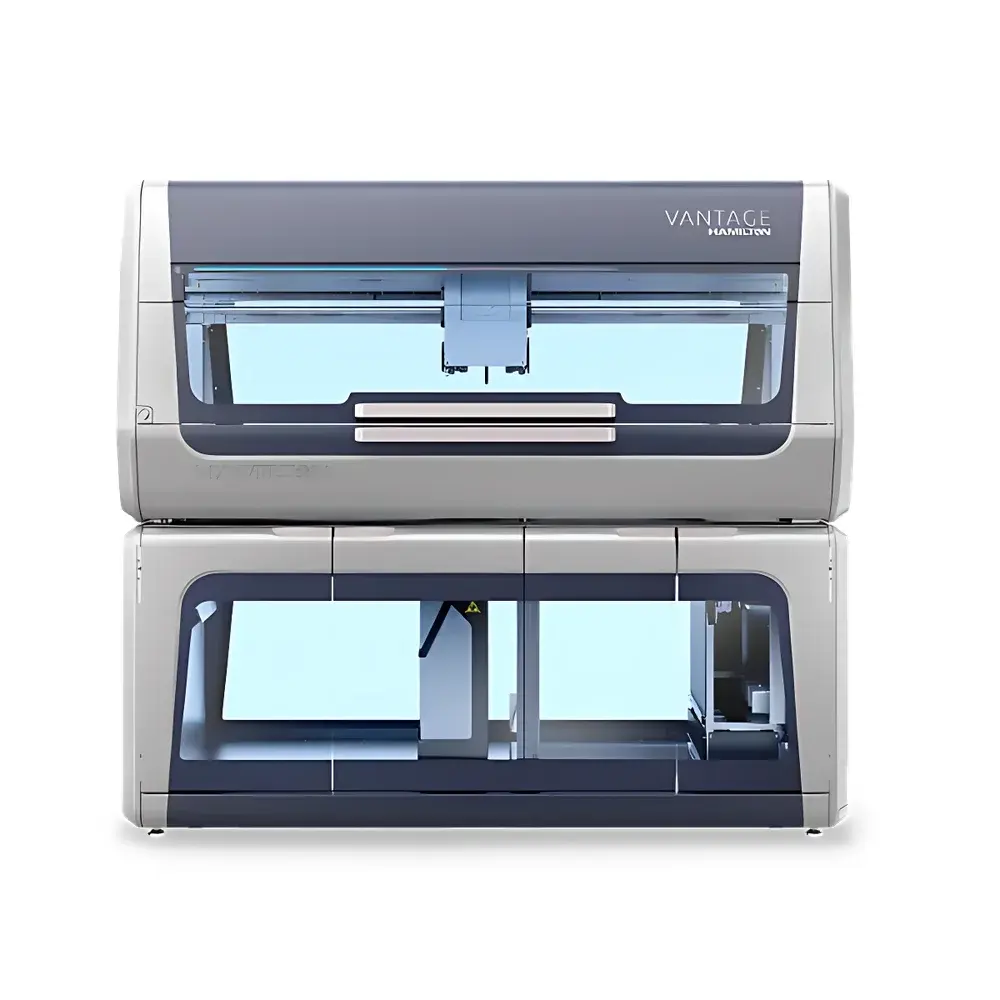
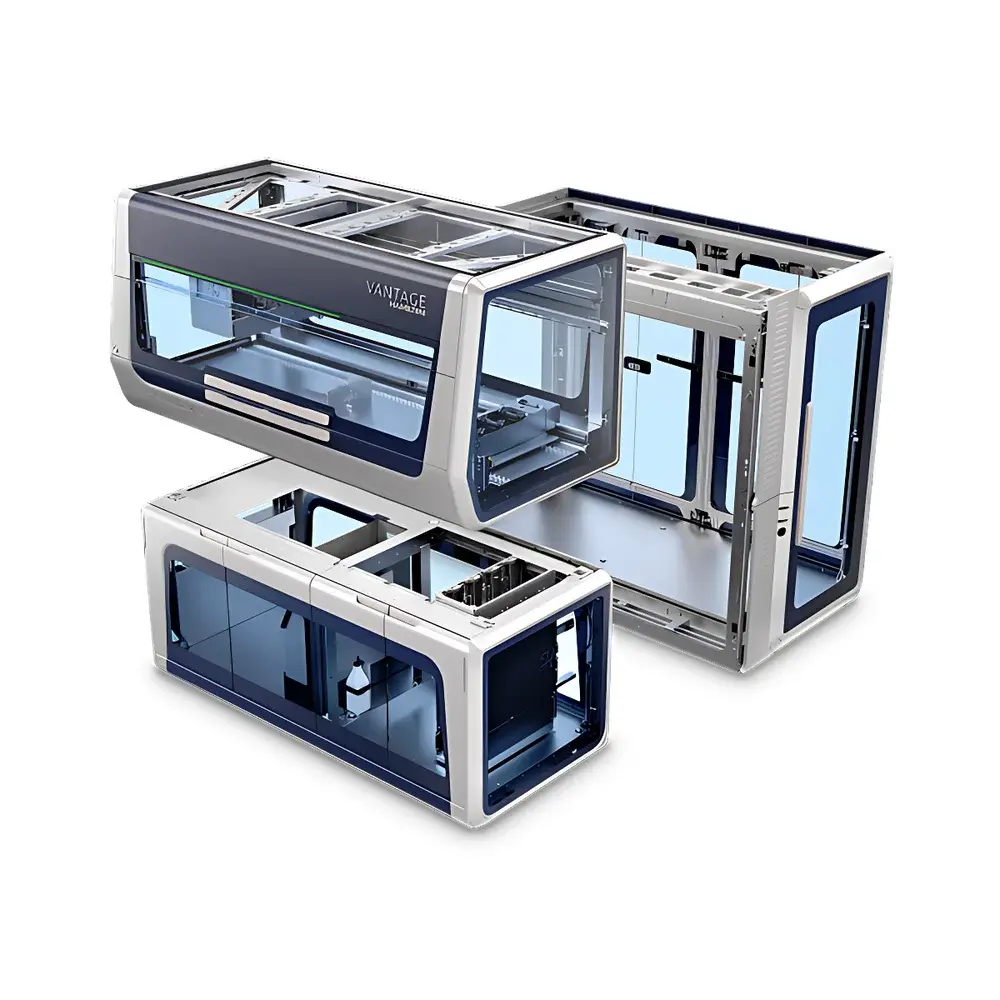
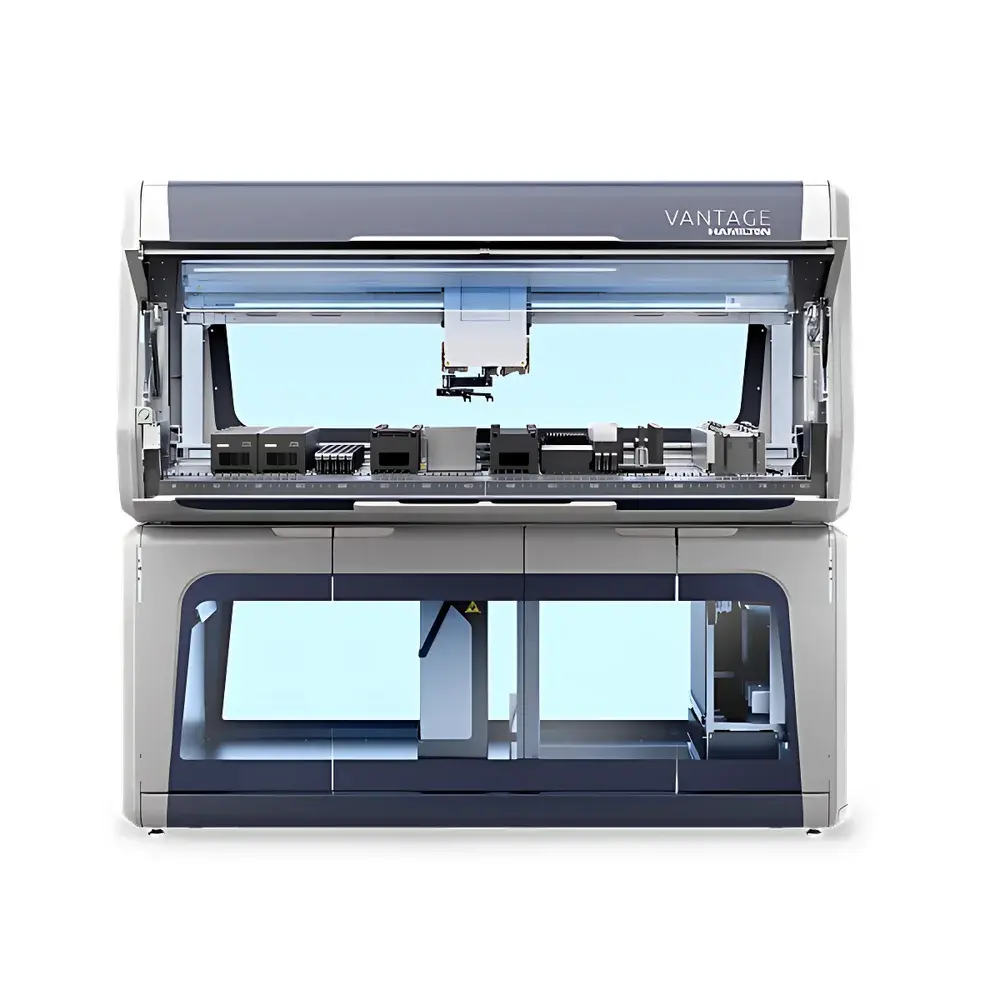
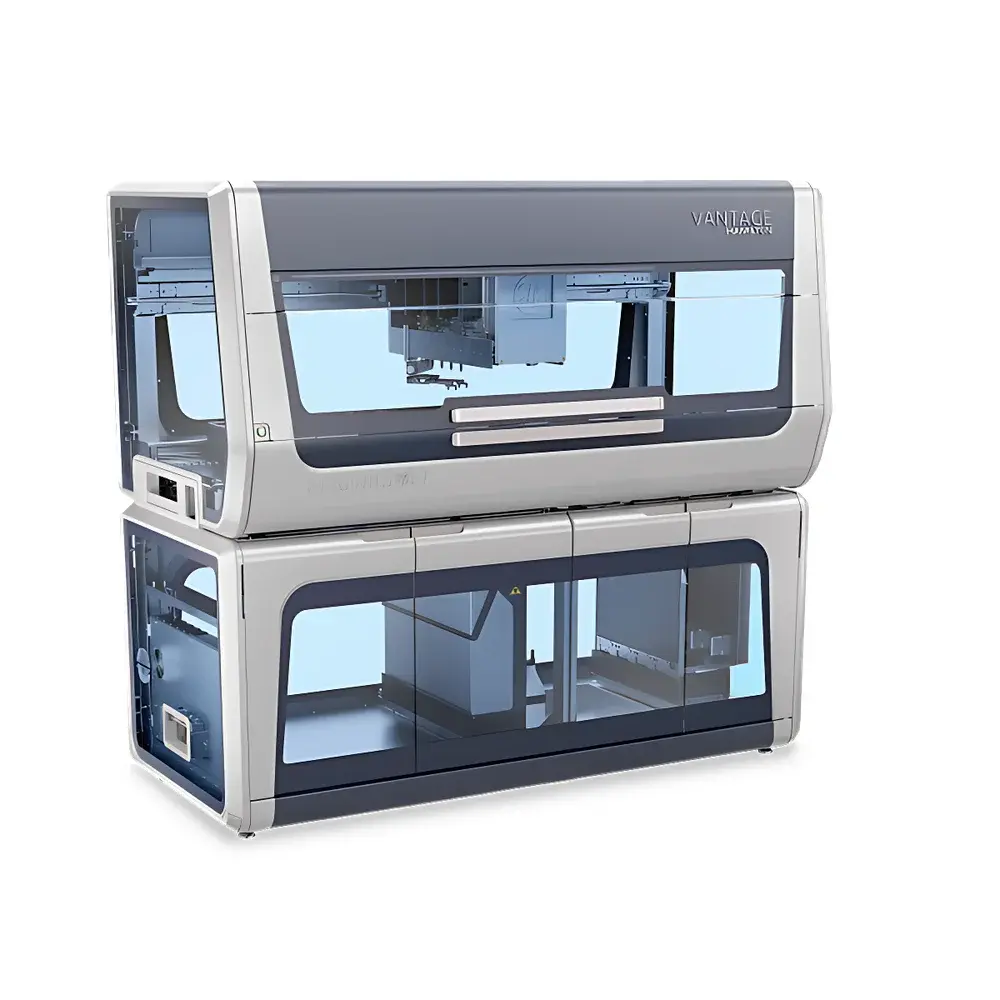
Hamilton Microlab VANTAGE Automated Liquid Handling Workstation
| Brand | Hamilton |
|---|---|
| Origin | Switzerland |
| Manufacturer | Hamilton Company |
| Product Type | Imported |
| Model | Microlab VANTAGE |
| Deck Capacity | >60 SBS-standard plates |
| Pipetting Accuracy | ±1% to ±8% (volume-dependent) |
| Pipetting Range | 0.35–5000 µL |
| Throughput | Up to 384 samples per run |
| Dimensions | 2000 mm × 930 mm × 960 mm |
Overview
The Hamilton Microlab VANTAGE is a modular, high-precision automated liquid handling workstation engineered for reproducible, scalable, and audit-ready laboratory workflows. Built upon Hamilton’s proprietary CO-RE (Compressed O-Ring Expansion) positive-displacement pipetting technology and guided by advanced motion control architecture, the VANTAGE delivers traceable volumetric performance across its full operational range—from sub-microliter dispensing (0.35 µL) to milliliter-scale transfers (5000 µL). Its open-deck design supports SBS-compliant microplates (96-, 384-, and 1536-well), tubes, vials, and custom labware, enabling end-to-end automation of assay setup, sample dilution, reagent addition, plate replication, and library normalization. Unlike fixed-function liquid handlers, the VANTAGE integrates hardware modularity with software-defined workflow orchestration—allowing laboratories to configure, validate, and reconfigure systems without engineering intervention.
Key Features
- Modular robotic architecture featuring independent dual-arm operation: one arm dedicated to precision pipetting (MPH module), the other to consumable transport (QCG gripper), enabling true parallel processing.
- High-speed pipetting module (MPH) completes full 96-well or 384-well plate transfers in ≤35 seconds, with real-time liquid level detection (LLD) using capacitive sensing for adaptive aspiration and dispense.
- Expandable deck space accommodating >60 SBS-standard positions; under-bench integration zone supports third-party instruments (e.g., centrifuges, readers, thermal cyclers) and auxiliary storage for tips, waste, and reagents.
- Intuitive drag-and-drop method editor (VANTAGE Software) compliant with IEC 62304 Class B software lifecycle requirements; supports protocol versioning, electronic signatures, and change logs.
- Integrated safety subsystem including interlocked transparent enclosure with infrared presence detection, emergency stop circuitry, and tip collision avoidance algorithms.
- Multi-modal sample identification: IDL (Input/Device Loader) module reads 1D/2D barcodes on plates, tubes, and tip racks, synchronizing physical labware with LIMS or ELN metadata.
Sample Compatibility & Compliance
The VANTAGE handles aqueous, viscous, volatile, and low-surface-tension liquids—including DMSO, glycerol, serum, and PCR master mixes—without cross-contamination, thanks to disposable CO-RE tips and air-gap dispensing logic. It complies with ISO 8655-6 (gravimetric verification of piston-operated volumetric apparatus), ASTM E2758 (standard guide for validation of automated liquid handling devices), and supports GLP/GMP-aligned validation packages (IQ/OQ/PQ documentation templates included). Optional 21 CFR Part 11 compliance mode enables role-based user access, audit trails, and electronic record integrity for regulated environments.
Software & Data Management
VANTAGE Software provides native support for structured method development, parameterized protocol libraries, and instrument resource scheduling. All executed runs generate timestamped, immutable JSON-based log files containing pipetting event metadata (volume, source/destination coordinates, tip ID, LLD status, error codes). Data export conforms to MIAME and ISA-TAB standards. Integration with enterprise systems is achieved via RESTful API, OPC UA, or direct database connectors (ODBC/JDBC), enabling bidirectional synchronization with LIMS, SDMS, and electronic lab notebooks.
Applications
The system is routinely deployed in genomics (NGS library prep, qPCR setup), drug discovery (HTS assay miniaturization, dose-response matrix generation), clinical diagnostics (automated extraction and assay loading), and biomanufacturing (cell culture media preparation, buffer exchange). Its ability to perform simultaneous pipetting and plate movement enables complex multi-step workflows—such as serial dilution followed by imaging plate transfer—without manual intervention or intermediate storage.
FAQ
What pipetting technologies does the VANTAGE employ?
It uses Hamilton’s CO-RE positive-displacement technology for high-accuracy, low-volume transfers and air displacement for higher volumes—switching automatically based on programmed volume thresholds.
Can the VANTAGE be integrated into an existing automated lab ecosystem?
Yes—via standardized physical interfaces (SBS footprint), digital protocols (RS-232, Ethernet/IP), and software APIs compatible with common lab automation frameworks (e.g., SLAS ANSI standards).
Is routine calibration traceable to national standards?
All factory calibrations are NIST-traceable; users may perform in-house verification using gravimetric methods per ISO 8655-6 or photometric assays per CLSI EP10.
How is tip waste managed to prevent biohazard exposure?
The system features segregated solid waste stations: one for biohazardous tips (with UV decontamination cycle option) and another for non-hazardous consumables; liquid waste is collected in sealed, pressure-relieved containers.
What validation documentation is provided with the system?
Hamilton supplies comprehensive IQ/OQ documentation kits, including test scripts, acceptance criteria, and raw data templates aligned with Annex 11 and FDA guidance on computerized system validation.



