
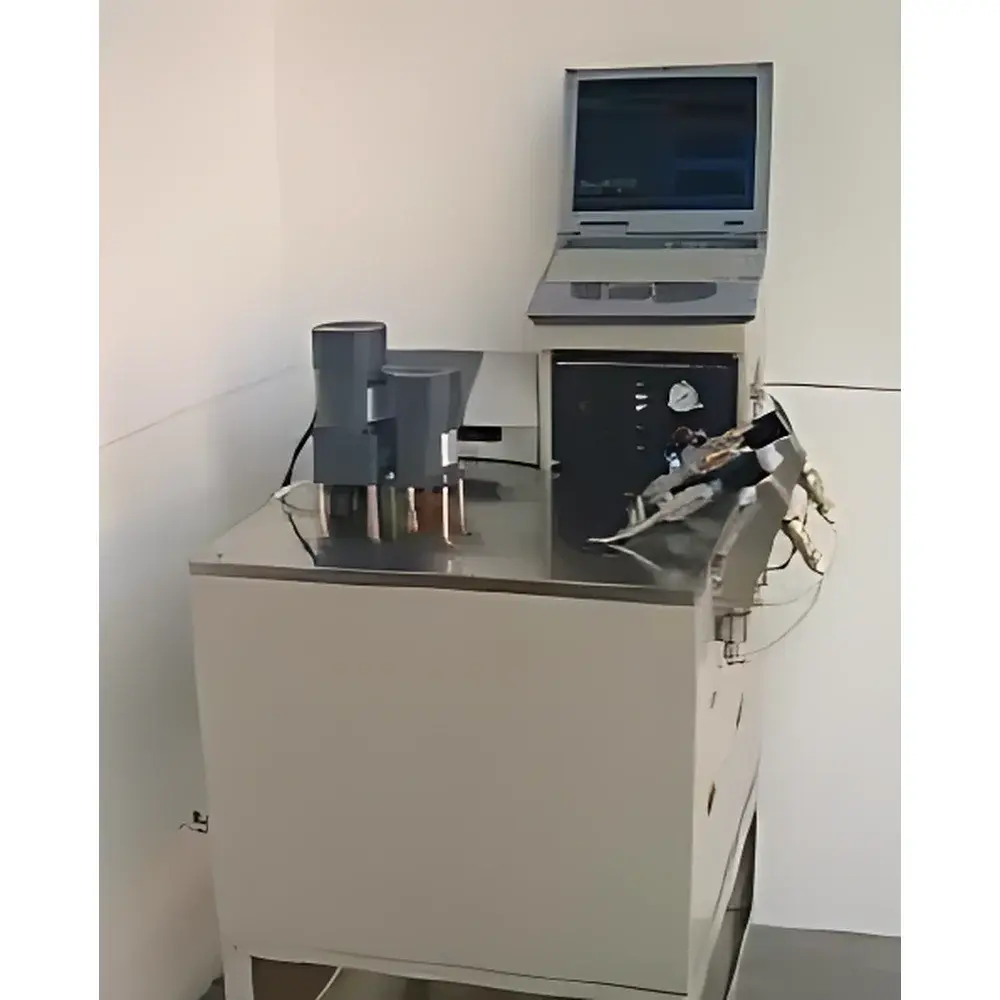
Xufeng XF-2272 Rotating Pressure Vessel Oxidation Stability Tester
| Brand | Xufeng |
|---|---|
| Origin | Shanghai, China |
| Model | XF-2272 |
| Standards Compliance | SH/T 0193, ASTM D2112, ASTM D2272, GB/T 8018 |
| Temperature Control Range | 0–150 °C (±0.1 °C accuracy) |
| Pressure Measurement Accuracy | ±0.1% |
| Data Storage Capacity | 100 test records |
| Power Consumption | 2.6 kW |
| Dimensions (W×D×H) | 620 × 780 × 1150 mm |
| Weight | ~85 kg |
| Interface | RS-232C |
| Display | Large-screen LCD with Windows-based GUI |
Overview
The Xufeng XF-2272 Rotating Pressure Vessel Oxidation Stability Tester is a precision-engineered instrument designed for quantitative evaluation of oxidation resistance in lubricating oils and gasoline under accelerated, high-pressure oxygen environments. It operates on the rotating pressure vessel (RPV) principle—where a standardized sample is sealed in a stainless-steel oxygen bomb, immersed in a temperature-controlled bath, and rotated at a fixed speed (typically 100 rpm) to enhance oxygen mass transfer and simulate oxidative stress encountered during long-term service. This method enables reproducible determination of oxidation induction time (OIT) or pressure drop rate, directly correlating with antioxidant depletion kinetics and base oil stability. The XF-2272 complies with internationally recognized test standards including SH/T 0193 (Chinese standard for inhibited turbine oils), ASTM D2272 (for steam turbine oils), ASTM D2112 (for mineral insulating oils), and GB/T 8018 (gasoline oxidation stability via induction period method, when equipped with optional gasoline-specific oxygen bomb assembly). Its dual-bomb architecture allows parallel testing—improving laboratory throughput without compromising measurement integrity.
Key Features
- Dual independent rotating oxygen bomb system with high-integrity American-sourced rotary pressure feedthroughs—ensuring zero leakage at operating pressures up to 1.0 MPa (10 bar), critical for pressure decay-based stability assessment.
- Microprocessor-based control with wireless signal transmission between controller and rotating units—eliminating mechanical wear and enabling stable long-duration operation (>100 h).
- Large-format LCD display running a Windows-compatible graphical user interface (GUI) featuring real-time dual-channel visualization: simultaneous temperature vs. time, pressure vs. time (logarithmic scale), rotational speed monitoring, and dynamic calculation of induction period or slope-based oxidation rate.
- Integrated automated functions: programmable oxygen charging, self-checking leak detection prior to test initiation, over-temperature and low-bath-level safety interlocks, and audible/visual fault alerts with diagnostic codes.
- Economical data recording: supports thermal printing on standard A4 copy paper (cost-effective alternative to proprietary chart paper), reducing consumable cost by >99% versus legacy analog recorders.
- RS-232C serial interface compliant with Modbus RTU protocol—enabling seamless integration into centralized LIMS or QA/QC network infrastructure for audit-ready data traceability.
- Modular design accommodates optional accessories: gasoline-specific oxygen bomb (for GB/T 8018 compliance), external pressure recorder (for manual–automated result cross-validation), and GLP-compliant audit trail firmware upgrade (available upon request).
Sample Compatibility & Compliance
The XF-2272 is validated for use with new and service-aged petroleum products including turbine oils, hydraulic fluids, transformer oils, and unleaded gasoline formulations. Its stainless-steel wetted parts (316L grade) resist corrosion from acidic oxidation byproducts and halogenated additives. All operational parameters—including temperature ramp profiles, rotation speed tolerance (±1 rpm), pressure sampling frequency (≥2 Hz), and data logging resolution—are aligned with the procedural requirements of SH/T 0193, ASTM D2272, and ASTM D2112. For gasoline testing per GB/T 8018, the instrument requires the dedicated low-volume oxygen bomb and modified pressure calibration routine—both supplied as factory-certified options. The system supports full traceability per ISO/IEC 17025:2017 clause 7.7 (result reporting) and is compatible with FDA 21 CFR Part 11–enabled software extensions for electronic signatures and audit trail generation.
Software & Data Management
The embedded firmware provides local storage of up to 100 complete test datasets—including raw pressure/time arrays, calculated induction periods, statistical averages, and operator annotations. Export is supported via USB flash drive in CSV and PDF formats, preserving timestamped metadata (start time, ambient conditions, calibration ID, user login). Optional PC-based Xufeng LabLink™ software (v3.2+) adds advanced capabilities: multi-instrument fleet monitoring, SPC charting (X̄–R, Cpk), automated report generation per ASTM E29 or ISO 80000 conventions, and configurable export to SQL databases. All software modules undergo annual verification against NIST-traceable reference materials and include built-in calibration verification routines per ASTM E74.
Applications
- Quality control of antioxidant package efficacy in turbine and industrial lubricants during batch release.
- Accelerated aging studies for formulation development of synthetic ester-based and PAO-based lubricants.
- Comparative stability ranking of reclaimed or re-refined base oils versus virgin stocks.
- Regulatory compliance testing for OEM specifications (e.g., GEK 32568, Siemens TLV 9013, Rolls-Royce RRES 90061).
- Research into oxidation inhibition mechanisms using model compounds (e.g., hindered phenols, aromatic amines) under controlled thermal-oxygen stress.
- Gasoline stability screening for refinery blending optimization and ethanol compatibility assessment per GB/T 8018.
FAQ
What standards does the XF-2272 fully support out-of-the-box?
It natively complies with SH/T 0193, ASTM D2272, and ASTM D2112 for lubricant testing. GB/T 8018 capability requires the optional gasoline oxygen bomb and corresponding firmware module.
Is the pressure transducer calibrated traceable to national standards?
Yes—each unit ships with a certificate of calibration traceable to CNAS-accredited laboratories (equivalent to ISO/IEC 17025), with optional NIST-traceable recalibration services available.
Can test data be exported to LIMS without third-party middleware?
Yes—the RS-232C port supports direct ASCII command/response protocol; configuration templates for Thermo Fisher SampleManager and LabWare LIMS are provided in the installation kit.
What maintenance intervals are recommended for long-term reliability?
O-ring replacement every 500 test cycles; oxygen bomb hydrostatic certification annually; full system performance verification every 12 months using certified reference oil (CRM-OX-01).
Does the instrument meet electromagnetic compatibility (EMC) requirements for lab environments?
Yes—certified to IEC 61326-1:2013 Class A (industrial environment) and tested per EN 61000-4-2/3/4/6 for electrostatic discharge, radiated RF immunity, fast transient bursts, and conducted disturbances.





