
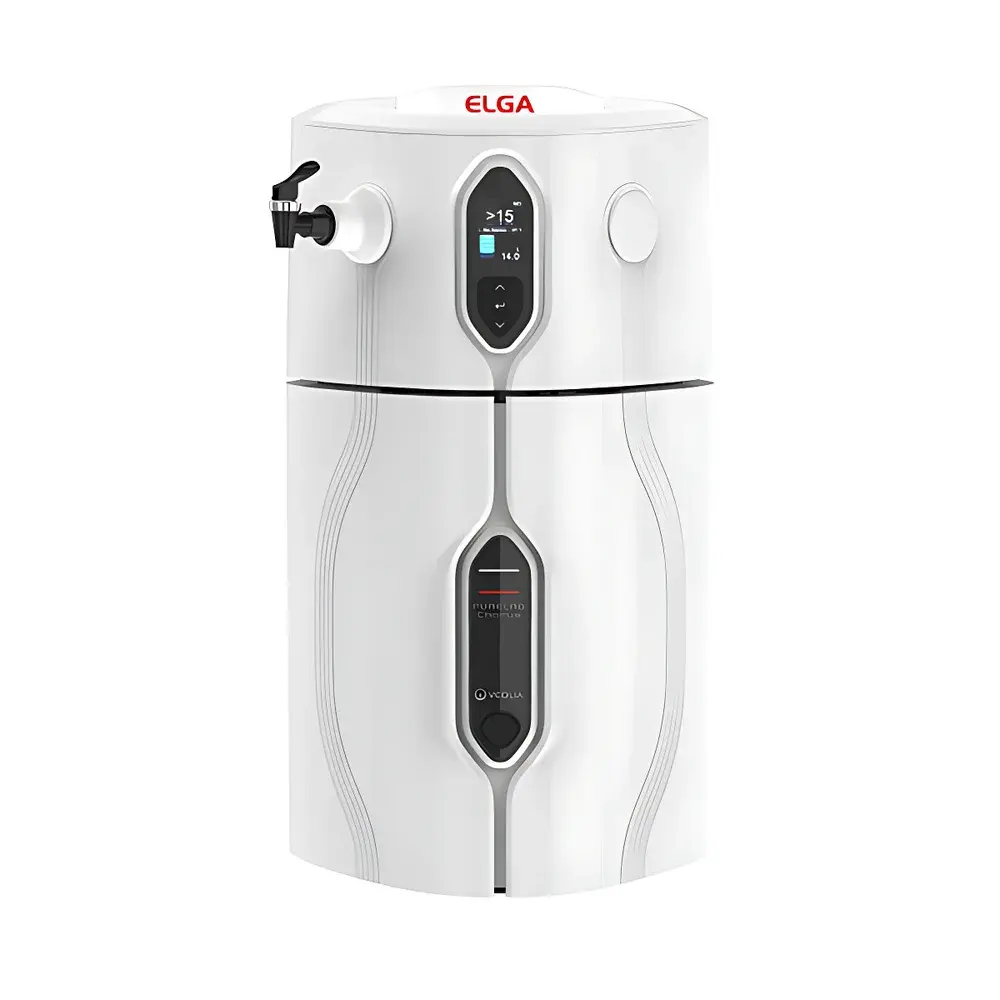
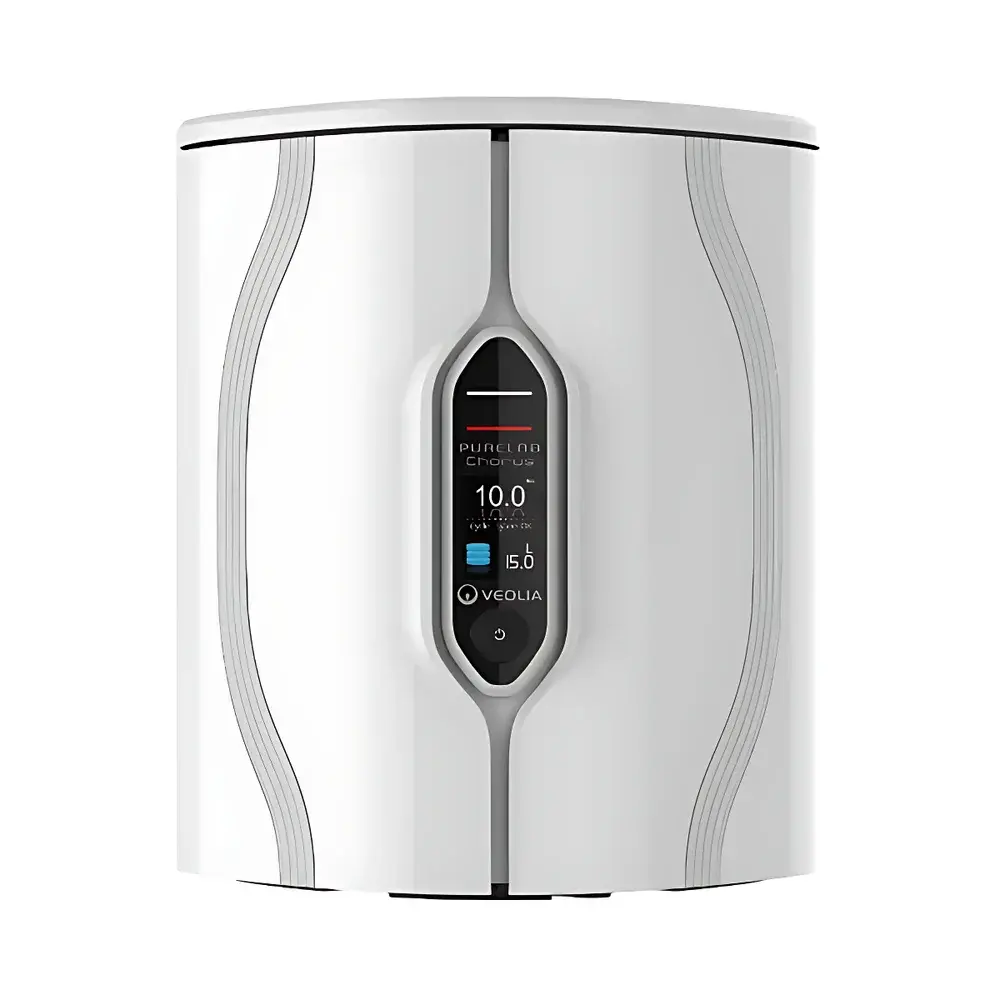
ELGA PURELAB® Chorus Ultra-Pure Water System
| Brand | Veolia ELGA |
|---|---|
| Origin | Germany |
| Model | PURELAB® Chorus 1 / Chorus 1 Complete / Chorus 2+ / Chorus 2&3 |
| Purification Technology | Integrated RO/EDI/DI + UV + UF + TOC Monitoring |
| Resistivity Output | Up to 18.2 MΩ·cm (Chorus 1), >15 MΩ·cm (Chorus 2+), 10 MΩ·cm (Chorus 2&3) |
| Flow Rate | Up to 1.2 L/min |
| Dimensions (W×H) | 232 mm × 510 mm |
| Compliance | GCP/GMP-aligned design, FDA 21 CFR Part 11-ready data logging (with optional software), ISO 3696 Class 1, ASTM D1193 Type I/II/III |
Overview
The ELGA PURELAB® Chorus is a modular, high-reliability ultra-pure water system engineered for continuous, on-demand delivery of laboratory-grade water meeting stringent international standards—including ISO 3696 Class 1, ASTM D1193 Type I, and pharmacopeial requirements for purified water (USP ). Designed and manufactured in Germany by Veolia Water Technologies, the Chorus platform employs a multi-stage purification architecture integrating reverse osmosis (RO), electrodeionization (EDI), mixed-bed deionization (DI), dual-wavelength ultraviolet (185/254 nm) photo-oxidation, 5 kDa ultrafiltration (UF), and real-time total organic carbon (TOC) monitoring. Unlike batch-mode or semi-circulating systems, Chorus utilizes full-loop recirculation—encompassing the storage tank, distribution loop, UV chamber, and point-of-use dispensers—to eliminate stagnant zones and suppress microbial regrowth, thereby maintaining stable resistivity at 18.2 MΩ·cm (Chorus 1) or >15 MΩ·cm (Chorus 2+) across all outlets. Its architecture supports both centralized and decentralized deployment, with wall-mountable, under-bench, or stacked configurations optimized for space-constrained analytical labs, biotechnology facilities, and regulated pharmaceutical QC environments.
Key Features
- Full-loop recirculation architecture—eliminates dead-legs and ensures consistent 18.2 MΩ·cm (Chorus 1) or >15 MΩ·cm (Chorus 2+) resistivity at every point-of-use
- PureSure™ deionization technology with predictive cartridge life monitoring and early-warning alerts for ion breakthrough
- Integrated real-time TOC sensor (1–999 ppb range) with automatic calibration traceability
- Dual-wavelength UV oxidation (185 nm for organic photolysis; 254 nm for microbial inactivation)
- 5 kDa ultrafiltration module with automated backflush cycle to retain endotoxin, RNase, DNase, and pyrogen removal efficacy over extended service life
- ELGA terminal filters (0.22 µm sterilizing-grade or 5 kDa ultrafiltration) available as configurable options for critical applications
- Modular scalability: Chorus 2&3 systems support parallel configuration via shared reservoirs; Chorus 2+ integrates anti-fouling EDI with full-fill chamber design to extend service intervals beyond 3 years
- Compact footprint (232 mm W × 510 mm H) with front-access service panel for tool-free consumables replacement
- USB-based data logging compliant with GLP/GMP audit requirements; optional integration with Veolia’s cloud-enabled PureLink™ software for remote performance monitoring, alarm notification, and electronic record retention
Sample Compatibility & Compliance
The PURELAB® Chorus delivers water qualified for use across ISO/IEC 17025-accredited testing laboratories and FDA-regulated manufacturing sites. Chorus 1 Complete meets USP specifications for Water for Injection (WFI)-adjacent applications when paired with ELGA’s 0.22 µm sterilizing terminal filter. All models comply with ISO 3696:2017 Class 1 for conductivity/resistivity, TOC, and bacterial limits. The system’s firmware and data handling architecture support 21 CFR Part 11 compliance when deployed with PureLink™ software—including electronic signatures, audit trails, and role-based access control. Built-in sensors log timestamped resistivity, TOC, UV intensity, pressure differentials, and filter saturation metrics—enabling full traceability for IQ/OQ/PQ validation protocols. Materials of construction (wetted parts: EPDM, PTFE, PVDF, and 316L stainless steel) conform to USP Class VI biocompatibility and EU 10/2011 food-contact regulations.
Software & Data Management
Data acquisition is performed via embedded USB interface supporting CSV export for third-party LIMS integration or internal QA review. Optional PureLink™ software enables secure TLS-encrypted remote access from desktop or mobile devices, delivering live dashboards for system status, historical trend analysis, predictive maintenance scheduling, and automated report generation (PDF/Excel). Audit trail functionality records all user actions—including parameter changes, calibration events, and consumables swaps—with immutable timestamps and operator ID linkage. Firmware updates are delivered via signed packages validated against Veolia’s public key infrastructure, ensuring integrity and authenticity. All logs adhere to ALCOA+ principles (Attributable, Legible, Contemporaneous, Original, Accurate, Complete, Consistent, Enduring, Available) for regulatory submissions.
Applications
- HPLC, UHPLC, LC-MS, and GC-MS mobile phase preparation and instrument rinsing
- Cell culture media formulation, transfection reagent preparation, and stem cell expansion workflows
- PCR, qRT-PCR, NGS library prep, and CRISPR-Cas9 editing requiring nuclease-free water
- Atomic absorption spectroscopy (AAS), ICP-OES, and ICP-MS standard dilution and blank preparation
- Pharmaceutical stability testing, dissolution media preparation, and excipient compatibility studies
- Electrophysiology, patch-clamp, and microfluidic device priming where low ionic background is essential
- Calibration of conductivity meters, TOC analyzers, and particle counters
FAQ
What resistivity accuracy does the PURELAB® Chorus guarantee at the point of use?
Resistivity is continuously monitored inline with temperature-compensated electrodes; certified output remains ≥18.2 MΩ·cm (Chorus 1) or ≥15.0 MΩ·cm (Chorus 2+) at 25°C across all dispensing points during normal operation.
Can the system be validated per GMP requirements?
Yes—the Chorus platform supports full qualification (IQ/OQ/PQ) documentation packages, including factory acceptance testing (FAT), site acceptance testing (SAT), and traceable calibration certificates for all sensors. PureLink™ provides 21 CFR Part 11-compliant electronic records.
How often must consumables be replaced?
Service intervals depend on feedwater quality and daily usage volume; typical lifetimes are 6–12 months for RO membranes, 18–36 months for EDI modules (Chorus 2+), and 12–24 months for polishing cartridges (Chorus 1). PureSure™ alerts notify users 72 hours prior to exhaustion.
Is wall-mounting supported without structural reinforcement?
Yes—the chassis is engineered for direct attachment to standard laboratory wall studs using supplied mounting hardware; load capacity accommodates full reservoir weight (≤15 kg).
Does the system support CO₂ removal for low-conductivity applications?
Chorus 2&3 offers an optional membrane degasser installed post-RO to reduce carbonate alkalinity, thereby extending downstream DI bed life and stabilizing resistivity in high-sensitivity applications.



