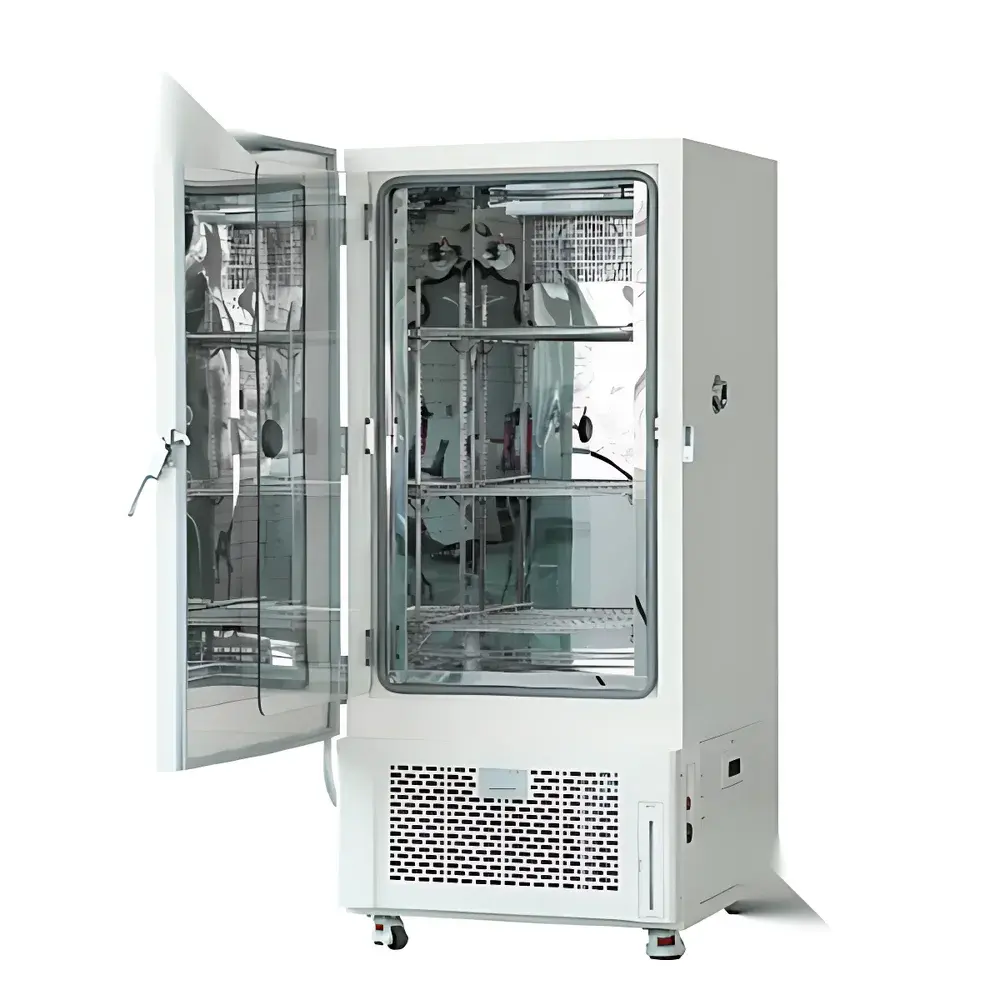
Xufeng XF-3535 Automatic Pour Point Tester
| Brand | Xufeng |
|---|---|
| Origin | Shanghai, China |
| Model | XF-3535 |
| Temperature Range | –50 °C to 80 °C |
| Temperature Resolution | 0.1 °C |
| Cooling System | Cascade Compressor Refrigeration |
| Detection Method | Fiber-optic Sensor |
| Temperature Sensor | Custom Pt100 Platinum Resistance Thermometer |
| Control System | Microprocessor-based with RS-232C Interface |
| Power Supply | AC 220 V, 50/60 Hz, 1500 W |
| Printer | Integrated Dot-matrix Panel Printer |
| Compliance | GB/T 3535, ASTM D97 |
| Construction | Desktop, All-Stainless-Steel Enclosure |
Overview
The Xufeng XF-3535 Automatic Pour Point Tester is an engineered solution for determining the pour point of petroleum products in accordance with internationally recognized standard test methods—specifically GB/T 3535 and ASTM D97. The pour point is defined as the lowest temperature at which a petroleum product remains fluid under prescribed cooling and tilt conditions; it serves as a critical low-temperature performance indicator for lubricants, diesel fuels, crude oils, and other hydrocarbon-based fluids. This instrument implements the tilt-and-observe methodology: samples are cooled at a controlled rate, periodically tilted at a fixed angle (typically 45°), and visually assessed for movement. The XF-3535 automates this process using a high-sensitivity fiber-optic detection system that captures subtle flow initiation with reproducible timing, eliminating subjective visual interpretation and operator-dependent variability. Its cascade compressor refrigeration architecture ensures stable, linear cooling across the full operational range of –50 °C to +80 °C, while integrated microprocessor control maintains thermal uniformity within ±0.3 °C during hold phases—a prerequisite for compliance with precision requirements in ASTM D97 Annex A1.
Key Features
- Fully automated test sequence from initial cooling through final pour point determination, reducing manual intervention and inter-operator variance.
- Integrated cascade compressor refrigeration system with independent cold trap and heating circuit (NiCr heating element, 200 W) enables rapid temperature ramping and precise isothermal stabilization.
- High-resolution 0.1 °C temperature readout via calibrated Pt100 platinum resistance thermometer, traceable to national metrological standards.
- Real-time graphical display of cooling curve, current tilt cycle status, elapsed time, and detected movement events on a color TFT-LCD touchscreen interface with intuitive Chinese–English bilingual navigation.
- Fiber-optic sensor array positioned at the sample tube’s lower observation zone delivers sub-second response to fluid displacement, ensuring accurate and repeatable pour point identification.
- Onboard dot-matrix printer outputs complete test reports—including ambient conditions, cooling rate, tilt intervals, observed movement timestamps, and final pour point—with automatic timestamping and instrument ID tagging.
- Comprehensive self-diagnostic suite monitors refrigerant pressure, sensor continuity, heater function, and communication integrity; faults trigger audible alerts and on-screen error codes aligned with maintenance protocols.
- RS-232C serial interface supports bidirectional data exchange with LIMS or laboratory informatics platforms, enabling audit-ready export of raw temperature/time logs and result metadata.
Sample Compatibility & Compliance
The XF-3535 is validated for use with transparent and opaque petroleum liquids including base oils, engine oils, hydraulic fluids, fuel oils, and residual crudes. Sample volume requirement is standardized at 45 mL per test, accommodated in supplied borosilicate glass test tubes (10 pcs included). Instrument design conforms to mechanical and thermal specifications outlined in Clause 6 of ASTM D97 and Section 5 of GB/T 3535, particularly regarding tilt angle (45° ± 1°), dwell time (3 seconds minimum per tilt), and cooling rate (1.5 °C/min ± 0.1 °C/min between –18 °C and –33 °C). The all-stainless-steel chassis meets IP20 ingress protection and satisfies general laboratory electrical safety requirements per IEC 61010-1. While not inherently 21 CFR Part 11 compliant, its RS-232 output and deterministic event logging support integration into validated GxP environments when paired with appropriate electronic signature and audit-trail middleware.
Software & Data Management
Operation is managed entirely through embedded firmware—not PC-dependent software—ensuring deterministic real-time control and immunity to host OS instability. All test parameters (cooling rate, tilt interval, hold duration, alarm thresholds) are configurable via the touchscreen interface and retained in non-volatile memory. Each test generates a structured ASCII log containing: instrument serial number, operator ID (manually entered), start timestamp, ambient temperature/humidity (if external sensors connected), 10-Hz temperature–time pairs, tilt event markers, and final pour point with confidence flag (e.g., “confirmed on 3rd tilt”). Data export occurs via RS-232 at 9600 baud, supporting CSV or fixed-field formats compatible with Excel, LabArchives, or custom QA databases. Optional firmware updates—distributed via USB flash drive—include enhanced calibration routines and expanded reporting templates aligned with ISO/IEC 17025 documentation requirements.
Applications
This instrument is routinely deployed in refinery QC labs for batch release of distillate fuels and lube stocks; in R&D settings for evaluating pour point depressant (PPD) efficacy; and in third-party testing laboratories accredited to ISO/IEC 17025 for contract analysis of biodiesel blends and synthetic ester lubricants. It supports method transfer studies between ASTM D97 and alternative low-temperature specifications such as IP 15 and DIN 51597. Due to its wide temperature span and robust thermal control, the XF-3535 also serves as a platform for developing internal correlation models between pour point and cloud point or cold filter plugging point (CFPP) in diesel formulations.
FAQ
What standards does the XF-3535 comply with?
It is designed and verified for full conformance with GB/T 3535 and ASTM D97, including specified cooling profiles, tilt mechanics, and observation criteria.
Can the instrument be integrated into a LIMS environment?
Yes—via its native RS-232C port, supporting ASCII-based data streaming with configurable delimiters and header formats.
Is calibration traceable to national standards?
Temperature sensor calibration certificates (as Pt100) are provided with each unit, referencing CNAS-accredited calibration laboratories in China.
What maintenance is required for the refrigeration system?
No user-serviceable refrigerant handling is needed; annual verification of compressor oil level and condenser coil cleanliness is recommended.
Does the system support multi-language UI beyond Chinese?
Firmware v2.4+ includes English, Spanish, and Arabic language packs, selectable directly from the setup menu.