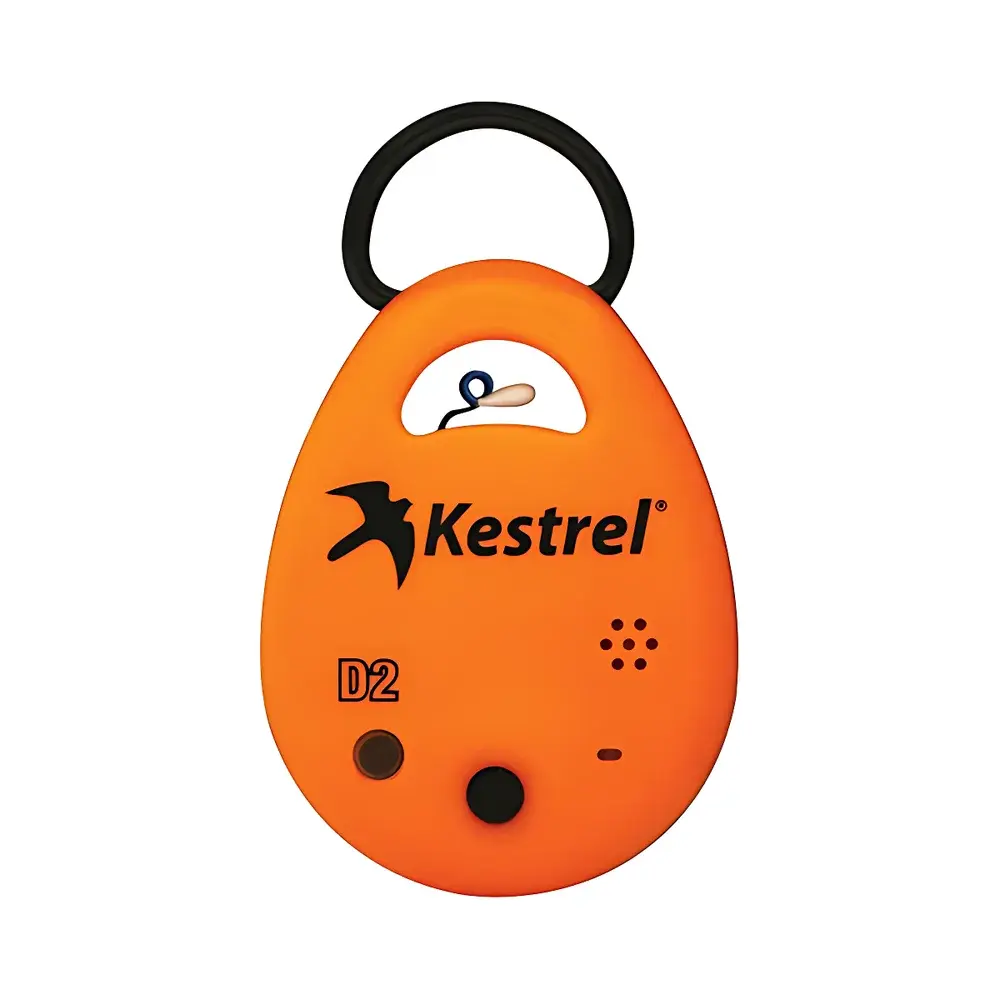
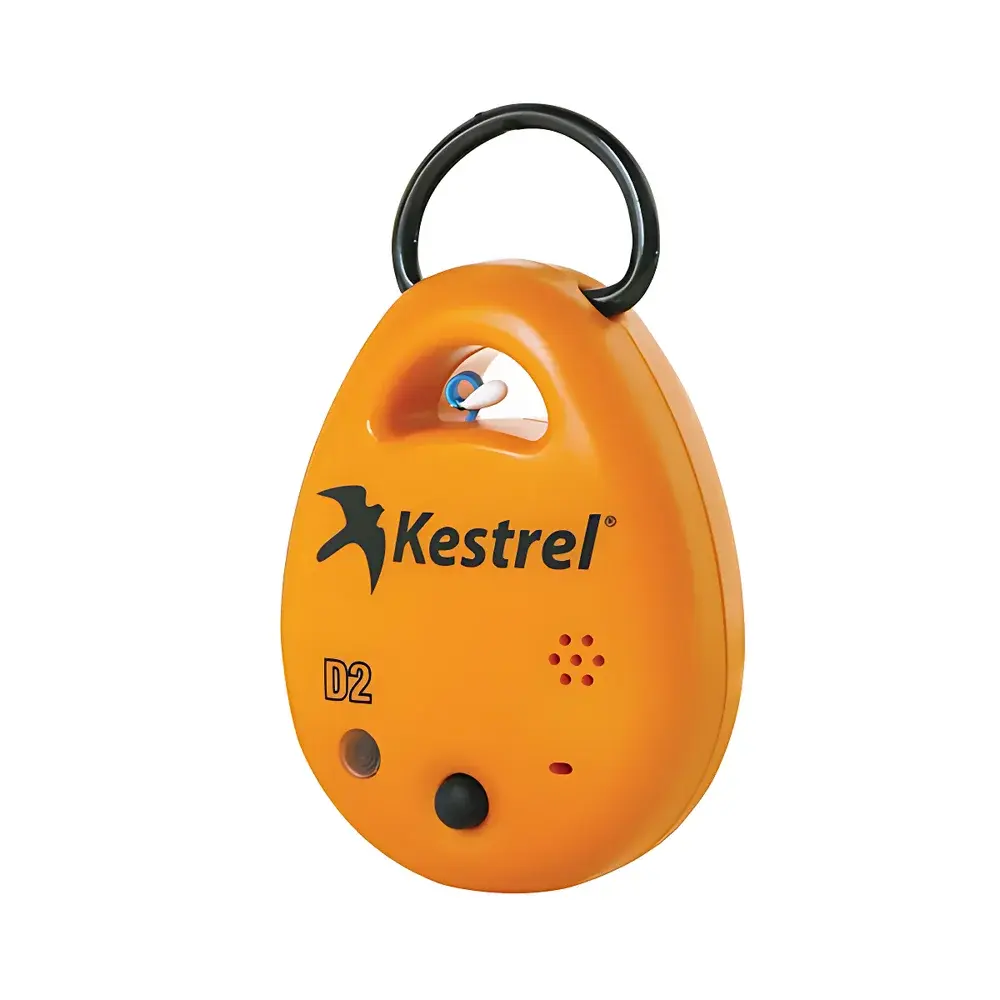
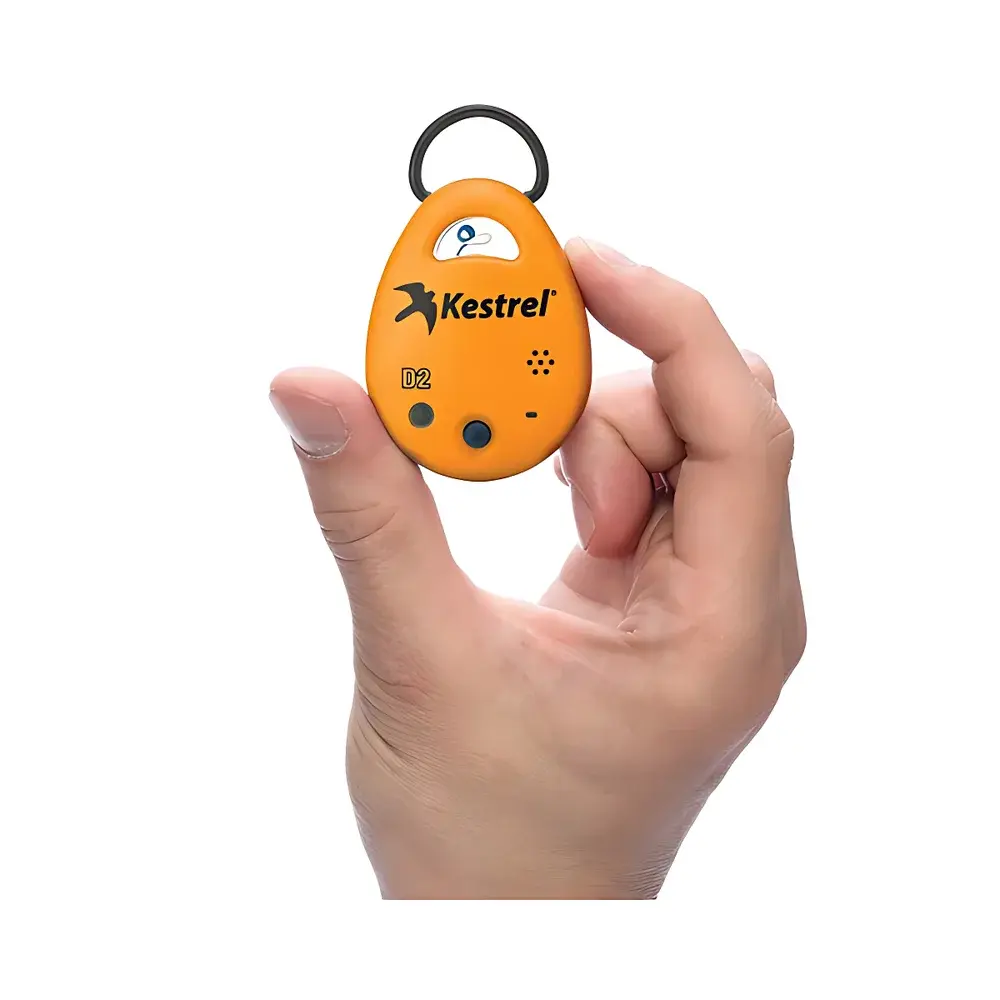
Kestrel DROP D2HS Thermal Stress Monitor
| Brand | NK |
|---|---|
| Origin | USA |
| Model | DROP D2HS |
| Temperature Range | -10 to 55°C |
| Temperature Accuracy | ±0.5°C |
| Resolution | 0.1°C |
| Operating Environment | -18°C to 60°C |
| Power Supply | User-replaceable CR2032 coin cell |
| Dimensions | 6 × 4.5 × 2.3 cm |
| Weight | 34 g |
| IP Rating | IP67 (30-min submersion) |
| Shock Resistance | MIL-STD-810G (1 m drop) |
| Data Capacity | >7,000 temperature/humidity records |
| Battery Life | Up to 4 months (typical use) |
| Wireless Range | Up to 30 m (100 ft) via Bluetooth® 4.0+ |
| Computation Capabilities | Heat Stress Index (HSI), Dew Point Temperature |
Overview
The Kestrel DROP D2HS Thermal Stress Monitor is a compact, ruggedized environmental data logger engineered for continuous, unattended monitoring of ambient temperature and relative humidity in industrial, occupational health, laboratory, and field-deployed settings. Unlike basic thermohygrometers, the D2HS implements real-time thermodynamic computation to derive two critical occupational safety metrics: the Heat Stress Index (HSI) — a validated indicator of physiological strain under combined thermal and moisture load — and dew point temperature, essential for condensation risk assessment and HVAC system validation. Its measurement principle relies on dual high-stability NTC thermistors and capacitive polymer humidity sensors, hermetically sealed and thermally isolated to minimize thermal lag and ensure rapid equilibration (<30 s response time in still air). The device operates within a certified accuracy envelope of ±0.5°C across its full -10°C to +55°C operational range, with 0.1°C resolution and traceable calibration performance aligned with ISO/IEC 17025-accredited reference standards.
Key Features
- Ruggedized housing rated to IP67 (30-minute immersion at 1 m depth) and MIL-STD-810G for mechanical shock resistance (1 m drop onto concrete)
- Integrated D-ring mounting hardware for secure suspension in ducts, enclosures, storage areas, or outdoor shelters
- Bluetooth® 4.0+ wireless interface enabling bidirectional communication with iOS and Android mobile devices up to 30 meters line-of-sight
- Onboard memory stores over 7,000 timestamped temperature/humidity pairs with automatic time synchronization upon each mobile connection
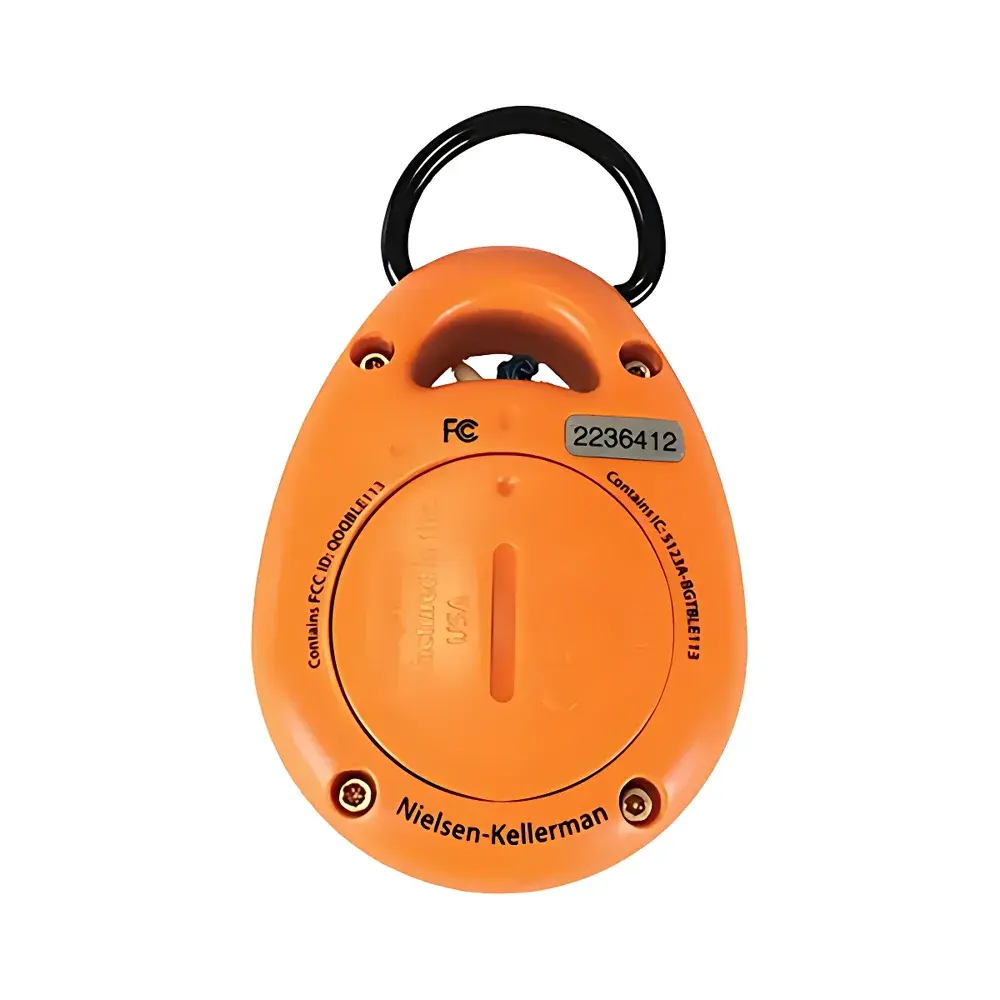
- CR2032 lithium coin cell provides up to four months of continuous logging at standard 15-minute intervals; battery replacement requires no tools or disassembly
- Real-time calculation of Heat Stress Index per ACGIH TLV® methodology and dew point temperature using Magnus formula implementation
- Configurable logging interval (2 seconds to 12 hours), programmable high/low threshold alerts, and auto-export capability via email or cloud sync
Sample Compatibility & Compliance
The DROP D2HS is designed for non-invasive, ambient air monitoring only — it does not support immersion, pressurized gas sampling, or corrosive atmosphere exposure. Its sensor architecture complies with ASTM E2234 (Standard Practice for Determining Thermal Comfort Conditions Using the Heat Stress Index) and supports documentation requirements under OSHA 1910.1200 (Hazard Communication Standard) for workplace heat stress evaluation. While not FDA 21 CFR Part 11–compliant out-of-the-box, audit-ready data export (CSV, PDF reports) and full metadata logging (device ID, firmware version, UTC timestamps, sensor status flags) facilitate integration into GLP/GMP-aligned environmental monitoring systems when paired with validated Kestrel LiNK workflows.
Software & Data Management
Kestrel LiNK — a free, platform-native application for iOS (iOS 6+, iPhone 4s or newer) and Android (4.3+, Bluetooth Smart®-enabled devices) — serves as the sole interface for configuration, visualization, and data retrieval. It supports concurrent pairing with up to eight DROP units per device, enabling spatial mapping of thermal gradients across facilities. Real-time dashboards display min/max/avg values, trend graphs with adjustable time windows, and annotated event markers. All logged data include embedded UTC timestamps, sensor health indicators, and battery voltage readings. Export options include timestamped CSV files compatible with Excel, MATLAB, and LIMS platforms, as well as shareable PDF summaries with embedded charts and metadata. Firmware updates are delivered over-the-air through the app.
Applications
- Occupational health surveillance: Continuous HSI tracking in foundries, warehouses, agricultural processing, and construction sites to support OSHA-compliant heat illness prevention programs
- Pharmaceutical cold chain validation: Monitoring ambient conditions in staging areas, loading docks, and quarantine rooms where refrigerated transport interfaces with ambient environments
- Museum and archive environmental stewardship: Long-term passive logging of temperature/humidity excursions affecting artifact preservation
- Building commissioning and HVAC diagnostics: Mapping thermal stratification, identifying dew point violations near glazing or insulation gaps, and verifying setpoint stability
- Field research deployments: Lightweight, waterproof deployment in remote ecological stations, weather shelters, or transportation containers without external power dependency
FAQ
What is the maximum recommended logging interval for long-term deployments?
For optimal battery longevity exceeding 4 months, a 15-minute interval is recommended under typical ambient conditions (-10°C to 40°C). Intervals shorter than 2 minutes significantly reduce operational duration.
Does the DROP D2HS support external sensor inputs or analog outputs?
No — the D2HS is a self-contained unit with fixed internal sensors only. It does not feature analog I/O, RS-485, or expansion ports.
Can historical data be retrieved after the battery is depleted?
Yes — all stored data remain intact in non-volatile memory until overwritten, even after battery exhaustion. Replacement and reconnection will restore access to the full dataset.
Is calibration traceable to NIST or other national metrology institutes?
Each unit ships with a factory calibration certificate referencing NIST-traceable standards. Field recalibration is not user-serviceable; return-to-factory service is available through authorized NK distributors.
How is time synchronization handled when multiple DROP units are deployed?
Each unit maintains an independent RTC. Time is synchronized to the host mobile device’s network time (NTP) only during active Bluetooth connection — no GPS or radio time signal is used.