

Hukseflux SR15-A1 Pyranometer
| Brand | Hukseflux |
|---|---|
| Origin | Netherlands |
| Model | SR15-A1 |
| Spectral Range | 285–3000 nm |
| ISO 9060 | 2018 Classification: Spectrally Flat Class B |
| Calibration Uncertainty | < 1.8 % (k = 2) |
| Measurement Range | 0–3000 W/m² |
| Response Time | < 10 s |
| Zero Offset (unventilated) | 5 W/m² |
| Operating Temperature | −40 to +80 °C |
| Temperature Response | < ±2 % (−40 to +80 °C) |
| Heater Power Consumption | 1.5 W @ 12 VDC |
| Supply Voltage | 5–30 VDC |
| Analog Output | mV per W/m² |
| Cable Length | 5 m |
| Heating Function | Integrated heater for dew/frost mitigation |
Overview
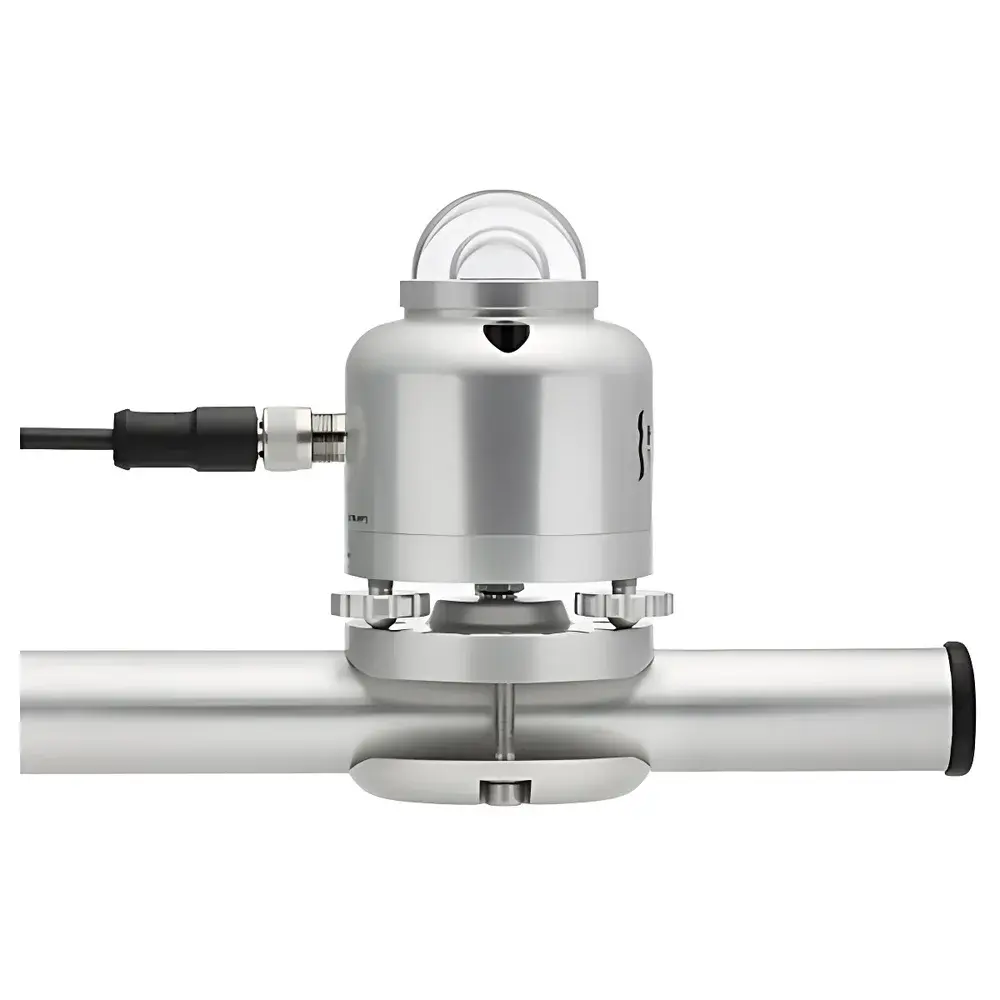
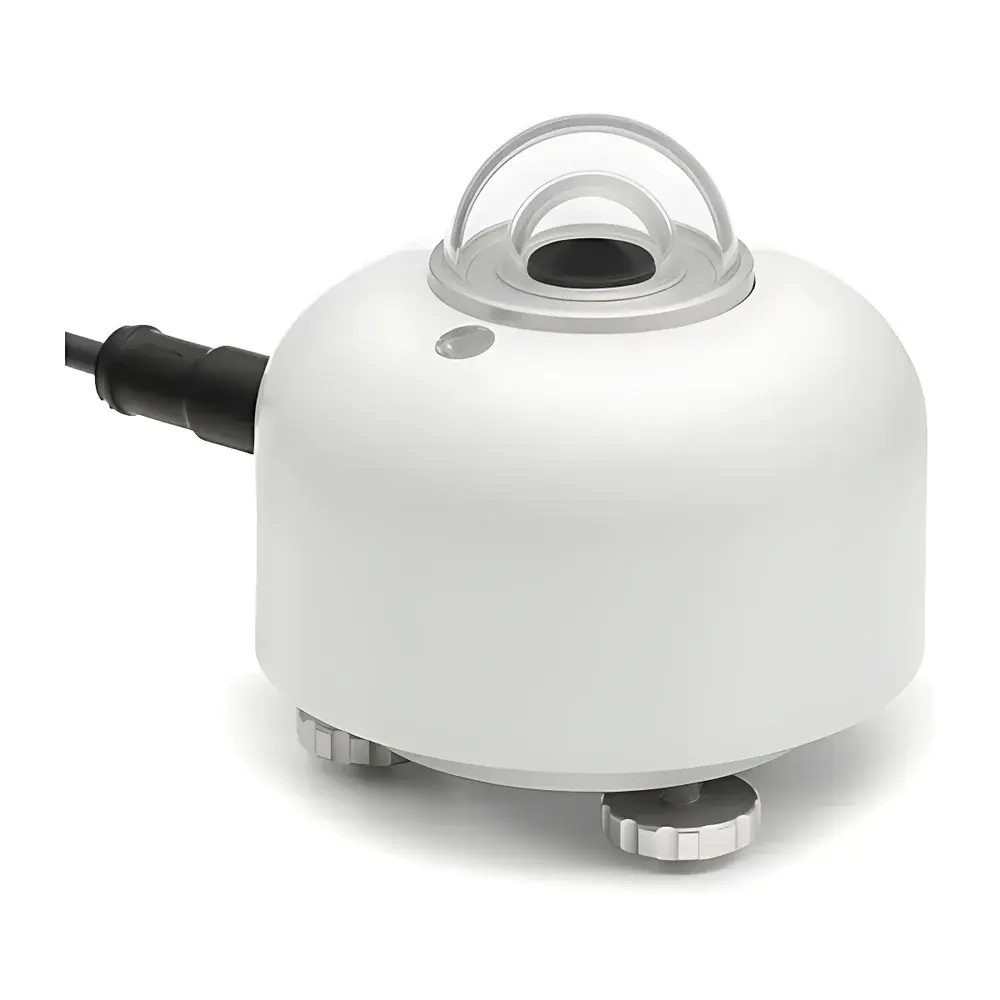
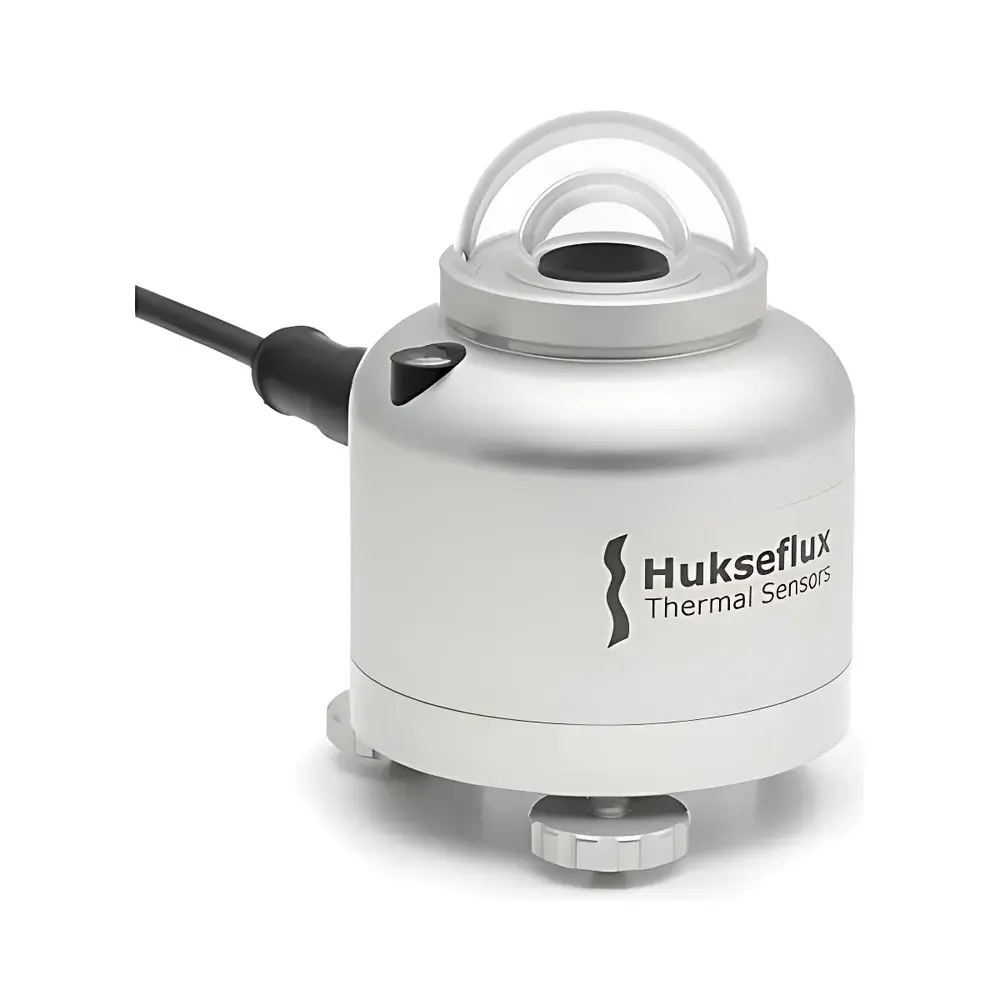
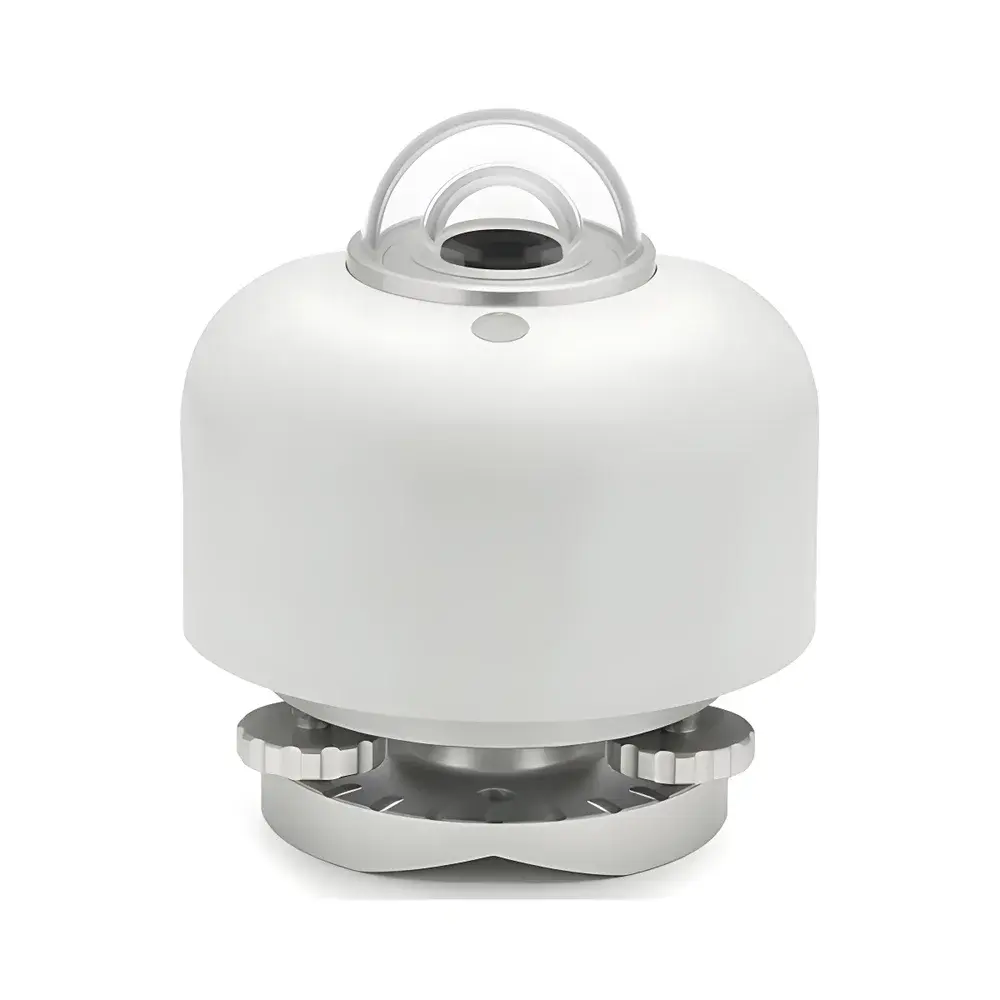
The Hukseflux SR15-A1 is a high-accuracy, thermopile-based pyranometer engineered for continuous, traceable measurement of hemispherical solar irradiance (global horizontal irradiance, GHI) under outdoor and controlled indoor conditions. It operates on the principle of thermal detection: incident solar radiation is absorbed by a blackened thermopile sensor mounted beneath a precision-ground, spectrally neutral quartz dome. The resulting temperature gradient across the thermopile generates a millivolt-level analog output proportional to irradiance in W/m². Conforming strictly to ISO 9060:2018 as a spectrally flat Class B instrument—and equivalently classified as “First Class” per ISO 9060:1990—the SR15-A1 delivers metrological performance suitable for reference-grade solar monitoring networks, photovoltaic (PV) performance validation, and climate research applications. Its 180° field of view ensures full-hemisphere integration, and its robust mechanical design supports mounting in horizontal, tilted, or inverted configurations—enabling use not only for GHI but also for reflected (albedo) and plane-of-array (POA) irradiance measurements.
Key Features
- ISO 9060:2018 spectrally flat Class B classification with documented spectral responsivity across 285–3000 nm
- Calibration uncertainty of 2.8 % for Class B instruments, traceable to the World Radiometric Reference (WRR)
- Integrated resistive heater (1.5 W @ 12 VDC) mitigates dew, frost, and snow accumulation without compromising thermal stability or long-term calibration integrity
- Low zero offset (< 5 W/m² under unventilated conditions) and minimal temperature dependence (< ±2 % over −40 to +80 °C)
- Rugged anodized aluminum housing with IP67-rated sealing and corrosion-resistant fasteners for permanent outdoor deployment
- Response time < 10 s—fully compliant with IEC 61724-1 and ASTM E2848 requirements for PV system performance monitoring
- Wide operating voltage range (5–30 VDC) and low-power heater enable compatibility with battery- or solar-powered data loggers
Sample Compatibility & Compliance
The SR15-A1 is designed for direct exposure to natural sunlight and artificial light sources including xenon-arc, metal halide, and LED-based solar simulators used in laboratory PV testing. Its spectral flatness ensures accurate integration across the full terrestrial solar spectrum (AM1.5G), making it suitable for both broadband irradiance quantification and spectral mismatch correction in PV performance assessment. The instrument complies with international standards governing radiometric instrumentation and solar energy applications: ISO 9060:2018 and WMO-No. 8 for classification and operational guidelines; ISO 9847 for calibration methodology; ASTM E2848 for PV system performance monitoring; and IEC 61724-1 for photovoltaic system monitoring—particularly for GHI, POA, and albedo measurements. It also supports WMO-approved sunshine duration calculation via the “irradiance threshold method” (≥120 W/m²), eliminating the need for dedicated sunshine recorders in national meteorological networks.
Software & Data Management
While the SR15-A1 provides a passive analog (mV) output requiring external signal conditioning and digitization, it integrates seamlessly with industry-standard data acquisition systems—including Campbell Scientific CR-series, Delta-T GP2, and HOBO U30 loggers—via calibrated scaling factors supplied with each unit. For users deploying digital variants (e.g., SR15-D1), Hukseflux Sensor Manager software enables configuration, real-time diagnostics, Modbus address assignment, and data visualization on Windows PCs. Although the SR15-A1 does not support digital communication natively, its analog interface ensures broad compatibility with SCADA systems, PLCs, and cloud-connected IoT platforms when paired with appropriate analog-to-digital converters. All calibration certificates include full uncertainty budgets calculated per the ISO/IEC Guide 98-3 (GUM), and Hukseflux provides downloadable Excel-based uncertainty evaluation tools to support user-specific uncertainty analysis per application context (e.g., tilt angle, ventilation, thermal environment).
Applications
- Photovoltaic power plant performance ratio (PR) monitoring and yield assessment per IEC 61724-1
- Solar resource assessment for site feasibility studies and bankable energy yield modeling
- National and regional meteorological observation networks (WMO-recommended Class B instrumentation)
- Indoor solar simulator characterization and spectral mismatch correction in PV cell and module testing labs
- Albedo and surface reflectance studies in climatology and land-surface modeling
- Building-integrated photovoltaics (BIPV) and façade irradiance mapping
- Long-term climate monitoring programs requiring traceable, stable, and maintenance-free operation
FAQ
What is the difference between SR15-A1 and SR15-D1?
The SR15-A1 provides a millivolt analog output and requires external signal conditioning and digitization; the SR15-D1 features RS-485 Modbus RTU digital output and onboard diagnostics.
Is the heater always active, or can it be controlled externally?
The heater is powered continuously when supply voltage is applied; for programmable control, users must implement external switching via relay or MOSFET circuitry.
Can the SR15-A1 be used for diffuse irradiance measurement?
Yes—when deployed with a motorized shadow band or shading disc compatible with standard mounting hardware, it meets ISO 9060:2018 requirements for diffuse component measurement.
Does the SR15-A1 require periodic recalibration?
Hukseflux recommends recalibration every two years under routine field use; annual recalibration is advised for applications demanding highest metrological confidence (e.g., reference stations, bankable reporting).
What mounting options are available for stable leveling?
Optional accessories include spring-loaded leveling mounts and tubular leveling stands with M6 mounting bolts—designed for rapid installation, precise horizon alignment, and tool-free sensor replacement.
How is traceability to WRR ensured?
Each SR15-A1 is calibrated at the Hukseflux Primary Calibration Laboratory against a WRR-traceable reference pyranometer under controlled solar simulator and outdoor conditions, with full uncertainty budget documentation provided in the certificate.







