
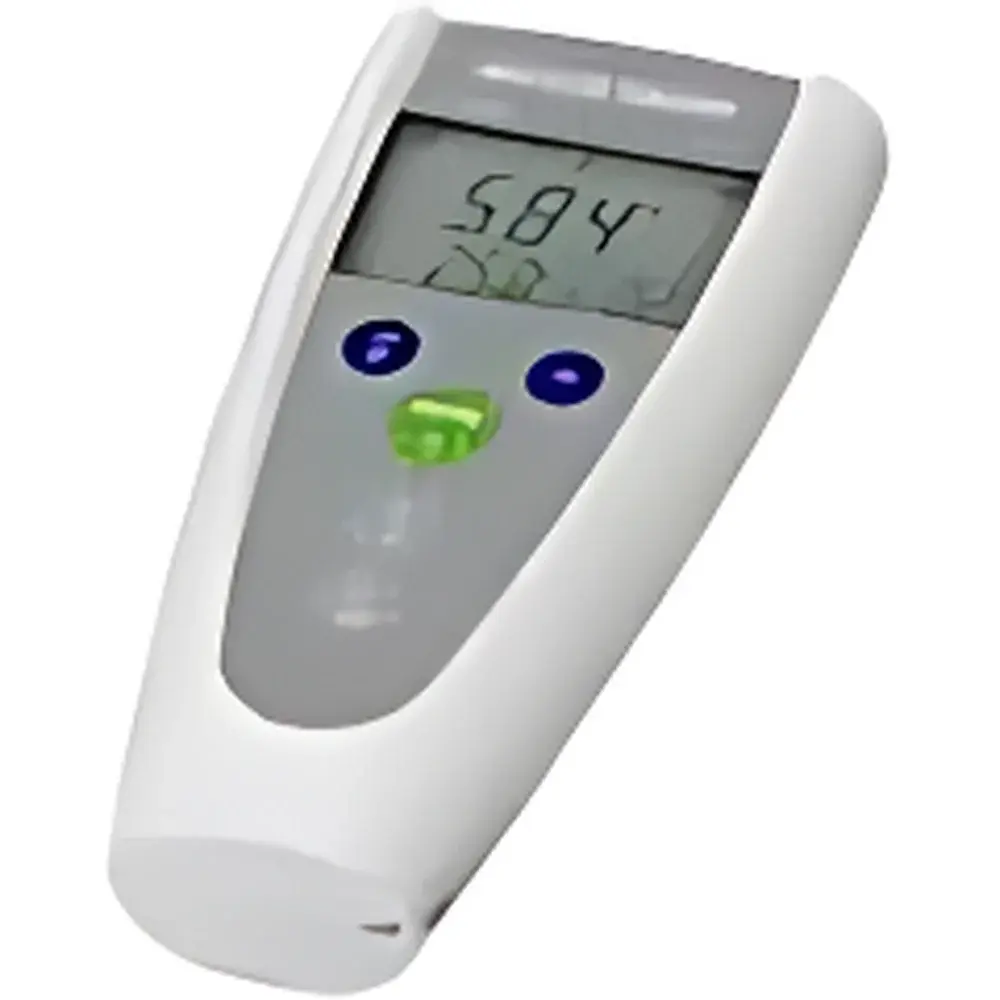
METTLER TOLEDO FG2 FiveGo™ Portable pH and mV/ORP Meter
| Brand | METTLER TOLEDO |
|---|---|
| Origin | Switzerland |
| Model | FG2 |
| Instrument Type | Portable |
| pH Range | 0.00–14.00 |
| pH Resolution | 0.01 |
| pH Accuracy (relative) | ±0.01 |
| mV Range | −1999 to +1999 mV |
| mV Resolution | 1 mV |
| mV Accuracy (relative) | ±1 |
| Temperature Range | 0.0–100.0 °C |
| Temperature Resolution | 0.1 °C |
| Temperature Accuracy | ±0.5 °C |
| Calibration | Up to 3-point, with 4 predefined buffer sets |
| Data Storage | 30 measurements |
| Display | LCD |
| Power Supply | 4 × AAA 1.5 V batteries |
| IP Rating | IP54 |
| Operating Environment | 0–40 °C, 5–80 % RH |
Overview
The METTLER TOLEDO FG2 FiveGo™ Portable pH and mV/ORP Meter is an entry-level, field-deployable electrochemical instrument engineered for precision, repeatability, and operational simplicity in routine pH and redox potential measurements. Based on potentiometric measurement principles—where the electromotive force (EMF) generated across a pH-sensitive glass electrode and a stable reference electrode is converted into a pH or mV value—the FG2 delivers traceable, NIST-compatible results under ISO/IEC 17025-aligned laboratory and field conditions. Designed for robustness in non-laboratory environments—including food & beverage production lines, municipal water distribution networks, wastewater treatment plants, and environmental monitoring sites—the FG2 integrates METTLER TOLEDO’s 60+ years of electrode science into a compact, ergonomic housing compliant with IEC 60529 (IP54) for dust resistance and limited water ingress protection.
Key Features
- Automatic endpoint detection: Eliminates subjective judgment by locking readings once stability criteria (±0.01 pH/min or ±0.1 mV/min over 10 s) are met.
- Intelligent buffer recognition: Auto-identifies standard pH 4.01, 7.00, 9.21, and 10.01 buffers during calibration, reducing manual entry errors and supporting GLP-compliant documentation.
- Dual-mode operation: Switch seamlessly between pH and mV/ORP modes without recalibration; ORP measurements support redox process control in disinfection, corrosion monitoring, and anaerobic digestion.
- Ergonomic five-button interface: Dedicated keys for START/STOP, CAL, MEMORY, and SETUP enable glove-compatible operation and minimize training time for field technicians.
- Simultaneous parameter display: LCD shows real-time pH/mV value, measured temperature, endpoint status (e.g., “STABLE”), calibration age indicator, and battery level—all without menu navigation.
- Integrated data management: Stores up to 30 complete measurement records (pH/mV value, temperature, date/time stamp, and calibration ID), exportable via manual transcription for audit-ready reporting.
Sample Compatibility & Compliance
The FG2 is compatible with METTLER TOLEDO’s LE438 polymer-body pH electrode (included in ELK and FK configurations), optimized for rapid response in turbid, low-conductivity, or high-suspended-solid samples typical of environmental surface water, effluent streams, and food slurries. Its gel-filled, double-junction design minimizes liquid junction potential drift and prevents clogging in particulate-rich media. The instrument meets CE marking requirements and conforms to IEC 61010-1 for electrical safety in measurement and control equipment. While not certified for ATEX or IECEx hazardous areas, its IP54 rating ensures reliable operation in outdoor, humid, or intermittently wet locations per EN 60529. Calibration traceability aligns with ASTM D1293 (Standard Test Method for pH of Water) and ISO 10523 (Water Quality — Determination of pH).
Software & Data Management
The FG2 operates as a standalone instrument with no proprietary software dependency. All stored data are accessible directly on-device via the MEMORY key and can be manually recorded for inclusion in paper-based or LIMS-integrated QA/QC workflows. Though it lacks USB or Bluetooth connectivity, its structured data format (value, unit, temp, timestamp) supports seamless integration into Excel-based trending logs or internal electronic notebooks. For regulated environments, users may implement supplementary procedural controls—such as defined calibration intervals, operator sign-off on printed calibration reports, and periodic verification against certified reference materials—to satisfy FDA 21 CFR Part 11 record-keeping expectations where electronic records are maintained externally.
Applications
- Food & Beverage: Monitoring pH during fermentation (e.g., yogurt, beer), post-rinse validation in CIP systems, and shelf-life stability testing of acidic beverages.
- Water & Wastewater: Field verification of drinking water pH compliance (WHO Guidelines, EPA 600/R-94/151), influent/effluent profiling in activated sludge processes, and stormwater runoff screening.
- Environmental Fieldwork: On-site assessment of soil leachate, lake sediment pore water, and groundwater pH gradients during site characterization or remediation monitoring.
- Education & Training: Ideal platform for undergraduate analytical chemistry labs due to intuitive interface, built-in calibration diagnostics, and compatibility with standard teaching electrodes.
- Quality Control in Manufacturing: In-process checks of cleaning solution acidity, rinse water neutrality, and coating bath pH in electroplating or pharmaceutical excipient preparation.
FAQ
Does the FG2 support automatic temperature compensation (ATC)?
Yes—the FG2 performs automatic temperature compensation using either a built-in temperature sensor or an optional external Pt1000 probe (not included). ATC follows the Nernst equation with slope correction per IUPAC recommendations.
Can the FG2 be used with non-METTLER TOLEDO electrodes?
It accepts any BNC-compatible pH or ORP electrode with standard 0–1000 mV output; however, optimal performance, calibration stability, and IP54 sealing integrity are guaranteed only with METTLER TOLEDO electrodes and accessories.
Is the FG2 suitable for GLP or GMP environments?
While the FG2 itself does not provide electronic audit trails or user access control, its calibration memory, timestamped data storage, and adherence to recognized standards allow it to function within GLP/GMP frameworks when supported by documented SOPs, calibration logs, and periodic system suitability checks.
What is the expected battery life under typical usage?
With alkaline AAA batteries, continuous operation lasts approximately 2,000 hours (≈83 days); auto-power-off after 10 minutes of inactivity extends service life significantly.
How often should the FG2 be calibrated?
Calibration frequency depends on application criticality and sample matrix; METTLER TOLEDO recommends at least one 2-point calibration before each measurement session, with verification using a third buffer if operating across wide pH ranges or in regulatory contexts.





