
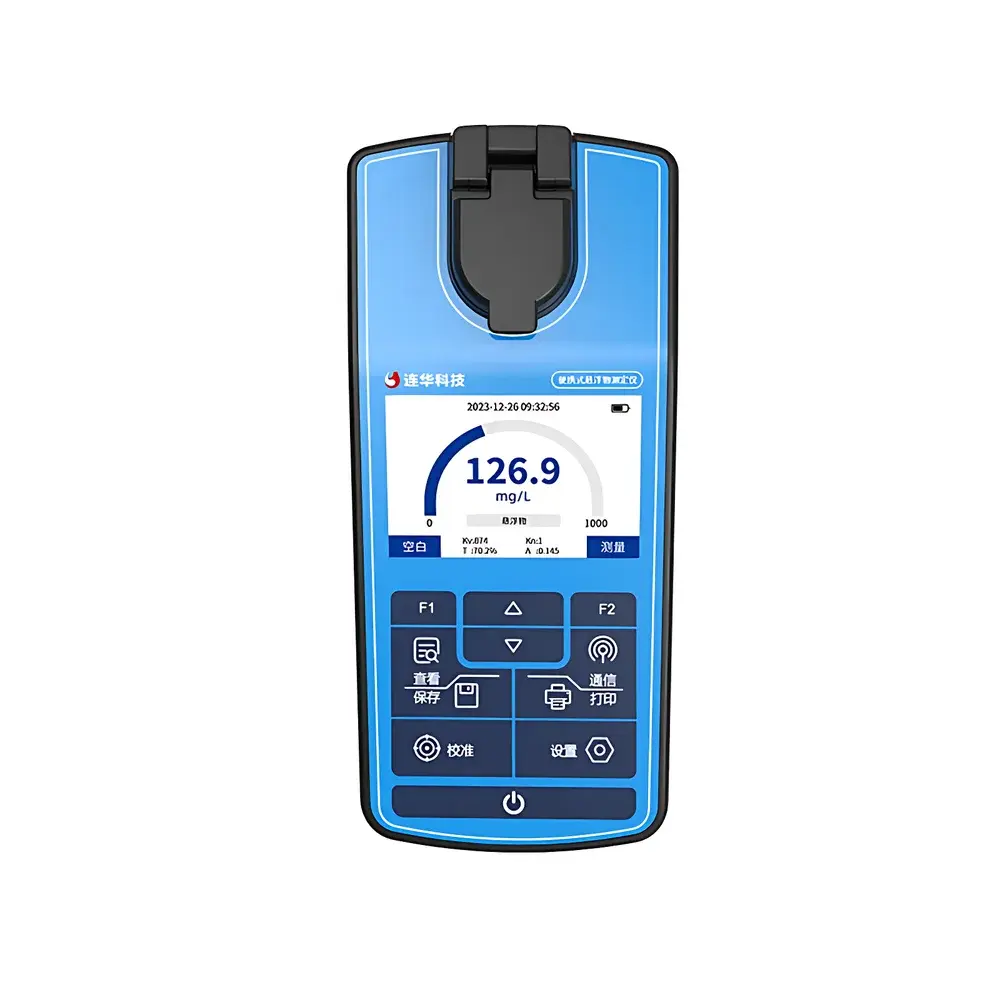
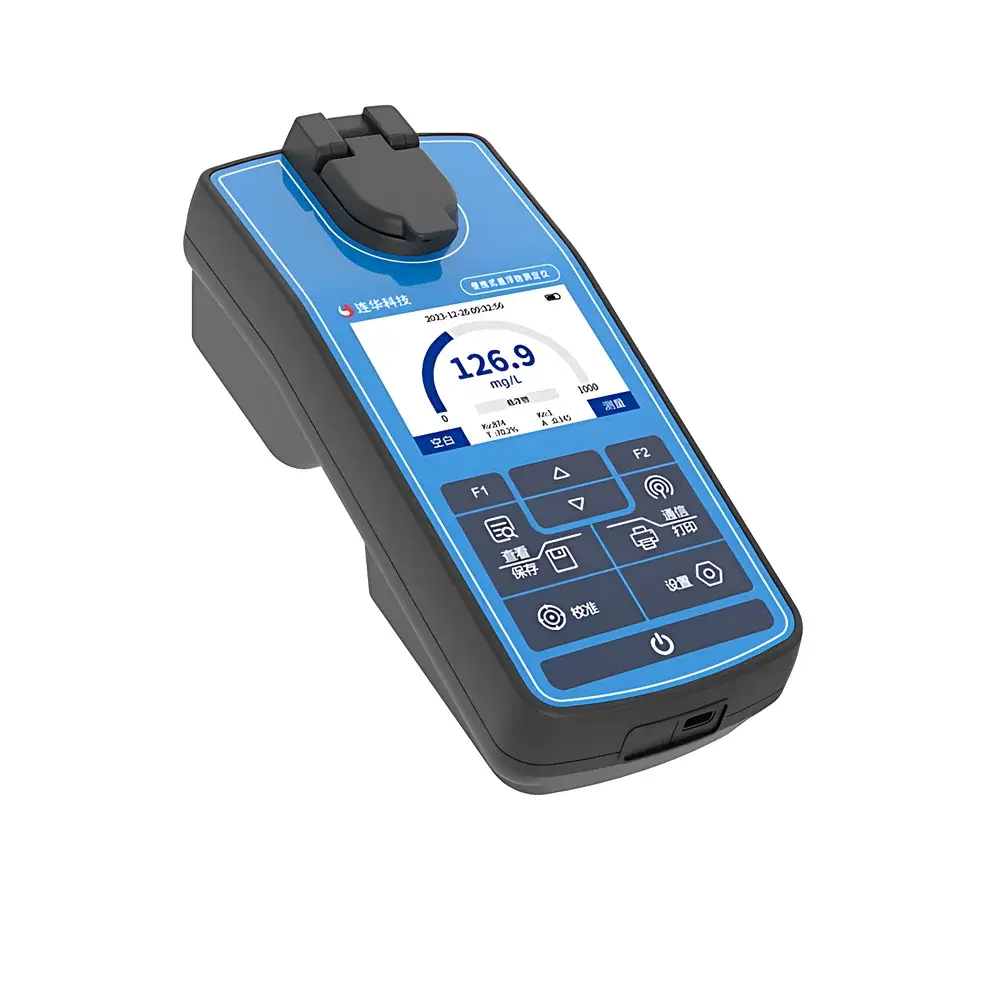
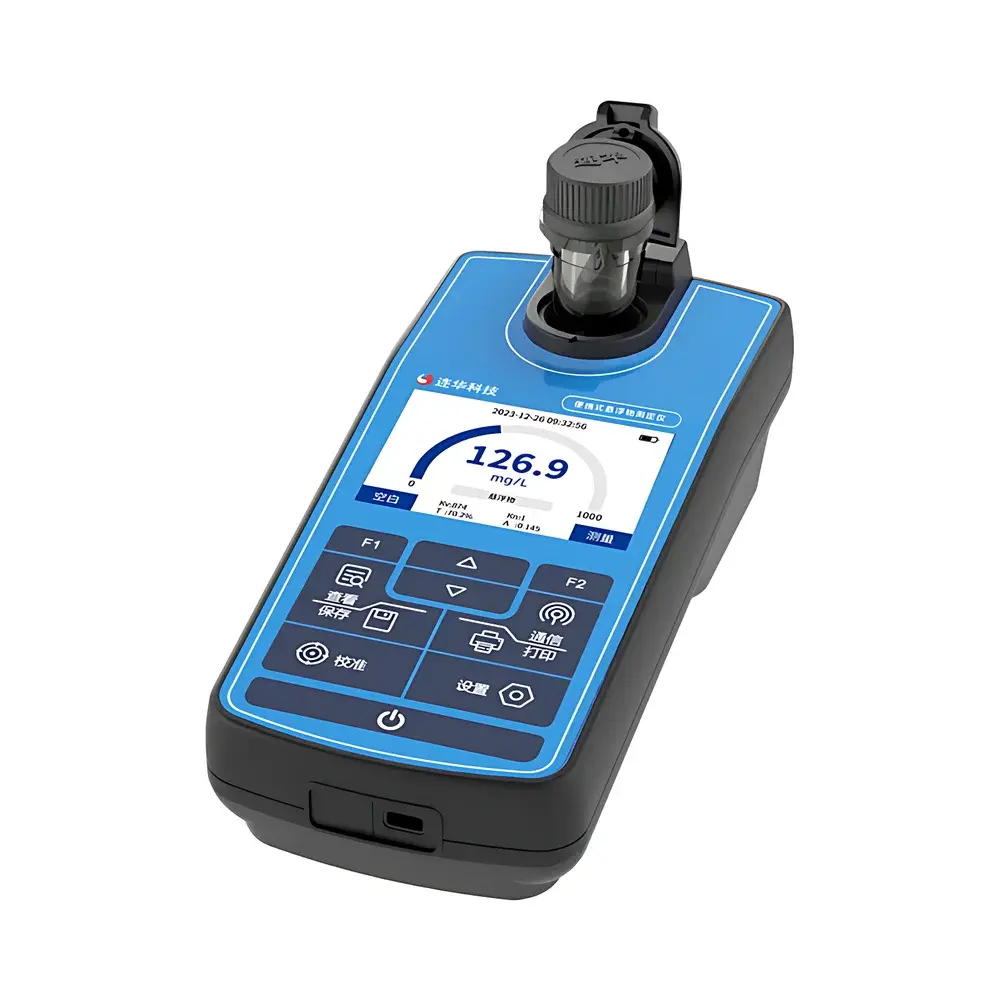
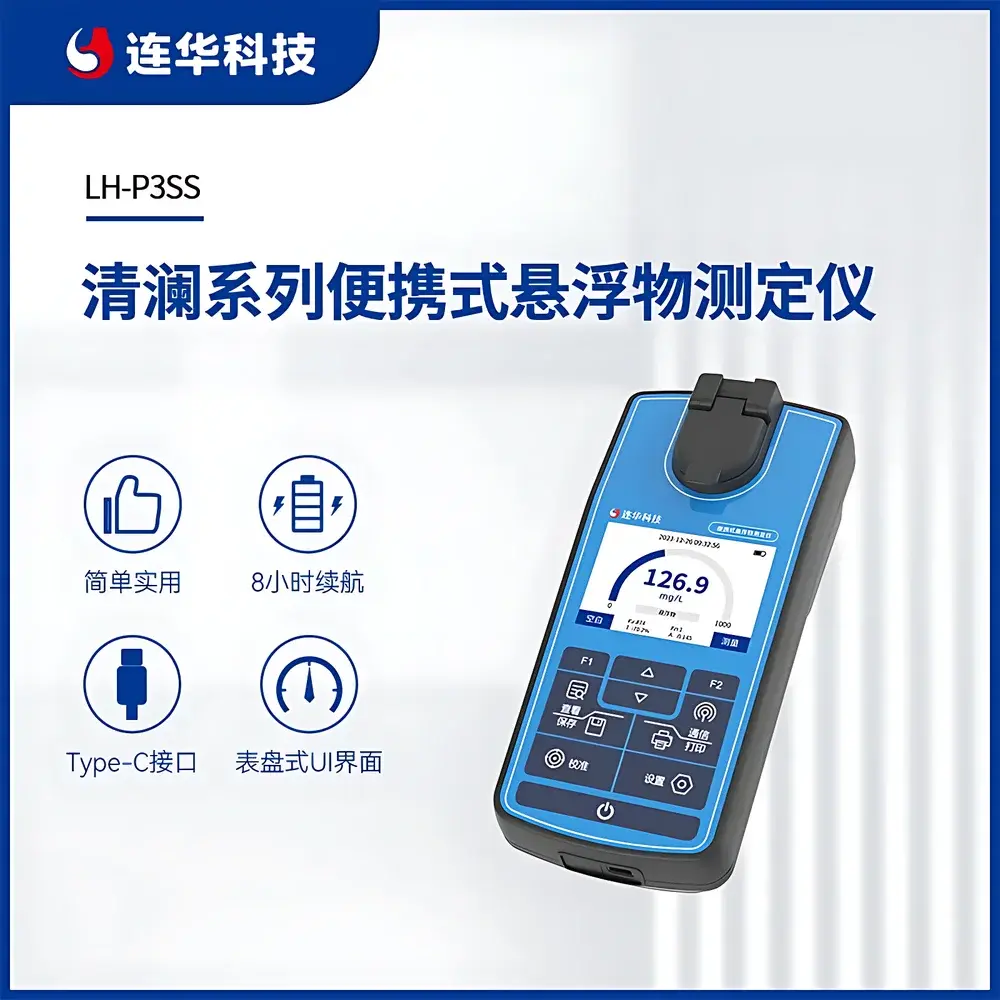
Lohand LH-P3SS Portable Suspended Solids Analyzer
| Brand | Lohand |
|---|---|
| Origin | Beijing, China |
| Manufacturer Type | Direct Manufacturer |
| Country of Origin | China |
| Model | LH-P3SS |
| Instrument Type | Portable |
| Display | 3.5-inch color TFT LCD with dial-style UI |
| Battery | Rechargeable lithium-ion, up to 8 hours continuous operation under typical field conditions |
| Calibration | Optical intensity calibration supported |
| Calibration Curves | 5 built-in calibration curves for turbidity-to-SS correlation |
| Measurement Limit Indication | Visual upper-limit alert (red highlight) on dial interface |
| Data Output | Concentration directly displayed in mg/L (ppm) units |
Overview
The Lohand LH-P3SS Portable Suspended Solids Analyzer is an engineered field-deployable instrument designed for rapid, on-site quantification of total suspended solids (TSS) in natural waters, wastewater effluents, and process streams. Based on the standardized principle of optical turbidimetry—where light attenuation at a fixed wavelength (typically 850 nm or 650 nm LED source) correlates with particle concentration—the LH-P3SS delivers reliable, repeatable TSS estimates without requiring laboratory-grade filtration or gravimetric analysis. Its compact form factor, integrated power management, and intuitive dial-based interface enable immediate deployment by environmental technicians, municipal operators, and field researchers operating under variable ambient lighting, temperature, and humidity conditions. The device complies with foundational methodological alignment to ISO 7027 (optical properties of water quality), and its calibration architecture supports traceability to NIST-traceable turbidity standards when used with certified reference suspensions (e.g., Formazin or AMCO AEPA-1).
Key Features
- Optimized optical path design with stable LED light source and matched photodetector, enabling consistent signal-to-noise ratio across varying sample turbidity ranges.
- Rechargeable high-capacity lithium-ion battery delivering ≥8 hours of continuous measurement cycles under mixed-use field conditions—including screen illumination, internal diagnostics, and repeated sample insertion.
- 3.5-inch color TFT display featuring a real-time analog dial interface that renders measured TSS concentration (mg/L) as a rotating needle indicator—enhancing readability during outdoor daylight exposure and reducing cognitive load during rapid surveys.
- Five programmable calibration curves preloaded into firmware, supporting flexible correlation between turbidity response and gravimetrically verified SS concentrations across diverse matrix types (e.g., riverine silt, activated sludge, algal blooms).
- Onboard optical intensity self-calibration function—performed via internal reference shutter—to compensate for LED aging and ambient thermal drift, thereby maintaining long-term photometric stability without external hardware.
- Intelligent range management: automatic detection of optical saturation; upper measurement limit dynamically displayed on the dial face, with red-highlighted visual warning when sample turbidity exceeds the validated linear dynamic range.
Sample Compatibility & Compliance
The LH-P3SS is optimized for aqueous samples with low-to-moderate color interference and minimal dissolved organic carbon (DOC) contribution. It accepts standard 10 mm pathlength cuvettes (glass or optical-grade polycarbonate) and accommodates particulate sizes ranging from ~1 µm to >100 µm, provided particles remain stably suspended during measurement. While not a replacement for EPA Method 160.2 or ISO 11923 gravimetric TSS determination, the instrument serves as a validated screening tool aligned with ASTM D3977–99 (Standard Practice for Sampling and Analysis of Suspended Solids in Water) and supports GLP-compliant field data capture when paired with documented calibration logs and operator IDs. All firmware and calibration records are stored internally with timestamping, satisfying basic audit trail requirements for municipal reporting and internal QA/QC workflows.
Software & Data Management
The LH-P3SS operates autonomously without PC dependency. All calibration parameters, measurement history (up to 500 records), and user-defined curve coefficients are retained in non-volatile memory. Data export is enabled via micro-USB port using vendor-provided Windows-compatible desktop utility, which generates CSV-formatted reports compliant with LIMS ingestion protocols. The software enforces electronic signature prompts for calibration events and supports batch export with ISO 8601 timestamps, instrument ID, and operator code—meeting foundational elements of FDA 21 CFR Part 11 for electronic records in regulated environmental monitoring programs.
Applications
- Routine monitoring of influent/effluent TSS in municipal and industrial wastewater treatment plants.
- Field verification of sediment trap efficiency and stormwater runoff characterization.
- Pre-screening of raw water sources prior to coagulation-flocculation trials in pilot-scale treatment studies.
- Educational use in environmental science laboratories for teaching turbidity–SS relationships and calibration methodology.
- Emergency response assessment following flooding or construction-related erosion events.
FAQ
Does the LH-P3SS require periodic recalibration with standard suspensions?
Yes—while optical intensity self-calibration maintains LED stability, full system calibration using certified turbidity standards (e.g., Formazin 100 NTU) is recommended before each daily shift or after extended storage.
Can the instrument measure colored or highly absorbing samples accurately?
Accuracy degrades in samples with significant spectral absorption at the LED emission wavelength; users should verify correlation against gravimetric TSS for high-color matrices such as peat-stained surface waters.
Is the device waterproof or dust-resistant?
The LH-P3SS meets IP65 ingress protection rating—suitable for rain-exposed field use but not submersion or high-pressure washdown.
What sample volume is required per measurement?
A minimum of 10 mL of well-homogenized sample is required to fill the standard 10 mm cuvette to the fill line.
Does the firmware support custom curve entry beyond the five built-in options?
No—only the five factory-loaded curves are available; curve parameters are locked to ensure metrological consistency and prevent unauthorized modification.







