
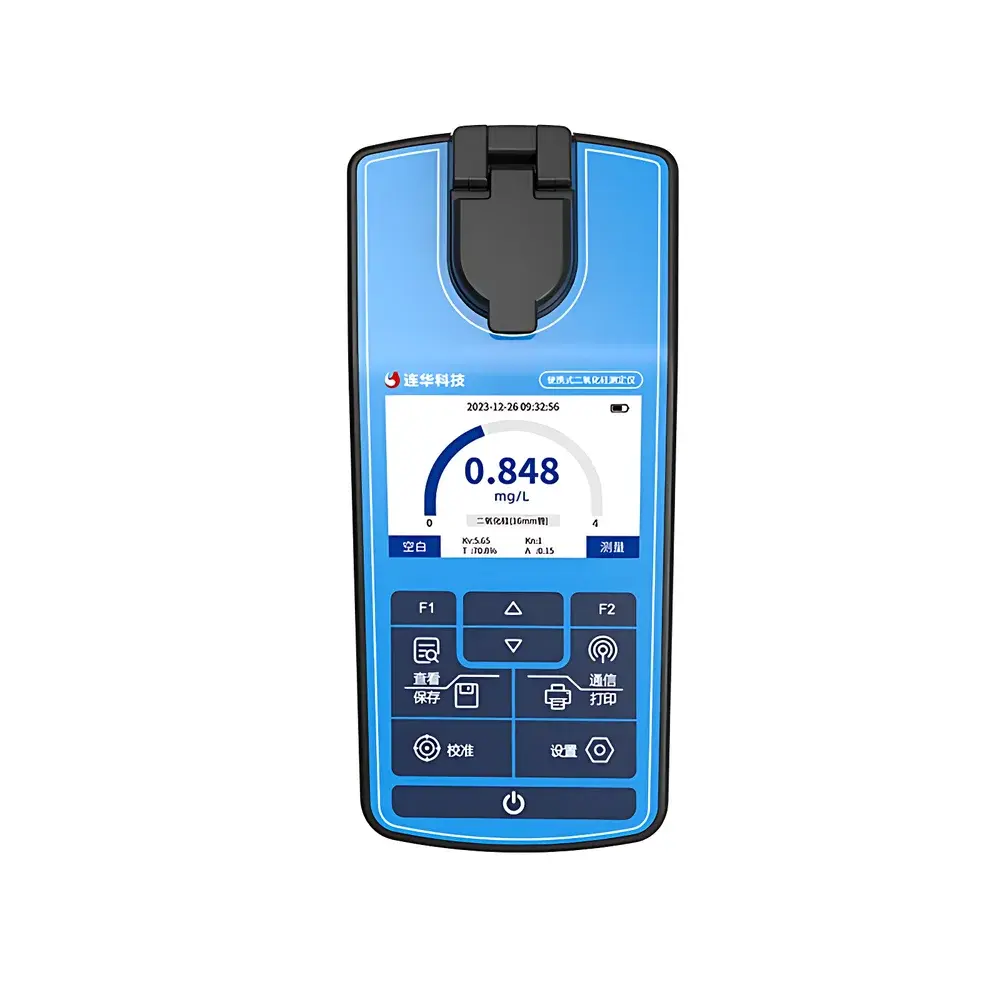
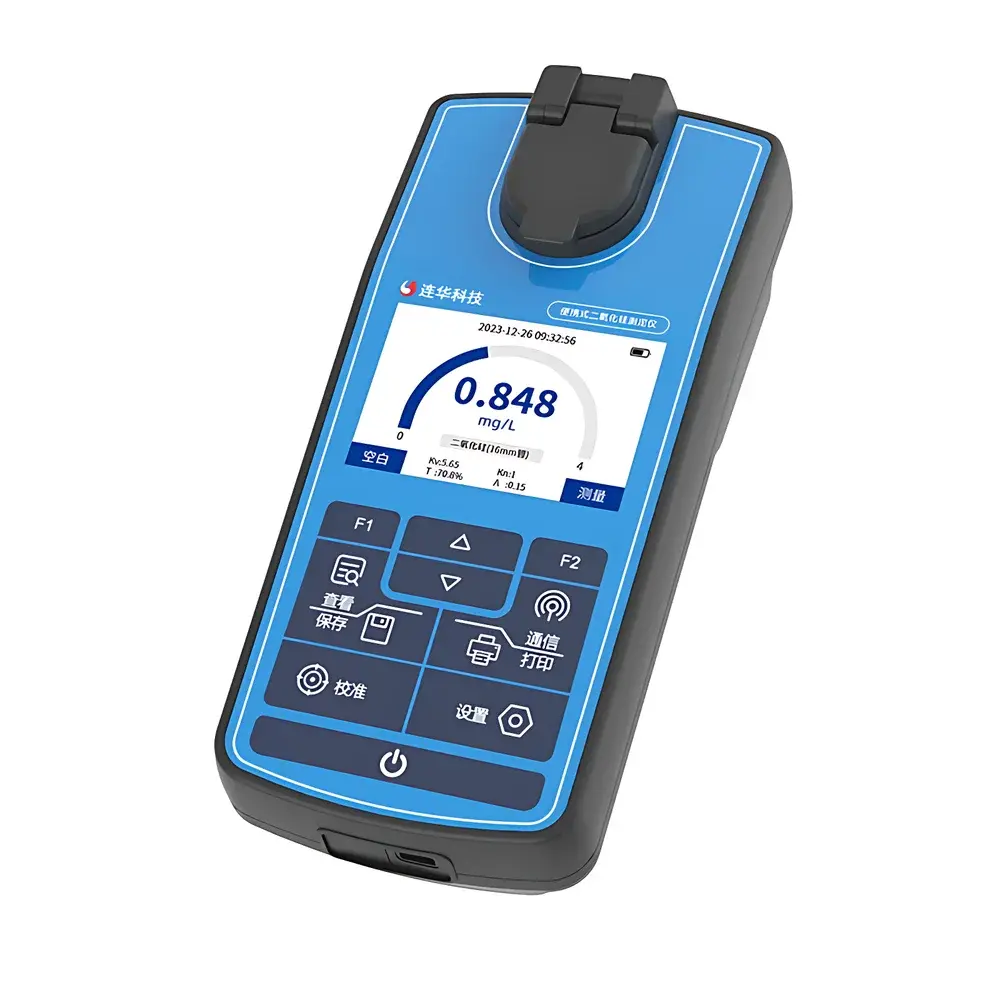
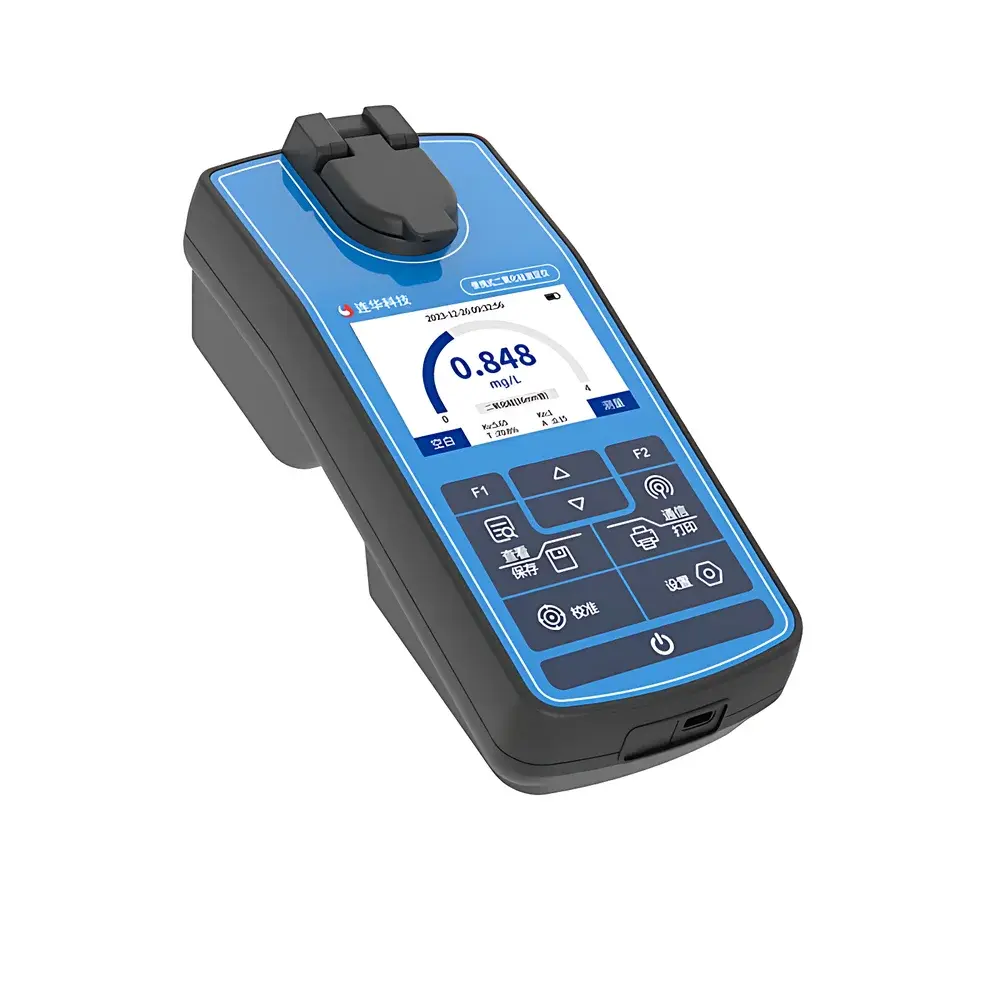
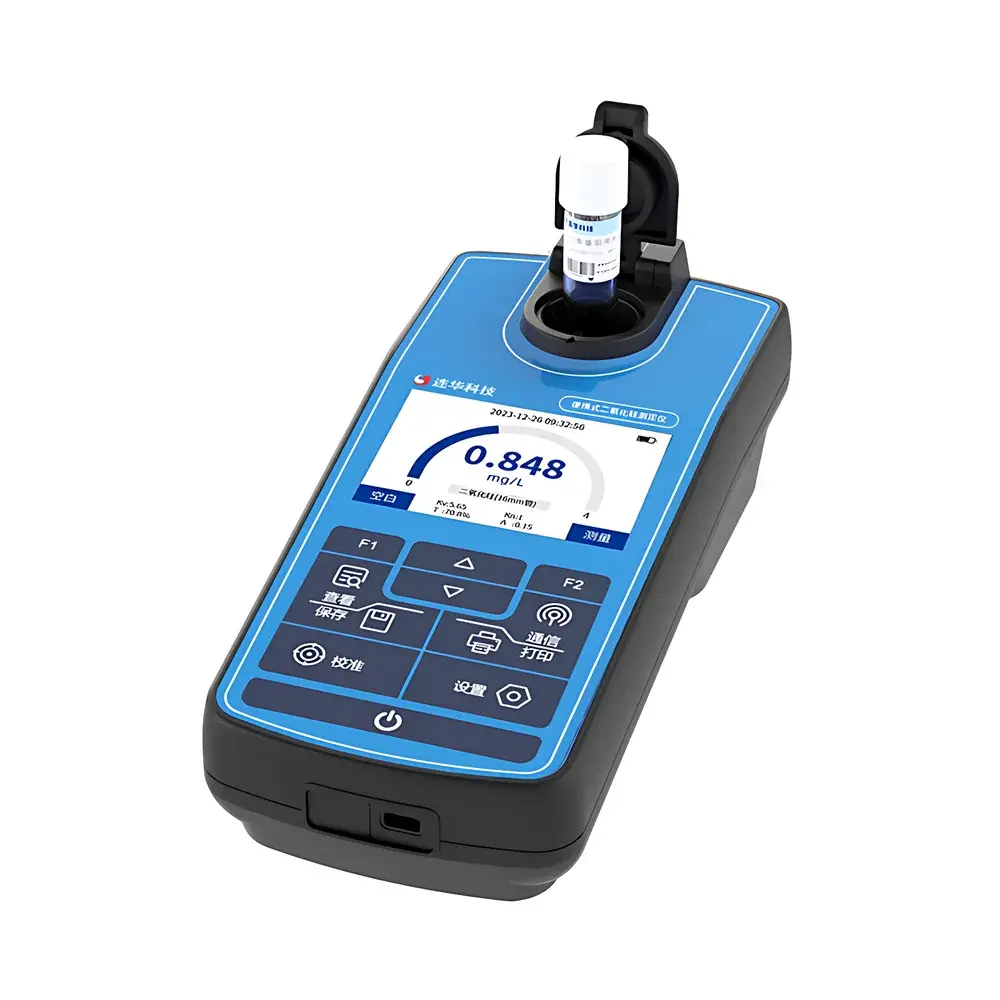
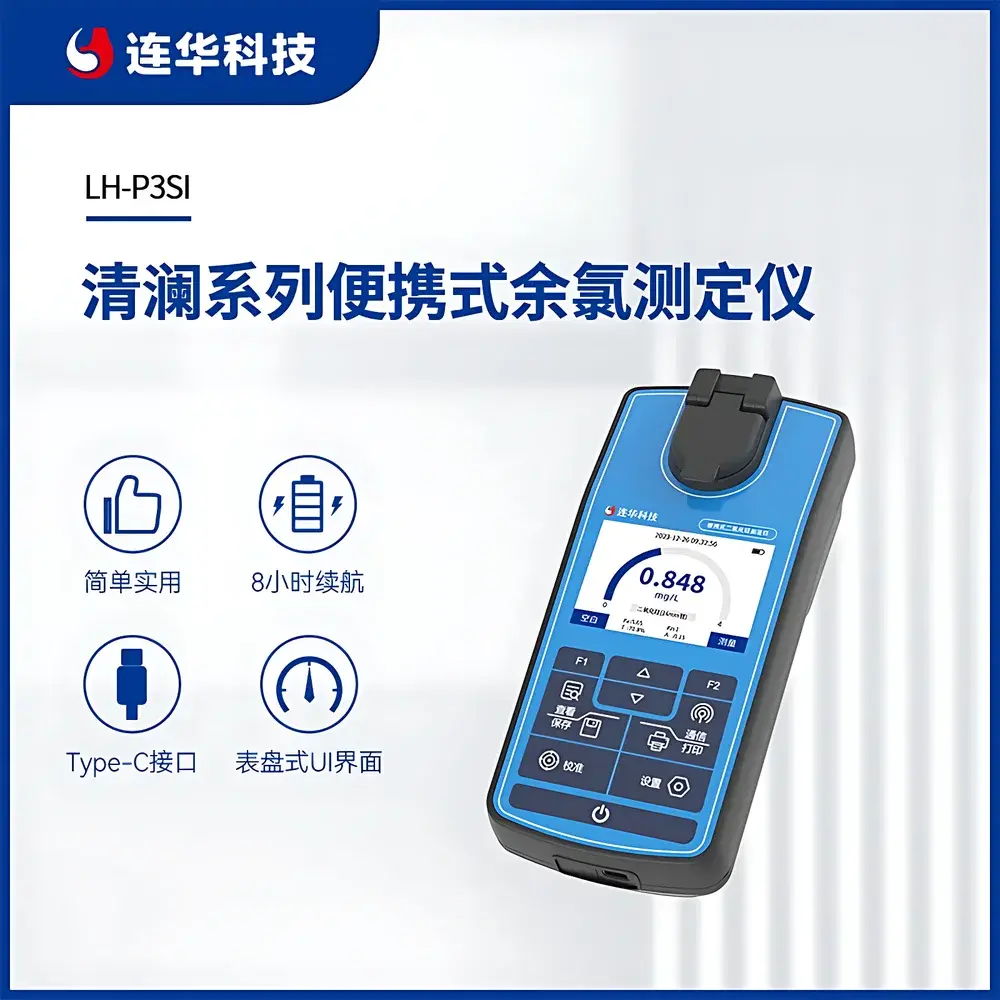
Lohand LH-P3SI Portable Silica Analyzer – Qinglan Series
| Brand | Lohand |
|---|---|
| Origin | Beijing, China |
| Manufacturer Type | Manufacturer |
| Product Category | Domestic |
| Model | LH-P3SI |
| Instrument Type | Portable |
| Compliance Standard | GB/T 12149–2017 Industrial Circulating Cooling Water and Boiler Water — Determination of Silicon |
Overview
The Lohand LH-P3SI Portable Silica Analyzer (Qinglan Series) is a field-deployable photometric instrument engineered for rapid, on-site quantification of dissolved silica (SiO₂) in water samples—specifically optimized for industrial water treatment applications including cooling tower systems, boiler feedwater monitoring, and desalination pre-treatment streams. It operates on the principle of molybdenum blue spectrophotometry, compliant with the Chinese national standard GB/T 12149–2017, which specifies the methodology for silicon determination in industrial circulating cooling water and boiler water. The analyzer employs a precision narrow-band interference optical filter paired with a high-stability imported cold light source to minimize spectral drift and thermal noise—critical for maintaining measurement integrity during extended field use or temperature-variable environments. Its compact, ruggedized housing meets IP65 ingress protection requirements, enabling reliable operation in humid, dusty, or semi-outdoor utility corridors and plant perimeters.
Key Features
- Imported cold light source with narrow-band interference optics ensures long-term photometric stability and minimizes wavelength drift over time and ambient temperature fluctuations.
- 3.5-inch full-color TFT display with analog-style gauge UI provides intuitive, at-a-glance concentration readout—eliminating need for unit conversion or secondary interpretation.
- One-touch measurement workflow reduces operator dependency: sample loading, reagent addition (via pre-filled reagent vials), and analysis are completed within <90 seconds.
- Five built-in calibration curves cover typical operational ranges for industrial water matrices; each curve supports user-initiated calibration verification and slope/intercept adjustment per ASTM D859 or ISO 15304 guidelines.
- Optical calibration function allows periodic validation of LED intensity output using reference standards—ensuring consistent photometric response across instrument lifetime and supporting GLP-compliant maintenance logs.
- Integrated upper-limit alert system displays maximum measurable concentration as a fixed red threshold on the gauge interface; exceeding this value triggers immediate visual (red highlight) and audible feedback—preventing misinterpretation of saturated signals.
Sample Compatibility & Compliance
The LH-P3SI is validated for use with clarified, low-turbidity aqueous samples—primarily deionized, softened, or filtered industrial process waters. It accommodates standard 10 mL glass or quartz cuvettes and is compatible with common silica reagent kits based on ammonium molybdate and reducing agents (e.g., ascorbic acid or 1-amino-2-naphthol-4-sulfonic acid). Sample pretreatment requirements align with GB/T 12149–2017: acid digestion is not required for soluble orthosilicic acid (H₄SiO₄); however, total silica analysis necessitates prior fusion or high-acid digestion—a step performed off-instrument. The analyzer’s optical design excludes interference from common co-ions (e.g., phosphate, iron, and aluminum) up to concentrations specified in Clause 6.2 of the standard. It does not meet USP or EP 2.2.48 requirements for pharmaceutical-grade water; its compliance scope is strictly limited to industrial water quality control per GB/T 12149–2017 and equivalent regional specifications (e.g., JIS K 0102 Annex A11).
Software & Data Management
Data storage is handled via embedded non-volatile memory supporting ≥500 test records, each timestamped with date, time, operator ID (optional numeric entry), and measured concentration. Export is enabled through USB-C interface to standard FAT32-formatted flash drives—no proprietary drivers or software installation required. Output files are CSV-delimited with UTF-8 encoding and include raw absorbance values at 650 nm, applied calibration curve ID, and pass/fail status against configured upper limit. Audit trail functionality records all calibration events, optical checks, and firmware updates with immutable timestamps—supporting basic 21 CFR Part 11 readiness when paired with organizational procedural controls (e.g., password-protected access and change logs). Firmware updates are delivered via signed .bin files; version history and SHA-256 checksums are published in the technical documentation portal.
Applications
- Real-time monitoring of silica breakthrough in mixed-bed ion exchange or reverse osmosis polishing stages.
- Routine surveillance of boiler drum water to prevent silica carryover and subsequent turbine deposit formation.
- Commissioning and performance verification of silica removal units (e.g., anion exchange resins, magnesium oxide precipitation systems).
- Field validation of online silica analyzers during preventive maintenance or sensor drift investigations.
- Educational laboratories requiring portable, standards-aligned instrumentation for water chemistry coursework aligned with GB/T 12149–2017 pedagogical frameworks.
FAQ
What is the detection range for soluble silica (as SiO₂) using the LH-P3SI?
The instrument supports a typical linear range of 0.01–5.00 mg/L SiO₂, dependent on selected calibration curve and reagent batch. Exact range validation must be performed per user’s reagent lot and matrix-specific blanks.
Does the LH-P3SI require daily calibration?
No—optical calibration is recommended weekly or after 50 measurements; chemical calibration using certified reference materials is advised before each sampling campaign or when changing reagent lots.
Can it measure total silica without sample digestion?
No. The method is specific to reactive (soluble) silica. Total silica quantification requires high-temperature alkaline fusion or strong-acid digestion prior to analysis—performed externally.
Is the device suitable for wastewater or seawater matrices?
Not without pretreatment. High turbidity, suspended solids, or chloride interference (>1000 mg/L Cl⁻) must be removed via filtration or dilution to meet GB/T 12149–2017 sample clarity requirements.
How is firmware updated and verified?
Firmware updates are initiated via USB-C connection using manufacturer-provided signed binaries; update success and version confirmation are displayed on-screen with cryptographic hash verification log entry.
Related Products







