
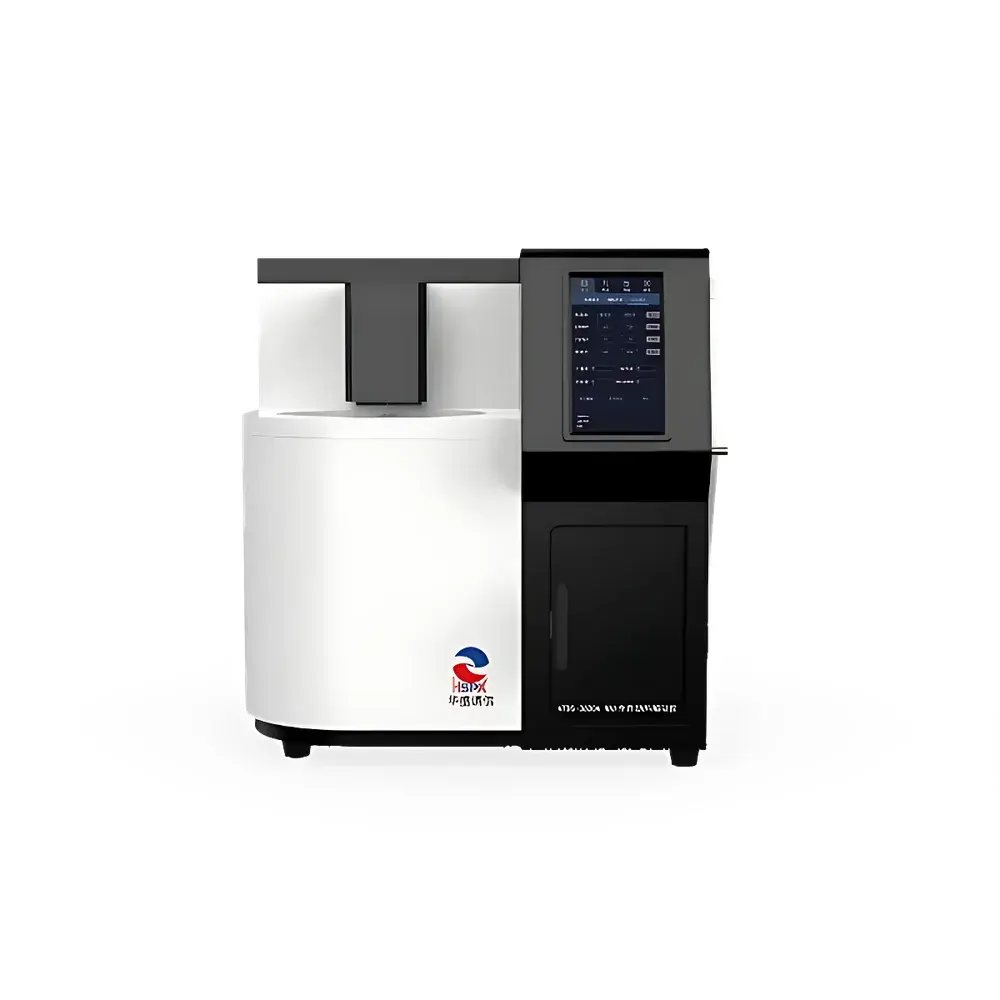
HuaShengPuXin ATDS-3600A MAX Fully Automated Two-Stage Thermal Desorber
| Brand | HuaShengPuXin (HSPX) |
|---|---|
| Origin | Beijing, China |
| Manufacturer Type | Direct Manufacturer |
| Instrument Type | Two-Stage Thermal Desorber |
| Automation Level | Fully Automated |
| Desorption Temperature Range | Ambient to 400 °C |
| Valve Injection Zone Temperature Range | Ambient to 220 °C |
| Transfer Line Temperature Range | Ambient to 240 °C |
| Cold Trap Temperature Range | −35 °C to Ambient |
| Temperature Control Accuracy | ±0.1 °C |
| Analyte Recovery Rate | >98% (compound-dependent) |
| Sample Capacity | ≥10 positions |
Overview
The HuaShengPuXin ATDS-3600A MAX is a fully automated two-stage thermal desorber engineered for high-fidelity preconcentration and transfer of volatile and semi-volatile organic compounds (VOCs and SVOCs) from sorbent tubes prior to gas chromatographic analysis. It operates on the principle of sequential thermal desorption: first-stage desorption releases analytes from the primary sorbent tube under controlled inert gas flow; second-stage cryofocusing traps and refocuses the eluent in a narrow band at the head of the GC column using precise low-temperature cooling (−35 °C). This architecture eliminates cold-spot losses, minimizes band broadening, and ensures quantitative transfer—critical for trace-level environmental monitoring, indoor air quality assessment, and occupational hygiene compliance testing.
Key Features
- Fully automated operation with programmable method sequencing, including tube conditioning, sample desorption, cold trap focusing, and GC interface synchronization—reducing manual intervention and operator-induced variability.
- Independent, high-stability temperature control across four critical zones: desorption furnace (ambient to 400 °C), valve manifold (ambient to 220 °C), transfer line (ambient to 240 °C), and cryogenic cold trap (−35 °C to ambient), each regulated to ±0.1 °C for reproducible thermal profiles.
- Integrated cold trap with rapid cooldown and precise ramping capability, enabling sharp analyte refocusing and compatibility with both splitless and programmed temperature vaporization (PTV) GC inlets.
- Modular sorbent tube handling system supporting ≥10 sample positions, accommodating standard 6 mm OD stainless steel or quartz tubes (e.g., Tenax TA, Carbopack B/C, Carboxen 1000) with optional robotic carousel expansion.
- Rugged industrial-grade construction with corrosion-resistant internal surfaces and sealed pneumatic pathways, ensuring long-term reliability under continuous laboratory operation.
Sample Compatibility & Compliance
The ATDS-3600A MAX is validated for use with EPA TO-17–compliant sorbent tubes and aligns with multiple Chinese national and environmental standards, including HJ 583–2010 (determination of VOCs in ambient air), HJ 644–2013 (determination of SVOCs in ambient air), HJ 734–2014 (determination of VOCs in fixed pollution sources), GBZ/T 300.62–2017 (occupational exposure assessment), and GB 50325–2020 (indoor air quality control for civil construction projects). Its performance meets ISO 16000–6:2011 requirements for VOC sampling and analysis workflows. The system supports GLP-compliant data integrity through audit-trail–enabled method storage and hardware timestamping—facilitating regulatory readiness for laboratories operating under CNAS, CMA, or equivalent accreditation frameworks.
Software & Data Management
The instrument is operated via a dedicated Windows-based control platform supporting multi-user authentication, method library management, and real-time status monitoring. All temperature profiles, timing sequences, and pressure parameters are stored with full metadata (operator ID, date/time stamp, version history). Raw method files are saved in non-proprietary formats (CSV, XML) for third-party LIMS integration. Software logs include event-driven records for maintenance alerts, calibration verification, and fault diagnostics—fully traceable for internal QA audits and external regulatory inspections per GB/T 19022–2003 (metrological confirmation systems) and ISO/IEC 17025:2017 clause 7.7.
Applications
- Environmental monitoring: Quantitative analysis of C2–C16 hydrocarbons, benzene-toluene-ethylbenzene-xylene (BTEX), aldehydes, and polycyclic aromatic hydrocarbons (PAHs) in ambient, indoor, and stack emissions samples.
- Building materials and furnishings testing: Emission profiling of formaldehyde, terpenes, plasticizers (e.g., phthalates), and flame retardants from carpets, adhesives, and composite wood products per GB/T 18883–2022 and GB/T 18204.2–2014.
- Occupational health and safety: Workplace air sampling for OSHA-permissible exposure limits (PELs) and ACGIH TLVs®, particularly in petrochemical, pharmaceutical, and coating manufacturing facilities.
- Method development and validation labs: Platform for optimizing desorption parameters (flow rate, hold time, trap desorption ramp), evaluating breakthrough volumes, and assessing recovery linearity across matrix types.
FAQ
What sorbent tube formats are supported by the ATDS-3600A MAX?
Standard 6 mm OD stainless steel or quartz tubes compliant with ASTM D6196 and EPA TO-17 specifications—including single- and multi-bed configurations (e.g., Tenax TA + Carbopack B + Carboxen 1000). Custom tube adapters available upon request.
Does the system support remote monitoring or networked operation?
Yes—the control software includes TCP/IP communication protocol support for LAN-based remote access, status polling, and alarm notification via email or SNMP traps.
Is the cold trap compatible with liquid nitrogen or mechanical cooling only?
The ATDS-3600A MAX uses a closed-cycle thermoelectric (Peltier) cooling system with no consumables; liquid nitrogen is neither required nor supported.
How is calibration verified for temperature accuracy?
Each temperature zone is factory-calibrated using NIST-traceable platinum resistance thermometers (PRTs); users may perform periodic verification using external calibrated probes per ISO/IEC 17025 section 6.4.10.
Can the instrument be integrated with autosamplers or GC–MS systems from other vendors?
Yes—standard TTL and RS-232/485 interfaces enable seamless synchronization with Agilent, Thermo Fisher, Shimadzu, and PerkinElmer GC and GC–MS platforms via manufacturer-provided trigger protocols.




