
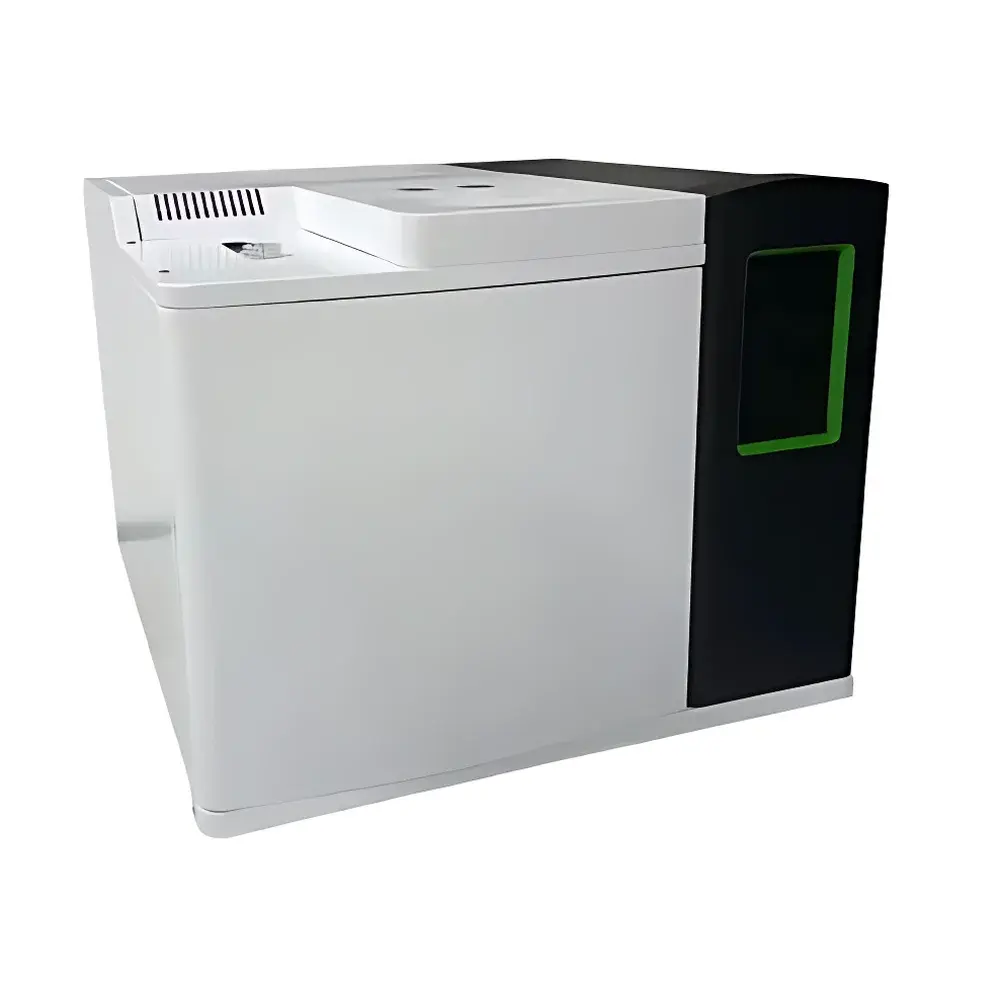
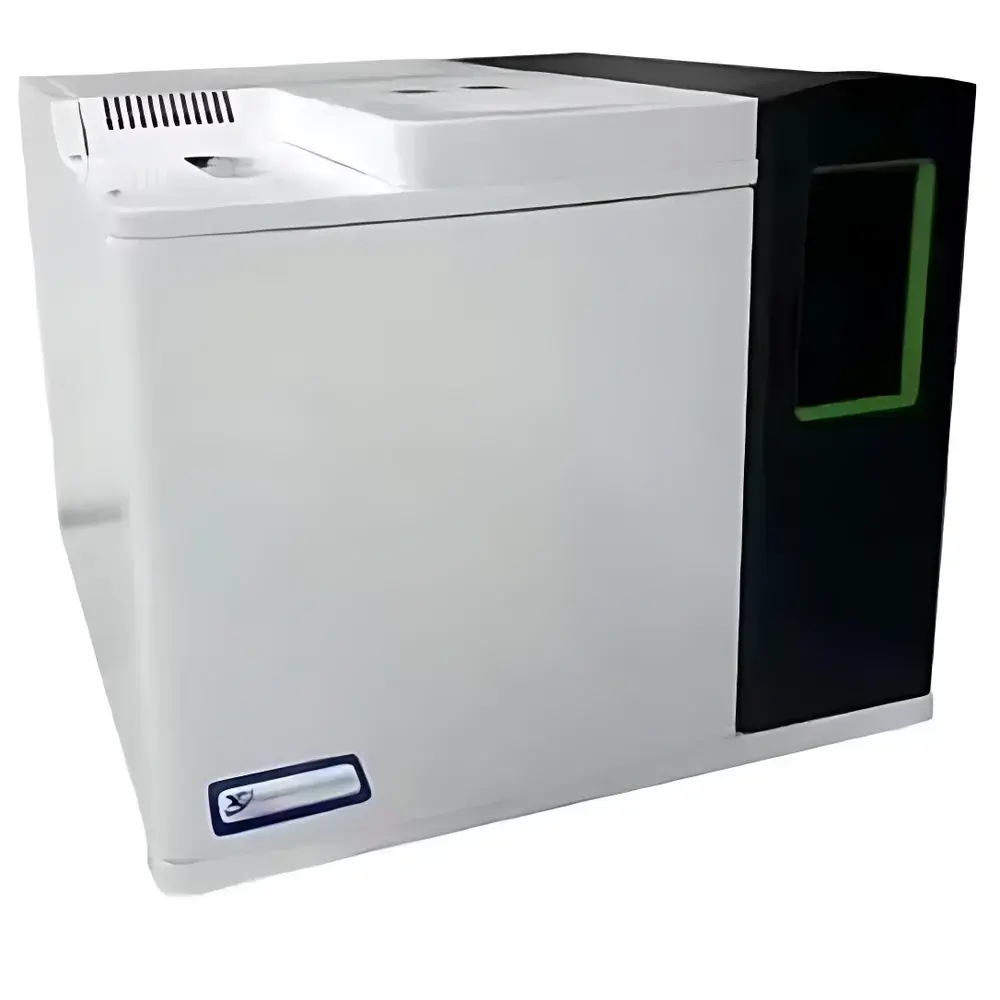
HuaShengPuXin HSPX-FormaldehydeDimethyl GC System
| Brand | HuaShengPuXin (HSPX) |
|---|---|
| Origin | Beijing, China |
| Manufacturer Type | Direct Manufacturer |
| Origin Category | Domestic (China-made) |
| Model | Formaldehyde Dimethyl-Specific Gas Chromatograph |
| Price Range | USD 4,200 – 7,000 |
| Instrument Type | Laboratory Gas Chromatograph |
| Application Field | Solvent Purity Analysis & Quality Control |
| Oven Temperature Range | Ambient to 400 °C |
| Oven Ramp Rate | 0.1–40 °C/min |
| Oven Cooling Rate | From 450 °C to 50 °C in ~6 min |
| Carrier Gas Flow Range & Control | 0–60 mL/min |
| Carrier Gas Pressure Range & Control | 0–0.6 MPa |
| Injector Max Operating Temperature | 400 °C |
| Injector Pressure Setting Range | 0–0.6 MPa |
| Injector Total Flow Setting Range | 0–1200 mL/min |
Overview
The HuaShengPuXin HSPX-FormaldehydeDimethyl GC System is a dedicated laboratory gas chromatograph engineered for precise, repeatable quantification of formaldehyde dimethyl (dimethoxymethane, DMM) and its key impurities—water and methanol—in industrial solvent streams. Built upon a robust, single-channel dual-packed-column architecture, the system employs thermal conductivity detection (TCD) with hydrogen carrier gas under optimized isothermal or programmed temperature conditions. Its design adheres to fundamental gas chromatographic principles: analyte separation occurs via differential partitioning between the mobile phase (H2) and stationary phases within two parallel stainless-steel packed columns—typically one for water/methanol resolution and another for DMM retention and selectivity. The instrument operates within a certified laboratory environment and supports routine QC workflows compliant with internal quality standards and general ISO/IEC 17025-aligned method validation frameworks.
Key Features
- Dual independent packed-column configuration with quick-connect fittings for rapid column exchange and method flexibility
- Intelligent oven with programmable ramp rates (0.1–40 °C/min) and fast cooling capability (450 °C → 50 °C in ≈6 min), enabling high-throughput batch analysis
- High-stability TCD detector with adjustable bridge current (up to 150 mA) and optimized thermal management for low-drift baseline performance
- Full digital pressure and flow control for injector (0–0.6 MPa, 0–1200 mL/min total flow) and column (0–60 mL/min carrier flow), ensuring method reproducibility
- Integrated self-diagnostic functions including carrier gas loss detection, overtemperature alarm, and automatic fault logging
- Front-panel LCD interface with real-time parameter display, built-in stopwatch timer, and non-volatile method storage for ≥10 user-defined methods
- Thermally insulated injection port (max 400 °C) with precise pressure regulation and septum purge control to minimize carryover and degradation of thermally labile species
Sample Compatibility & Compliance
The HSPX-FormaldehydeDimethyl GC System is validated for direct injection of neat liquid samples and diluted solvent matrices without derivatization. It accommodates standard 1–10 µL liquid injections via manual or optional auto-sampler interfaces. The system meets essential safety and operational requirements for Class I, Division 1 hazardous area compatibility when installed with appropriate ventilation and hydrogen monitoring. While not pre-certified to specific regulatory mandates (e.g., USP , ASTM D7260), its hardware architecture and parameter traceability support full method development and validation per GLP/GMP guidelines. Data integrity features—including audit-trail-ready parameter logs and time-stamped run records—facilitate alignment with FDA 21 CFR Part 11 expectations when paired with compliant third-party data systems.
Software & Data Management
The instrument operates standalone via embedded firmware; no proprietary PC software is bundled. Raw analog detector output is digitized at ≥10 Hz and displayed in real time on the front-panel LCD. Peak integration, retention time alignment, and basic calibration curve generation (linear/ratio) are performed manually using on-screen cursors and stored calculation templates. All acquisition parameters, run metadata, and calibration coefficients are saved internally with timestamps. For advanced reporting, chromatograms and results can be exported via RS-232 or USB-to-serial interface to external LIMS or validated chromatography data systems (CDS) supporting ASCII or CSV import. Full electronic records—including method versions, operator IDs, and instrument maintenance logs—are maintainable externally to satisfy ISO 17025 documentation requirements.
Applications
- Quantitative assay of formaldehyde dimethyl purity (≥99.0% w/w) in bulk production lots
- Trace-level moisture determination (<0.1% w/w) in anhydrous DMM used in pharmaceutical excipient synthesis
- Methanol residue testing in post-distillation fractions per internal QC specifications
- Stability-indicating analysis of DMM degradation products (e.g., formaldehyde, dimethyl ether) under accelerated storage conditions
- Batch release testing for cosmetics-grade solvents where residual methanol must remain below 500 ppm
- Supporting raw material qualification per ICH Q5, Q7, and Q9 principles in API manufacturing environments
FAQ
What detection method does this system use, and why is TCD preferred for DMM analysis?
The system uses a thermal conductivity detector (TCD) with hydrogen carrier gas. TCD offers universal, non-destructive response to all analytes—including water and methanol—which lack strong UV absorbance or ionizability required by FID or ECD. Its stability and linear dynamic range (10⁴) make it ideal for %-level quantitation across volatile solvent matrices.
Can this GC analyze other low-boiling solvents beyond formaldehyde dimethyl?
Yes—within its operational window (bp −104.8 °C to 42.3 °C), it supports analysis of acetone, methyl ethyl ketone, ethanol, isopropanol, and dichloromethane, provided appropriate column selection and method revalidation are performed.
Is hydrogen carrier gas safe to use in standard lab environments?
Hydrogen poses flammability risk above 4% v/v in air. Safe operation requires proper ventilation, leak-checked gas lines, hydrogen sensors, and adherence to NFPA 55 and local fire codes. Alternative helium or nitrogen carriers may be used with reduced sensitivity but improved safety profile.
Does the system support 21 CFR Part 11 compliance out-of-the-box?
No—the embedded controller lacks electronic signatures, role-based access control, or audit-trail encryption. Full Part 11 compliance requires integration with a validated third-party CDS and documented procedural controls.





