
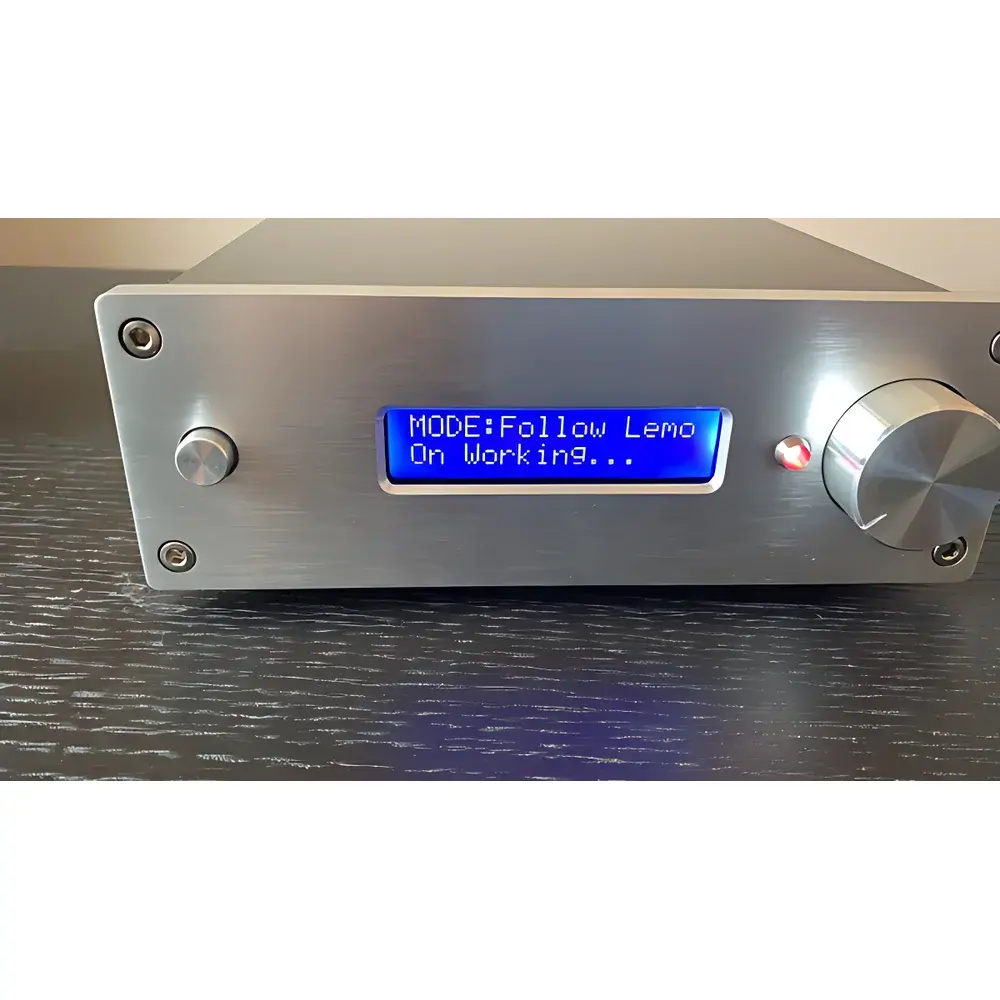
Orient KOJI EzTime-EL Transient Electroluminescence (TEL) Measurement System
| Brand | Orient KOJI |
|---|---|
| Origin | Tianjin, China |
| Model | EzTime-EL |
| Time Resolution Range | 100 ps – 10 s |
| Spectral Range | 350 nm – 1050 nm (configuration-dependent) |
| Electrical Pulse Width | <1.5 ns |
| Driving Voltage Range | 5–24 V (0.1 V step) |
| External Bias Delay | 0–1000 µs adjustable |
| Detector Options | CCD area detector, single-photon counting module (SPCM), time-resolved multichannel acquisition module |
| Optional Accessories | Integrating sphere, device fixture, pulsed laser source (for TR-PL) |
Overview
The Orient KOJI EzTime-EL Transient Electroluminescence (TEL) Measurement System is a modular, time-resolved optoelectronic characterization platform engineered for quantitative analysis of electroluminescent decay dynamics under controlled electrical excitation. It operates on the principle of time-correlated single-photon counting (TCSPC) and fast-gated multichannel detection, enabling high-fidelity capture of EL intensity transients following nanosecond-scale current pulses. Unlike steady-state EL systems, the EzTime-EL resolves luminescence decay kinetics across nine orders of magnitude—from sub-nanosecond prompt emission to second-scale delayed components—providing direct access to carrier recombination pathways, exciton lifetime distributions, and trap-assisted decay mechanisms in emissive semiconductor devices.
Key Features
- Ultra-broad temporal coverage: 100 picoseconds to 10 seconds per acquisition, supporting both ultrafast radiative recombination and long-lived phosphorescent or triplet-triplet annihilation processes.
- Precise electrical excitation control: Adjustable driving voltage (5–24 V, 0.1 V resolution) with pulse widths <1.5 ns and programmable inter-pulse delay; external bias delay tunable from 0 to 1000 µs for probing field-dependent charge injection and extraction dynamics.
- Flexible spectral detection architecture: Modular detector integration including back-illuminated CCD arrays for spectral-resolved transient imaging and time-gated SPCM for highest timing resolution and signal-to-noise ratio in low-light conditions.
- Configurable optical interface: Supports optional integrating spheres for absolute quantum efficiency estimation, standardized device fixtures for reproducible contact geometry, and synchronized pulsed laser inputs for comparative time-resolved photoluminescence (TR-PL) measurements.
- Hardware-synchronized data acquisition: Time-resolved multichannel acquisition module ensures sub-nanosecond jitter alignment between electrical trigger, optical detection, and spectral dispersion—critical for artifact-free transient spectral mapping (TRES).
Sample Compatibility & Compliance
The EzTime-EL system accommodates standard planar OLED, PeLED, QLED, and perovskite LED test structures (e.g., ITO/PEDOT:PSS/EME/EIL/Al), as well as custom flexible or micro-patterned substrates via interchangeable fixtures. All electrical interfaces comply with IEC 61000-4-5 surge immunity standards, and grounding topology adheres to IEEE 11073-10201 for low-noise instrumentation environments. Data acquisition workflows support audit-ready metadata tagging—including timestamp, voltage ramp profile, ambient temperature, and detector gain settings—to facilitate GLP-compliant reporting. While not certified for FDA 21 CFR Part 11 out-of-the-box, the software architecture permits integration with third-party electronic lab notebook (ELN) systems meeting ALCOA+ data integrity principles.
Software & Data Management
The proprietary EzTime Control Suite provides unified instrument orchestration, real-time waveform preview, and batch-mode transient fitting using Levenberg–Marquardt nonlinear regression. Preloaded kinetic models include mono-/bi-/tri-exponential decay, stretched exponential (Kohlrausch), and dispersive transport approximations. Spectral transients are exportable in HDF5 format with embedded SI units and dimensioned axes (time in seconds, wavelength in nanometers, intensity in counts per second). Raw TCSPC histograms support conversion to IRF-deconvoluted decay profiles using iterative reconvolution algorithms. All measurement parameters and processing steps are logged automatically for traceability, satisfying ISO/IEC 17025 clause 7.7 requirements for result validity assurance.
Applications
- Exciton lifetime quantification in thermally activated delayed fluorescence (TADF) emitters and heavy-metal-free phosphors.
- Charge balance assessment via rise-time asymmetry analysis in bilayer and bulk heterojunction devices.
- Operational stability diagnostics: correlation of EL decay shortening with interfacial degradation observed during accelerated aging tests.
- Trap density estimation through voltage-dependent transient shape analysis (e.g., exponential tailing at low bias).
- Cross-validation of carrier mobility using time-of-flight (ToF)-derived transit times extracted from EL turn-on delays.
- Phase segregation monitoring in mixed-halide perovskites via spectral shift evolution within the first microsecond of emission.
FAQ
What minimum sample size is required for reliable TEL measurement?
Standard device fixtures accept active areas from 0.01 cm² to 1.0 cm²; smaller pixels may be measured using fiber-coupled micro-optics (optional upgrade).
Can the system measure both EL and PL transients on the same sample without realignment?
Yes—laser input port and electrical terminals are spatially co-aligned; switching between excitation modes requires only software-triggered configuration change and automatic dark-current recalibration.
Is spectral calibration traceable to NIST standards?
Wavelength calibration uses Hg/Ar lamp reference lines; users receive a certificate of calibration valid for 12 months, with optional annual NIST-traceable recalibration service.
Does the software support custom kinetic model definition?
Yes—the fitting engine accepts user-defined differential equations via Python scripting interface, enabling implementation of advanced recombination models (e.g., Langevin vs. trap-limited bimolecular kinetics).
How is electrical crosstalk between drive circuitry and optical detection minimized?
The system employs galvanically isolated trigger distribution, shielded coaxial routing, and synchronous digital gating—achieving >80 dB dynamic range suppression of switching transients at the detector input.




