
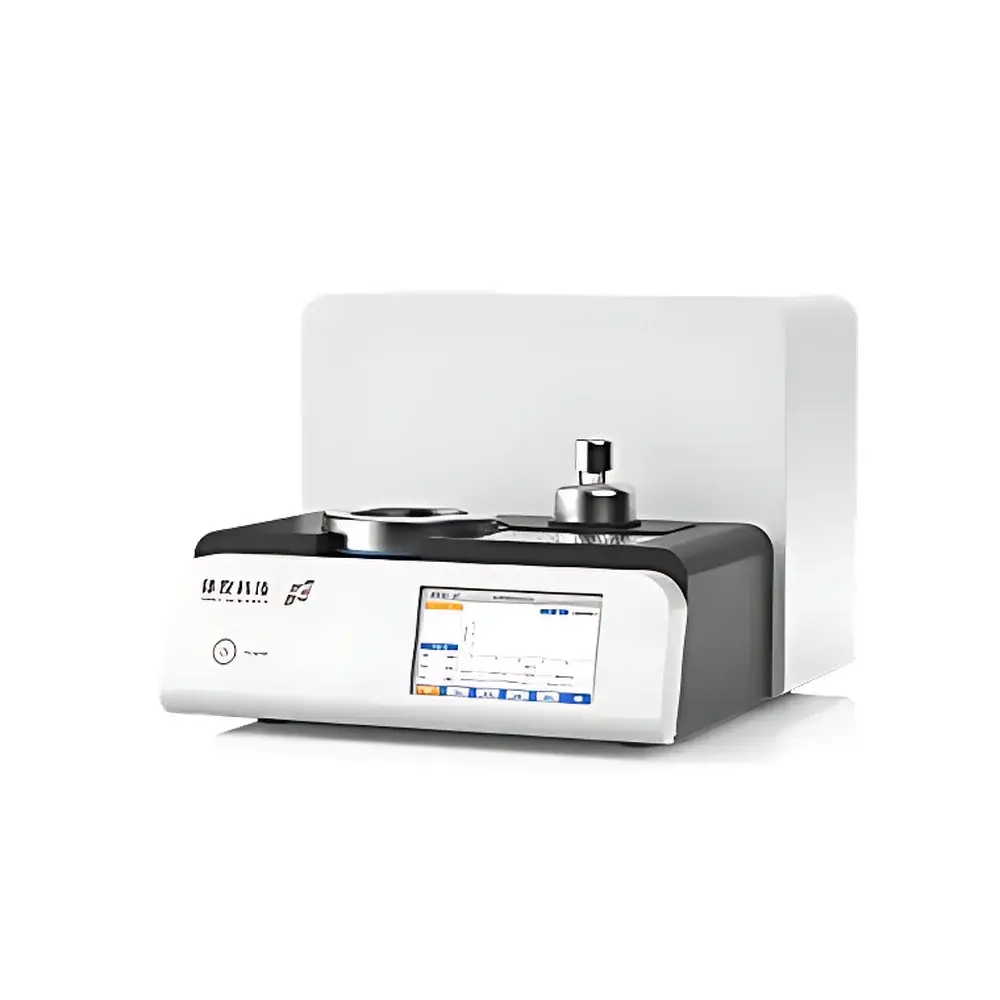
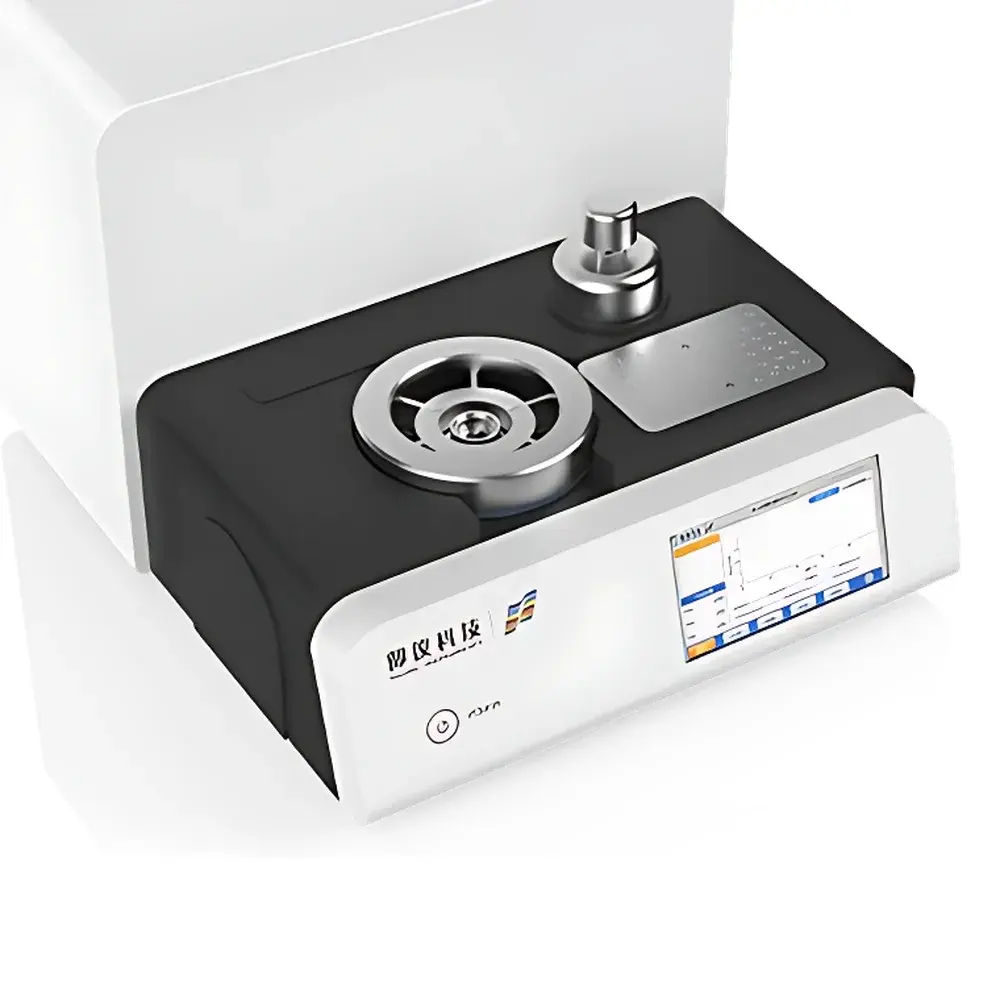
Young Instruments DSC-40A Thermal Flow-Type Differential Scanning Calorimeter
| Brand | Young Instruments |
|---|---|
| Origin | Zhejiang, China |
| Manufacturer Type | Direct Manufacturer |
| Instrument Type | Thermal Flow DSC |
| Temperature Range | RT to 700 °C |
| Heating Rate | 0.05–200 °C/min |
| Baseline Stability | ≤100 µW (100–300 °C, uncorrected) |
| Baseline Repeatability | ≤40 µW |
| Heat Flow Noise | <8 µW (peak-to-peak) |
| Enthalpy Accuracy | ±0.8% (In) |
| Enthalpy Precision | ±0.08% (In) |
| Phase Transition Temperature Accuracy | ±0.1 °C (In) |
| Phase Transition Temperature Precision | ±0.02 °C (In) |
| Indium Peak Height / FWHM | ≥20.0 mW/K |
| Sampling Frequency | 50 Hz |
| Heat Flow Range | ±750 mW |
| Gas Control | 3-channel, inert/oxidizing, static/dynamic, 0–300 mL/min |
Overview
The Young Instruments DSC-40A is a thermal flow-type differential scanning calorimeter engineered for high-fidelity thermodynamic and kinetic characterization of solid and semi-crystalline materials under controlled temperature programs. Based on the classical heat-flux principle—where sample and reference crucibles are mounted on a single thermopile sensor within a symmetric silver furnace—the instrument measures the differential heat flow between sample and inert reference as a function of temperature or time. This architecture enables precise quantification of endothermic and exothermic transitions—including glass transitions (Tg), melting points (Tm), crystallization onset, cure reactions, decomposition events, and specific heat capacity (Cp)—using only milligram-scale specimens (typically 1–10 mg). The DSC-40A operates across a broad thermal range from ambient (RT) to 700 °C, supporting both heating and isothermal modes, with programmable ramp rates spanning 0.05 to 200 °C/min. Its design prioritizes baseline stability, low thermal noise, and reproducible signal capture—critical for regulatory-compliant thermal analysis in R&D, quality control, and failure analysis laboratories.
Key Features
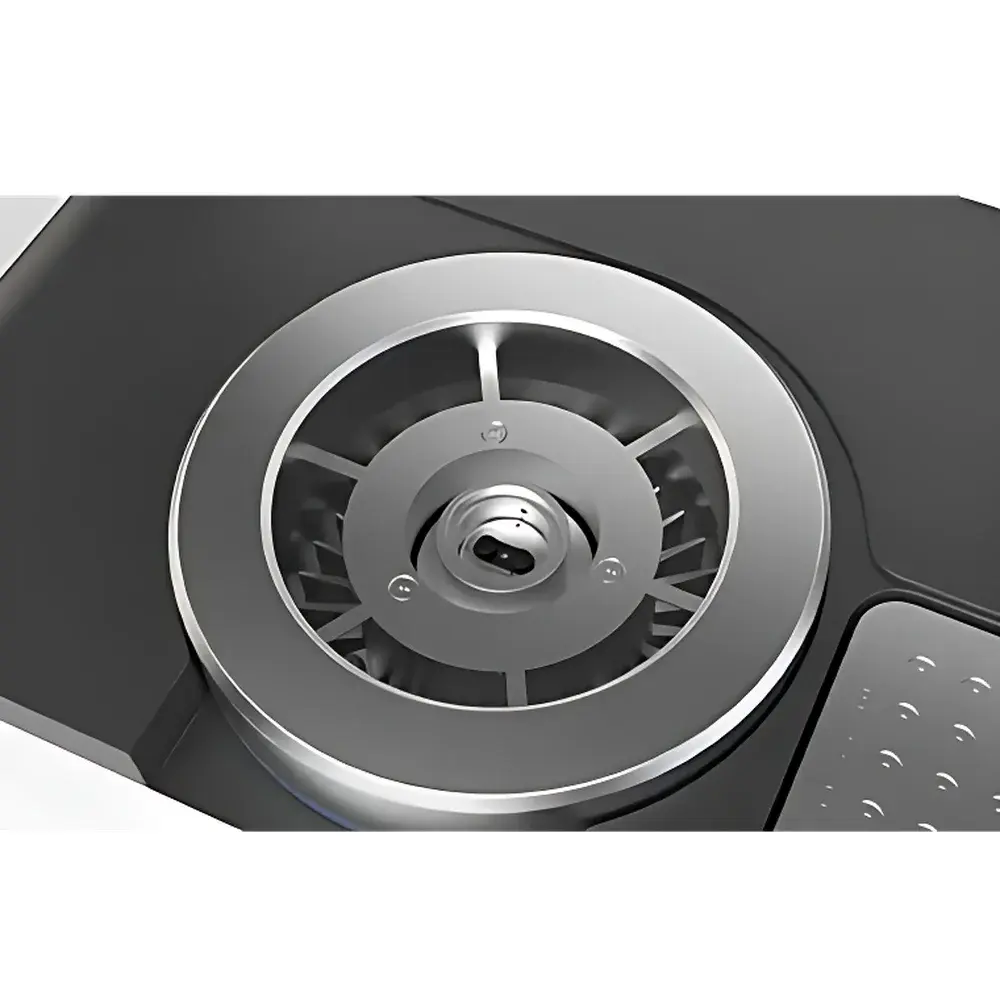
- Thermal flow architecture with symmetrical silver furnace for superior thermal conductivity, minimized thermal lag, and reduced cross-talk between sample and reference positions
- High-sensitivity heat-flux sensor fabricated on oxidation-resistant substrate, delivering enhanced dynamic response and detection of microthermal events down to <8 µW peak-to-peak noise
- Baseline stability ≤100 µW (100–300 °C, uncorrected) and repeatability ≤40 µW across consecutive runs—validated per ASTM E2253 and GB/T 19466.2
- Real-time data acquisition at 50 Hz, enabling high-resolution capture of sharp thermal events and improved deconvolution of overlapping transitions
- Integrated three-gas manifold with independent mass-flow control (0–300 mL/min) for inert (N₂, Ar), oxidative (air, O₂), or dynamic/static purge configurations
- Touchscreen HMI with intuitive workflow navigation, preloaded analysis routines (onset, extrapolated onset, peak temperature, enthalpy integration, Tg step-change fitting), and real-time baseline correction
- Compliance-ready firmware supporting audit trails, user access levels, and electronic signature capability aligned with GLP/GMP documentation requirements
Sample Compatibility & Compliance
The DSC-40A accommodates standard aluminum, gold-plated aluminum, and high-temperature ceramic crucibles (e.g., alumina, sapphire), enabling analysis of polymers, pharmaceuticals, composites, energetic materials, metals, ceramics, and food matrices. Milligram-scale loading minimizes material consumption while maintaining statistical reliability—particularly valuable for high-value or scarce samples. The system conforms to multiple international standards including ASTM E793 (heat of fusion), ASTM E794 (melting point), ASTM E1269 (Cp measurement), ASTM E2253 (instrument calibration), GB/T 19466.2 (plastics—DSC determination of Tg), GB/T 19466.6 (cure kinetics), and GB/T 28724 (baseline stability verification). All calibration procedures utilize certified reference materials (e.g., high-purity indium, tin, zinc) traceable to NIST or CNAS-accredited providers.
Software & Data Management
Data acquisition and analysis are performed via proprietary Windows-based software compliant with FDA 21 CFR Part 11 requirements. The platform supports multi-level user authentication, configurable audit trails with timestamped event logging (method edits, calibration records, result exports), and electronic signatures for report finalization. Raw heat flow vs. temperature/time datasets are stored in vendor-neutral ASCII format (.txt) alongside metadata-rich .dsc files. Analytical modules include automatic peak detection, baseline construction (tangent, linear, polynomial), enthalpy integration with user-defined start/end limits, Tg calculation via midpoint or inflection methods, and kinetic modeling (e.g., Ozawa-Flynn-Wall, Kissinger) for curing or decomposition reactions. Export options include CSV, PDF reports, and image formats compatible with LIMS integration.
Applications
- Thermal transition profiling of thermoplastics, thermosets, and elastomers—including Tg, cold crystallization, melt enthalpy, and degree of crystallinity estimation
- Pharmaceutical solid-state characterization: polymorph screening, amorphous content quantification, excipient compatibility, and stability-indicating assay development
- Reaction calorimetry of epoxy, polyurethane, and silicone curing systems—determining reaction onset, total heat of reaction, and isoconversional activation energy
- Decomposition kinetics and thermal stability assessment of battery cathode materials, propellants, and flame-retardant formulations
- Specific heat capacity (Cp) determination for metallurgical alloys and refractory ceramics using the comparative method with sapphire reference
- Food science applications: fat crystallization/melting behavior, starch gelatinization, and protein denaturation thermodynamics
FAQ
What calibration standards are recommended for routine instrument verification?
Indium (melting point 156.60 °C, ΔHfus = 28.45 J/g) is the primary standard for temperature and enthalpy calibration. Tin (231.93 °C) and zinc (419.53 °C) are used for extended-range validation. All references must be ≥99.99% purity and handled under inert atmosphere to prevent oxidation.
Can the DSC-40A perform modulated DSC (MDSC®) measurements?
No—the DSC-40A implements conventional heat-flux DSC only. It does not support temperature modulation or dual-signal separation required for MDSC.
Is the instrument compatible with vacuum or reducing atmospheres?
Yes—when equipped with optional quartz or stainless-steel hermetic cells and paired with appropriate gas purification (e.g., oxygen/moisture scrubbers), the system supports operation under vacuum (≤10⁻² mbar) or pure H₂/N₂/H₂–Ar mixtures.
How is baseline drift corrected during long-duration isothermal holds?
The software provides both manual and automated baseline subtraction tools, including polynomial fitting over user-defined temperature ranges and post-run digital filtering to suppress low-frequency thermal drift without compromising transition resolution.
Does the system meet requirements for regulated pharmaceutical testing (e.g., ICH Q5C, USP <1163>)?
Yes—when operated with validated methods, calibrated sensors, and full audit trail enabled, the DSC-40A satisfies data integrity expectations for thermal stability studies referenced in ICH guidelines and USP monographs.



