
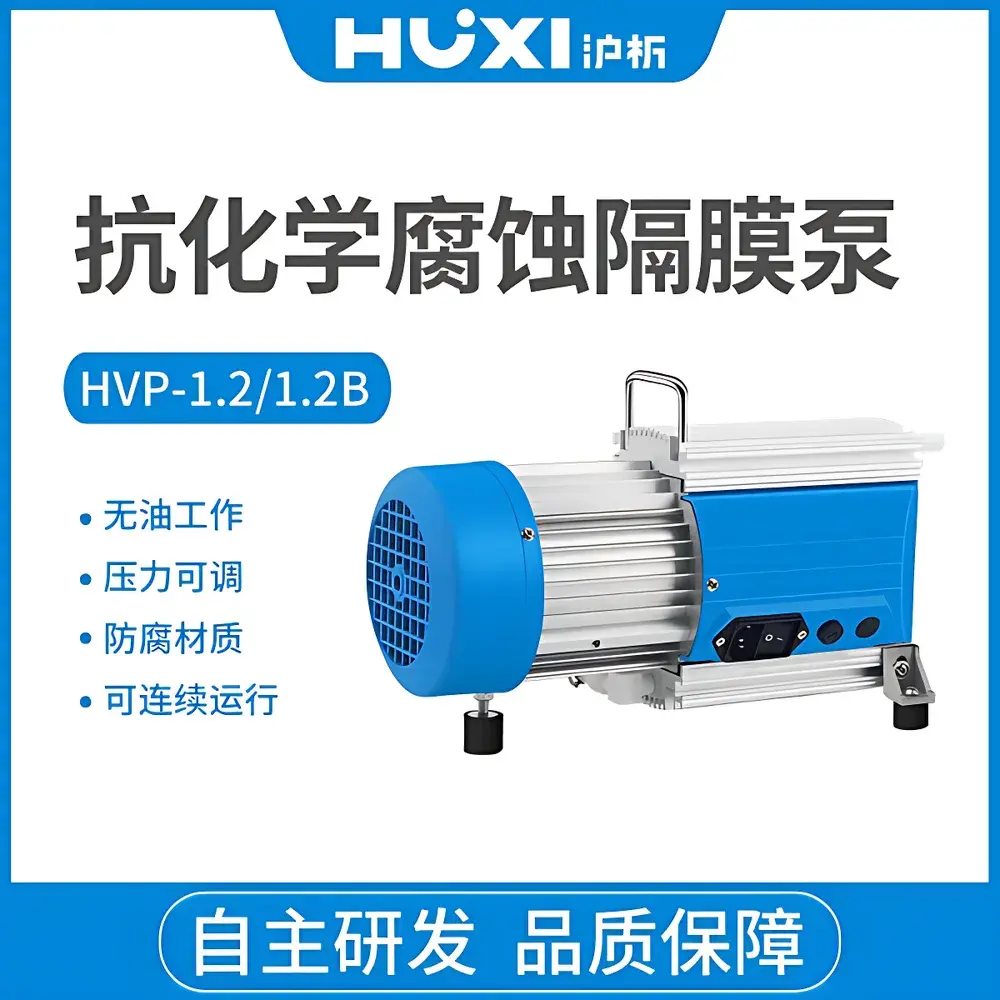
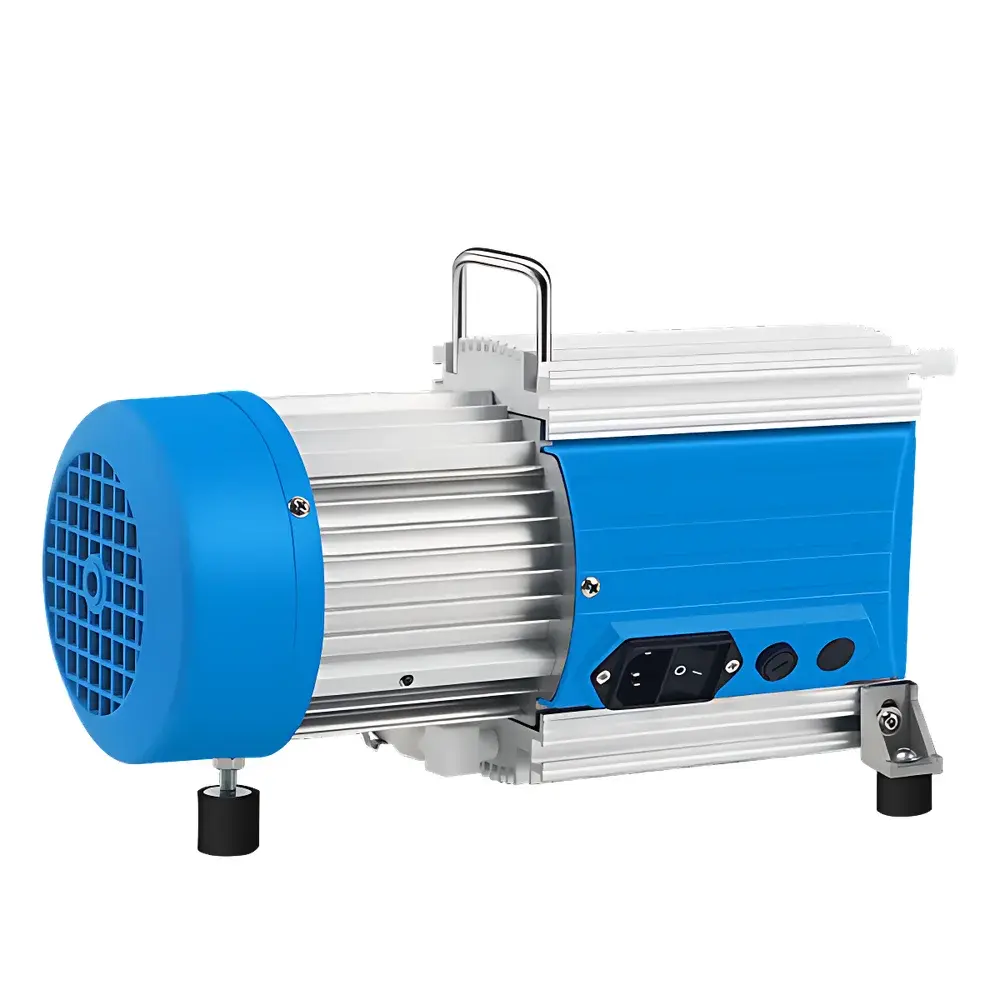
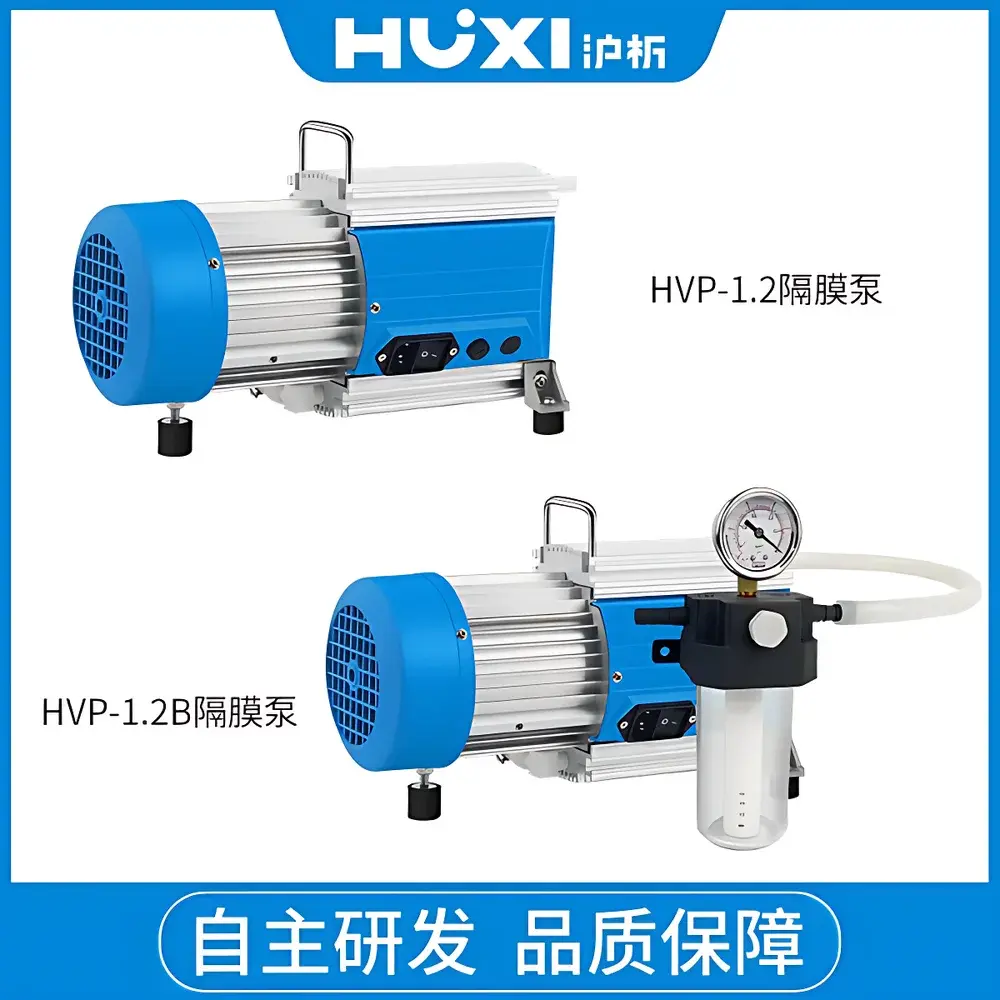
HUXI HVP-1.2 Chemically Resistant Diaphragm Vacuum Pump
| Brand | HUXI |
|---|---|
| Origin | Shanghai, China |
| Manufacturer Type | Direct Manufacturer |
| Country of Origin | China |
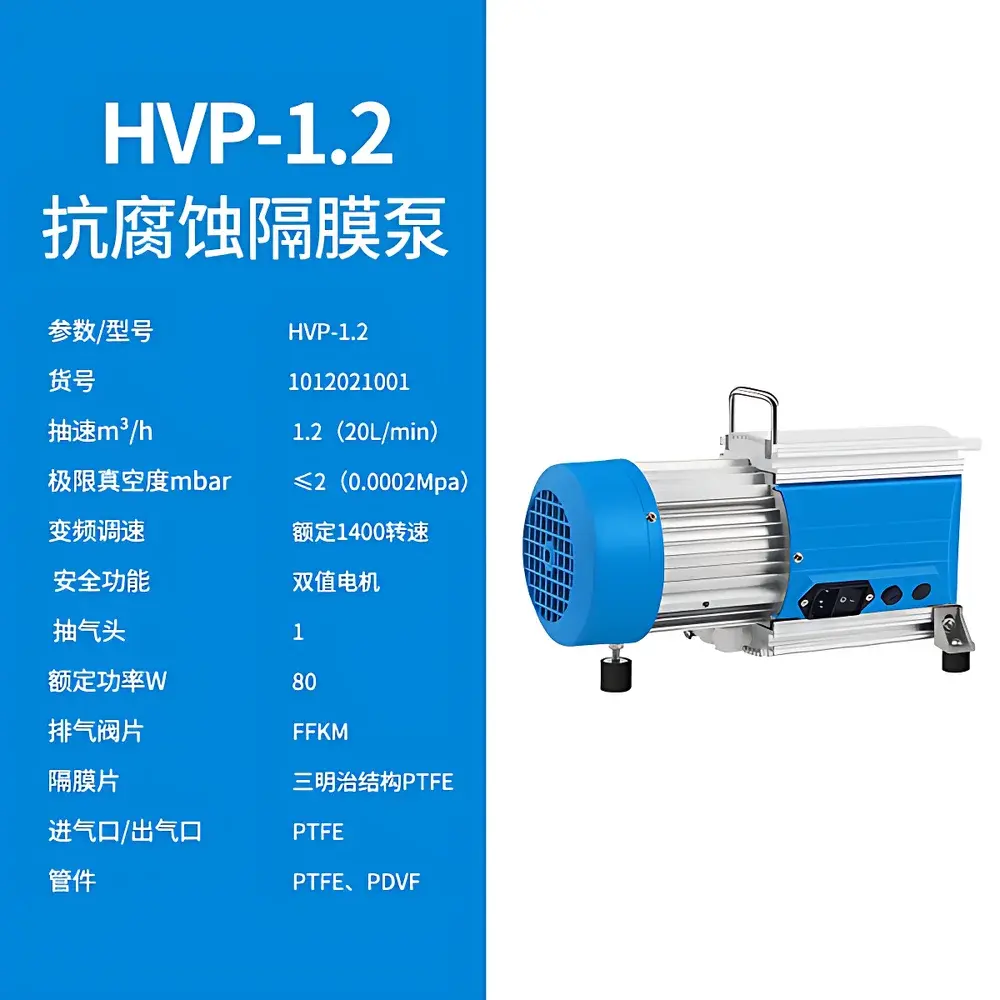
| Model | HVP-1.2 |
| Instrument Type | Diaphragm Vacuum Pump |
| Product Category | Oil-Free Vacuum Pump |
| Pumping Speed | 1.2 m³/h (20 L/min) |
| Ultimate Vacuum | ≤2 mbar (0.0002 MPa) |
| External Dimensions | 315 × 144 × 215 mm |
| Weight | 7 kg |
| Motor Power | 80 W |
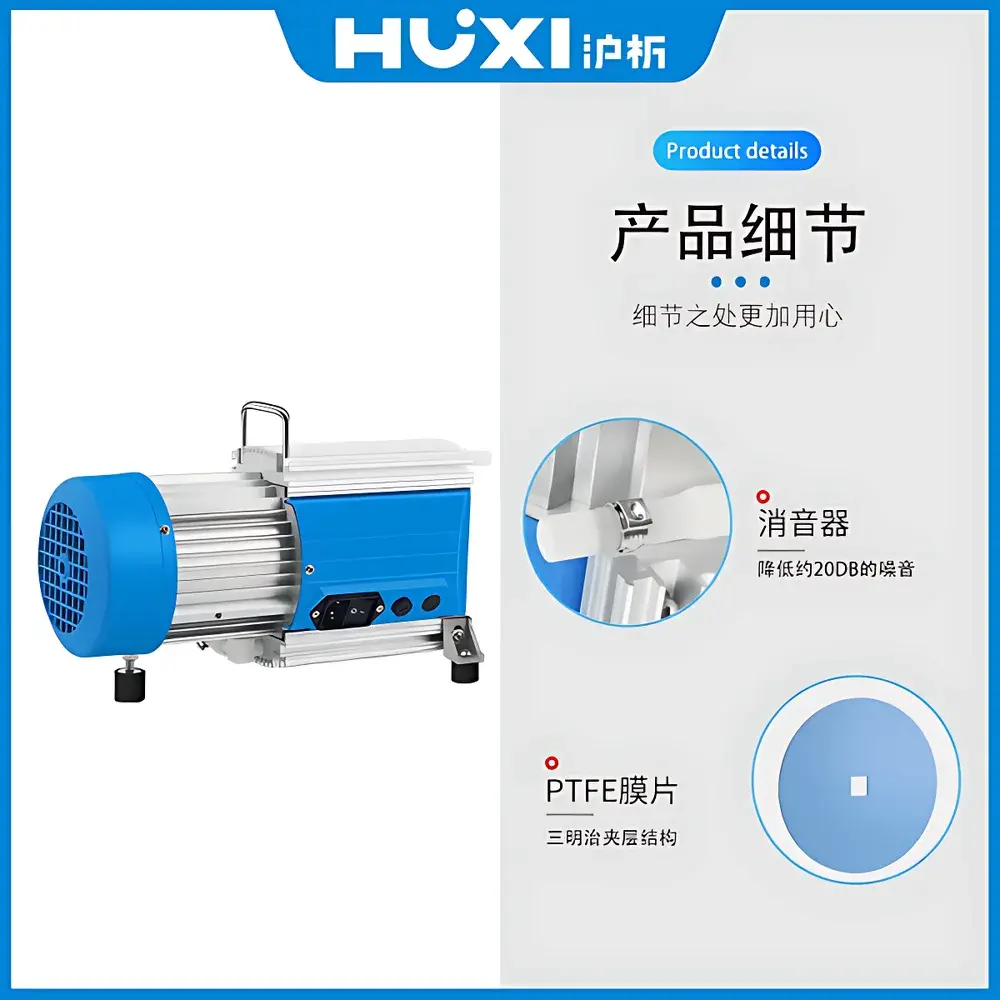
| Diaphragm Material | Sandwich-structured PTFE |
| Valve Material | FFKM |
| Inlet/Outlet Fittings | PTFE and PVDF |
| Chamber & Clamping Plate | ECTFE with carbon fiber reinforcement, hard-anodized and PTFE-coated |
| Inlet/Outlet Port | 10 mm barbed connection |
| Speed Control | Fixed-speed (1400 rpm), no variable frequency drive |
Overview
The HUXI HVP-1.2 is a compact, oil-free diaphragm vacuum pump engineered for chemical resistance and long-term reliability in demanding laboratory environments. It operates on positive displacement principle via an oscillating PTFE-sandwich diaphragm, eliminating the need for lubricating oil and preventing sample contamination—a critical requirement in analytical chemistry, pharmaceutical development, and materials science workflows. Its ultimate vacuum performance of ≤2 mbar enables effective operation across common low-to-medium vacuum applications including rotary evaporation, vacuum drying ovens, reduced-pressure distillation, solid-phase extraction (SPE), and centrifugal concentration systems. Designed for continuous duty cycles, the HVP-1.2 maintains stable vacuum levels under variable load conditions, supporting reproducible experimental outcomes in GLP-compliant laboratories.
Key Features
- Chemically inert fluid path constructed entirely from fluoropolymer materials: PTFE-sandwich diaphragm, FFKM exhaust valves, ECTFE pump chamber reinforced with carbon fiber, and hard-anodized + PTFE-coated clamping plates—ensuring compatibility with aggressive solvents (e.g., acetone, chloroform, concentrated acids/bases) and halogenated compounds.
- Oil-free operation eliminates risk of backstreaming hydrocarbons into vacuum lines or samples—critical for mass spectrometry sample preparation, HPLC solvent degassing, and ultra-trace analysis.
- Compact footprint (315 × 144 × 215 mm) and lightweight design (7 kg) facilitate benchtop integration, mobile lab deployment, or installation beneath fume hoods and rotary evaporators.
- Robust 80 W induction motor with thermal overload protection ensures stable 1400 rpm operation; dual-value motor design enhances torque consistency and service life under sustained vacuum loads.
- Modular construction enables rapid field maintenance: diaphragm replacement, valve servicing, and filter cartridge swaps require no specialized tools or calibration recalibration.
Sample Compatibility & Compliance
The HVP-1.2 is validated for use with corrosive vapors and condensable solvents encountered in routine lab processes—including methanol, acetonitrile, ethyl acetate, dichloromethane, and dilute mineral acid vapors. Its fluoropolymer wetted components comply with ISO 8573-1 Class 0 (oil-free air standard) for contaminant-free vacuum generation. While not certified to specific regulatory standards (e.g., FDA 21 CFR Part 11), its design supports audit-ready documentation practices: consistent vacuum output enables traceable process parameters in SOPs aligned with ISO/IEC 17025 and USP Analytical Instrument Qualification guidelines. Optional inlet filters (particulate and chemical scrubber variants) extend operational life when handling dusty or reactive gas streams.
Software & Data Management
The HVP-1.2 is a standalone analog vacuum pump without integrated digital controls or data logging capabilities. It features a manual on/off switch and requires external vacuum gauges (e.g., Pirani or capacitance manometers) for real-time pressure monitoring. For laboratories implementing electronic record systems, vacuum status can be logged via third-party pressure transducers connected to LIMS or SCADA platforms. No firmware, drivers, or proprietary software are required—reducing cybersecurity exposure and validation burden in regulated environments.
Applications
- Vacuum-assisted sample preparation: rotary evaporation of heat-sensitive compounds, lyophilization pre-chamber evacuation, and vacuum filtration in environmental water analysis (EPA Method 505/525).
- Chemical synthesis support: removal of low-boiling solvents under reduced pressure, inert atmosphere purging prior to Schlenk-line operations, and vacuum transfer of air-sensitive reagents.
- Quality control workflows: vacuum drying of polymer films per ASTM D2244, moisture content determination per ISO 15512, and residual solvent testing in pharmaceutical intermediates (ICH Q3C).
- Research instrumentation interfacing: serving as primary vacuum source for benchtop FTIR accessories, small-scale vacuum ovens, and modular gas chromatography sample introduction modules.
FAQ
Is the HVP-1.2 suitable for pumping acidic or halogenated vapors?
Yes—the entire gas path uses chemically resistant fluoropolymers (PTFE, FFKM, ECTFE), validated for intermittent exposure to HCl, HF (dilute), and chlorinated solvents at ambient temperatures.
Does it include built-in vacuum regulation or speed control?
No—the HVP-1.2 operates at fixed speed (1400 rpm); vacuum level is controlled externally using needle valves or bypass regulators.
Can it be used with a vacuum controller or feedback loop?
Yes—when paired with an external vacuum gauge and proportional control valve, it integrates into closed-loop vacuum management systems compliant with ISO 5343 stability criteria.
What maintenance intervals are recommended for continuous operation?
Diaphragm replacement every 6,000–8,000 operating hours; valve inspection every 2,000 hours; inlet filter cleaning after each solvent-intensive run.
Is it compatible with GMP/GLP documentation requirements?
Its mechanical simplicity, material traceability (certified fluoropolymer lot numbers available upon request), and stable performance profile support IQ/OQ protocols and equipment logbook entries per Annex 11 and ALCOA+ principles.



