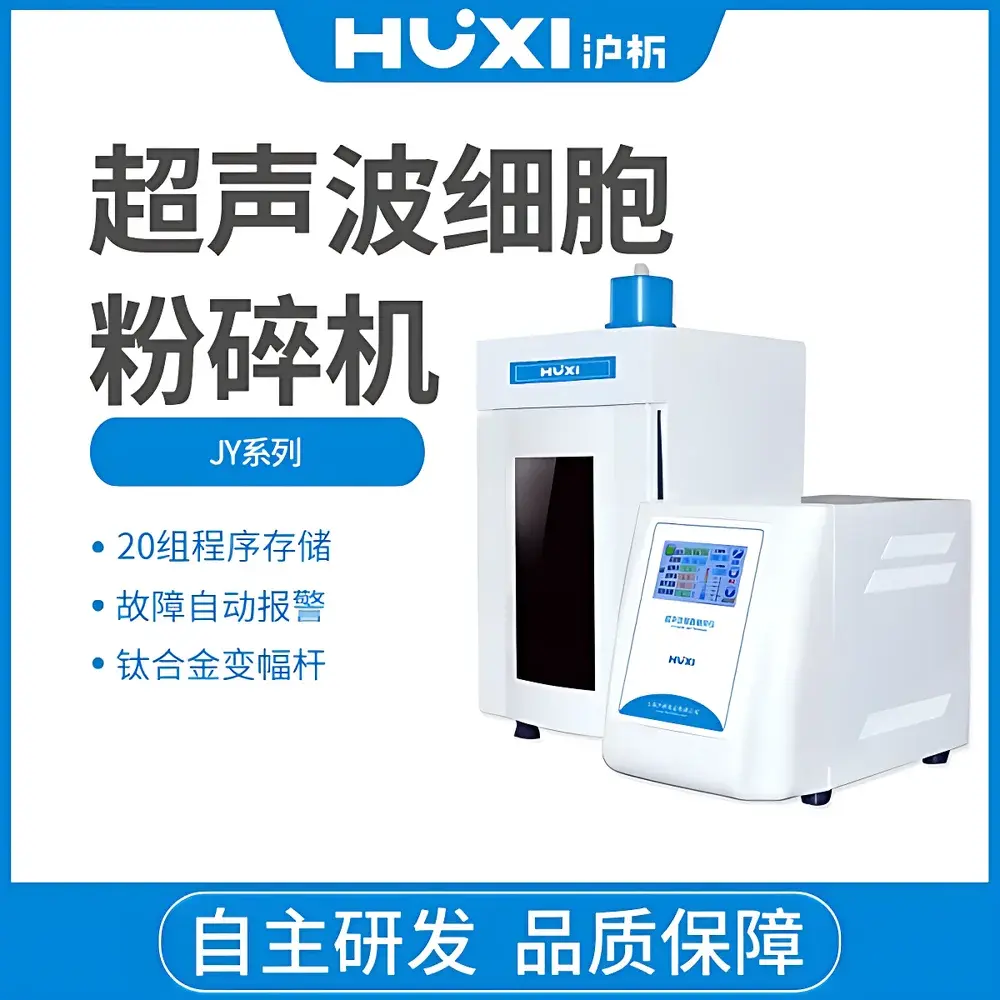
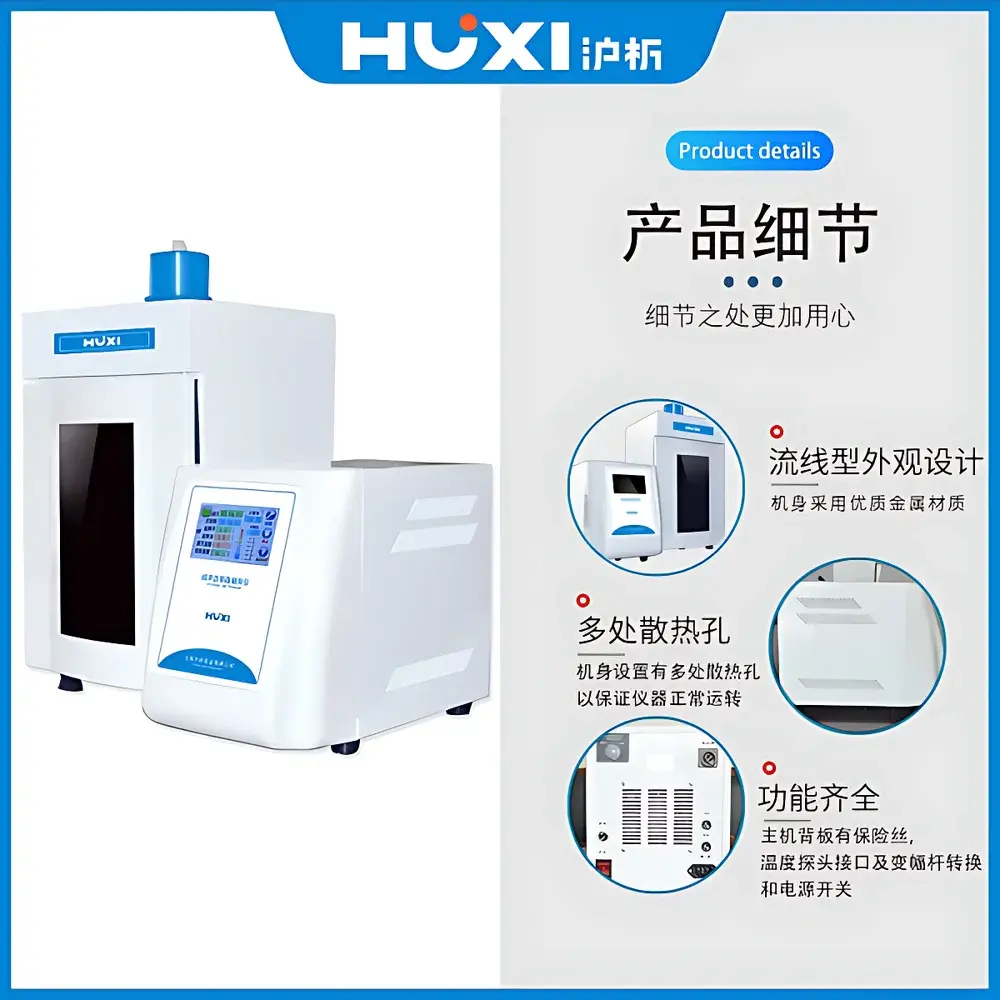
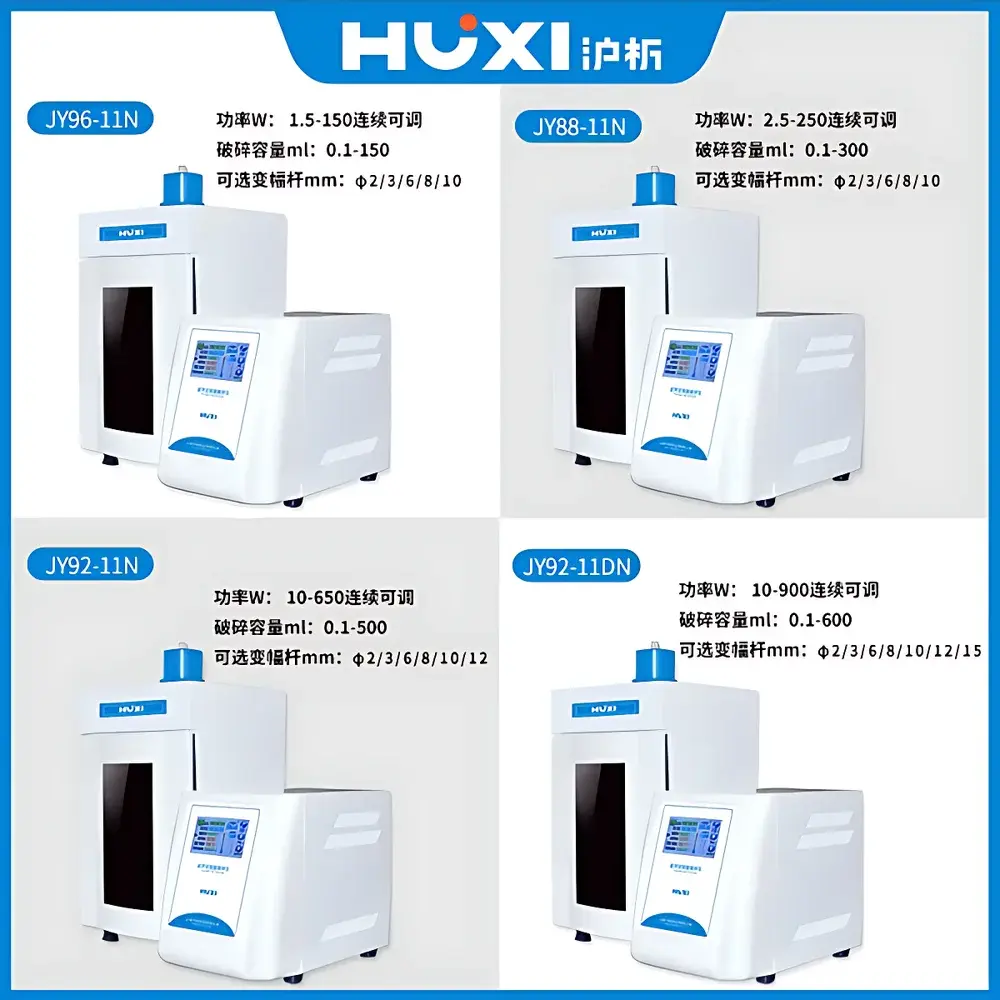
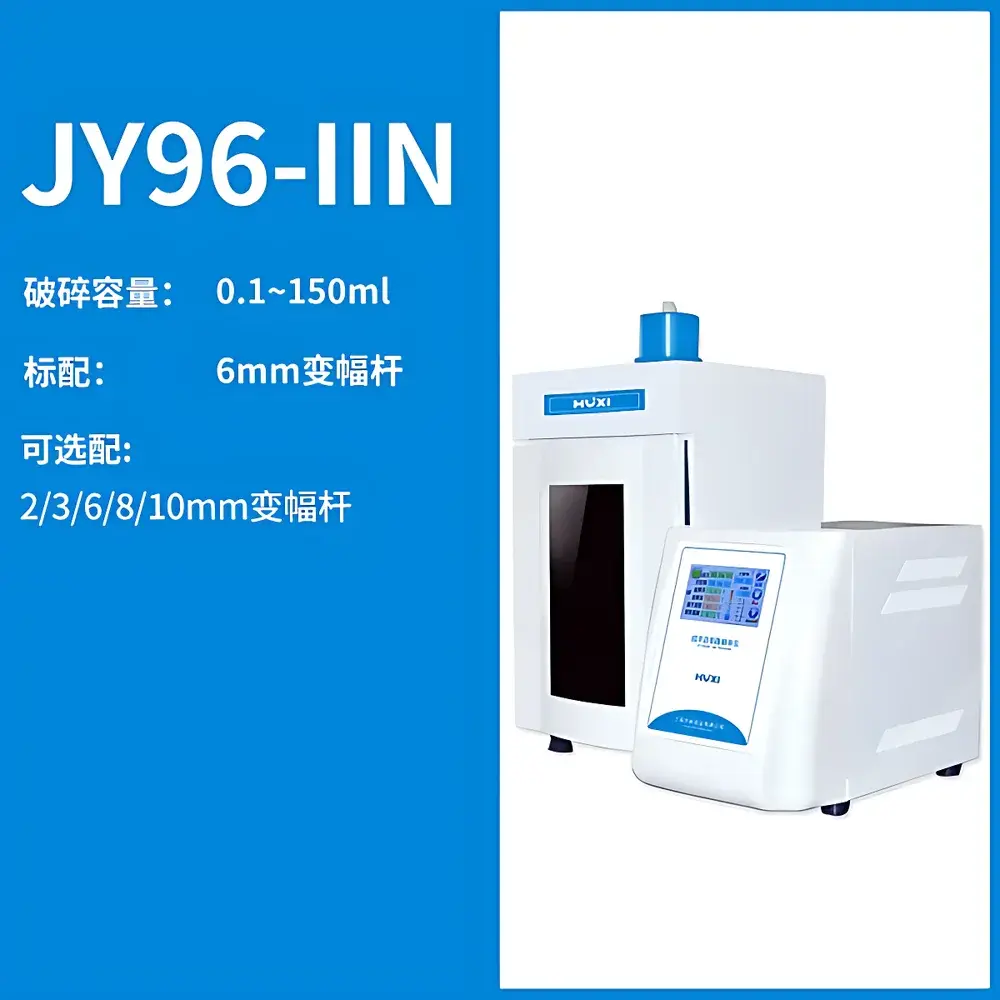
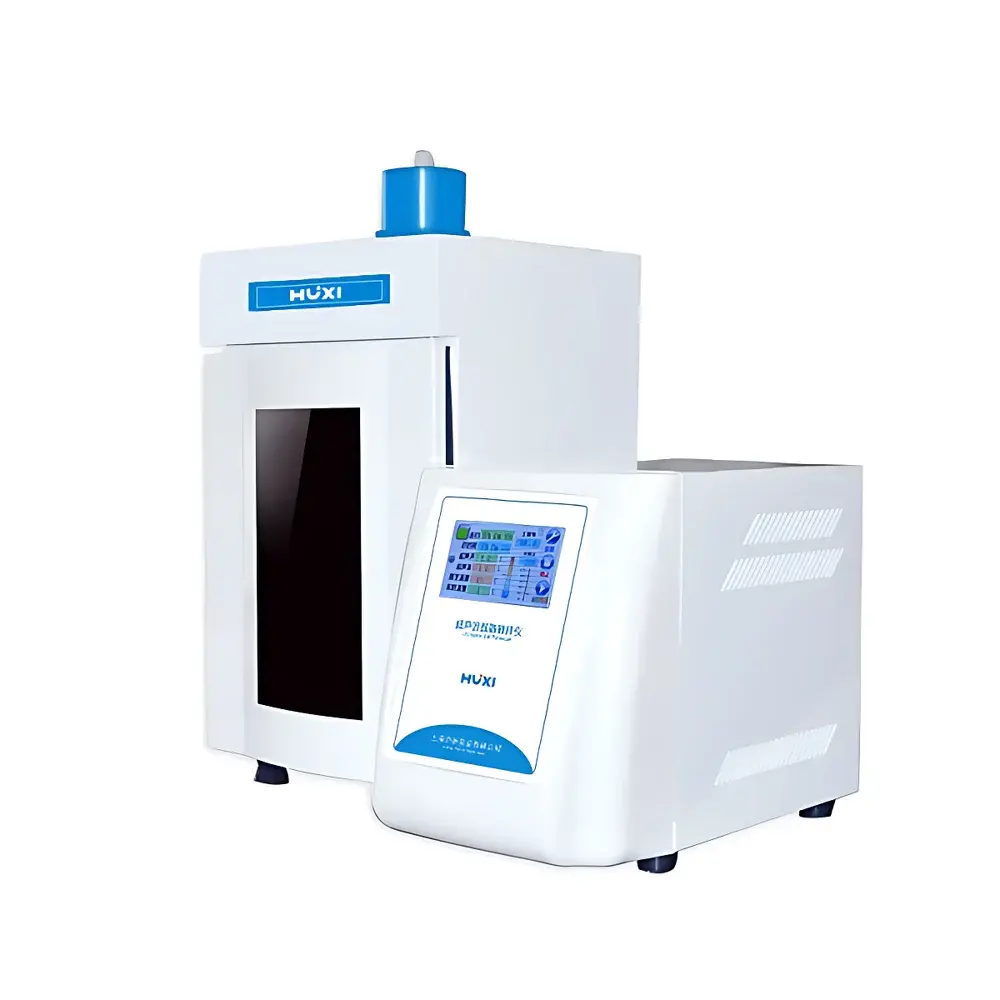
HUXI JY96-IIN Benchtop Ultrasonic Cell Disruptor
| Brand | HUXI |
|---|---|
| Origin | Shanghai, China |
| Manufacturer Type | Direct Manufacturer |
| Instrument Type | Ultrasonic Cell Disruptor |
| Model | JY96-IIN |
| Ultrasonic Power Range | 1.5–150 W (continuously adjustable) |
| Operating Frequency | 20–25 kHz |
| Temperature Control Range | 0–100 °C (low-temperature circulator optional) |
| Sample Volume Capacity | 0.1–150 mL (requires compatible probe selection) |
| Sample Throughput | Single-sample processing per cycle |
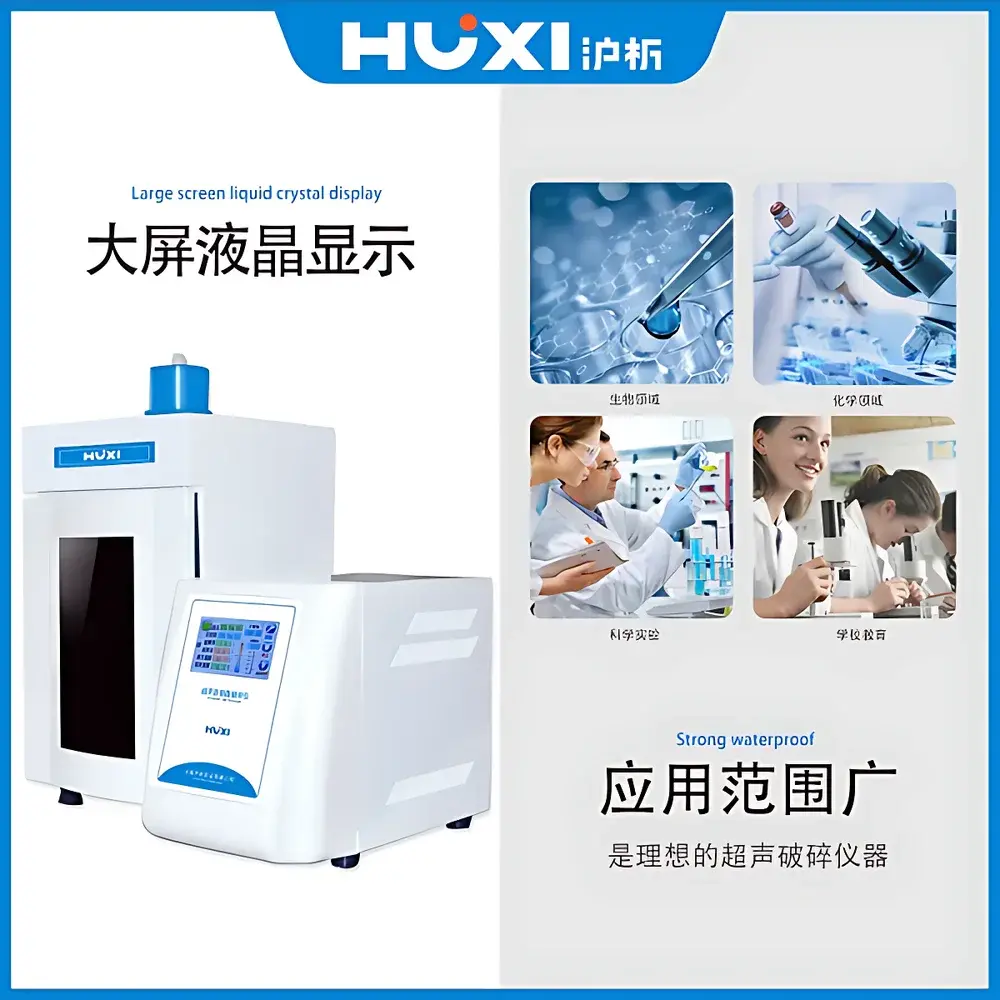
| Display | 4.3″ capacitive TFT touchscreen (7″ optional) |
| Pulse Mode | Ultrasonic on-time 0.1–99.9 s, off-time 0.1–99.9 s, total duration up to 99 h 59 min 59 s |
| Duty Cycle | 0.1–99.9% |
| Probe Options | Φ2, Φ3, Φ6 (standard), Φ8, Φ10 mm titanium alloy (Grade 5, ASTM B348) |
| Safety Features | Overload protection, no-load (dry-run) detection, real-time temperature monitoring with thermal cutoff, audible fault alerts |
| Compliance | Designed for GLP-compliant lab environments |
Overview
The HUXI JY96-IIN is a benchtop ultrasonic cell disruptor engineered for precise, reproducible lysis of biological samples through controlled acoustic cavitation. It operates on the principle of high-intensity ultrasound (20–25 kHz) transmitted via a piezoelectric transducer and titanium alloy probe into liquid media, generating transient microbubbles that collapse violently—producing localized shear forces, shockwaves, and extreme transient temperatures (>5,000 K) sufficient to disrupt cellular membranes, organelles, and protein complexes. Unlike rotor-stator or bead-beating methods, this non-thermal, contact-based technique preserves heat-labile biomolecules—including enzymes, nucleic acids, and post-translationally modified proteins—making it ideal for downstream applications in molecular biology, biopharmaceutical process development, and analytical sample preparation. Its modular probe architecture and fine-grained power/duty-cycle control enable optimization across diverse sample matrices: bacterial cultures (E. coli, Bacillus), yeast (S. cerevisiae), mammalian suspension cells, plant tissues, and viral lysates.
Key Features
- Microprocessor-controlled ultrasonic output with continuous 1.5–150 W power adjustment (0.1 W resolution) and programmable duty cycles (0.1–99.9%) for precise energy delivery.
- Real-time sample temperature monitoring via integrated Pt100 sensor; automatic power reduction or shutdown if preset threshold (user-defined, 0–100 °C) is exceeded.
- Frequency auto-tracking circuitry maintains resonance stability during prolonged operation, minimizing probe heating and ensuring consistent cavitation intensity.
- Industrial-grade Ti-6Al-4V (Grade 5) probes—certified to ASTM B348—with optional diameters (Φ2, Φ3, Φ6, Φ8, Φ10 mm) for scalable throughput from microliter-scale nuclei isolation to 150 mL batch homogenization.
- 4.3″ capacitive TFT touchscreen interface with intuitive icon-driven workflow navigation; firmware supports up to 20 user-defined protocols with timestamped execution logs.
- Dual safety architecture: hardware-level dry-run detection prevents probe fracture during air exposure; software-enforced thermal and current overload limits comply with IEC 61000-6-3 EMC standards.
- Integrated acoustic enclosure reduces ambient noise to ≤65 dB(A) at 1 m distance—meeting ISO 11201 occupational exposure guidelines for routine lab use.
Sample Compatibility & Compliance
The JY96-IIN accommodates viscous, particulate, and heterogeneous suspensions without clogging, provided appropriate probe geometry and pulse parameters are selected. It is routinely validated for lysis efficiency per ISO 13843:2020 (biomolecular extraction) and supports method transfer under USP (cell disruption validation). When operated with traceable calibration records and temperature-stamped run logs, it satisfies basic GLP documentation requirements. While not FDA 21 CFR Part 11–certified out-of-the-box, its RS232/USB interface enables integration with validated LIMS or ELN platforms for electronic signature and audit trail generation. All titanium probes meet ASTM F136 for biomedical-grade implantable material equivalency, ensuring minimal metal ion leaching in sensitive assays.
Software & Data Management
The embedded control system stores 20 full protocol configurations—including power setpoint, pulse sequence, temperature limit, and probe ID—with automatic timestamping upon execution. Optional PC connectivity (RS232 or USB-to-serial) permits remote parameter upload/download and real-time data streaming (power, temperature, elapsed time) to CSV or Excel-compatible formats. No proprietary software is required; terminal emulation (e.g., PuTTY) or custom Python scripts using PySerial suffice for automation. For regulated environments, users may configure external data loggers compliant with ISO/IEC 17025 to capture and archive all operational metadata—including operator ID, environmental conditions, and instrument calibration status—supporting full traceability per ALCOA+ principles.
Applications
- Nucleic acid extraction: Efficient release of genomic DNA, plasmid DNA, and total RNA from Gram-negative/positive bacteria, fungi, and cultured mammalian cells without phenol-chloroform.
- Protein solubilization: Disruption of inclusion bodies and membrane-bound receptors while retaining native conformation for subsequent affinity purification.
- Virus purification: Gentle lysis of enveloped and non-enveloped viruses for antigen recovery in vaccine R&D.
- Nanoparticle synthesis: Acoustic-assisted emulsification for liposome, polymeric micelle, and exosome formulation.
- Material science: Dispersion of carbon nanotubes, graphene oxide, and ceramic nanoparticles in aqueous/organic media.
- Quality control: Rapid homogenization of QC reference standards in pharmaceutical stability testing per ICH Q5C guidelines.
FAQ
What probe sizes are included standard, and how do I select the optimal diameter for my sample?
The JY96-IIN ships with a Φ6 mm titanium probe. Smaller diameters (Φ2–Φ3 mm) deliver higher energy density for low-volume, high-viscosity samples (e.g., tissue homogenates); larger probes (Φ8–Φ10 mm) provide broader coverage for volumes >50 mL but require proportionally higher power input.
Can the instrument operate unattended overnight?
Yes—programmable total duration (up to 99 h 59 min 59 s) and thermal safety cutoff allow extended runs. However, continuous operation beyond 60 minutes is recommended only with active cooling (e.g., recirculating chiller) and periodic visual inspection.
Is the temperature sensor calibrated, and can its accuracy be verified?
The built-in Pt100 sensor is factory-calibrated to ±0.5 °C over 0–100 °C. Users may verify accuracy using a NIST-traceable immersion thermometer in a water bath prior to critical experiments.
Does the unit support GMP-compliant electronic records?
Standalone, it generates timestamped protocol logs but lacks digital signature or audit trail features. Integration with third-party ELN/LIMS systems via serial interface enables compliance with 21 CFR Part 11 when those platforms are validated.
What maintenance is required for long-term reliability?
Annual inspection of transducer bonding integrity and probe tip erosion (via optical profilometry) is advised. Cleaning with ethanol or mild detergent—never abrasive agents—is sufficient. Avoid ultrasonic operation in highly corrosive solvents (e.g., strong acids, halogenated organics) without chemical-resistant probe coatings.