
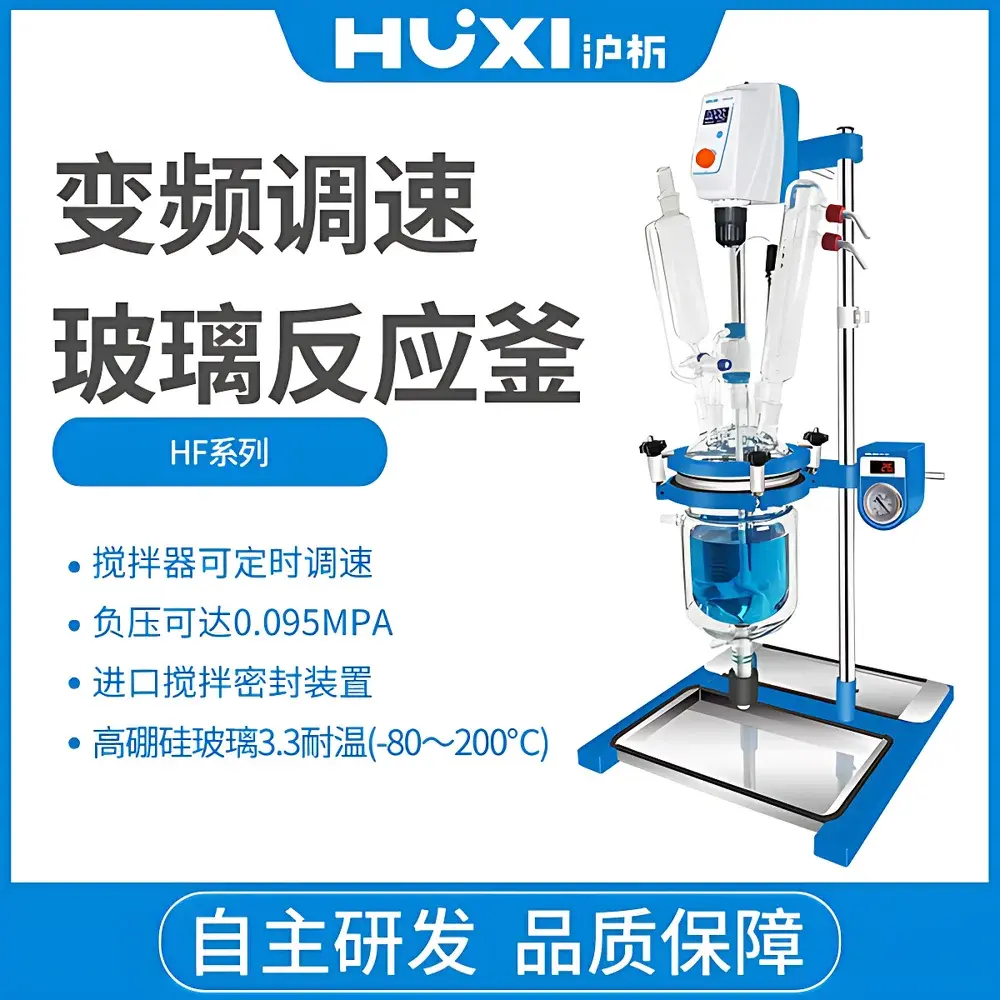
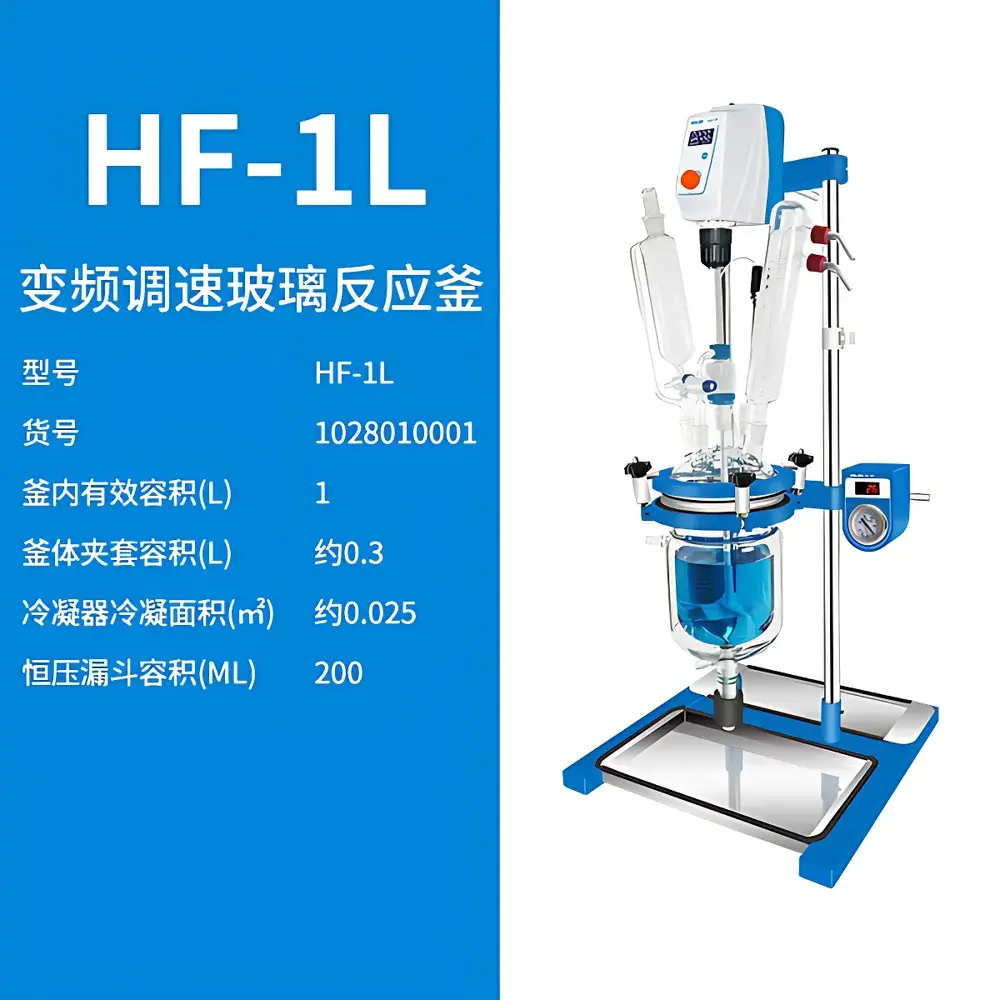
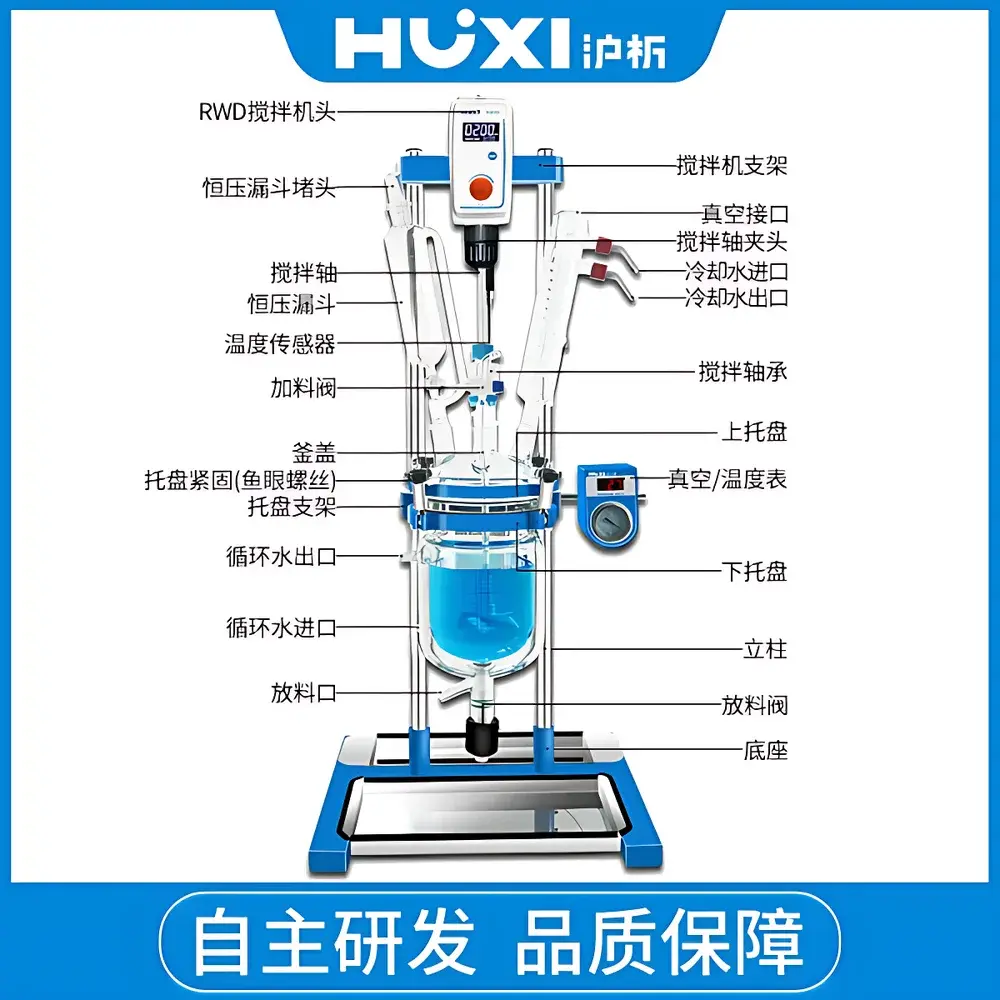
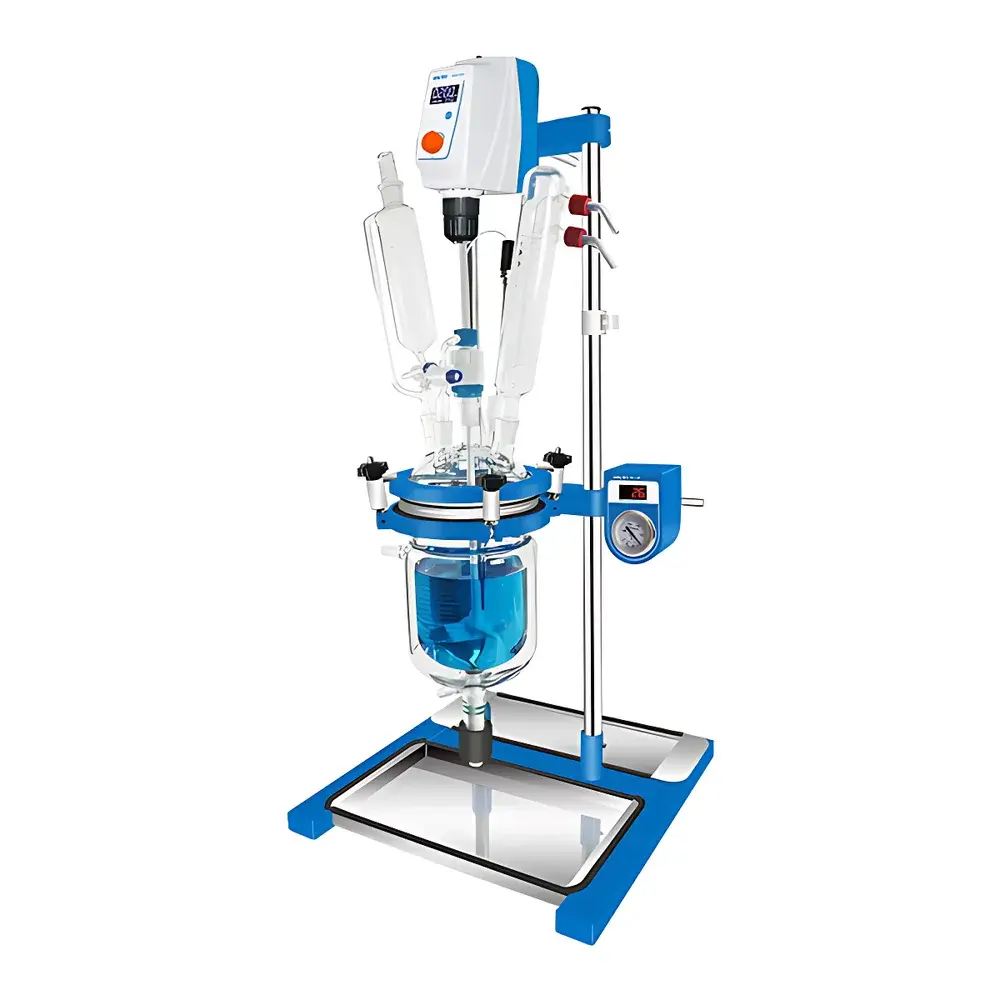
HUXI HF-1L Variable-Frequency Speed-Controlled Glass Reactor
| Brand | HUXI |
|---|---|
| Origin | Shanghai, China |
| Manufacturer Type | Direct Manufacturer |
| Product Category | Domestic |
| Model | HF-1L |
| Instrument Classification | Jacketed Glass Reactor |
| Usable Volume | 1 L |
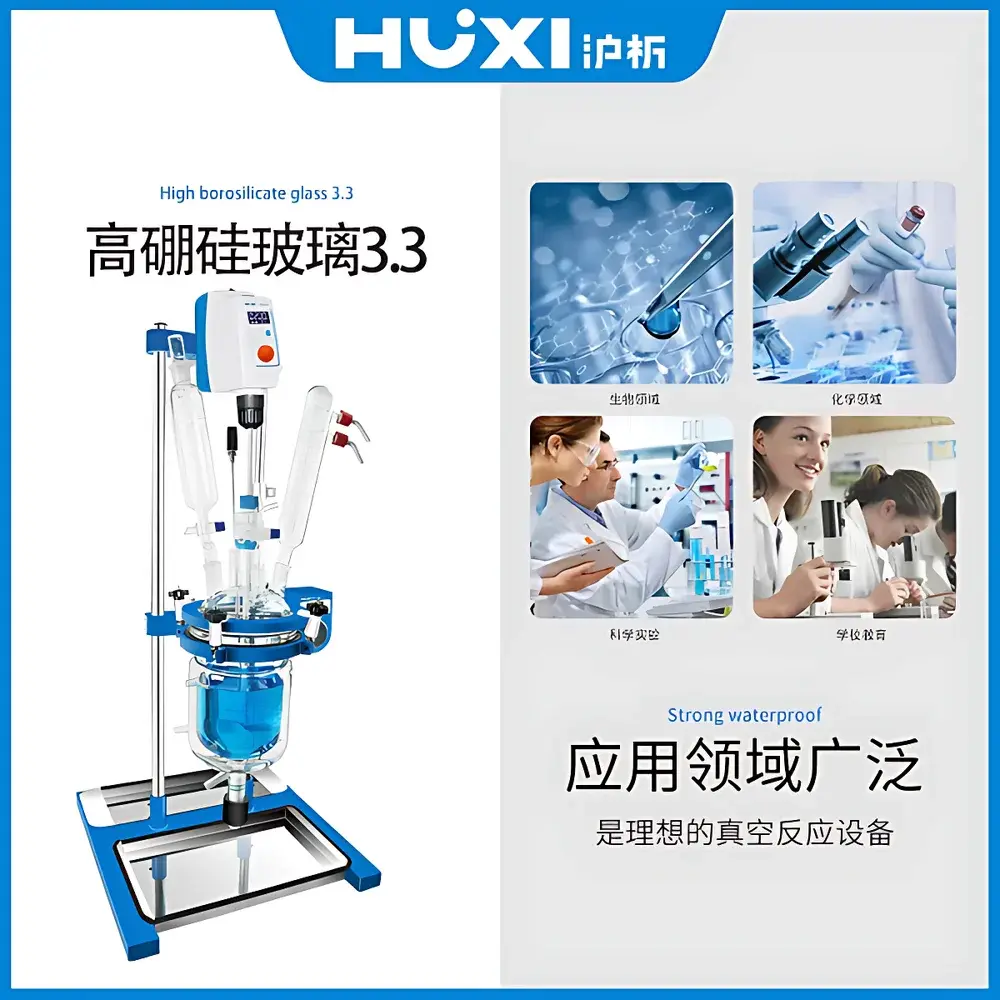
| Vessel Material | Borosilicate Glass (3.3) |
| Operating Pressure Range | Low-Pressure / Vacuum-Compatible |
| Maximum Vacuum Level | −0.095 MPa (absolute) |
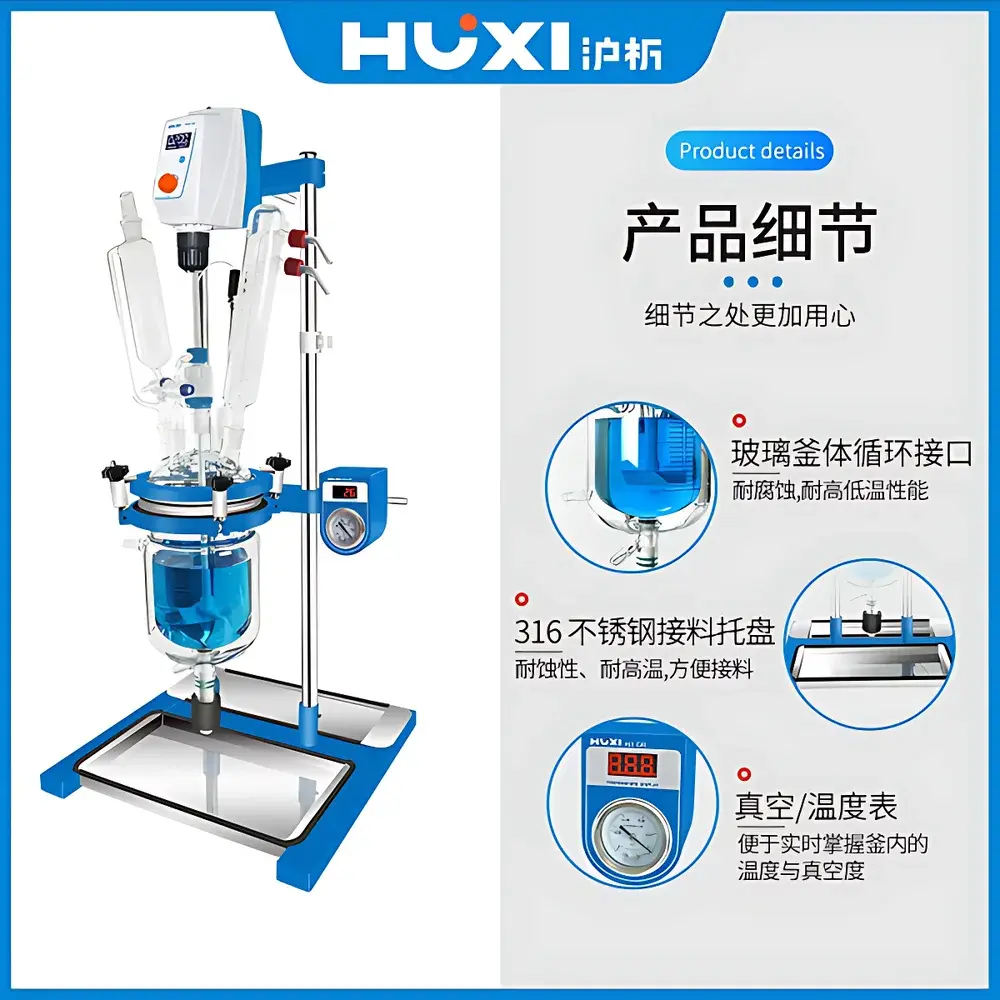
| Jacket Inlet/Outlet | Standardized G1/2" Fittings |
| Stirring Drive | Top-Mounted Mechanical Stirrer with Imported Sealed Bearing Assembly |
| Sealing Materials | PTFE + Borosilicate Glass |
| Temperature Monitoring | Integrated Pt100 Sensor Port |
| Vacuum & Temperature Measurement | Optional Digital Dual-Parameter Display Unit |
| Drain Valve | Quick-Release PTFE-Ball Valve with Zero-Dead-Volume Design |
| Condenser Type | Standard All-Glass Dimroth or Coil Condenser (Configurable) |
| Base Frame | 316 Stainless Steel Support with Adjustable Feet |
| Compliance | Designed per GB/T 25187–2010 (Laboratory Glass Reactors), Compatible with ISO 3585 (Borosilicate Glass 3.3 Specifications) |
Overview
The HUXI HF-1L Variable-Frequency Speed-Controlled Glass Reactor is an engineered laboratory-scale jacketed reactor system designed for controlled synthesis, catalytic reactions, solvent reflux, and vacuum-assisted distillation under reproducible thermal and pressure conditions. Built around a seamless, all-glass reaction vessel fabricated from DIN/ISO 3585-compliant borosilicate glass 3.3, the HF-1L operates on the principle of double-wall thermal regulation: a circulating fluid—such as silicone oil, glycol-water mixtures, or chilled ethanol—is introduced into the outer jacket to precisely control internal reaction temperature between −20 °C and +200 °C (dependent on heat transfer medium). The reactor supports both atmospheric and reduced-pressure operation, with ultimate vacuum capability down to −0.095 MPa (absolute), enabling low-boiling-point solvent removal, moisture-sensitive chemistry, and accelerated reaction kinetics via boiling point depression. Its top-driven mechanical stirring system—equipped with an imported corrosion-resistant bearing assembly and variable-frequency motor—delivers stable rotational speeds from 0 to 600 rpm, ensuring homogeneous mixing across viscous and heterogeneous reaction media without seal degradation.
Key Features
- Borosilicate glass 3.3 construction (ASTM E438 Type I, Class A) for exceptional chemical inertness, thermal shock resistance (ΔT ≥ 150 °C), and optical clarity throughout operational life.
- Zero-dead-volume PTFE ball valve with quick-release cam-lock mechanism, enabling complete, residue-free discharge of reaction mixtures—including slurries and precipitates—without disassembly.
- Modular, standardized ground-glass joints (ISO 2955/KF-compatible) at all interfaces (condenser, dropping funnel, thermometer port, gas inlet/outlet), facilitating rapid reconfiguration for multi-step synthetic workflows.
- Integrated Pt100 temperature sensor port and optional digital dual-parameter display unit for real-time monitoring of internal temperature and absolute vacuum level—calibrated traceable to NIST-traceable references.
- Top-mounted stirrer drive with IP54-rated enclosure, sealed high-load bearing, and torque-sensing feedback loop to maintain consistent agitation under varying viscosity profiles.
- All wetted surfaces constructed exclusively from borosilicate glass 3.3 or virgin PTFE—no metallic gasket materials or elastomer seals exposed to process stream—ensuring compliance with USP , EP 3.1.1, and ISO 10993 biocompatibility screening requirements.
- 316 stainless steel support frame with non-slip adjustable leveling feet and integrated drip tray, rated for static loads up to 15 kg and compatible with fume hood mounting.
Sample Compatibility & Compliance
The HF-1L is routinely deployed in academic, pharmaceutical, and fine-chemical laboratories for reactions involving aggressive reagents—including concentrated acids (H₂SO₄, HNO₃), halogenated solvents (CH₂Cl₂, CCl₄), strong bases (NaOH, KOtBu), and organometallics (n-BuLi, Grignard reagents)—without measurable leaching or surface etching. Its design conforms to GB/T 25187–2010 for laboratory glass reactors and incorporates safety margins aligned with PED 2014/68/EU Annex I essential safety requirements for low-pressure equipment. Vacuum integrity is verified per ISO 15848–1 for fugitive emission control. For regulated environments, the system supports integration with electronic lab notebooks (ELNs) and audit-trail-capable data loggers compliant with FDA 21 CFR Part 11 when paired with optional RS485/Modbus-enabled sensors.
Software & Data Management
While the base HF-1L operates as a stand-alone analog-controlled platform, it is fully compatible with third-party process monitoring systems via standardized 0–10 VDC or 4–20 mA analog outputs from optional digital transmitters (temperature, vacuum). HUXI provides open communication protocols and pinout schematics for integration into LabVIEW, DeltaV, or custom SCADA architectures. When equipped with the optional HUXI-DAQ-1 data acquisition module, users gain timestamped CSV export, configurable alarm thresholds, and GLP-compliant electronic signatures—fully supporting ALCOA+ data integrity principles (Attributable, Legible, Contemporaneous, Original, Accurate, Complete, Consistent, Enduring, Available).
Applications
- Batch synthesis of APIs and intermediates under inert or vacuum atmosphere (e.g., Suzuki couplings, esterifications, hydrazide formations).
- Solvent recovery via fractional distillation using integrated Dimroth condensers and precision-controlled vacuum ramps.
- Crystallization studies requiring precise supersaturation control through synchronized cooling/vacuum profiles.
- Catalyst screening under reproducible mass-transfer-limited conditions (gas–liquid–solid triphasic reactions).
- Photochemical reactions using UV-transparent borosilicate vessels coupled with external LED or mercury lamp sources.
- Teaching laboratory demonstrations of reaction thermodynamics, Le Chatelier’s principle, and phase-equilibrium behavior.
FAQ
What is the maximum operating temperature of the HF-1L reactor vessel?
The borosilicate glass 3.3 vessel is rated for continuous operation up to +200 °C; however, safe upper limits depend on jacket fluid selection and pressure conditions—consult the thermal fluid datasheet and apply appropriate safety derating.
Can the HF-1L be used for hydrogenation reactions?
Yes, provided appropriate gas dispersion hardware (e.g., fritted gas inlet tube) and pressure-rated accessories are added; the base configuration supports only low-pressure/vacuum operation per its design classification.
Is the stirring motor explosion-proof?
The standard motor is not ATEX-certified; for flammable solvent applications, users must install an external explosion-proof motor housing or operate within certified fume hoods meeting EN 14175 standards.
How is calibration traceability maintained for temperature and vacuum measurements?
Optional Pt100 sensors are supplied with individual calibration certificates traceable to national metrology institutes (NIM, China); vacuum gauges comply with ISO 2533 and include factory calibration reports with uncertainty budgets.
Does HUXI provide IQ/OQ documentation packages?
Yes—upon request, HUXI supplies instrument qualification templates aligned with ASTM E2500 and EU GMP Annex 15, including risk assessments, test protocols, and execution records for installation qualification (IQ) and operational qualification (OQ).



