
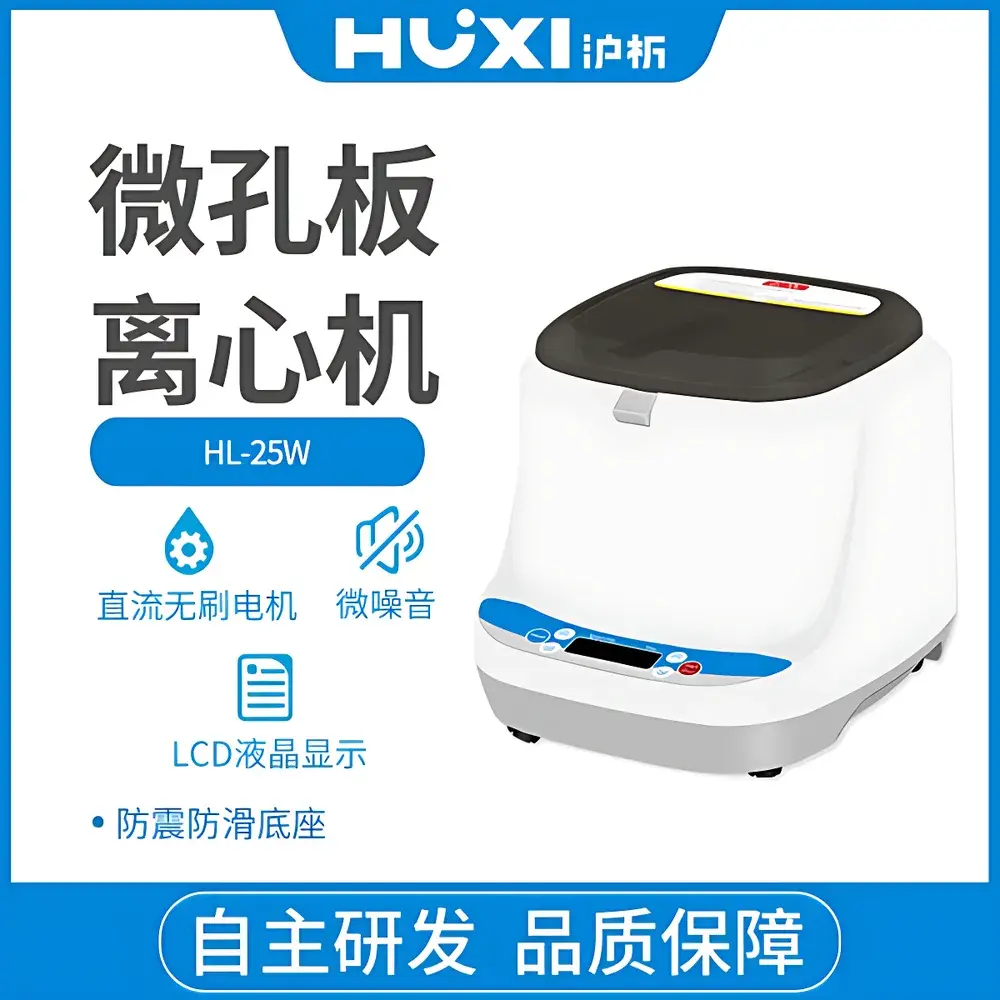
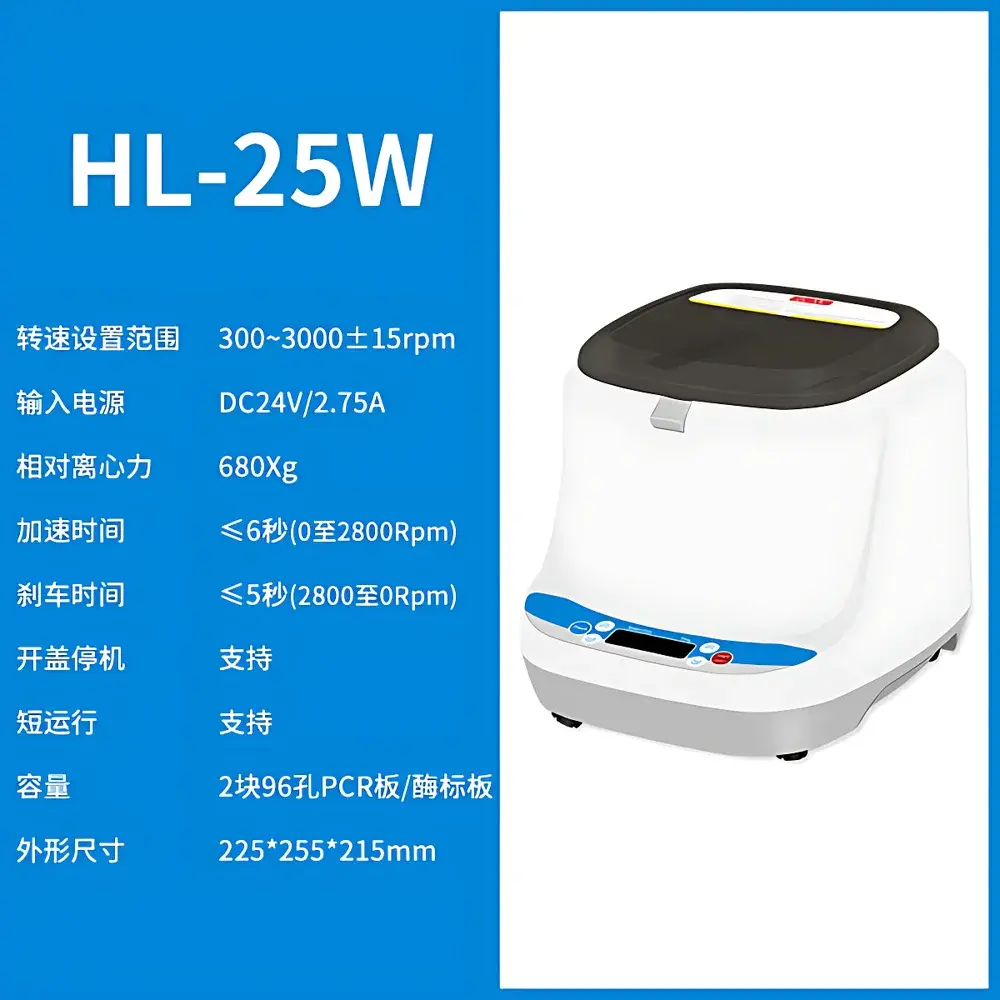
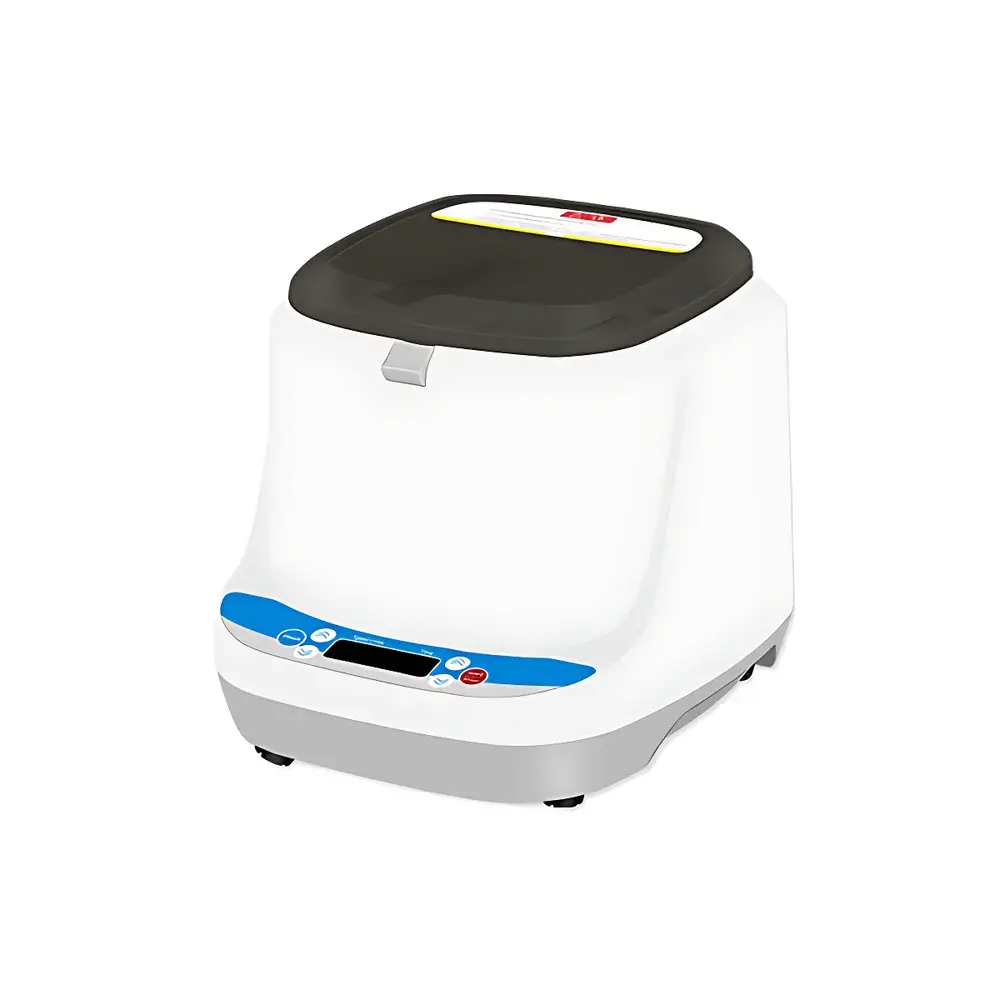
HUXI HL-25W Microplate Centrifuge
| Brand | HUXI |
|---|---|
| Origin | Shanghai, China |
| Manufacturer Type | Direct Manufacturer |
| Instrument Type | Benchtop Centrifuge |
| Speed Range | 300–3000 ±15 rpm |
| Speed Increment | 10 rpm |
| Max. Capacity | 2 × standard 96-well PCR plates or microtiter plates |
| Max. RCF | 608 × g |
| Acceleration Time (0→3000 rpm) | ≤6 s |
| Deceleration Time (3000→0 rpm) | ≤5 s |
| Power Supply | DC 24 V / 2.75 A |
| Input Power | 55 W |
| Motor Type | Brushless DC frequency-controlled motor |
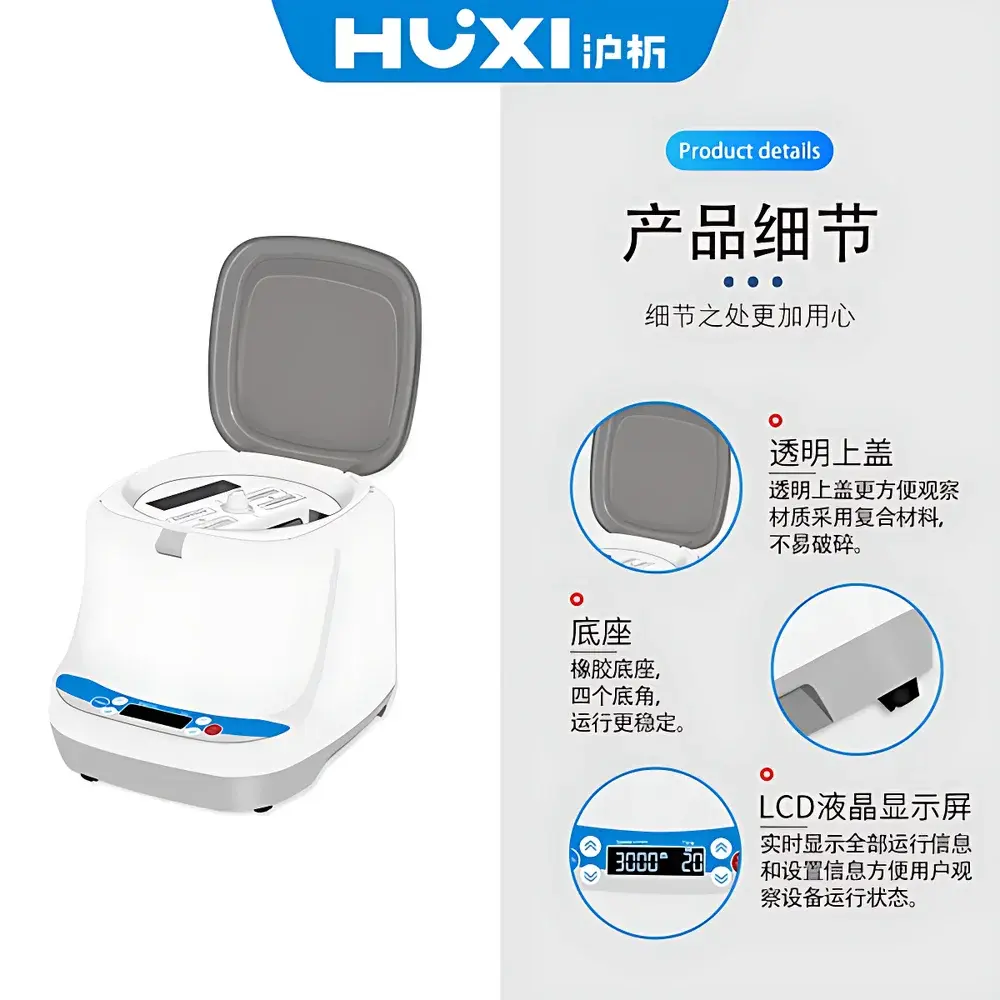
| Display | High-brightness LCD |
| Timer Range | 1 min 1 sec – 99 min 59 sec |
| Dimensions (W×D×H) | 225 × 255 × 215 mm |
| Weight | 3.9 kg |
| Protection Class | IP20 |
| Safety Features | Lid interlock, real-time imbalance detection, overspeed protection, acoustic & visual fault alerts with error code display |
Overview
The HUXI HL-25W Microplate Centrifuge is a compact, benchtop centrifugal instrument engineered specifically for rapid and reliable pelleting of liquid samples in standard microplates—primarily 96-well and 384-well formats, including skirted, unskirted, and semi-skirted PCR plates and ELISA microtiter plates. Unlike general-purpose centrifuges, the HL-25W employs a horizontal rotor architecture optimized for microplate geometry, ensuring uniform force distribution across all wells without plate deformation or cross-well splashing. Its operational principle relies on controlled rotational acceleration to generate radial centrifugal force (RCF), effectively sedimenting residual droplets adhering to well walls or tube caps—a critical step prior to downstream assays such as qPCR, enzymatic reactions, cell-based screening, or high-throughput ELISA workflows. Designed for integration into automated lab environments or manual benchtop use, the HL-25W delivers reproducible, low-vibration performance with precise speed regulation and minimal thermal load—essential for temperature-sensitive biomolecules.
Key Features
- Ultra-fast acceleration and deceleration: Achieves full speed (3000 rpm) in ≤6 seconds and halts completely in ≤5 seconds—reducing total cycle time per plate by up to 40% compared to conventional microplate centrifuges.
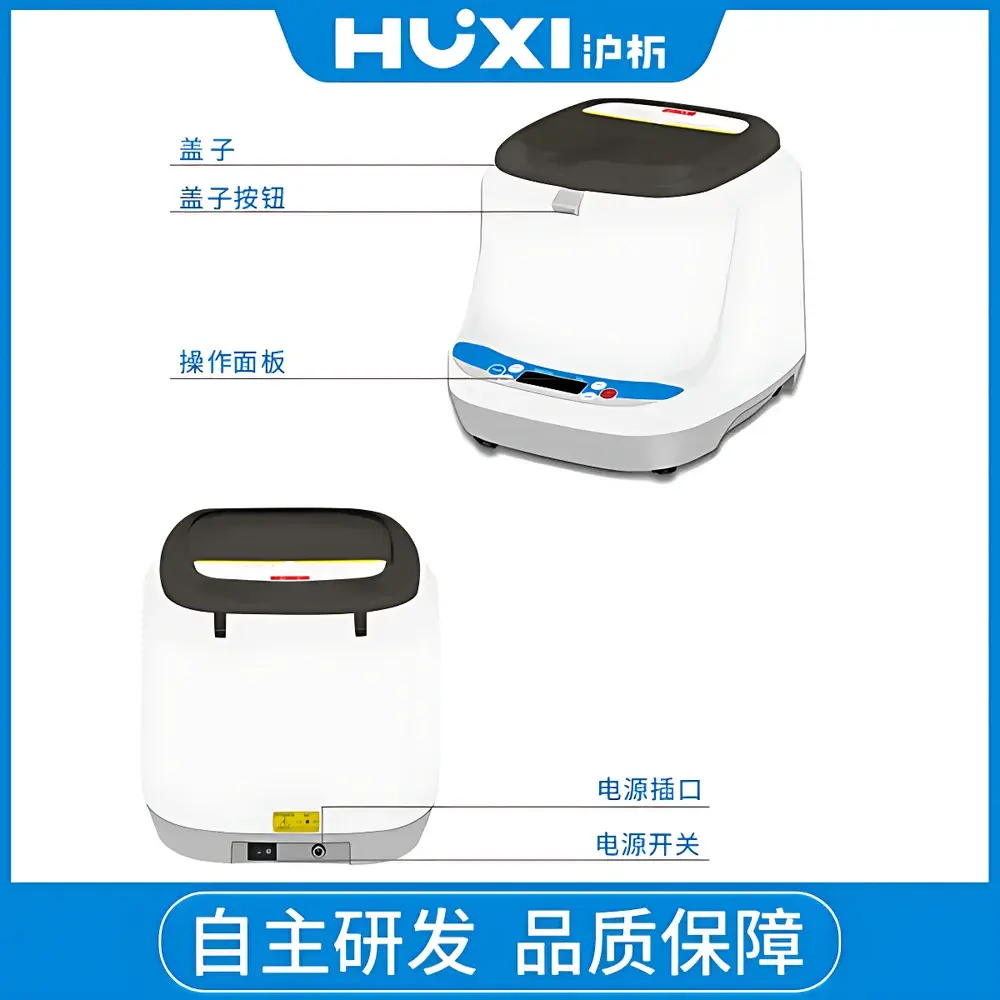
- Intelligent safety architecture: Integrated lid interlock prevents operation unless fully closed; real-time imbalance sensing automatically interrupts rotation if mass asymmetry exceeds tolerance; overspeed cutoff ensures compliance with mechanical design limits.
- DC brushless frequency-controlled motor: Delivers consistent torque across the entire speed range (300–3000 rpm), eliminates carbon brush wear, and enables fine-grained speed adjustment in 10-rpm increments for method optimization.
- High-contrast LCD interface: Displays real-time rpm, remaining time, error codes, and status indicators—supporting GLP-compliant documentation when paired with external logging systems.
- Low-noise, low-heat operation: Rated at 55 W input power and IP20 ingress protection—suitable for continuous use in shared laboratory spaces without dedicated ventilation or cooling infrastructure.
Sample Compatibility & Compliance
The HL-25W accommodates two standard SBS-format microplates simultaneously—compatible with ANSI/SLAS-compliant 96-well and 384-well plates, including those with full skirts, partial skirts, or no skirts. It supports common plate materials (polypropylene, polystyrene, cyclic olefin copolymer) and maintains structural integrity under repeated centrifugation cycles. While not certified for clinical diagnostics under IVD directives, the device meets general electrical safety requirements per IEC 61010-1:2010 and electromagnetic compatibility standards per EN 61326-1:2013. Its operational parameters align with common laboratory protocols referenced in ASTM E2500-13 (verification of laboratory equipment) and ISO/IEC 17025:2017 (competence of testing laboratories), particularly where microplate-based sample preparation is part of validated analytical workflows.
Software & Data Management
The HL-25W operates via standalone embedded firmware with no proprietary software dependency. All user inputs and system events—including start/stop timestamps, final speed, elapsed time, and fault codes—are retained in volatile memory and displayed on the LCD during operation. For audit-trail purposes, laboratories may integrate the unit into networked monitoring systems using optional RS-232 or USB-to-serial adapters (not included), enabling timestamped log export compatible with LIMS platforms. Though not natively 21 CFR Part 11 compliant, its deterministic behavior, repeatable timing, and error-code-based diagnostics support traceability when documented alongside SOPs and electronic lab notebooks (ELNs).
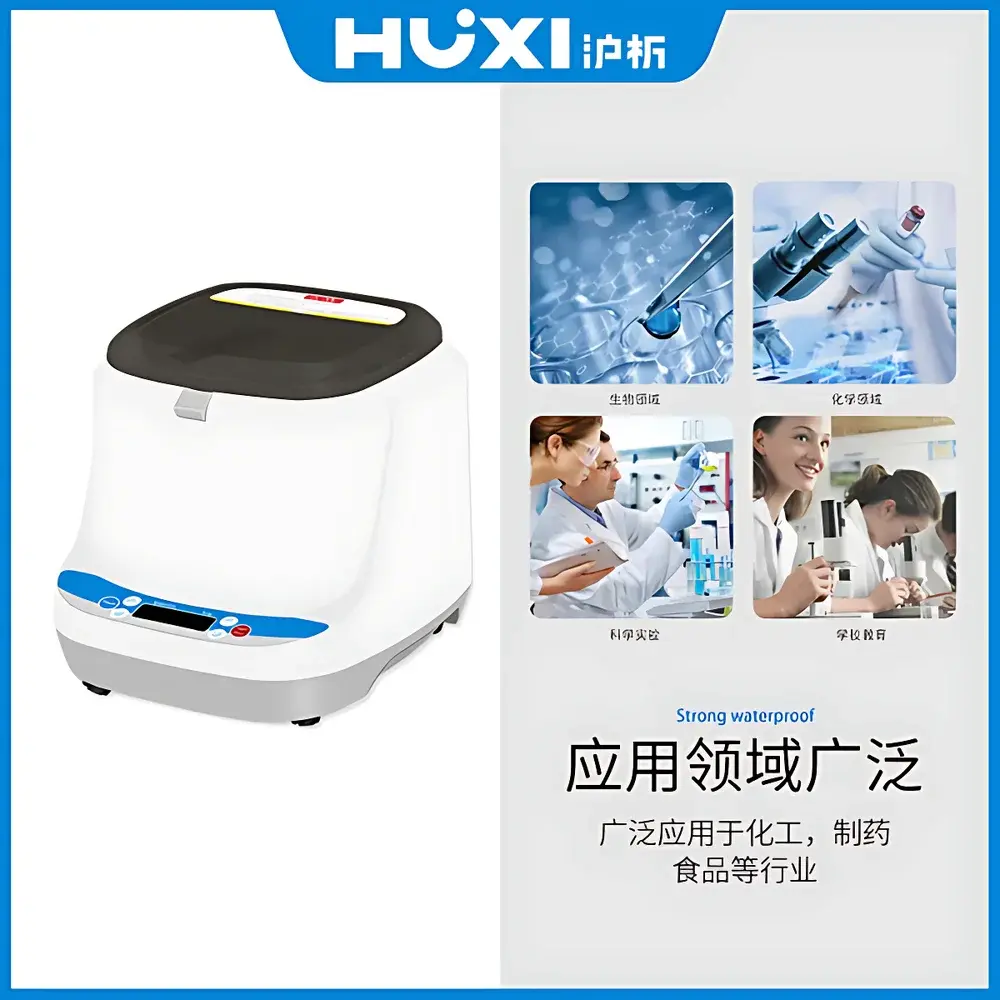
Applications
- Pre-PCR sample consolidation: Removing condensation from thermal cycling plate lids before amplification.
- ELISA assay preparation: Ensuring complete reagent transfer from storage tubes to coated wells and minimizing edge effects.
- Cell culture supernatant harvesting: Rapid clarification of low-volume conditioned media from multiwell plates.
- Library normalization in NGS workflows: Equalizing DNA fragment concentrations across 96-well indexed plates prior to pooling.
- Quality control in biomanufacturing: Verifying fill volume consistency and absence of air bubbles in pre-filled diagnostic assay plates.
FAQ
What microplate formats are supported?
The HL-25W accepts all ANSI/SLAS-standard 96-well and 384-well plates, regardless of skirt configuration (full, half, or none), provided they conform to SBS footprint dimensions (127.76 × 85.48 mm). Non-standard or custom plates require mechanical verification prior to use.
Is the centrifuge suitable for radioactive or hazardous samples?
No. The HL-25W lacks sealed rotor chambers or secondary containment features; it is intended exclusively for non-hazardous, non-sterile, non-radioactive biological and chemical samples handled under BSL-1 or BSL-2 conditions.
Can runtime be extended beyond 99 minutes?
No. The maximum programmable duration is 99 minutes and 59 seconds. For longer protocols, users must initiate sequential runs manually or integrate external timer controls.
Does the unit require calibration or periodic maintenance?
Speed accuracy is factory-calibrated and stable over time due to the brushless motor’s inherent consistency. No routine recalibration is required; however, visual inspection of rotor integrity and cleaning of the chamber every 6 months is recommended per manufacturer guidelines.
What happens during an imbalance event?
Upon detecting rotational asymmetry exceeding 5% mass differential between opposing plate positions, the system immediately decelerates, emits a triple-tone alert, and displays “E03” on the LCD—halting further operation until the plates are repositioned and the lid is reopened and reclosed.



