
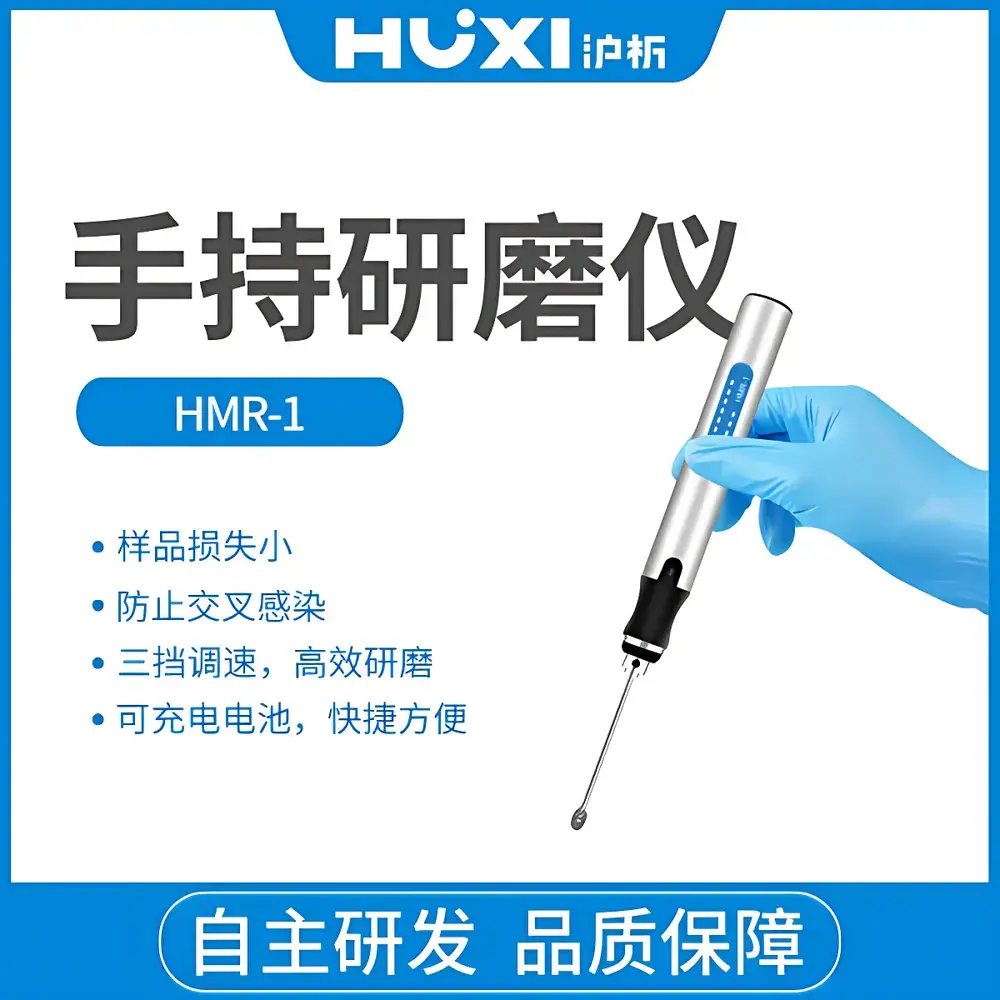
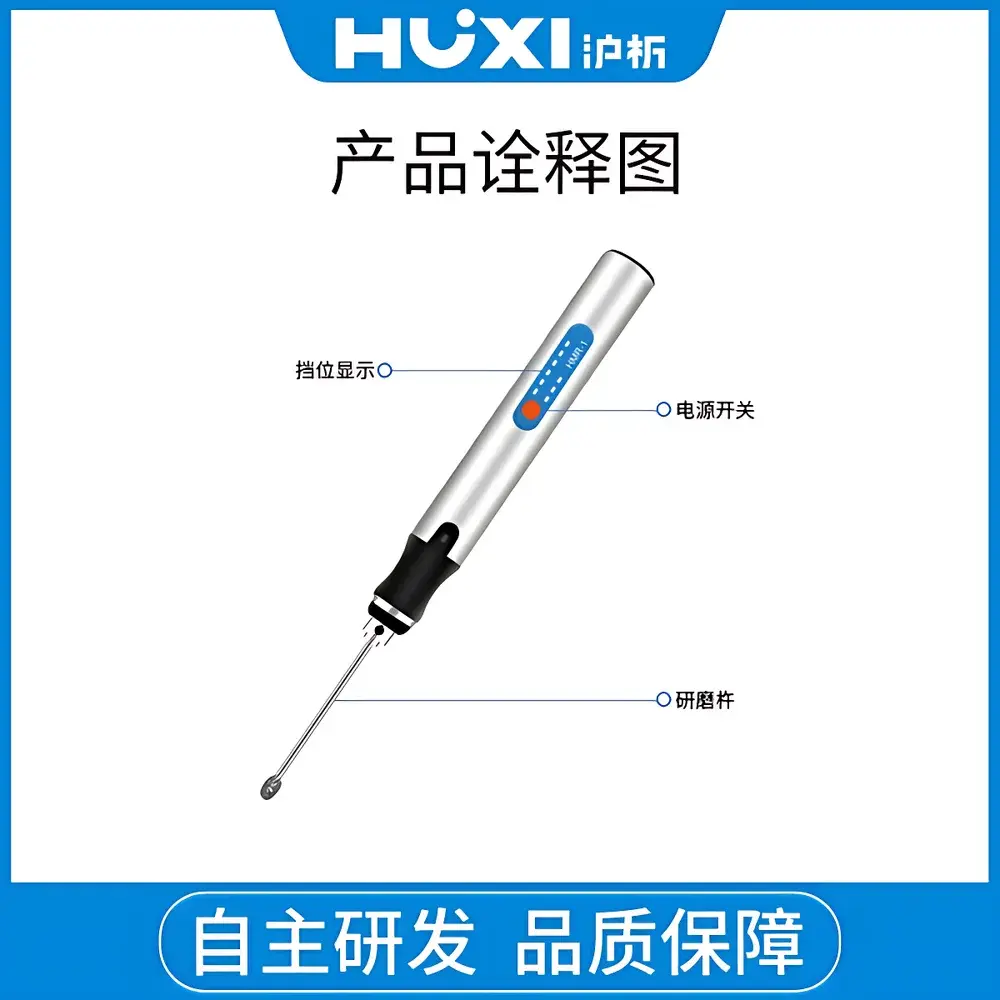
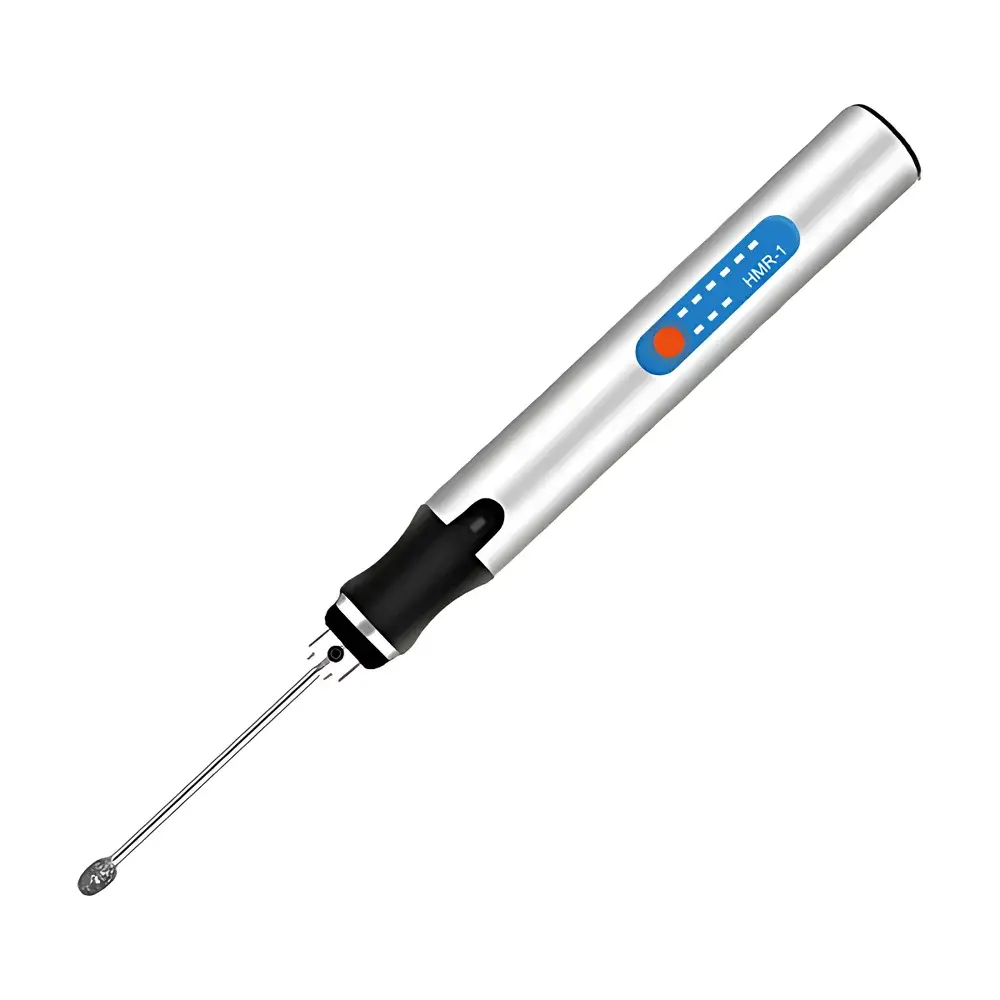
HUXI HMR-1 Handheld Tissue Grinder
| Brand | HUXI |
|---|---|
| Origin | Shanghai, China |
| Manufacturer Type | Direct Manufacturer |
| Region of Origin | Domestic (China) |
| Model | HMR-1 |
| Instrument Type | Handheld Tissue Grinder |
| Sample Compatibility | Soft biological tissues |
| Maximum Feed Size | <30 mm |
| Final Particle Size | ≤5 µm |
| Batch Processing Volume | ≤1.5 mL |
| Speed Settings | 3-step adjustable (5,000 / 10,000 / 18,000 rpm) |
| Power Supply | Rechargeable Li-ion battery (4.2 V, 300 mAh) |
| Rated Power | 10 W |
| Chuck Diameter | 3 mm |
| Chuck Depth | 25 mm |
| Device Dimensions | 125 × 16 mm |
| Net Weight | 0.086 kg |
| Charging Time | 60 min (full), 30 min (80%) |
| Battery Life | >60 min per charge |
Overview
The HUXI HMR-1 Handheld Tissue Grinder is an ergonomically engineered, battery-powered micro-grinding device designed for rapid, controlled mechanical disruption of soft biological samples directly within standard 1.5 mL microcentrifuge tubes. Operating on the principle of high-speed rotational impact—where a rotating grinding pestle delivers consistent kinetic energy to tissue fragments—the HMR-1 enables efficient cell lysis and homogenization without cross-contamination or sample transfer loss. Its compact form factor and low thermal output make it especially suitable for temperature-sensitive applications in molecular biology workflows, including nucleic acid and protein extraction where integrity of labile biomolecules must be preserved. Unlike benchtop grinders requiring external power sources or cryogenic handling, the HMR-1 supports field-deployable, point-of-use processing under ambient or chilled conditions.
Key Features
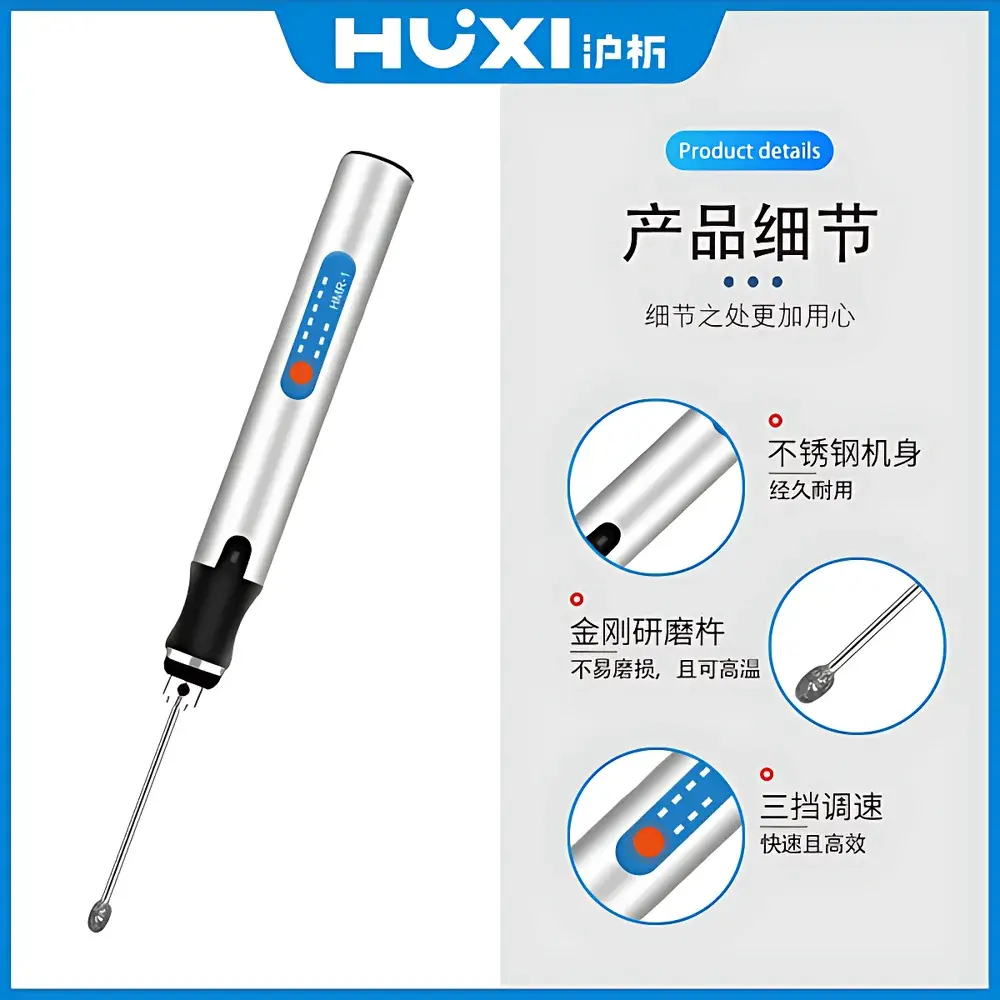
- Three-step speed control (5,000 / 10,000 / 18,000 rpm) provides precise optimization for diverse sample types—from delicate plant leaves to fibrous muscle tissue—without over-shearing or excessive heat generation.
- Lightweight aluminum-alloy housing (86 g) with balanced center-of-mass ensures stable one-handed operation and minimizes operator fatigue during repetitive use.
- Interchangeable 3 mm-diameter stainless-steel grinding pestles—compatible with standard microtube geometries—feature hardened tips resistant to wear and validated for autoclaving (121°C, 20 min, 15 psi), supporting strict GLP-compliant reuse protocols.
- Integrated lithium-ion battery (4.2 V / 300 mAh) delivers >60 minutes of continuous operation at mid-range speed; full recharge completes in 60 minutes via included USB charging module, enabling seamless integration into high-throughput lab environments with limited outlet access.
- No external clamping fixtures or adapters required: direct insertion of pestle into tube cap ensures secure engagement and reproducible torque transmission across batches.
Sample Compatibility & Compliance
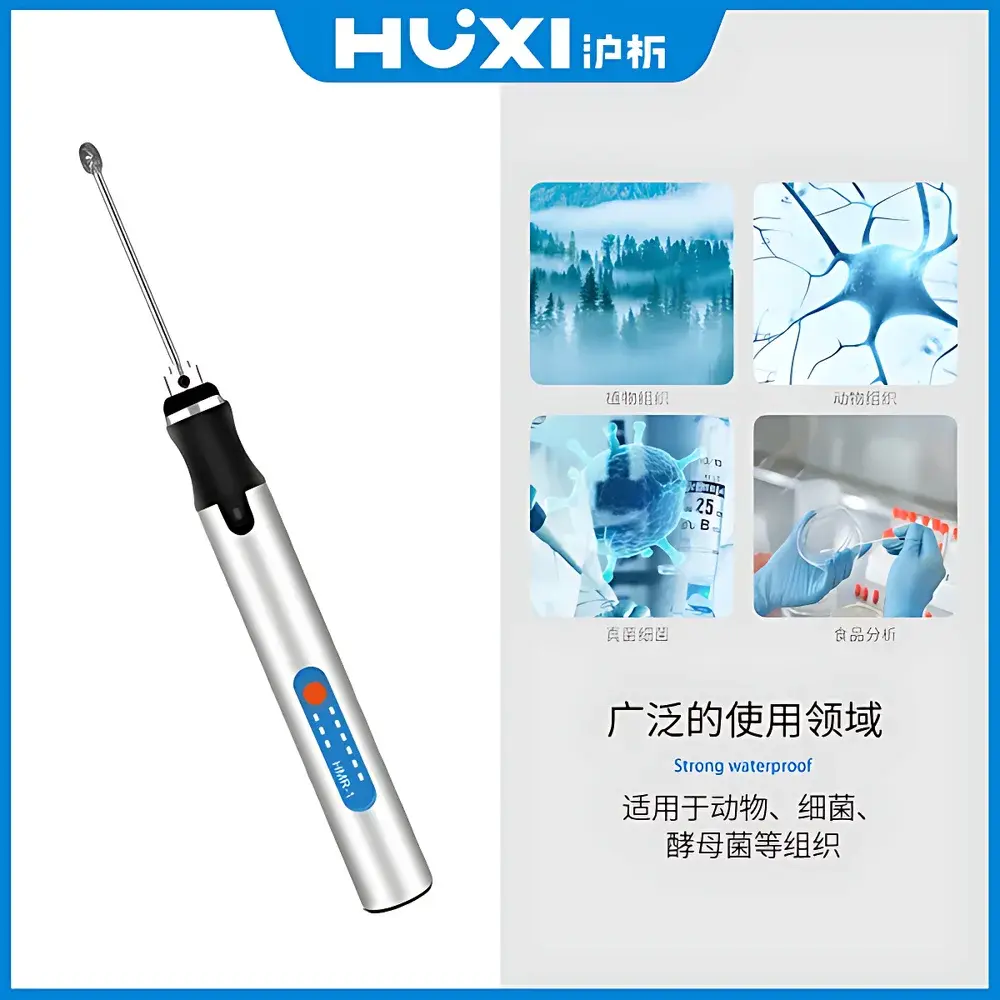
The HMR-1 is validated for use with soft-to-medium consistency biological matrices, including fresh/frozen plant tissues (e.g., Arabidopsis leaves, tomato fruit), animal organs (liver, brain, kidney), cultured cells (adherent and suspension), and microbial pellets. It is not intended for hard, mineralized, or highly fibrous samples (e.g., bone, seed coats, wood). All contact surfaces comply with ISO 10993-5 cytotoxicity standards. Pestle sterilization follows ISO 17664 guidelines for reprocessable medical devices. The instrument meets IEC 61000-4 electromagnetic compatibility requirements and carries CE marking for laboratory equipment safety (EN 61010-1).
Software & Data Management
As a manually operated, non-programmable instrument, the HMR-1 does not incorporate embedded firmware, touch interfaces, or digital data logging. Operational parameters—including speed selection and runtime—are set physically via push-button controls. This architecture eliminates software validation overhead and aligns with FDA 21 CFR Part 11 requirements for instruments used in regulated environments where audit trails are not mandated for manual process steps. User-defined protocols (e.g., “10 sec at 10,000 rpm, repeated 3×”) can be documented in laboratory notebooks or LIMS-integrated SOPs.
Applications
- Routine pre-lysis homogenization prior to commercial DNA/RNA isolation kits (e.g., Qiagen RNeasy, Thermo Fisher PureLink), significantly reducing carryover loss and improving nucleic acid yield from low-input samples (≤10 mg tissue).
- Preparation of soluble protein extracts for Western blotting or ELISA, minimizing protease activation through rapid, cold-compatible processing.
- High-fidelity microbiome sample stabilization—grinding fecal or soil slurries directly in preservation buffers (e.g., RNAlater, DNA/RNA Shield) to prevent RNA degradation during transport.
- Supporting single-cell omics workflows by generating uniform suspensions for downstream FACS sorting or scRNA-seq library prep.
- Field-based environmental sampling where portability, battery independence, and minimal infrastructure dependency are critical.
FAQ
Can the HMR-1 be used with 2.0 mL tubes or PCR strips?
No—it is mechanically optimized for 1.5 mL conical microcentrifuge tubes (e.g., Eppendorf Safe-Lock) with standard cap geometry. Use with larger or non-standard vessels may compromise pestle alignment and grinding efficiency.
Is the battery replaceable by the end user?
The sealed Li-ion cell is not field-replaceable; battery service requires return to authorized HUXI technical support centers to maintain electrical safety certification.
Does the device generate significant heat during extended use?
At maximum speed (18,000 rpm), surface temperature rise remains below 8°C above ambient after 60 seconds of continuous operation—validated using ASTM E2234 infrared thermography—making it compatible with ice-chilled tube holders.
Are spare pestles available with different tip geometries (e.g., flat, serrated)?
HUXI supplies only the standard conical tungsten-carbide-tipped pestle (3 mm shank); alternative geometries are not part of the certified accessory portfolio.
What maintenance is required between uses?
Wipe exterior housing with 70% ethanol; sterilize pestles by autoclaving or dry-heat (160°C, 2 h). No lubrication or internal servicing is specified in the manufacturer’s maintenance schedule.



