
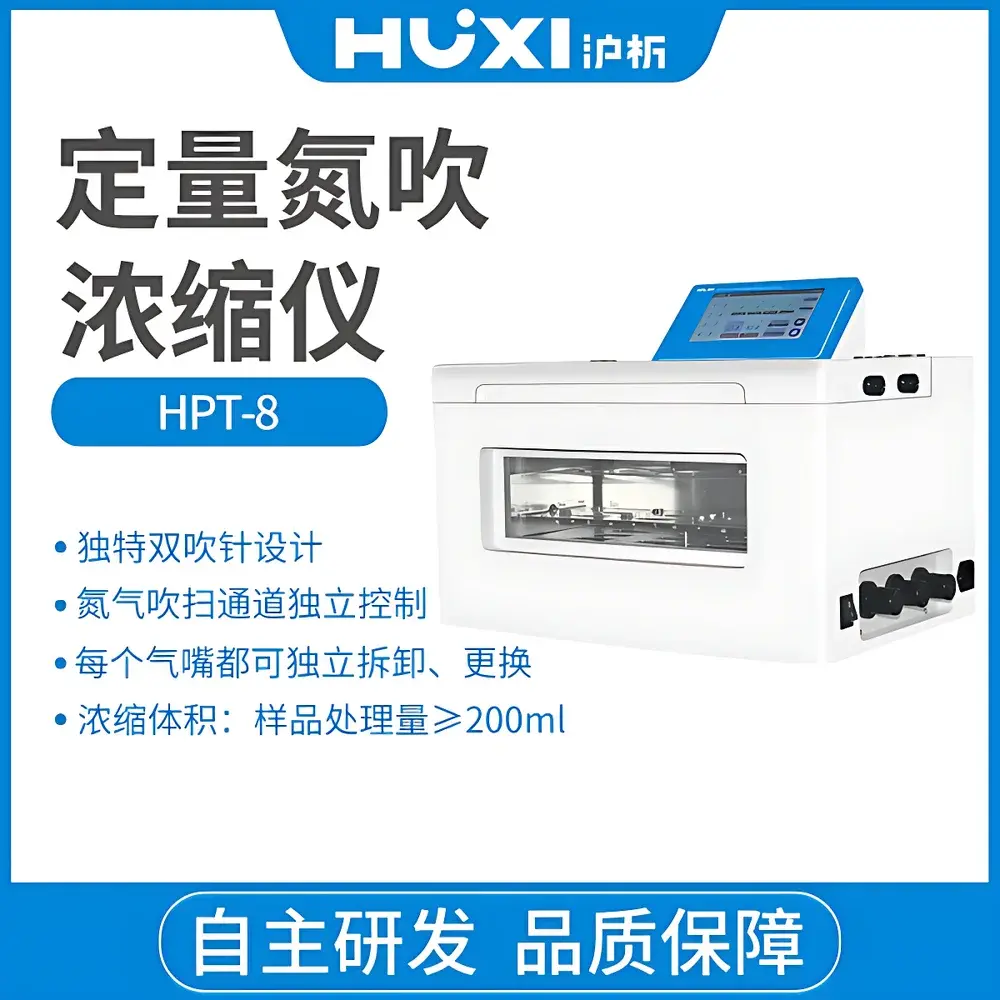
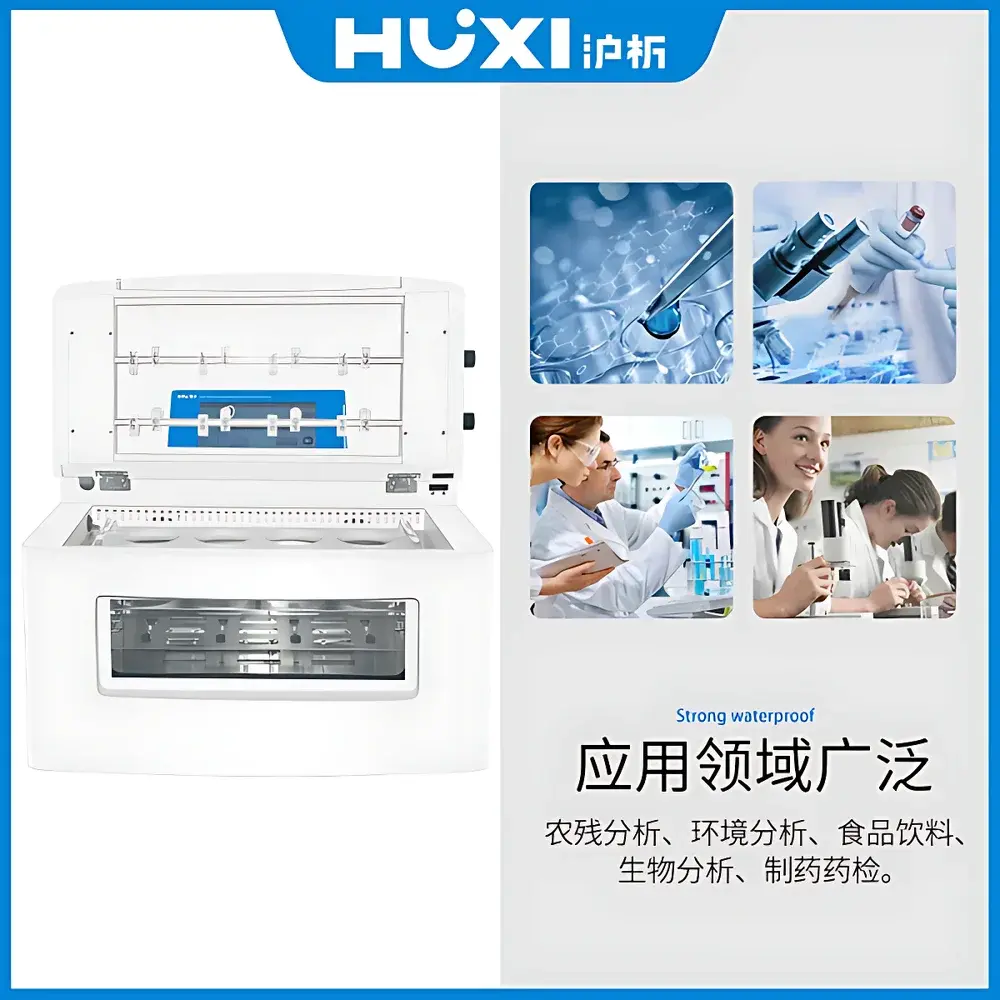
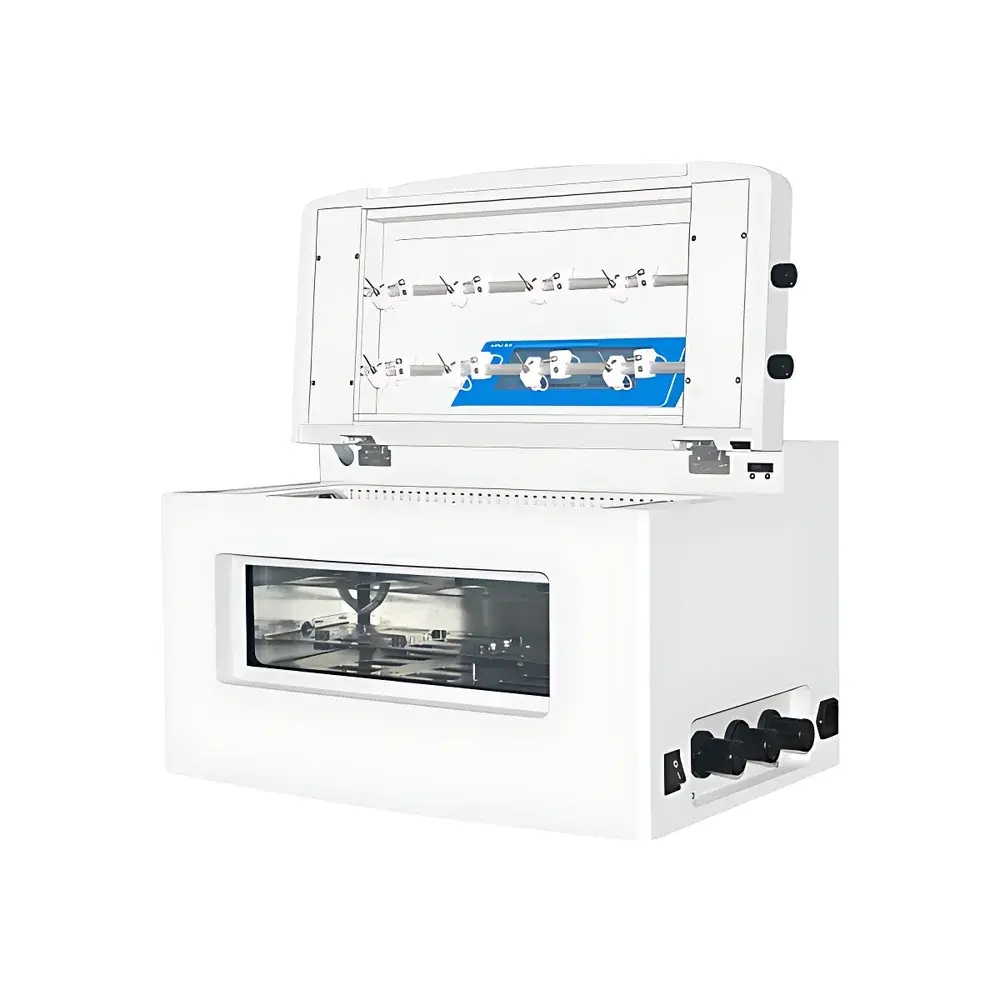
HUXI HPT-8 Automated Quantitative Nitrogen Evaporator
| Brand | HUXI |
|---|---|
| Origin | Shanghai, China |
| Manufacturer Type | Direct Manufacturer |
| Region of Origin | Domestic (China) |
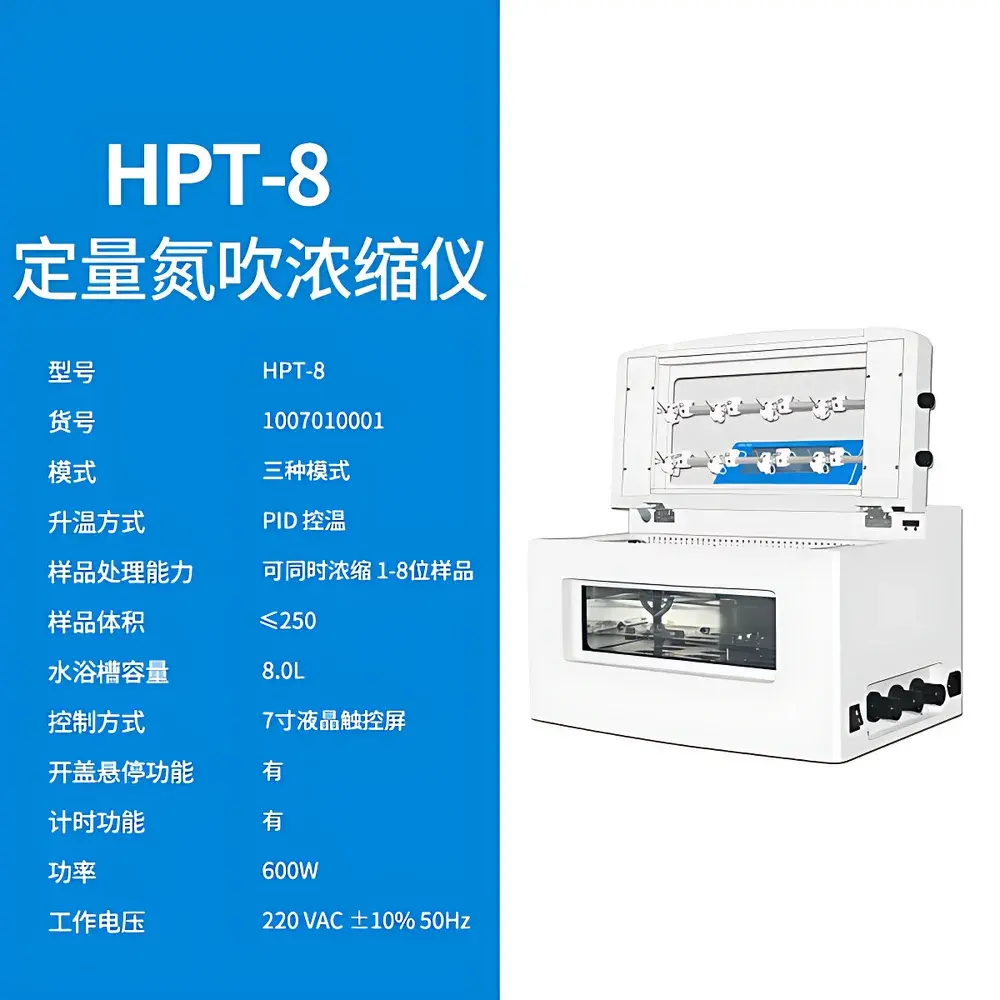
| Model | HPT-8 |
| Instrument Type | Automated Quantitative Concentrator |
| Temperature Range | Ambient to 90 °C |
| Temperature Control Accuracy | ±0.5 °C |
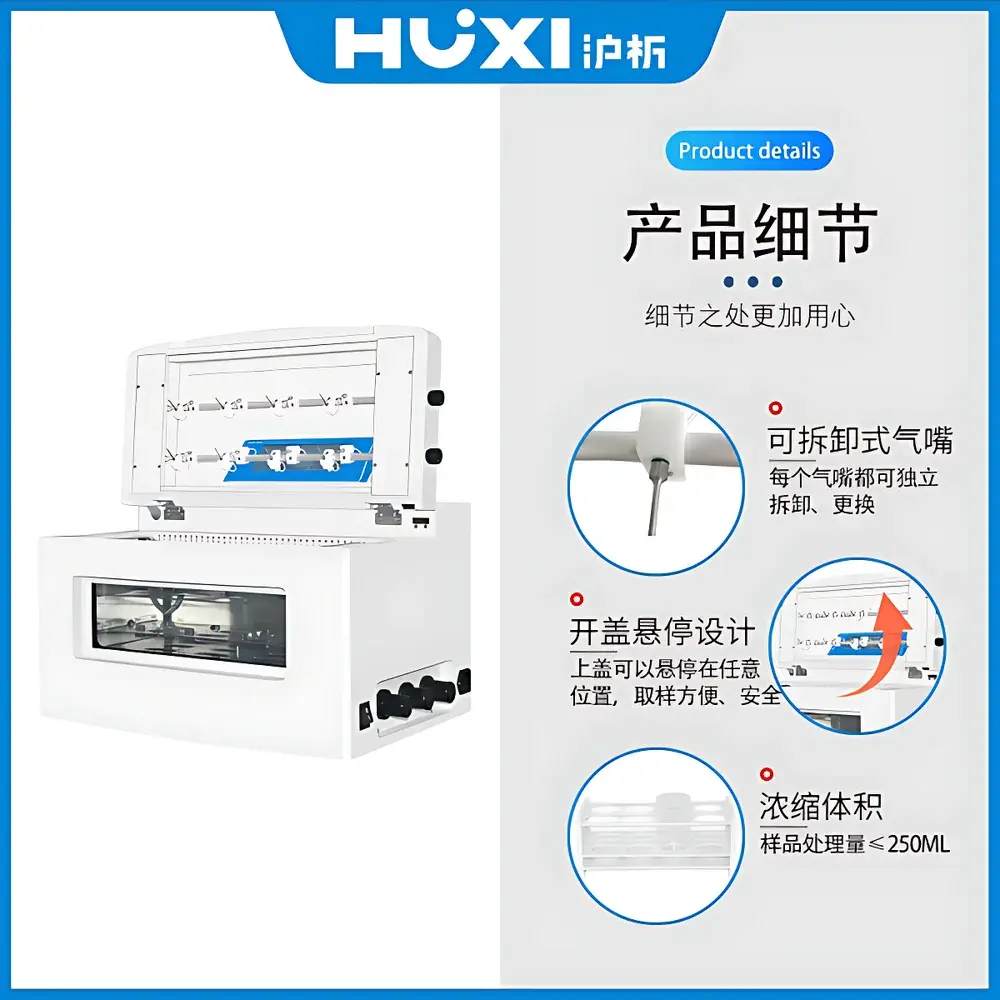
| Sample Capacity per Vessel | ≥200 mL |
| Operating Pressure Range | 0–0.4 MPa (≤80 psi) |
| Heating Method | Water Bath with PID Control |
| Sample Throughput | 1–8 Positions |
| Display | 7-inch LCD Touchscreen |
| Power Consumption | 600 W |
| Dimensions (W×D×H) | 540 × 440 × 410 mm |
| Net Weight | 36 kg |
Overview
The HUXI HPT-8 Automated Quantitative Nitrogen Evaporator is an engineered solution for precise, reproducible solvent removal in analytical laboratories requiring high-throughput sample preparation. It operates on the principle of nitrogen-assisted evaporation—leveraging controlled laminar nitrogen flow to disrupt the vapor–liquid equilibrium above liquid surfaces, thereby accelerating solvent volatilization without thermal degradation. Integrated water bath heating (ambient to 90 °C) provides uniform, stable thermal energy transfer, while PID-based temperature regulation ensures ±0.5 °C accuracy across all positions. Unlike open-air or rotary evaporation methods, the HPT-8 maintains inert atmosphere conditions throughout concentration—preventing oxidation of sensitive analytes such as pesticides, lipids, pharmaceuticals, and labile metabolites. Its architecture complies with core design expectations for GLP-compliant sample prep workflows, including traceable parameter logging, independent channel control, and fail-safe thermal protection.
Key Features
- Triple operational modes: Timed mode, quantitative endpoint mode, and dry-down mode—each programmable with independent setpoints per position.
- Dual-angle nitrogen delivery system: Automatically transitions from oblique vortex blowing (enhancing surface agitation during bulk solvent removal) to vertical direct blowing (maximizing efficiency near endpoint).
- Quantitative endpoint detection: Uses calibrated volumetric markings (0.5 mL and 1.0 mL increments) combined with real-time visual monitoring via transparent vessel alignment—enabling manual or semi-automated termination at user-defined residual volumes.
- Modular gas distribution: Eight individually controllable nitrogen channels with detachable, chemically resistant nozzles—facilitating rapid cleaning, replacement, and cross-contamination prevention.
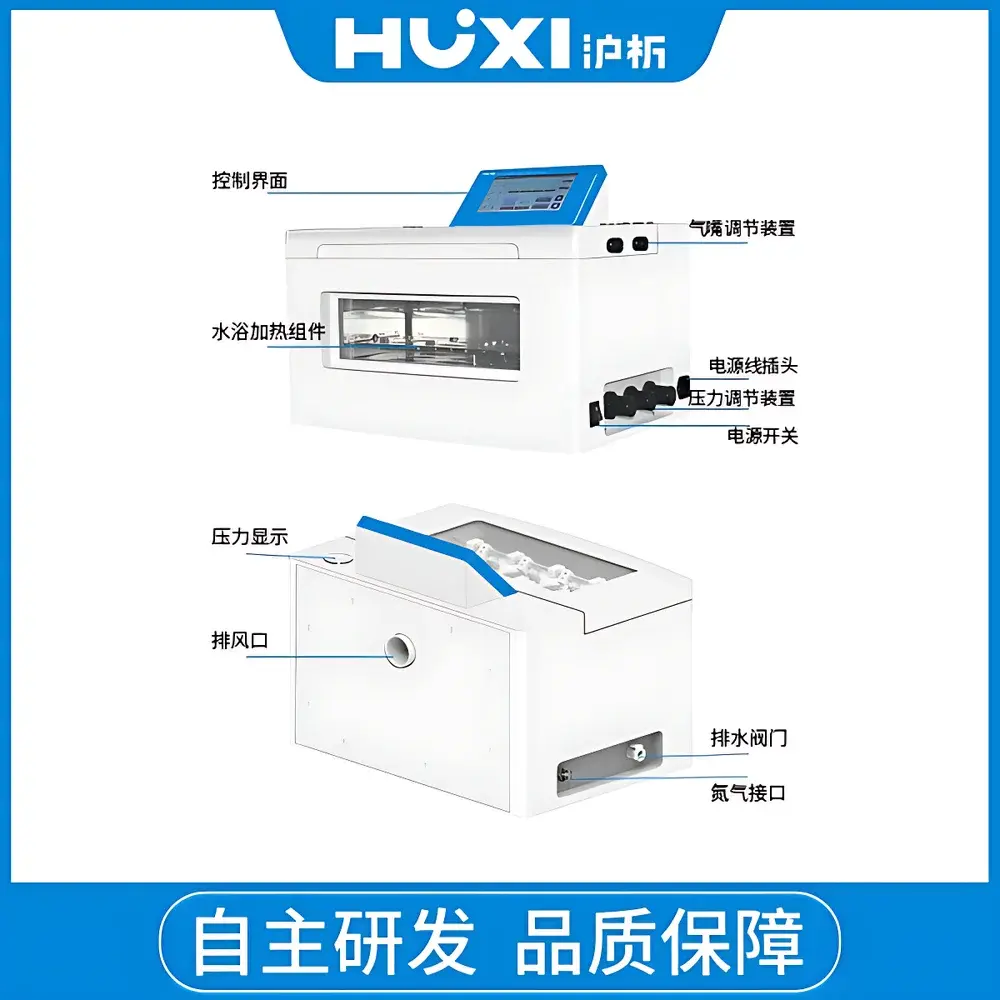
- Human-centered ergonomics: Lid suspension mechanism allows hands-free positioning at any angle; integrated LED lighting supports light-sensitive applications (e.g., retinoid or porphyrin analysis); built-in exhaust fan directs vapors away from the work area—eliminating reliance on fume hoods.
- Robust construction: Stainless steel housing and optional PTFE-coated wetted parts ensure compatibility with aggressive solvents (e.g., acetonitrile, chloroform, ethyl acetate) and long-term resistance to corrosion under routine laboratory use.
Sample Compatibility & Compliance
The HPT-8 accommodates standard 15–50 mL conical glass tubes and round-bottom vials with compatible neck geometries. Each position supports ≥200 mL total volume capacity, making it suitable for large-volume extractions common in environmental water testing (e.g., EPA Method 525.3) and food residue screening (e.g., QuEChERS AOAC 2007.01). All electrical components meet IEC 61010-1 safety standards for laboratory equipment. While the instrument does not include embedded 21 CFR Part 11 audit trail functionality, its parameter logs—including start time, target volume, actual endpoint volume, final temperature, and nitrogen pressure—can be exported manually for inclusion in validated SOP documentation. The system supports integration into ISO/IEC 17025-accredited labs when operated within defined method validation boundaries.
Software & Data Management
The HPT-8 employs a standalone embedded control interface—no external PC or proprietary software required. The 7-inch capacitive touchscreen displays real-time values for bath temperature, elapsed time, nitrogen pressure (0–0.4 MPa), and active mode status. All settings are stored in non-volatile memory with password-protected configuration access. Event-driven audio alerts notify users upon completion of individual channels or full batch processing. Parameter history is retained for up to 100 recent runs and can be reviewed directly on-screen or transferred via USB port for offline archiving. For laboratories implementing electronic lab notebooks (ELNs), timestamped screenshots and manual log entries may be synchronized with LIMS platforms using standardized CSV export protocols.
Applications
- Residue analysis: Accelerated cleanup of pesticide extracts from soil, water, and produce matrices prior to GC-MS or LC-MS/MS quantification.
- Environmental testing: Concentration of PAHs, PCBs, and phthalates from large-volume aqueous samples following solid-phase extraction (SPE) or liquid–liquid extraction (LLE).
- Food & beverage QA/QC: Reduction of solvent volumes post-extraction for mycotoxin, veterinary drug, or flavor compound analysis.
- Pharmaceutical development: Parallel concentration of stability study samples, dissolution media, and impurity-spiked formulations under inert, temperature-controlled conditions.
- Clinical & biomarker research: Gentle desolvation of plasma, urine, or tissue homogenates containing unstable endogenous compounds (e.g., prostaglandins, catecholamines).
FAQ
What nitrogen supply specifications are required for optimal operation?
A clean, oil-free nitrogen source delivering 0–0.4 MPa (0–58 psi) pressure is recommended. Inlet must be fitted with a particulate filter (≤0.01 µm) and moisture trap to prevent nozzle clogging and condensation in gas lines.
Can the HPT-8 be used with organic solvents other than those specified in the manual?
Yes—provided compatibility is verified against the materials of construction (stainless steel, PTFE, borosilicate glass). Solvents with flash points below 40 °C require strict adherence to local fire safety codes and may necessitate additional ventilation beyond the unit’s internal fan.
Is calibration traceable to national standards?
Temperature sensors are factory-calibrated against NIST-traceable references. Users may perform periodic verification using a certified RTD probe inserted into the water bath; calibration certificates are available upon request.
Does the instrument support remote monitoring or network connectivity?
No—the HPT-8 is a standalone device with no Ethernet, Wi-Fi, or RS-232 interfaces. Remote oversight requires external camera-based observation or scheduled manual checks.
How often should the nitrogen nozzles be cleaned or replaced?
Cleaning frequency depends on solvent volatility and sample matrix. As a general practice, inspect and ultrasonically clean nozzles after every 10–15 batches; replace if physical deformation or flow asymmetry is observed.



