
HUXI HX-MINI300E Ultrasonic Extractor
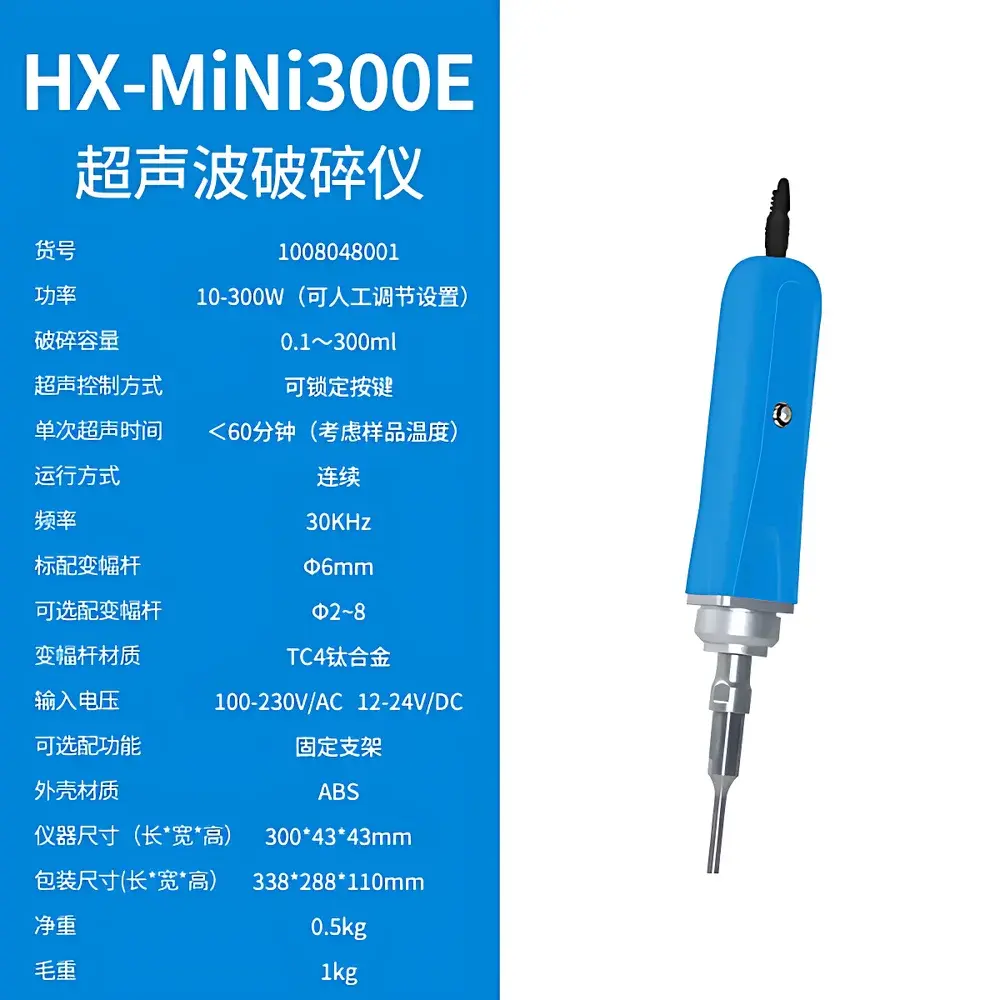
| Brand | HUXI |
|---|---|
| Origin | Shanghai, China |
| Manufacturer Type | Direct Manufacturer |
| Region of Origin | Domestic (China) |
| Model | HX-MINI300E |
| Ultrasonic Power Range | 10–300 W (adjustable) |
| Ultrasonic Frequency | 30 kHz |
| Sample Volume Capacity | 0.1–300 mL |
| Transducer Probe Diameter (Standard) | Φ6 mm |
| Optional Probe Diameters | Φ2 mm, Φ6 mm, Φ8 mm |
| Probe Material | TC4 Titanium Alloy (Grade 5 Ti-6Al-4V) |
| Input Voltage | 100–230 V AC / 12–24 V DC |
| Housing Material | ABS Thermoplastic |
| Operating Mode | Continuous |
| Maximum Single Ultrasonication Duration | <60 min (temperature-dependent) |
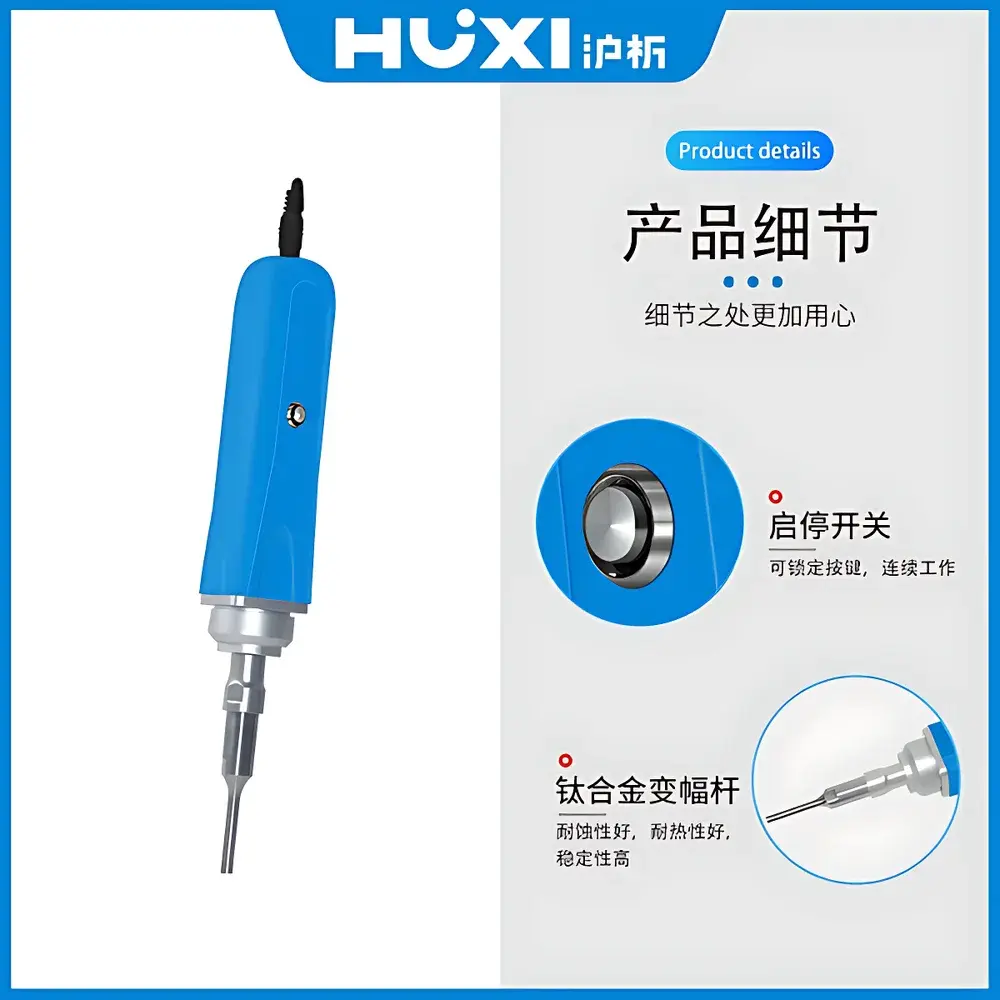
| Control Interface | Lockable Keypad |
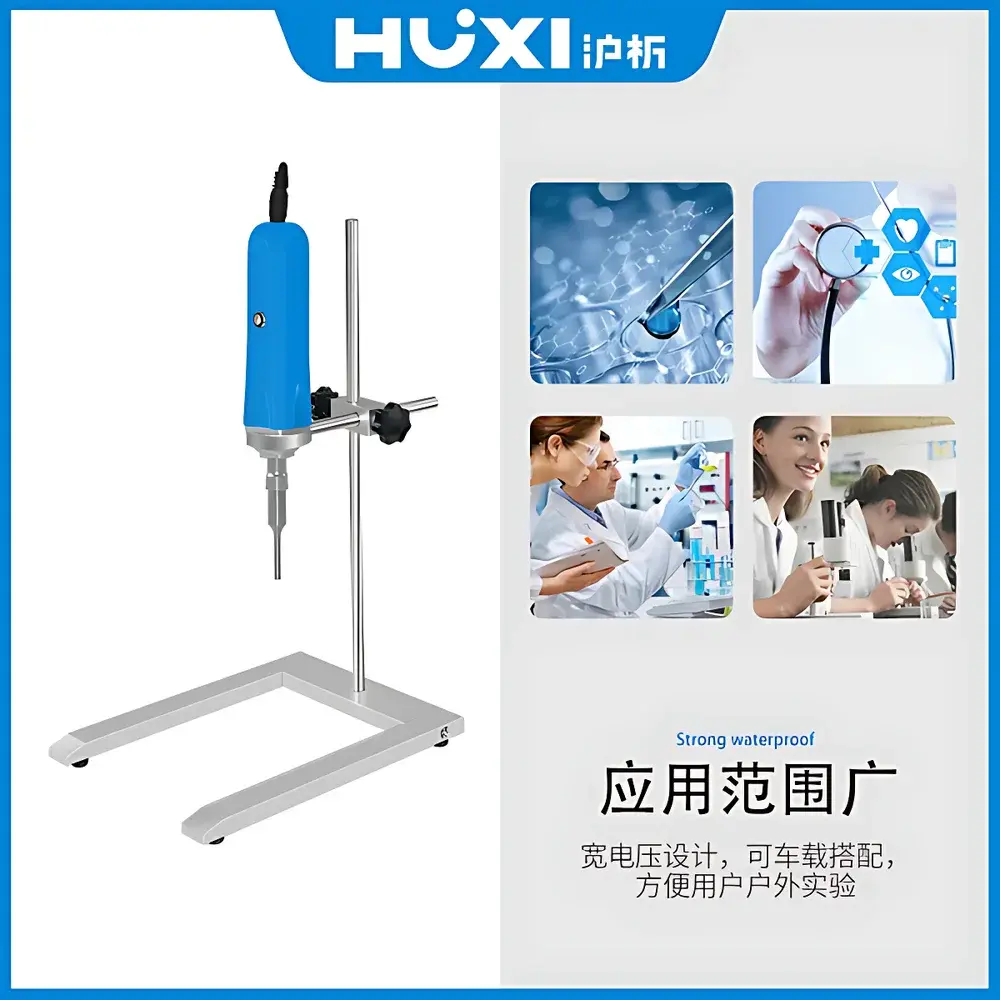
| Mounting Options | Handheld or Benchtop with Optional Stand |
| Net Weight | 0.5 kg |
| Gross Weight | 1.0 kg |
| Instrument Dimensions (L×Ø) | 300 × φ43 mm |
| Packaging Dimensions (L×W×H) | 338 × 288 × 110 mm |
Overview
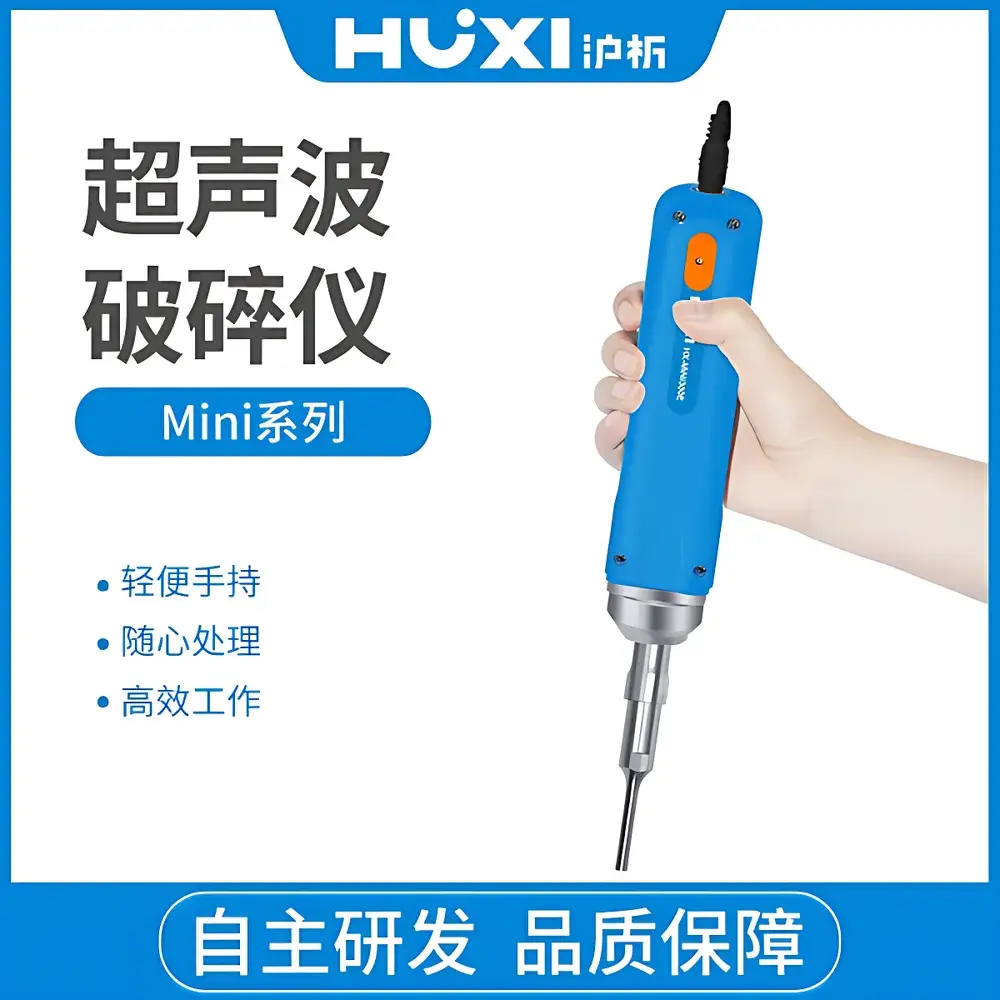
The HUXI HX-MINI300E Ultrasonic Extractor is a compact, handheld benchtop sonicator engineered for precise, low-volume ultrasonic processing in academic, pharmaceutical, and materials science laboratories. It operates on the principle of high-intensity ultrasonic cavitation—generating controlled microbubble formation, growth, and implosive collapse within liquid media at 30 kHz. This transient energy release produces localized shear forces, microstreaming, and thermal transients sufficient to disrupt cell membranes, disperse nanoparticles, accelerate chemical reactions, and homogenize immiscible phases. Unlike bath-type ultrasonicators, the HX-MINI300E delivers focused acoustic energy directly into the sample via interchangeable titanium alloy probes, ensuring high energy transfer efficiency and reproducible treatment across volumes from 0.1 mL to 300 mL. Its design prioritizes operational flexibility, electrical stability under variable input conditions, and compliance with fundamental safety and electromagnetic compatibility (EMC) requirements for Class II laboratory equipment.
Key Features
- Adjustable ultrasonic output power (10–300 W) with real-time amplitude control and automatic frequency tracking to maintain resonance under varying load conditions.
- TC4 titanium alloy (Ti-6Al-4V) probe construction—offering exceptional tensile strength (>895 MPa), corrosion resistance in aqueous and mildly acidic/alkaline media, and thermal stability up to 400 °C—ensuring long-term durability and minimal metal leaching.
- Modular probe system with standardized threading: standard Φ6 mm probe included; optional Φ2 mm (for micro-volumes ≤5 mL) and Φ8 mm (for higher throughput in viscous or dense suspensions) probes available separately.
- Wide-input dual-mode power supply (100–230 V AC / 12–24 V DC) enables use in diverse global lab environments—including mobile labs, cleanrooms with isolated DC supplies, and field-deployable setups.
- Ergonomic handheld form factor (300 × φ43 mm, 0.5 kg net weight) with non-slip ABS housing; compatible with optional vertical benchtop stand for hands-free, vibration-damped operation during extended protocols.
- Lockable keypad interface prevents accidental parameter changes during active sonication; timer function supports single-cycle operation up to 59 minutes 59 seconds, with built-in thermal safety cutoff logic to prevent probe overheating.
Sample Compatibility & Compliance
The HX-MINI300E is validated for use with aqueous buffers, organic solvents (e.g., ethanol, chloroform, acetone), and low-viscosity emulsions. It is not rated for explosive, highly flammable, or strongly oxidizing media without additional engineering controls. Probe immersion depth must exceed 10 mm to avoid cavitation-induced surface erosion. While not certified to IEC 61000-6-3 (EMI emissions) or IEC 61000-6-2 (immunity) as a standalone medical device, it meets general-purpose laboratory equipment EMC guidelines per CISPR 11 Group 1, Class B. No integrated temperature monitoring or feedback loop is provided; users are advised to monitor sample temperature externally when performing >30 min continuous cycles. The instrument conforms to basic electrical safety per IEC 61010-1:2010 for laboratory equipment (Pollution Degree 2, Overvoltage Category II).
Software & Data Management
The HX-MINI300E operates as a standalone hardware unit with no embedded firmware-based data logging, USB connectivity, or cloud interface. All operational parameters—including power level, duration, and start/stop events—are manually set and retained only during active session. For GLP/GMP-aligned workflows requiring audit trails, integration with external time-stamped video recording, digital thermometer loggers (e.g., calibrated Pt100 probes), or programmable lab timers is recommended. No software drivers, SDKs, or API documentation are supplied; the device does not support FDA 21 CFR Part 11 electronic signature or audit trail functionality.
Applications
- Nanomaterial dispersion: exfoliation of graphene oxide, deagglomeration of TiO₂ or SiO₂ nanoparticles in suspension.
- Biological sample preparation: lysis of bacterial, yeast, and mammalian cells for protein or nucleic acid extraction—compatible with RIPA, Trizol, and CTAB-based protocols.
- Accelerated solvent extraction (ASE): enhancement of phytochemical recovery (e.g., polyphenols, alkaloids) from plant matrices in ethanol/water mixtures.
- Emulsion stabilization: formation of nanoemulsions for drug delivery systems (e.g., curcumin-loaded lecithin-cholesterol vesicles).
- Chemical synthesis: sonochemical promotion of Suzuki couplings, esterifications, and oxidative cleavage reactions under ambient conditions.
- Quality control testing: particle size reduction verification in raw material batches prior to HPLC or DLS analysis.
FAQ
Is the HX-MINI300E suitable for sterilization or autoclaving?
No. The probe and housing are not autoclavable. TC4 titanium alloy tolerates repeated ethanol or 0.5% sodium hypochlorite wipe disinfection; avoid prolonged exposure to strong acids (e.g., HNO₃/HF mixtures) or alkalis above pH 12.
Can the instrument be used continuously for more than one hour?
Continuous operation beyond 60 minutes is not recommended without active cooling or duty-cycle interruption. Prolonged use may exceed thermal limits of the piezoelectric stack and reduce transducer lifespan.
Does the device include calibration certification or traceable metrology documentation?
No factory calibration certificate or NIST-traceable documentation is supplied. Users requiring power output validation should perform calorimetric calibration per ASTM E2884-13 using a calibrated calorimeter and reference fluid (e.g., degassed water).
What maintenance is required for long-term reliability?
Inspect probe threads and tip integrity before each use; clean with lint-free cloth and isopropanol after contact with biological or particulate-laden samples; store vertically in dry environment; replace probe if visible pitting or diameter deviation exceeds ±0.05 mm.
Is the HX-MINI300E compliant with ISO/IEC 17025 for accredited testing laboratories?
It may be used within ISO/IEC 17025-accredited labs as ancillary sample preparation equipment, but its lack of automated data capture, calibration traceability, and environmental monitoring precludes direct inclusion in method validation packages without supplementary controls.



