
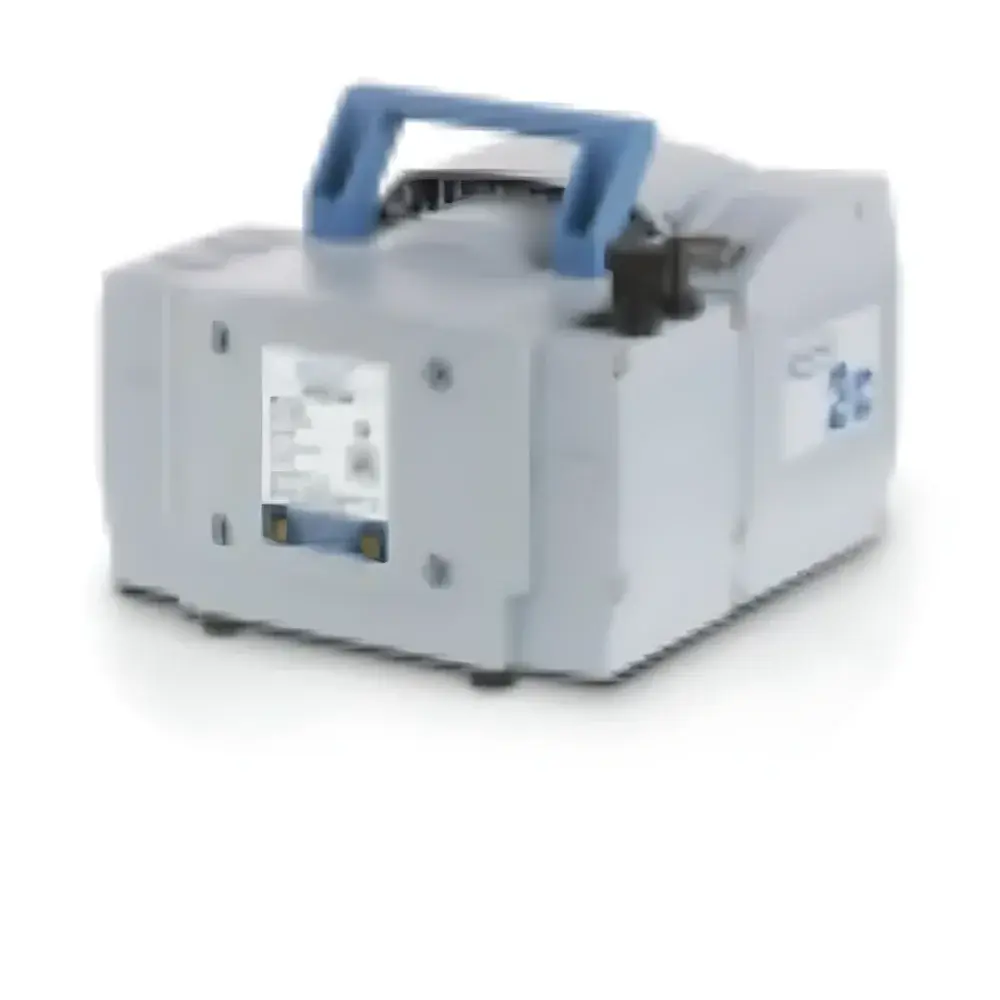
VACUUBRAND® Mz2c NT Chemical-Resistant Diaphragm Vacuum Pump
| Brand | VACUUBRAND® |
|---|---|
| Origin | Germany |
| Pump Type | Oil-Free Diaphragm Vacuum Pump |
| Model | Mz2c NT |
| Ultimate Vacuum | ≤7 mbar (with gas ballast closed), ≤12 mbar (with gas ballast open) |
| Pumping Speed | ≥2.0 m³/h |
| Dimensions (L×W×H) | 243 × 243 × 198 mm |
| Weight | 11.1 kg |
| Motor Power | Not specified |
| Noise Level | 45 dBA (at 50 Hz, typical) |
| Gas Ballast Valve | Integrated |
| ATEX Certification | II 3G IIC T3 X (Category 3 equipment for potentially explosive atmospheres) |
| Wetted Materials | PTFE-coated diaphragms, FFKM valves, PTFE-laminated gas pathways, ETFE + carbon-fiber-reinforced pump head and clamping plates |
| Inlet/Outlet Port Size | 8–10 mm ID |
Overview
The VACUUBRAND® Mz2c NT is a compact, oil-free, chemically resistant diaphragm vacuum pump engineered for demanding laboratory and pilot-scale applications where corrosion resistance, process safety, and long-term operational reliability are critical. Unlike rotary vane or scroll pumps, the Mz2c NT operates on a positive displacement principle using elastomeric diaphragms actuated by an eccentric crankshaft—eliminating lubricants from the gas path and ensuring inherently dry, oil-free vacuum generation. Its design centers on chemical inertness: all wetted components—including diaphragms (PTFE-coated), inlet/outlet valves (FFKM fluoroelastomer), and internal gas conduits (PTFE-laminated multilayer structure)—are selected to withstand aggressive vapors such as halogenated solvents, acidic gases (e.g., HCl, HF), oxidizing agents (e.g., NO₂, O₃), and organic condensables. The dual-stage configuration enables higher compression ratios than single-stage equivalents, supporting stable vacuum down to ≤7 mbar absolute without gas ballast, and ≤12 mbar when the integrated gas ballast valve is engaged—optimizing performance during solvent evaporation or moisture-laden processes.
Key Features
- Chemical resistance certified via material selection: PTFE-coated diaphragms, FFKM sealing elements, and ETFE/carbon-fiber-reinforced pump housing ensure compatibility with corrosive media per ISO 15195 and ASTM D471 guidelines.
- ATEX-certified Category 3 equipment (II 3G IIC T3 X) for use in Zone 2/22 hazardous areas—validated for short-duration or infrequent exposure to explosive gas/vapor mixtures.
- Integrated gas ballast valve enables continuous operation during condensable vapor loads, minimizing diaphragm fatigue and preserving ultimate vacuum stability.
- No oil, no mist, no wastewater: fully dry operation eliminates contamination risk in sensitive applications (e.g., GC sample introduction, lyophilizer primary drying, glovebox purge cycles).
- Low-noise architecture: acoustic enclosure design and vibration-damped mounting yield ≤45 dBA at 1 m distance (50 Hz supply), meeting EU Directive 2000/14/EC noise emission limits for laboratory environments.
- Modular service design: diaphragm sets, valves, and gas ballast components are field-replaceable without specialized tools—supporting GLP-compliant maintenance logs and predictable lifecycle costing.
Sample Compatibility & Compliance
The Mz2c NT is validated for use with volatile organic compounds (VOCs), inorganic acids, bases, and reactive halogenated species commonly encountered in synthetic chemistry, environmental analysis, and pharmaceutical R&D. It complies with EN 60079-0 (explosive atmospheres – general requirements) and EN 60079-15 (non-sparking equipment), fulfilling essential safety requirements for installation in laboratories operating under EU CLP Regulation (EC No. 1272/2008). All wetted materials meet USP Class VI biocompatibility criteria and FDA 21 CFR 177.1550 (fluoropolymer resins) for incidental contact scenarios. The pump is not intended for use with particulate-laden streams or pyrophoric gases without upstream filtration or scrubbing.
Software & Data Management
While the Mz2c NT operates as a standalone analog device, its electrical interface (IEC 60320 C14 input) supports integration into centralized lab infrastructure via optional external pressure controllers (e.g., VACUUBRAND® VACUU·SELECT) equipped with RS485/Modbus RTU or analog 0–10 V output. When paired, real-time vacuum level logging, duty-cycle monitoring, and predictive maintenance alerts can be recorded within LIMS or ELN platforms compliant with 21 CFR Part 11 audit trail requirements. Firmware-upgradable controllers enable traceable calibration history and user-access-level management—critical for GMP-regulated QC laboratories performing method validation per ICH Q2(R2).
Applications
- Routine vacuum filtration of aggressive reaction mixtures in synthetic organic chemistry.
- Evaporation of chlorinated solvents (e.g., CH₂Cl₂, CHCl₃) and nitric acid digestates in analytical sample preparation.
- Primary vacuum source for freeze dryers handling pH-sensitive biologics, where oil backstreaming would compromise sterility assurance.
- Gas evacuation and inert gas purging in Schlenk lines and anaerobic chambers requiring hydrocarbon-free atmosphere integrity.
- Support vacuum for mass spectrometry inlet systems, especially in ambient ionization techniques where pump oil residues interfere with spectral fidelity.
FAQ
Is the Mz2c NT suitable for continuous duty in high-humidity environments?
Yes—its gas ballast functionality and FFKM valve resilience allow uninterrupted operation under sustained water vapor loads up to 80% RH, provided inlet gas is pre-dehumidified to prevent ice formation in cold traps.
Can it be used with aggressive fluorinated solvents such as SF₆ or NF₃?
NF₃ is incompatible due to oxidative degradation of FFKM; SF₆ is permissible but requires verification of system leak integrity per ISO 10156, as prolonged exposure may affect diaphragm elasticity over >10,000 hr cumulative runtime.
Does the ATEX certification cover operation in Zone 1?
No—certification applies exclusively to Category 3 (Zone 2/22); use in Zone 1 requires additional barrier protection or substitution with a Category 2-rated pump variant (e.g., Mz 2C EX).
What is the recommended service interval for diaphragm replacement?
Under typical laboratory usage (≤8 hrs/day, non-condensing load), diaphragms retain functional integrity for ≥12,000 operating hours; visual inspection every 6 months is advised per VACUUBRAND® Service Bulletin SB-MZ2-2023.
Is remote start/stop capability built-in?
Not natively—the pump lacks digital I/O; however, external relay control via the mains switch terminal block (accessible under rear panel cover) enables PLC-integrated sequencing when deployed in automated workstations.



