
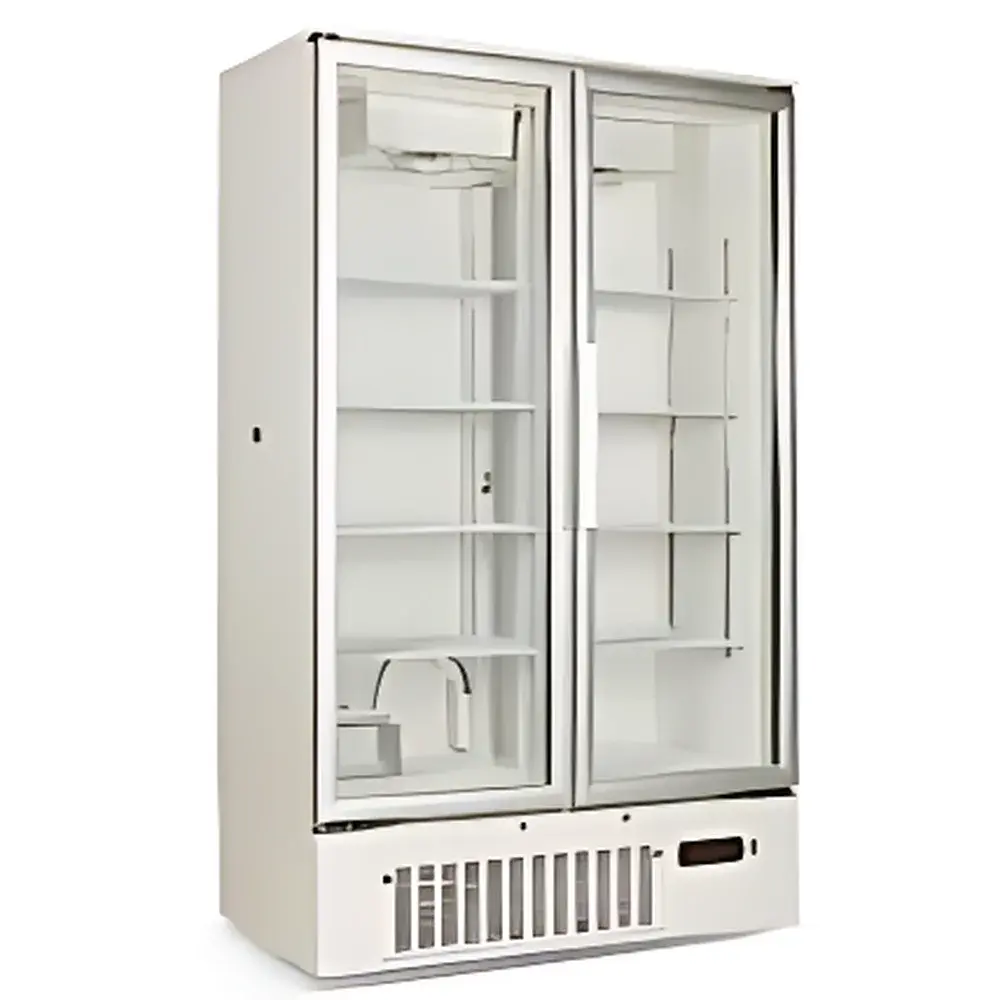
Panasonic MCR-720 Pharmaceutical Cool Storage Cabinet
| Brand | Panasonic |
|---|---|
| Origin | Liaoning, China |
| Manufacturer Type | Authorized Distributor |
| Origin Category | Domestic |
| Model | MCR-720 |
| Price Range | USD 7,000 – 14,000 |
| Temperature Range | 8–20°C (ambient 16–32°C) |
| Humidity Range | 35–75% RH |
| Net Volume | 725 L |
| External Dimensions (W×D×H) | 1210 × 590 × 2008 mm |
| Internal Dimensions (W×D×H) | 1074 × 472 × 1514 mm |
| Net Weight | 140 kg |
| Rated Power Consumption | ~620 W |
| Exterior Material | Powder-Coated Steel |
| Interior Material | Powder-Coated Steel |
| Door Type | Electrically Heated Double-Layer Glass |
| Locking Mechanism | Mechanical Lock with Dual Keys |
| Monitoring Port | One Φ32 mm Access Port (left side) |
| Compressor | Hermetic Scroll Type |
| Refrigerant | R404A (low-GWP alternative compliant with current regional phase-down schedules) |
| Safety Alarms | High/Low Temperature Alarm, Condenser Fouling Alarm, Condenser Overheat Alarm, Sensor Failure Alarm |
| Standard Accessories | 1 × LED Interior Lamp, 2 × Key Sets, 6-Tier Wire Shelving (12 shelves total), 1 × Humidification Tray |
Overview
The Panasonic MCR-720 Pharmaceutical Cool Storage Cabinet is an ISO 14644-compliant, temperature- and humidity-stabilized storage system engineered for the secure, long-term preservation of thermolabile pharmaceuticals, reference standards, clinical trial materials, and GMP-grade intermediates. Designed to meet the environmental control requirements outlined in ICH Q5C, USP , and EU Annex 15, the cabinet maintains a tightly regulated operational envelope of 8–20°C and 35–75% RH under ambient conditions of 16–32°C. Its refrigeration architecture employs a hermetically sealed scroll compressor and R404A refrigerant — selected for its balance of thermodynamic efficiency and regulatory acceptability during transitional refrigerant phase-out periods. The cabinet’s insulation utilizes cyclopentane-blown polyurethane foam, achieving a thermal conductivity (λ) of ≤0.022 W/m·K and minimizing heat ingress across all six panels. This ensures stable chamber uniformity (±1.5°C at setpoint, per ASTM E742-22 mapping protocol) and low energy demand — critical for laboratories operating under ISO 50001-certified energy management systems.
Key Features
- Electrically heated double-glazed doors prevent condensation buildup and maintain visual clarity during high-humidity operation, eliminating manual wiping and reducing cross-contamination risk.
- Integrated multi-point alarm system with audible/visual alerts and relay outputs supports integration into centralized BMS or LIMS platforms — fully traceable via event log timestamps (ISO/IEC 17025-compliant audit trail).
- Φ32 mm calibrated access port enables real-time monitoring via external data loggers without compromising chamber integrity — compliant with FDA 21 CFR Part 11 requirements for electronic record integrity.
- Modular wire shelving (6 tiers, 12 total shelves) features non-porous, powder-coated steel construction and adjustable height increments (25 mm), supporting flexible load distribution up to 25 kg per shelf.
- Condenser self-diagnostic function continuously monitors airflow resistance and surface temperature, triggering proactive maintenance alerts before thermal performance degradation occurs.
Sample Compatibility & Compliance
The MCR-720 accommodates vials, blister packs, ampoules, secondary packaging cartons, and stability study trays without airflow obstruction. Its interior layout conforms to WHO Technical Report Series No. 992 (Annex 9) guidelines for pharmaceutical storage space utilization. All materials in direct contact with stored products — including shelf surfaces, door gaskets, and humidification tray — are certified non-leaching and compliant with USP Elastomeric Closures and ISO 10993-5 cytotoxicity testing. The cabinet meets EN 61000-6-3 (EMC emission) and EN 61000-6-2 (immunity) standards, and its electrical safety design complies with IEC 61010-1 for laboratory equipment.
Software & Data Management
While the MCR-720 operates via embedded microcontroller-based logic (no onboard PC or touchscreen), it provides analog voltage outputs (0–10 V DC) and dry-contact relay signals for seamless integration with third-party environmental monitoring systems (e.g., SensiNet, TempTale, or Vaisala viewLinc). All alarm events — including sensor fault detection, condenser anomalies, and temperature excursions — are timestamped and stored in non-volatile memory for ≥30 days. Data export is supported via RS-485 Modbus RTU protocol, enabling automated ingestion into validated CSV or SQL databases aligned with 21 CFR Part 11 §11.10(a) record retention mandates.
Applications
- Stability storage of drug substances and products per ICH Q1A(R3) accelerated and intermediate condition protocols.
- Controlled storage of pharmacopeial reference standards (USP, EP, JP) requiring defined humidity buffering.
- Secure holding of cold-chain break samples prior to analytical testing (HPLC, dissolution, microbiological assay).
- Backup storage for QC labs maintaining parallel inventory of critical reagents (e.g., enzyme conjugates, monoclonal antibody standards).
- Compliance support for MHRA, PMDA, and NMPA inspections requiring documented environmental consistency over time.
FAQ
Does the MCR-720 comply with GMP Annex 15 requirements for qualified storage equipment?
Yes — the cabinet’s design, alarm architecture, and documentation package support IQ/OQ execution per ASTM E2500-13 and EU GMP Annex 15 Section 4.2. Qualification templates are available upon request.
Can the unit be validated for use in a regulated stability program?
Yes — its thermal uniformity, recovery time (<15 min after 30-sec door opening), and sensor redundancy meet ICH Q5C validation criteria when paired with calibrated external probes.
Is R404A refrigerant still permitted for new installations in the EU or USA?
R404A remains authorized for existing and newly installed medical/pharmaceutical equipment under EU F-Gas Regulation (EU) No 517/2014 Article 11 exemptions and EPA SNAP Program Listing Group 2 — subject to facility-specific leak rate reporting.
What is the recommended calibration interval for internal temperature/humidity sensors?
Per ISO/IEC 17025 Clause 6.5.2, we recommend annual calibration using NIST-traceable reference instruments; certificate-of-conformance is supplied with each unit.
How does the humidification tray interface with the cabinet’s control logic?
The tray operates passively — no active feedback loop — and is sized to sustain target RH within ±5% under steady-state conditions; optional external humidifier integration is available via the Φ32 mm port.



