
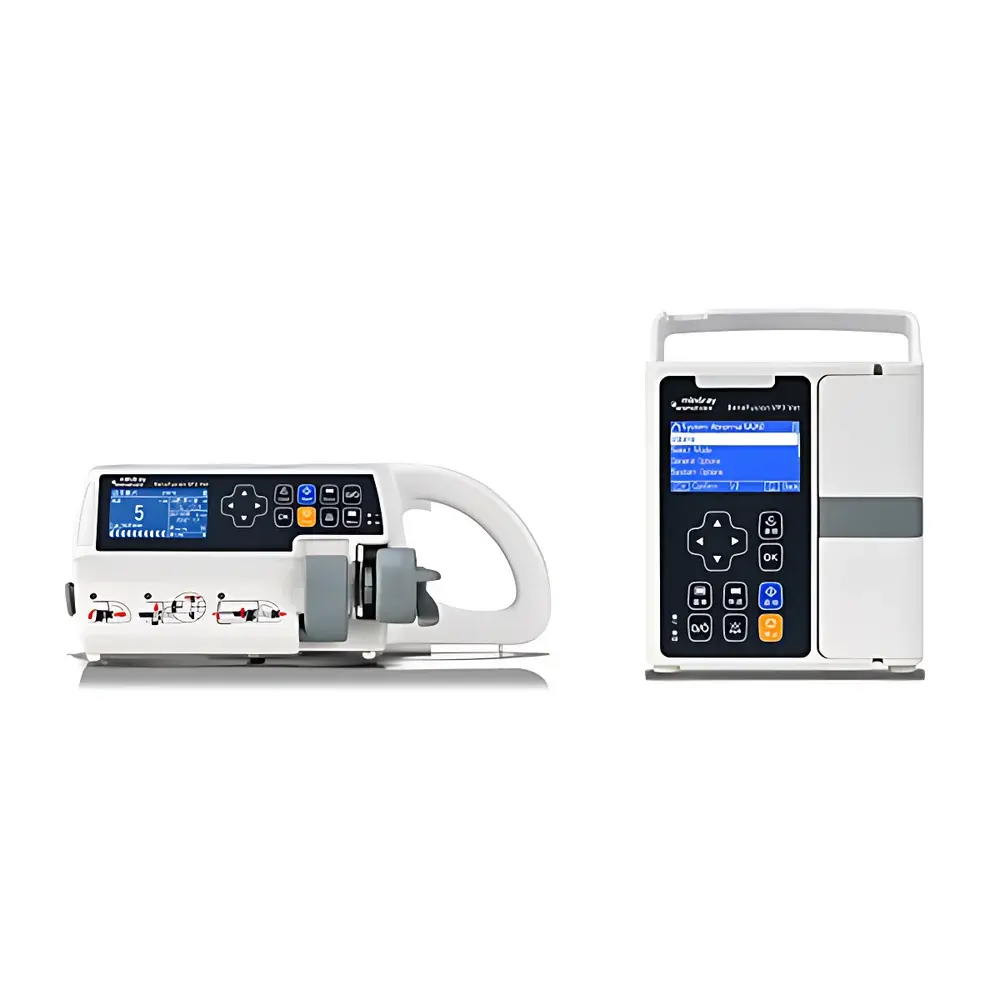
Mindray BeneFusion VP3 Vet / SP3 Vet Veterinary Infusion Pump
| Brand | Mindray |
|---|---|
| Model | BeneFusion VP3 Vet / SP3 Vet |
| Origin | Shanghai, China |
| Instrument Type | Veterinary Infusion Pump |
| Regulatory Classification | Class II Medical Device (China NMPA) |
| Intended Use | Continuous or intermittent intravenous, intra-arterial, or subcutaneous fluid and drug delivery in veterinary clinical settings |
Overview
The Mindray BeneFusion VP3 Vet and SP3 Vet are CE-marked, NMPA-registered veterinary infusion pumps engineered for precision, safety, and operational reliability in small animal, equine, and exotic species clinical environments. These devices operate on a micro-stepping motor-driven peristaltic mechanism with closed-loop flow monitoring, delivering volumetric accuracy within ±2% across clinically relevant flow ranges (0.1–999.9 mL/h for VP3 Vet; 0.01–999.9 mL/h for SP3 Vet). Unlike open-loop syringe pumps relying solely on step-counting, the VP3/SP3 Vet platforms integrate real-time pressure sensing and adaptive motor control to compensate for dynamic resistance variations—such as syringe plunger friction, tubing elasticity, and hydrostatic head changes—ensuring consistent delivery performance under variable physiological and setup conditions.
Key Features
- Adaptive Flow Control Algorithm: SP3 Vet employs a proprietary algorithm that dynamically adjusts motor torque during initial priming and bolus initiation, reducing time-to-first-drop by up to 40% compared to conventional syringe pumps—critical for emergency resuscitation and rapid-onset pharmacotherapy.
- Fatigue Compensation Technology: VP3 Vet continuously monitors mechanical hysteresis in the infusion set over extended operation (>72 h), automatically correcting for cumulative tubing deformation and syringe barrel creep to maintain volumetric fidelity without manual recalibration.
- Multi-Parameter Safety Monitoring: Integrated occlusion detection (up to 1300 mmHg), air-in-line sensing (≥0.02 mL air bubble), and motor stall recognition trigger immediate audible/visual alerts and automatic pump halt—compliant with IEC 60601-2-24 requirements for infusion equipment safety.
- Veterinary-Specific Dosing Modes: Preconfigured protocols for common species (canine, feline, equine, avian) include weight-based dosing calculators, multi-channel synchronized infusions, and titratable vasoactive drug profiles (e.g., dopamine, dobutamine, lidocaine).
- Ruggedized Clinical Design: IP34-rated enclosure, chemical-resistant housing, and shock-absorbing mounting brackets support deployment in mobile clinics, field hospitals, and high-traffic ICU environments.
Sample Compatibility & Compliance
The VP3 Vet and SP3 Vet support standard Luer-lock syringes (5–60 mL) and IV sets compliant with ISO 8536-4 (infusion sets) and ISO 7886-1 (syringes). Tubing compatibility includes PVC, polyethylene, and non-PVC alternatives (e.g., COP, TPE), validated for use with total parenteral nutrition (TPN), blood products, and lipid emulsions. Both models meet essential requirements of ISO 15223-1 (labeling), ISO 14971 (risk management), and EN 62304 (software lifecycle). They are designated as Class II medical devices under China’s NMPA Regulation (Registration No.: 2022-314-XXXXX) and carry CE marking under MDR 2017/745 Annex VIII (Class IIa).
Software & Data Management
Pump operation is governed by embedded firmware compliant with IEC 62304 Class B. All infusion logs—including start/stop timestamps, delivered volume, occlusion events, alarm history, and user authentication records—are stored locally with 30-day retention and exportable via USB 2.0 to CSV format. Audit trail functionality satisfies GLP/GCP data integrity requirements, including immutable timestamping, operator ID linkage, and change tracking per ALCOA+ principles. Remote fleet management is supported through Mindray’s VetLink Central Station (optional add-on), enabling centralized configuration, firmware updates, and compliance reporting aligned with veterinary hospital accreditation standards (e.g., AAHA, AAVLD).
Applications
These infusion systems serve core applications across academic veterinary teaching hospitals, commercial companion animal practices, research institutions conducting preclinical pharmacokinetic studies (e.g., PK/PD modeling in beagle dogs or minipigs), and USDA-licensed wildlife rehabilitation centers. Specific use cases include: continuous rate infusion (CRI) of anesthetics (e.g., ketamine-midazolam infusions), postoperative analgesia titration (e.g., morphine or methadone), critical care fluid resuscitation (e.g., balanced crystalloids or colloids), and controlled delivery of biologics in immunology trials. The SP3 Vet’s low-flow capability (<0.1 mL/h) supports neonatal and avian applications, while the VP3 Vet’s dual-channel architecture enables concurrent administration of incompatible drugs (e.g., antibiotics + vasopressors) via separate lumens.
FAQ
What regulatory certifications do the VP3 Vet and SP3 Vet hold?
Both models are CE-marked under EU MDR 2017/745 (Class IIa) and registered with China’s NMPA as Class II medical devices. They comply with IEC 60601-1 (general safety), IEC 60601-2-24 (particular requirements for infusion pumps), and ISO 14971 (risk management).
Can these pumps interface with veterinary electronic medical record (EMR) systems?
Yes—via Mindray VetLink Central Station (sold separately), which supports HL7 v2.5.1 message exchange for infusion event synchronization with EMR platforms such as IDEXX Cornerstone and eVetPractice.
Is battery backup available for uninterrupted operation during power outages?
The VP3 Vet includes an internal rechargeable Li-ion battery supporting ≥3 hours of continuous operation at 100 mL/h; the SP3 Vet offers optional external battery pack (BattPack-Vet) for up to 6 hours runtime.
How often does calibration verification need to be performed?
Per Mindray’s maintenance guidelines, functional verification using gravimetric testing is recommended before each shift in high-acuity units and quarterly in general practice settings. Full metrological calibration is required annually by an ISO/IEC 17025-accredited service provider.
Are disposable components supplied with device certification documentation?
Yes—each shipment includes traceable lot numbers for syringe drivers and tubing sets, accompanied by Declaration of Conformity and biocompatibility reports (ISO 10993-5 and -10) for all patient-contact materials.





