
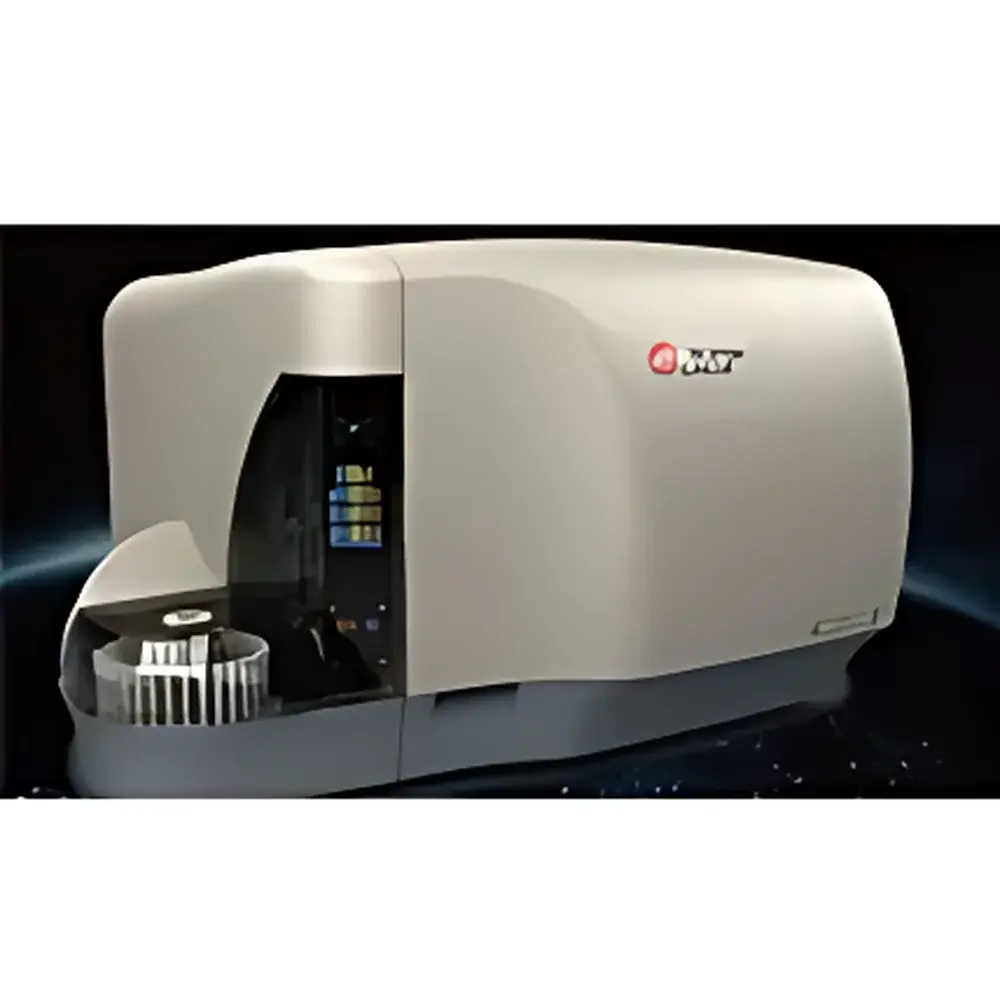
Beckman Coulter Gallios Flow Cytometer
| Brand | Beckman Coulter |
|---|---|
| Origin | USA |
| Model | Gallios |
| Product Type | Flow Cytometry Analyzer |
| Category | Cell Analysis Instrument |
| Import Status | Imported |
| Distribution Model | Authorized Distributor |
Overview
The Beckman Coulter Gallios Flow Cytometer is a benchtop, high-performance flow cytometry system engineered for precision multi-parameter analysis of heterogeneous cell populations in research and clinical development laboratories. Utilizing orthogonal light scatter detection (forward scatter [FSC] and side scatter [SSC]) combined with up to 10-color fluorescence detection via photomultiplier tube (PMT)-based optics, the Gallios enables quantitative measurement of cellular characteristics—including size, granularity, surface marker expression, intracellular cytokine profiles, DNA content, and viability—based on hydrodynamic focusing and laser-induced fluorescence emission. Designed around a fixed-alignment optical architecture with three spatially separated lasers (488 nm blue, 638 nm red, and 405 nm violet), the system delivers stable signal acquisition across extended run times, supporting reproducible longitudinal studies and cross-laboratory data comparability. Its compact footprint and integrated fluidics make it suitable for core facilities, immunology labs, and translational research environments where space efficiency and operational consistency are critical.
Key Features
- 10-color fluorescence detection capability with configurable filter sets and PMT voltage optimization per channel
- Digital signal processing architecture enabling high-resolution pulse height, width, and area analysis for improved discrimination of small particles (e.g., exosomes, microparticles) and low-expression antigens
- Automated sample loading via integrated 96-well plate handler, reducing manual intervention and enhancing throughput for large-scale screening or time-course experiments
- On-instrument calibration using standardized beads (e.g., Flow-Set Pro, CS&T beads) to maintain daily instrument performance verification per ISO 13845 and CLSI H42-A3 guidelines
- Robust fluidic design featuring pressure-controlled sheath flow and temperature-regulated sample chamber (4–35 °C) for optimal stability of sensitive primary cells and fragile samples
- Embedded diagnostics and real-time QC monitoring with automated alerts for nozzle clog detection, laser power drift, and PMT saturation events
Sample Compatibility & Compliance
The Gallios accommodates a broad range of biological specimens—including peripheral blood mononuclear cells (PBMCs), whole blood, bone marrow aspirates, tissue digests, and cultured cell lines—across volumes from 50 µL to 2 mL per tube or well. It supports both single-cell suspension preparation and pre-gated acquisition strategies for rare event detection (e.g., circulating tumor cells, antigen-specific T cells). The platform complies with key regulatory frameworks applicable to instrument qualification in GLP and GCP environments, including traceable electronic records per FDA 21 CFR Part 11 when used with compliant software configurations. Data integrity is reinforced through audit-trail-enabled acquisition logs, user-access controls, and secure export protocols aligned with ISO/IEC 17025 requirements for testing laboratories.
Software & Data Management
Acquisition and preliminary analysis are performed using Beckman Coulter’s Kaluza Acquisition and Analysis Software (v2.x+), which provides intuitive gating tools, Boolean logic-based population identification, and batch processing workflows. Kaluza supports MIFlowCyt-compliant metadata capture and exports FCS 3.0/3.1 standard files compatible with third-party platforms such as FlowJo, Cytobank, and R-based Bioconductor packages (e.g., flowCore, cytolib). For enterprise integration, the system supports DICOM-SR export for clinical trial repositories and HL7/FHIR-compatible metadata tagging when deployed within hospital informatics ecosystems. All software modules undergo annual validation updates to maintain alignment with evolving ICH-GCP and CAP accreditation expectations.
Applications
- Immunophenotyping of hematopoietic lineages and immune subset profiling in autoimmune disease and oncology trials
- Cell cycle and apoptosis analysis using DNA-binding dyes (e.g., PI, DAPI) and Annexin V conjugates
- Intracellular phospho-protein signaling assessment following cytokine or drug stimulation
- Multiparametric minimal residual disease (MRD) monitoring in leukemia and lymphoma patients
- Stem cell characterization and potency assay development for regenerative medicine programs
- Exosome and microvesicle enumeration and phenotyping using submicron calibration standards and high-sensitivity detectors
FAQ
Does the Gallios support spectral unmixing or compensation-free acquisition?
No—the Gallios employs conventional filter-based detection and requires manual or semi-automated compensation matrix generation using single-stained controls. Spectral capabilities are not native to this platform.
What is the minimum particle size resolvable under standard configuration?
With optimized optics and appropriate reference beads, the system reliably detects particles ≥0.5 µm in diameter; resolution of sub-0.3 µm events requires specialized triggering and noise-reduction settings.
Is the Gallios validated for use in Good Manufacturing Practice (GMP) environments?
While not pre-validated for GMP manufacturing release testing, the Gallios is routinely qualified for GMP-aligned process development and QC release assays when paired with documented IQ/OQ/PQ protocols and change-controlled software versions.
Can Kaluza software be deployed on virtualized Windows environments?
Yes—Kaluza v2.2+ supports operation on VMware Workstation and Hyper-V virtual machines, provided GPU passthrough and USB controller isolation are configured per Beckman Coulter’s Virtualization Support Matrix.
How frequently must the fluidics system be cleaned or serviced?
Daily decontamination with 10% bleach followed by water flush is recommended; full nozzle and tubing maintenance is scheduled every 6 months or after 1,000 hours of operation, per the manufacturer’s Preventive Maintenance Guide.
Related Products



