
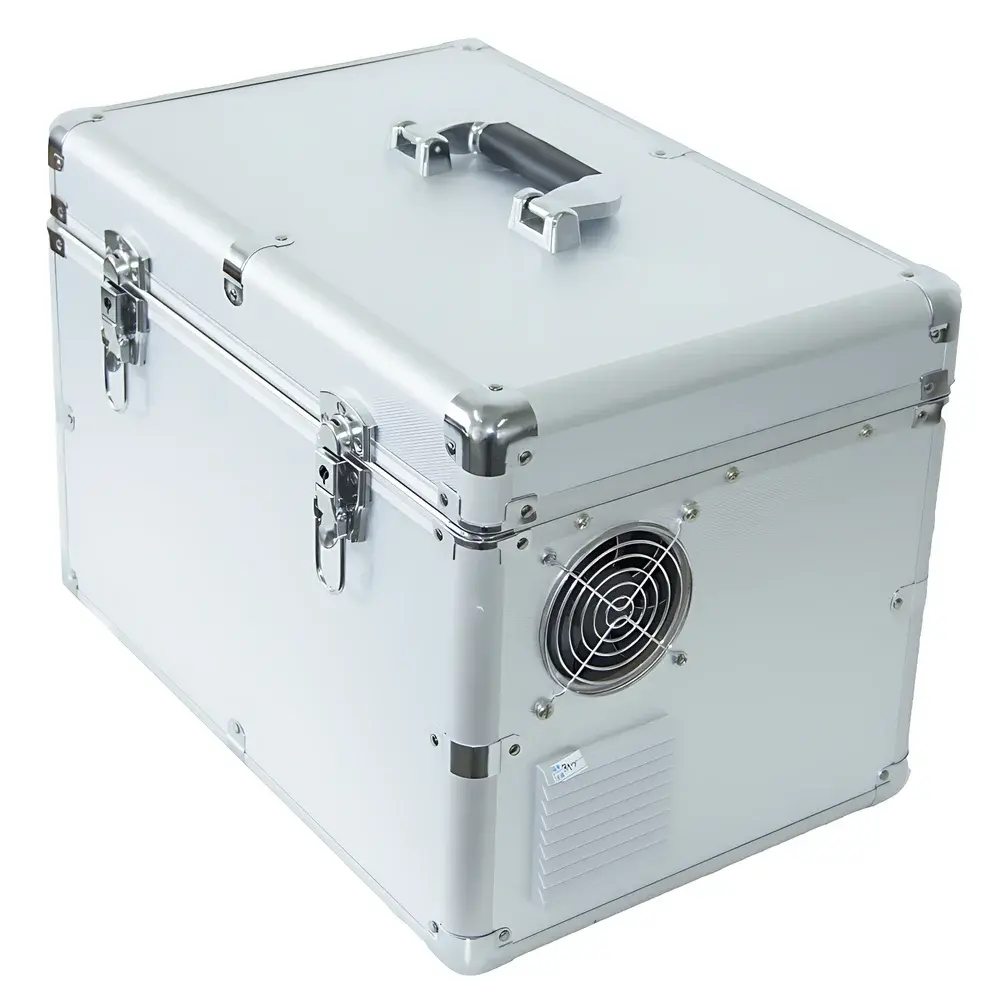
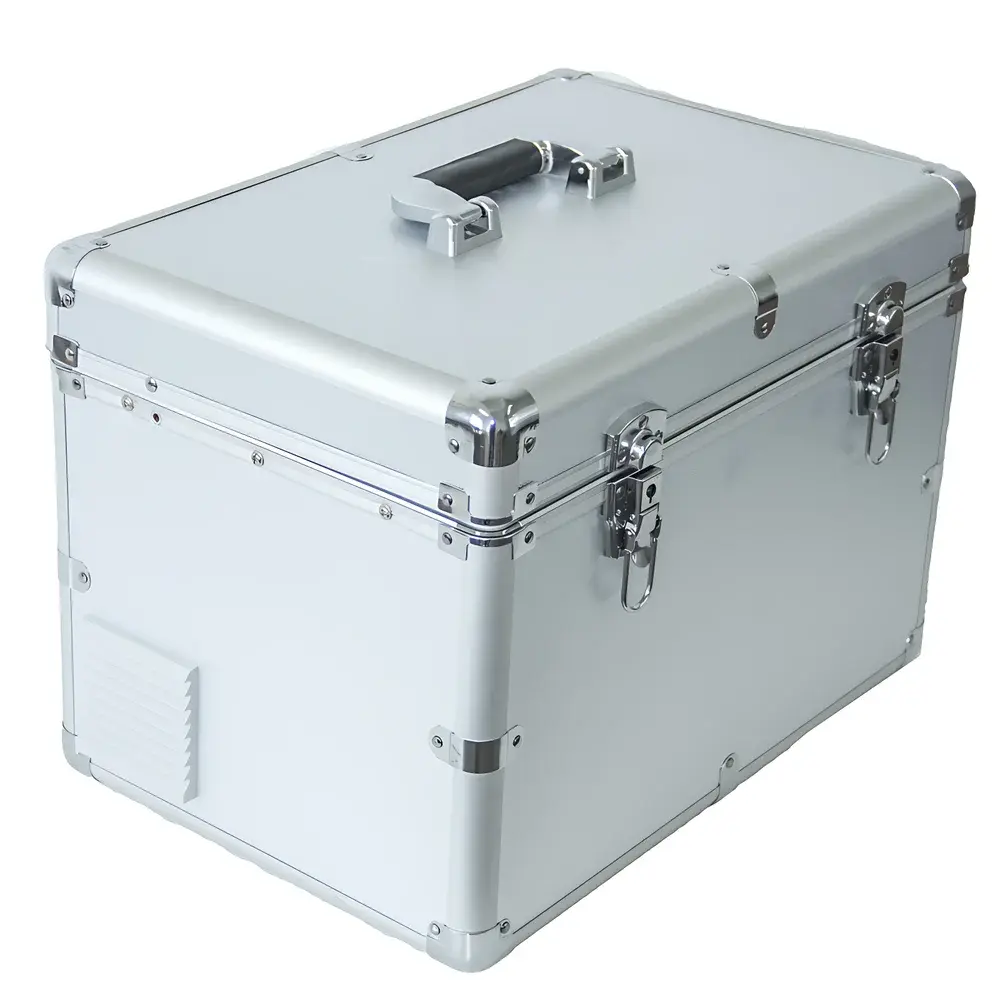
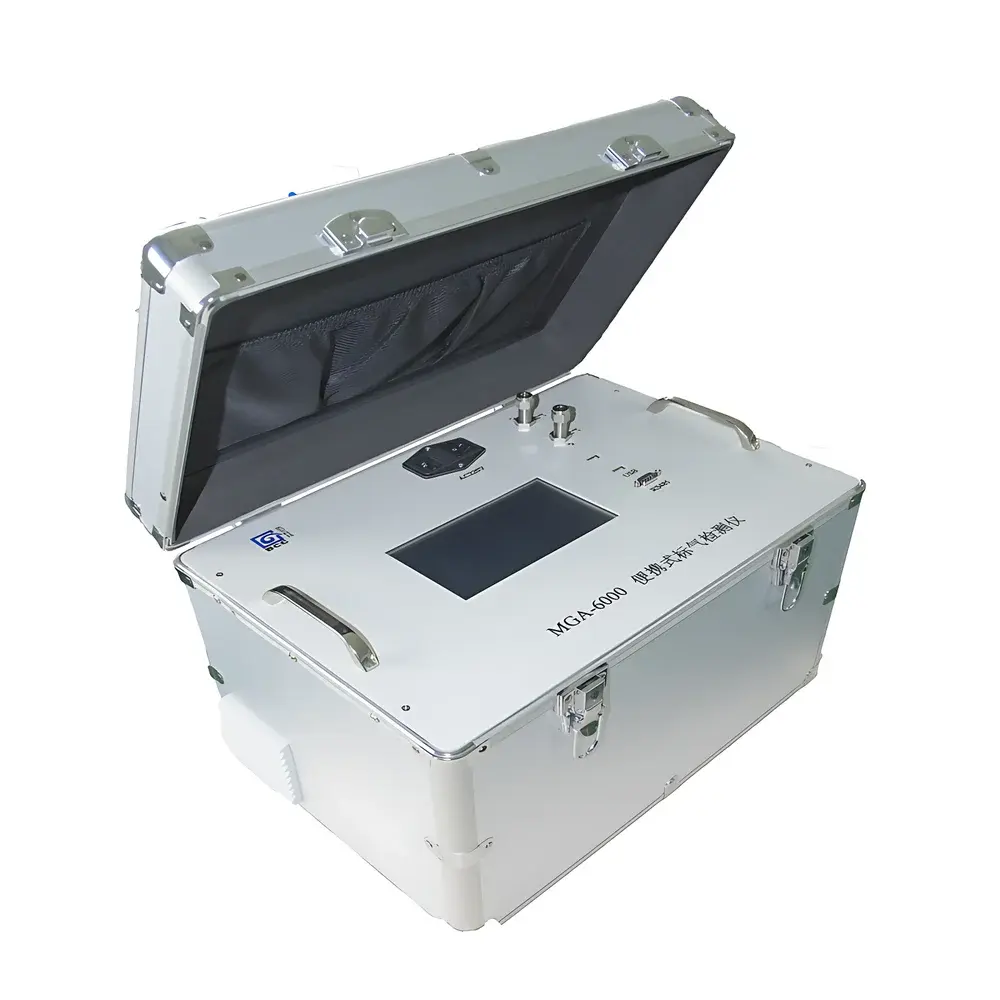
BCC MGA-3000P Portable Ammonia Gas Analyzer (NDIR)
| Brand | BCC |
|---|---|
| Origin | Hebei, China |
| Model | MGA-3000P (Ammonia-Specific) |
| Principle | Non-Dispersive Infrared (NDIR) Absorption |
| Type | Portable Multicomponent Gas Analyzer |
| Measurement Range | 1 ppb to 100% vol NH₃ (customizable) |
| Sensitivity | 1 ppb (NH₃) |
| Response Time | T₉₀ ≤ 20 s |
| Repeatability | ±1–2% FS |
| Zero/ Span Drift | ≤ ±1% FS / 24 h |
| Power Consumption | < 100 W |
| Output Interfaces | 4–20 mA, RS232 / RS485, USB, Ethernet (TCP/IP) |
Overview
The BCC MGA-3000P is a field-deployable, single-gas ammonia (NH₃) analyzer engineered for high-fidelity ambient air monitoring, industrial leak detection, agricultural emissions verification, and process safety applications. It employs dual-beam non-dispersive infrared (NDIR) spectroscopy — a physically robust, interference-resistant optical technique based on the characteristic absorption band of ammonia near 2.1 µm. Unlike electrochemical or metal-oxide sensors, NDIR delivers inherent stability, minimal calibration drift, and immunity to poisoning by common atmospheric contaminants such as H₂S, CO, or VOCs. The instrument integrates gas correlation filtering (GCF), a spectral discrimination method that enhances selectivity by dynamically matching reference and measurement channels to the target gas’s absorption profile — effectively suppressing cross-sensitivity from water vapor, CO₂, and other IR-active species commonly present in real-world sampling environments.
Key Features
- Ultra-Low Detection Limit: Achieves a verified limit of detection (LOD) of 1 ppb NH₃ under standard conditions (25°C, 1 atm), enabling compliance with stringent environmental guidelines including EU Industrial Emissions Directive (IED) monitoring requirements for livestock and fertilizer facilities.
- Auto-Ranging Dual-Scale Architecture: Seamlessly switches between low-range (0–10 ppm) and high-range (0–100% vol) modes without manual intervention, preserving resolution across trace-level background monitoring and high-concentration emergency response scenarios.
- Gas Correlation Filtering (GCF): Utilizes matched optical filters and temperature-stabilized detectors to isolate NH₃-specific absorption while rejecting spectral overlap from interfering gases — validated per ISO 12039 and ASTM D6348 protocols for gas analyzer selectivity assessment.
- Field-Ready Portability: Enclosed in an IP65-rated, shock-absorbing enclosure with integrated rechargeable Li-ion battery (≥6 hr continuous operation), ergonomic carry handle, and built-in sample pump with flow control (0.5–2.0 L/min).
- Real-Time Data Integrity: Onboard data logging (≥32,000 records) with timestamping, automatic zero/span validation triggers, and configurable alarm thresholds (TWA, STEL, peak exposure) aligned with OSHA and ACGIH occupational exposure limits.
Sample Compatibility & Compliance
The MGA-3000P accepts conditioned or unconditioned gas samples via heated stainless-steel inlet (optional 180°C heating for condensate-prone streams). It is compatible with standard ¼″ PTFE or stainless-steel sample lines and supports bypass, diffusion, or probe-based sampling configurations. The analyzer meets electromagnetic compatibility (EMC) requirements per IEC 61326-1 (industrial environment), operates within -10°C to +50°C ambient range, and complies with RoHS and CE marking directives. While not certified for intrinsic safety (ATEX/IECEx), it is suitable for Zone 2/Class I Division 2 environments when deployed with appropriate barrier systems. All firmware and calibration procedures support GLP-aligned audit trails and are compatible with FDA 21 CFR Part 11-compliant data management platforms via secure Ethernet interface.
Software & Data Management
BCC provides the MGA-Link™ desktop application (Windows/macOS) for configuration, calibration, diagnostics, and historical trend analysis. Raw sensor outputs, diagnostic flags (e.g., optical path contamination, pressure deviation), and user-defined metadata are exported in CSV or XML format. For enterprise integration, the device supports Modbus TCP and MQTT protocols over Ethernet, enabling direct ingestion into SCADA, PI System, or cloud-based environmental dashboards (e.g., AWS IoT Core, Azure IoT Hub). Remote firmware updates, over-the-air parameter reconfiguration, and encrypted TLS 1.2 data transmission ensure scalability and cybersecurity alignment with NIST SP 800-82 standards.
Applications
- Ambient air quality monitoring networks (EPA Method TO-15 adjunct for NH₃ speciation)
- Manure storage and poultry/livestock barn emission quantification (IPCC Tier 2 reporting)
- Chemical plant fence-line monitoring and LDAR (Leak Detection and Repair) programs
- Wastewater treatment plant headspace and scrubber efficiency verification
- Research-grade flux measurements using eddy covariance or gradient methods
- Calibration verification of fixed CEMS systems and reference analyzers
FAQ
Does the MGA-3000P require daily calibration?
No — due to its stable NDIR optics and GCF architecture, field calibration is recommended every 7–14 days depending on operating conditions; zero calibration can be performed automatically using internal synthetic air or external zero gas.
Can it measure ammonia in high-humidity environments?
Yes — the optical path includes humidity compensation algorithms and optional heated sample conditioning (up to 180°C) to prevent condensation-induced signal attenuation.
Is the analyzer compliant with EPA or ISO performance specifications?
It satisfies key performance criteria outlined in ISO 14644-8 (cleanroom NH₃ monitoring), EN 14625 (ambient air — NH₃), and EPA Method 320 (FTIR/NIR correlation); full certification documentation is available upon request.
What maintenance is required beyond calibration?
Annual verification of optical alignment and detector responsivity is advised; particulate filter replacement every 3 months in dusty environments; no consumables (e.g., electrolytes or membranes) are used.
Can multiple MGA-3000P units be synchronized for spatial mapping?
Yes — via GPS-enabled time synchronization and networked data aggregation through MGA-Link™ Cloud, enabling georeferenced plume modeling and source attribution studies.







