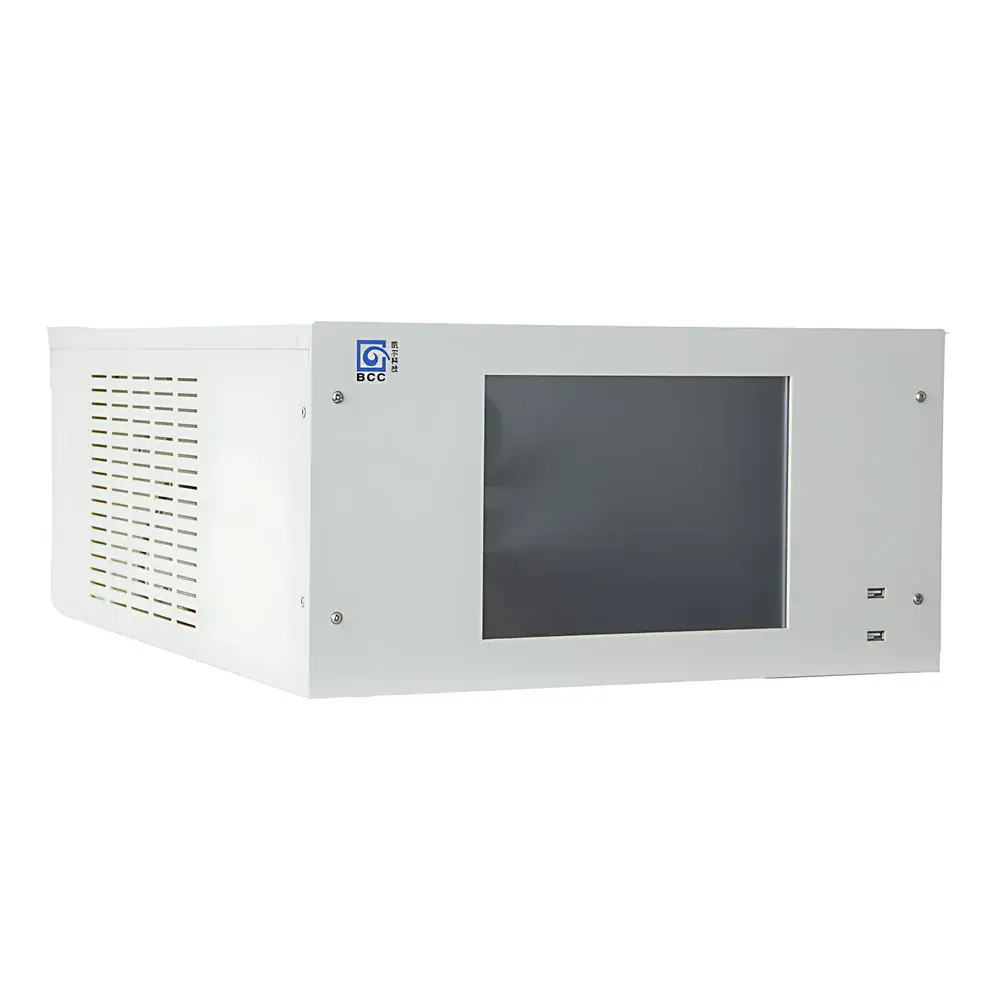
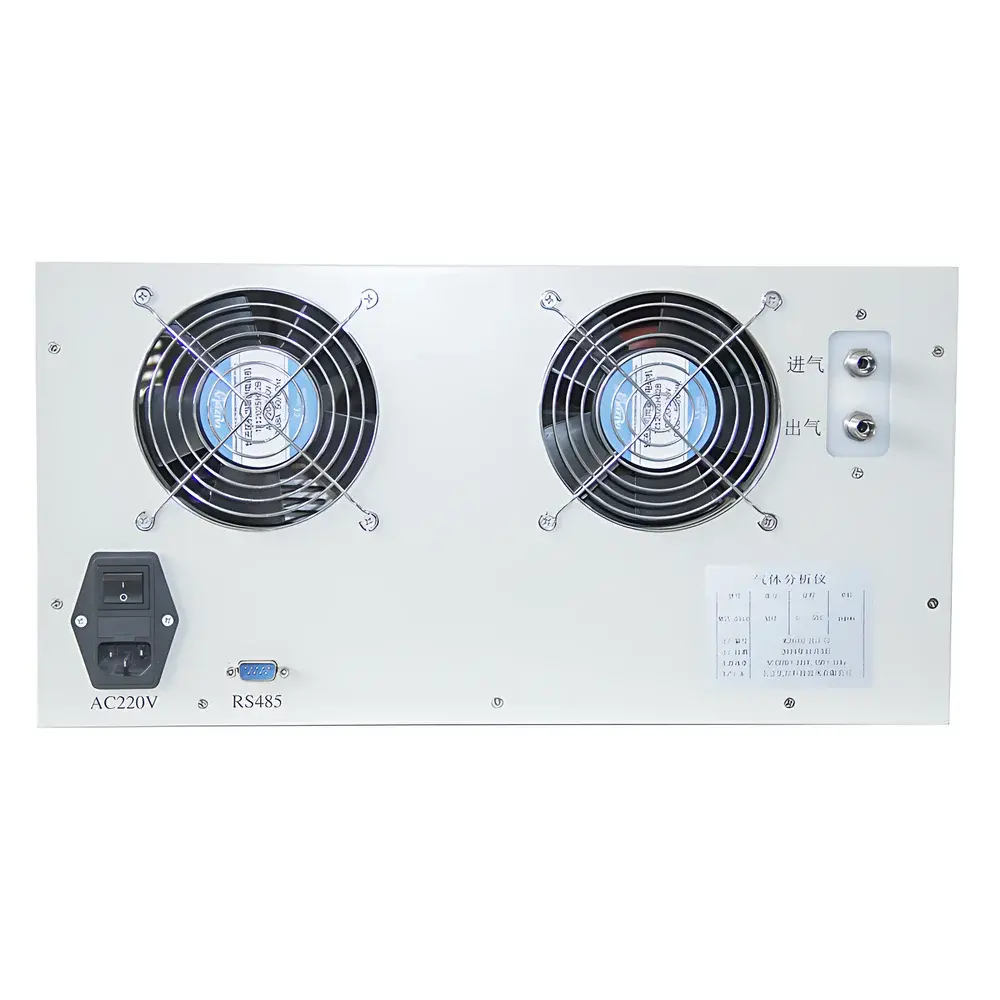
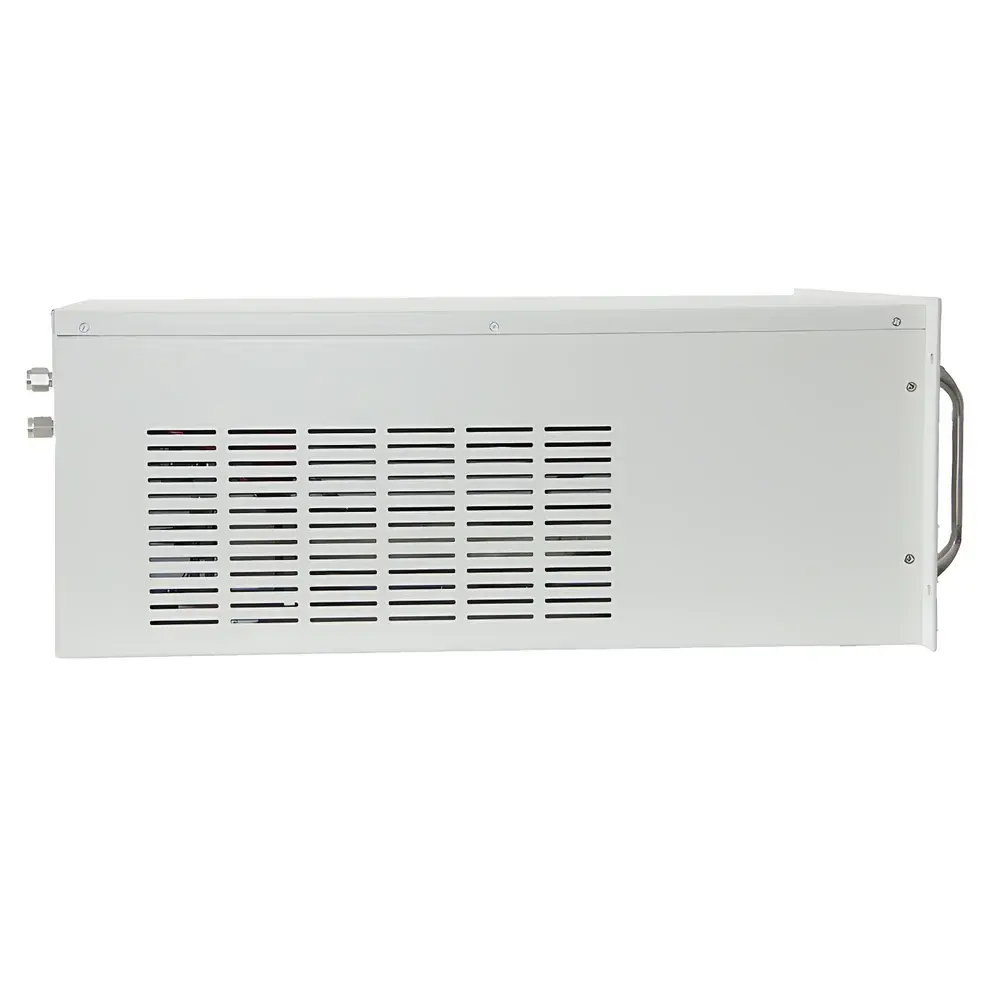
BCC MGA6000 Dual-Gas Laser TDLAS Analyzer for Acetylene and Ethylene
| Brand | BCC |
|---|---|
| Model | MGA-6000 |
| Measurement Principle | Tunable Diode Laser Absorption Spectroscopy (TDLAS) |
| Target Gases | Acetylene (C₂H₂) and Ethylene (C₂H₄) |
| Linearity Error | ≤ ±1% FS |
| Repeatability | ≤ 1% FS |
| Drift | ≤ ±1% FS/24 h |
| Response Time (T90) | ≤ 20 s |
| Detection Limit | 1 ppb – 1 ppm |
| Range Options | 0–1, 0–10, 0–50, 0–100, 0–500, 0–1000 ppm up to 100% vol (customizable) |
| Enclosure Types | 19″ rack-mount, benchtop, portable |
| Output Interfaces | 4–20 mA, RS232/RS485, USB, Ethernet |
Overview
The BCC MGA6000 is a high-performance, dual-gas online analyzer engineered for continuous, real-time quantification of acetylene (C₂H₂) and ethylene (C₂H₄) in industrial process streams. It employs wavelength-modulated tunable diode laser absorption spectroscopy (TDLAS), a physics-based optical technique that exploits the unique near-infrared absorption fingerprints of target molecules. Unlike electrochemical or catalytic bead sensors, TDLAS offers inherent selectivity—eliminating cross-sensitivity to CO, CO₂, CH₄, H₂O vapor, and other common interferents prevalent in petrochemical, cracking, polymerization, and syngas environments. The instrument operates on the principle of direct absorption measurement at precisely tuned laser wavelengths (e.g., ~1530 nm for C₂H₂, ~1620 nm for C₂H₄), delivering absolute concentration values traceable to NIST-standard reference spectra without calibration drift-induced recalibration cycles. Its optical path design incorporates temperature-stabilized laser diodes, high-finesse multipass gas cells (effective path lengths up to 20 m), and low-noise photodetectors, ensuring robust signal-to-noise ratio (SNR) under varying pressure, temperature, and particulate load conditions typical of refinery off-gas or ethylene plant recycle lines.
Key Features
- Simultaneous, independent quantification of acetylene and ethylene within a single compact optical platform
- No consumables or reagents—zero maintenance downtime associated with sensor replacement or electrolyte replenishment
- Optical measurement architecture immune to poisoning, aging, or humidity-induced baseline shift
- Configurable measurement ranges spanning from sub-ppb detection limits (1 ppb) to full-scale 100% volume percent, tailored to application-specific process safety or purity control requirements
- Fast dynamic response: T90 ≤ 20 seconds enables closed-loop feedback control in rapid transient processes such as fluidized bed reactor purge cycles or compressor surge monitoring
- Industrial-grade enclosure options—including 19″ 4U rack-mount for DCS integration, benchtop for lab validation, and IP65-rated portable variant for field verification and commissioning
- Integrated temperature and pressure compensation algorithms compliant with ISO 14644-1 and ASTM D6245 standards for volumetric gas concentration reporting
Sample Compatibility & Compliance
The MGA6000 is designed for direct in-situ or extractive sampling of dry or moderately humid process gases (dew point ≤ −20 °C). Sample conditioning is optional and configurable per IEC 61511 SIL2-ready pre-treatment modules (particulate filtration, coalescing, and thermoelectric cooling). It meets EMC Directive 2014/30/EU and Low Voltage Directive 2014/35/EU. For hazardous area deployment, ATEX/IECEx-certified variants (II 2G Ex db IIB T4 Gb) are available upon request. All firmware and data handling protocols support audit-trail functionality aligned with FDA 21 CFR Part 11 and EU Annex 11 requirements for regulated manufacturing environments, including electronic signature capability and immutable event logging.
Software & Data Management
The embedded Linux-based firmware provides local web interface (HTTPS) and Modbus TCP server for seamless integration into DeltaV, Emerson DeltaV, Siemens Desigo, or Honeywell Experion DCS ecosystems. Real-time concentration trends, spectral diagnostics (e.g., laser current/voltage, detector SNR, cell transmission), and alarm status are accessible via RESTful API. Historical data export supports CSV and OPC UA (Part 100) formats. Optional cloud gateway module enables TLS-encrypted telemetry to AWS IoT Core or Azure IoT Hub for predictive maintenance analytics and fleet-wide performance benchmarking. Calibration verification logs, user access records, and configuration change history are retained for ≥18 months per GLP/GMP data retention guidelines.
Applications
- Monitoring acetylene impurity in high-purity ethylene feedstocks for polyethylene production (ASTM D2504 compliance)
- Real-time tracking of C₂H₂ buildup in ethane cracker effluent to prevent runaway reactions in downstream hydrogenation reactors
- In-line verification of ethylene concentration in LDPE autoclave vent streams for environmental emission reporting (EPA Method 320)
- Safety interlock sensing for acetylene concentration in acetylene-air mixing stations (NFPA 51A)
- Quality assurance in specialty gas blending facilities supplying certified reference materials (ISO 6142)
- Research-grade kinetic studies of C₂H₂/C₂H₄ oxidation pathways in catalytic combustion test rigs
FAQ
Does the MGA6000 require periodic zero/span calibration?
No—TDLAS is an absolute measurement technique. While optional verification using certified gas standards is recommended quarterly for QA/QC, routine calibration is not required due to inherent wavelength stability and self-referencing spectral processing.
Can it operate in high-dust or corrosive gas environments?
Yes—when paired with BCC’s optional heated sample probe (up to 200 °C) and sintered stainless-steel filter (5 µm), the system maintains accuracy in FCC off-gas and sulfur recovery unit tail gas applications.
Is remote firmware update supported?
Yes—secure OTA updates are enabled via signed package deployment over Ethernet or cellular modem, with rollback capability and SHA-256 integrity verification.
What is the minimum detectable concentration for ethylene in nitrogen background?
At standard temperature and pressure (STP), the verified limit of detection (LOD) is 1.2 ppb for ethylene using the 100 ppm full-scale configuration and 20 m optical path.
How is measurement uncertainty quantified and documented?
Uncertainty budgets follow EURACHEM/CITAC Guide CG4, incorporating contributions from laser wavelength stability (±0.005 cm⁻¹), pressure transducer accuracy (±0.1% FS), temperature sensor tolerance (±0.2 °C), and line shape fitting residuals—fully reportable in instrument certification files.
Related Products